
Under the Big Top With ECHO
Cirque du Soleil’s latest show brings live music, astonishing feats of the human body, and circus magic to Marymoor Park.
 By Sarah Stackhouse February 16, 2026

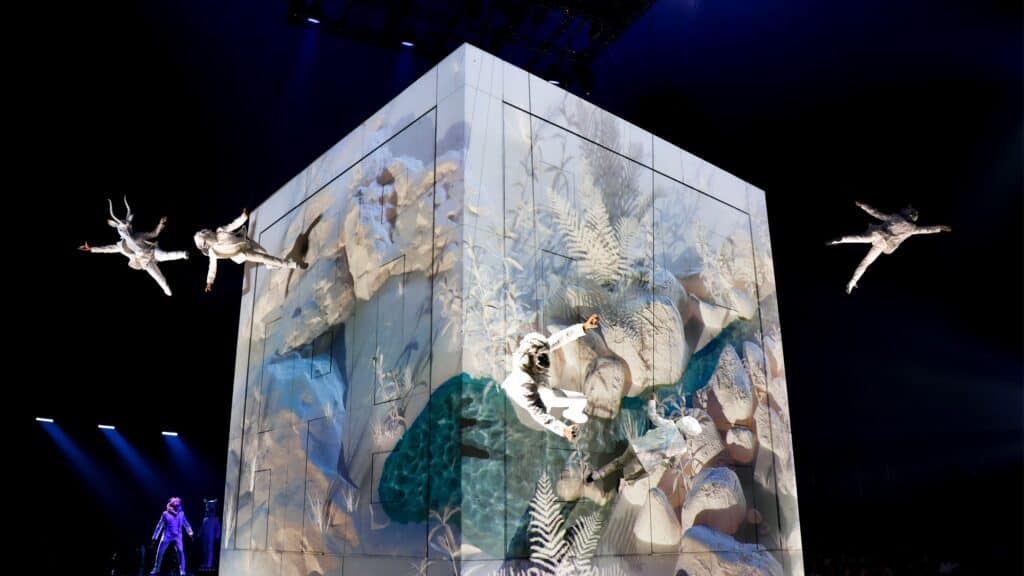
The moment the lights dropped inside the Big Top, I squeezed my 11-year-old daughter’s arm. The collective thrill of being packed into the circus tent felt palpable, and you could tell everyone was thinking the same thing. Center stage sat a massive cube. What was it going to do? Crack open? Spit people out? We had popcorn, cotton candy, and two different expectations—she was excited, while I was a little anxious. I love death-defying feats as much as the next person, but I feel it in my very non-performative, safety-first body, and Cirque du Soleil’s ECHO wasted no time testing both reactions.
Billed as a story of the “symbiotic connection between humans and the natural world,” ECHO follows a curious young woman named Future and her dog as they encounter the mysterious cube that opens a portal into a fantastical ecosystem, not unlike Alice in Wonderland. What unfolds is equal parts circus fever dream and theatrical magic show. It’s surreal, dazzling, and yes, nerve-rattling—all grounded in the physical extremes Cirque is known for.
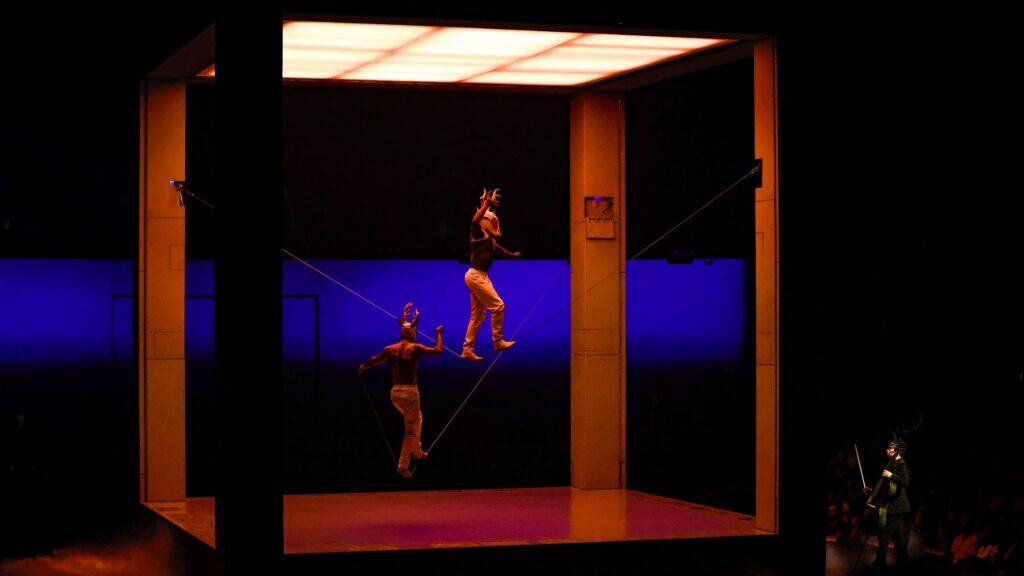
The cube itself is 23 feet tall and weighs roughly 10 metric tons. It rotates on a central pivot and is mapped with projections from 10 video projectors—the most ever used for a Cirque Big Top production. It opens to reveal performers dressed and masked in intricate animal costumes, becomes an acrobatic apparatus, splits apart, then rebuilds itself again. The symbolism is there if you want it—regeneration, connection, consequence—but it also works as a beautiful piece of art. You never quite know what it will do next.
The show moves through a series of acts, woven together by Future and her dog, the creatures that emerge from the cube, and the clowns (called Double Trouble) who pop in and out like any good comedy, breaking the tension between the bigger, heart-pounding feats.
The act that stayed with me most was the foot-juggling. I had never seen anything like it—a man reclined on his back, launching and spinning another full-grown human into the air using only his legs. It’s elegant for something so physically impossible, and it’s completely mind-blowing to see bodies doing this. I’m fairly certain I watched most of it with my mouth open.
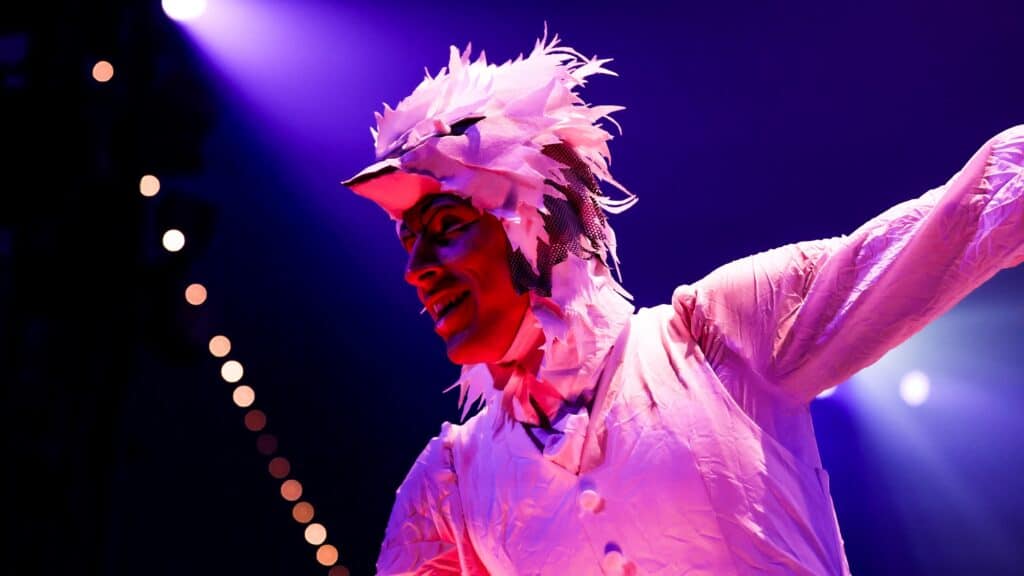
Another standout comes with the Colorful Paper People—performers launching each other skyward in bursts of synchronized trust. Bodies flip, fold, and reappear midair with balletic precision. It is one of the show’s most joyful moments, rooted as much in collaboration as athleticism.
There are too many performers to mention. A hair suspension act where acrobats soar, tethered only by their hair. Slackwire artists balancing within the cube itself as it rotates on stage. A contortionist whose body was bending and moving in ways that made me sink into my seat and wince with pain and awe. And there’s more but I won’t give it away. The show has a few tricks up its sleeve that are best discovered in the moment. That sense of surprise is part of the magic.
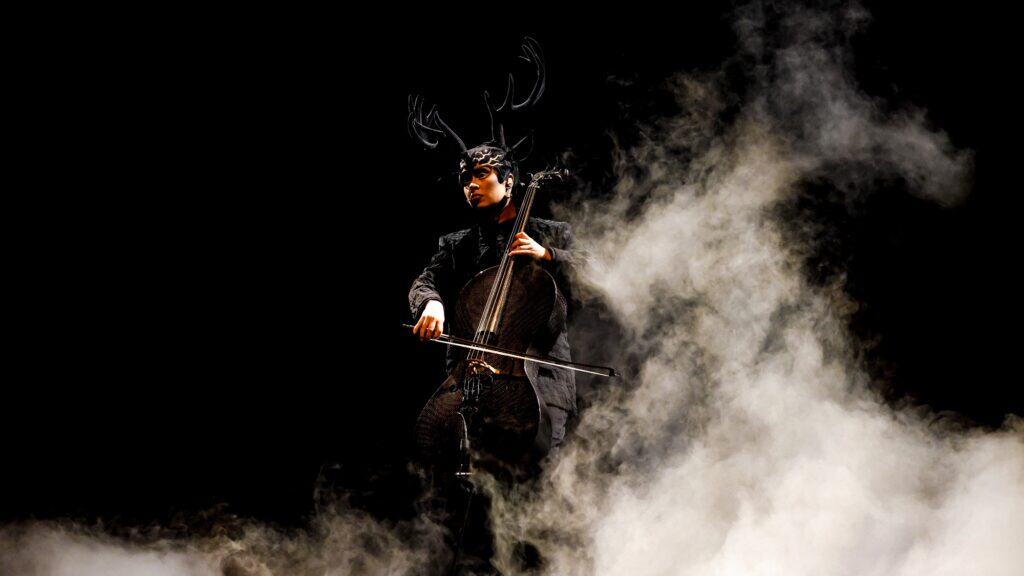
Threading all of it together is the music. For the first time in Cirque du Soleil history, ECHO features seven live vocalists who also play instruments. The score moves between meditative and soaring, guiding the emotional arcs of the show. And like any good soundtrack, it helps you navigate what you’re seeing and feeling. Dressed in black, the musicians themselves almost fade into the background, resembling shadowy animal figures we can hear but not always see. It reinforces the show’s environmental thread without ever weighing the room down.
The production is sleek and modern. Costume designer Nicolas Vaudelet contrasts animal figures rendered in sculptural whites with human performers in wrinkled, papier-mâché-like bright color, with beautiful geometric-style makeup.
It takes about four and a half days to raise the Big Top and two days to take it down, with a traveling village supporting more than 50 crew members and feeding hundreds of meals daily to artists and staff. ECHO features a cast representing 19 nationalities, performing up to 10 shows a week as the production moves city to city.
What struck me, though, is that all of these incredible performers and artists find each other—from around the world—to build something this ambitious together, traveling, which must no doubt be tiring, just to put this show on and delight whoever gets to be inside the tent. Watching people push their bodies to extremes to spark collective awe feels beautiful, inspiring, thrilling, and worth holding onto.
The circus still comes to town.
And for about two hours—intermission snacks included—ECHO lets you step inside its strange, electrifying world.
ECHO runs until March 22 at Marymoor Park in Redmond. Tickets and showtimes are available here.
Follow Us

Seattle Center Festál at 30
How community backlash to a Disney plan helped shape one of Seattle’s most expansive cultural traditions.
In the late 1980s, Seattle Center was staring down an identity crisis. The city had hired the Disney Corporation to produce a redevelopment plan for the 74-acre campus—the most significant reimagining since the 1962 World’s Fair. When the final proposal was released, the reaction was immediate. Community groups pushed back, arguing the vision felt imported…

From the Emergency Room to ‘The Pitt’
Bellevue-raised nurse Ned Brower brings real-life experience to one of TV’s most medically accurate dramas.
HBO’s The Pitt, now in its second season, has distinguished itself as one of television’s most realistic medical dramas, earning awards like an Emmy and Golden Globe for Best Drama Series. The show has received widespread praise for its clinical accuracy and emotional intensity. Created by ER alums Noah Wyle, John Wells, and R. Scott…

Nord-West Connection
Food for thought.
There has always been a strong connection between Seattle and the Nordic countries, and the National Nordic Museum’s current exhibition, New Nordic: Cuisine, Aesthetics and Place, is a visual reinforcement straight from Norway. A cross-disciplinary show exploring how New Nordic Cuisine—a culinary movement that developed in Scandinavia in the early 2000s that focuses on using…

Black History Month in Seattle
Events, landmarks, and businesses to support year-round.
Black pioneers first arrived in Seattle in the mid-19th century. The city’s earliest known African American resident was Manuel Lopes, who arrived in 1852 from Cabo Verde. A couple of decades later, African Americans began migrating to the Pacific Northwest from Southern states to work in coal mines. During this period, two Black enclaves began…