





Visual Arts
Read More ›
Chihuly Returns to Venice
The Tacoma-born artist marks 30 years since ‘Chihuly Over Venice’ with three new glass works along the Grand Canal.

We’re standing on the Accademia Bridge in Venice, watching massive cardboard boxes marked “FRAGILE” craned up from a barge. It’s a few weeks before the opening of Dale Chihuly’s new exhibit, and from this vantage point, we can see all three monumental works on the Grand Canal being assembled.
“It really did start here,” says Britt Cornett, director of exhibitions for Chihuly Studio. “We’re here to celebrate what happened 30 years ago.”
Today, the name Chihuly is synonymous with large-scale glass art. It’s been 30 years since the Chihuly Over Venice project, where the Tacoma-born artist installed 14 chandeliers in the canals and piazzas of this ancient Italian city. CHIHULY: Venice 2026 is a tribute to that 1996 show, and runs May 5 to Nov. 14 during the Venice Biennale. The works are outdoors and public-facing, no tickets needed.
Chihuly, 84, has been making art for six decades, and this show highlights that long and prolific career. Venice is his favorite city in the world, where he fell in love with the medium of glass. But Seattle is where he chooses to make his home.
These Venice works were blown at his hotshop near Gas Works Park. They were designed and built full-scale at the studio near the Ballard Fred Meyer, then packed into four 40-foot shipping containers that sailed across the Atlantic.
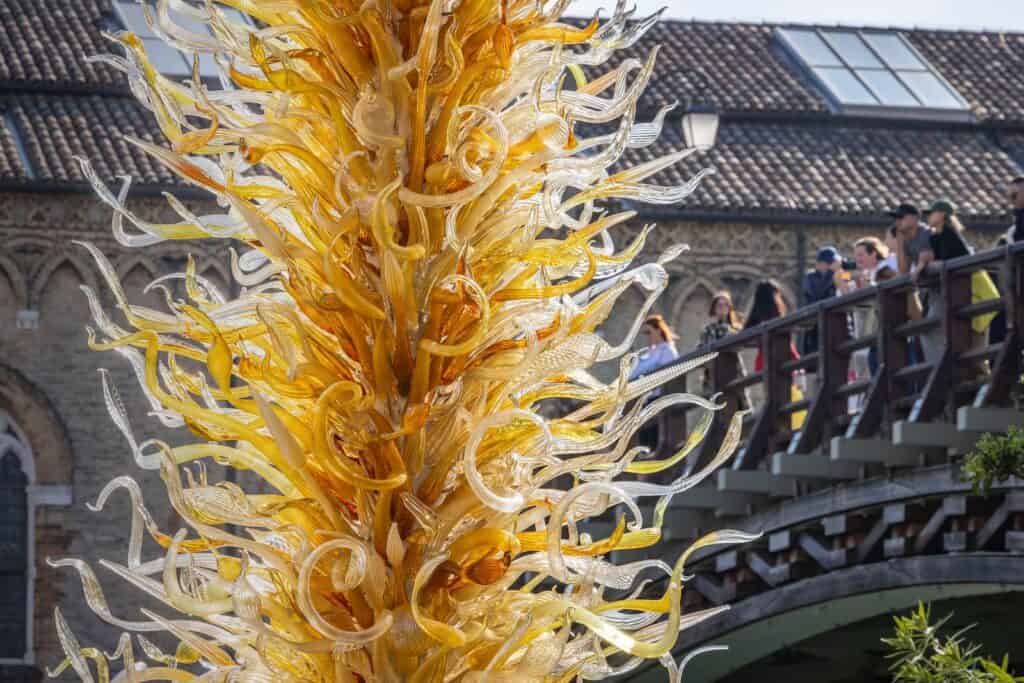
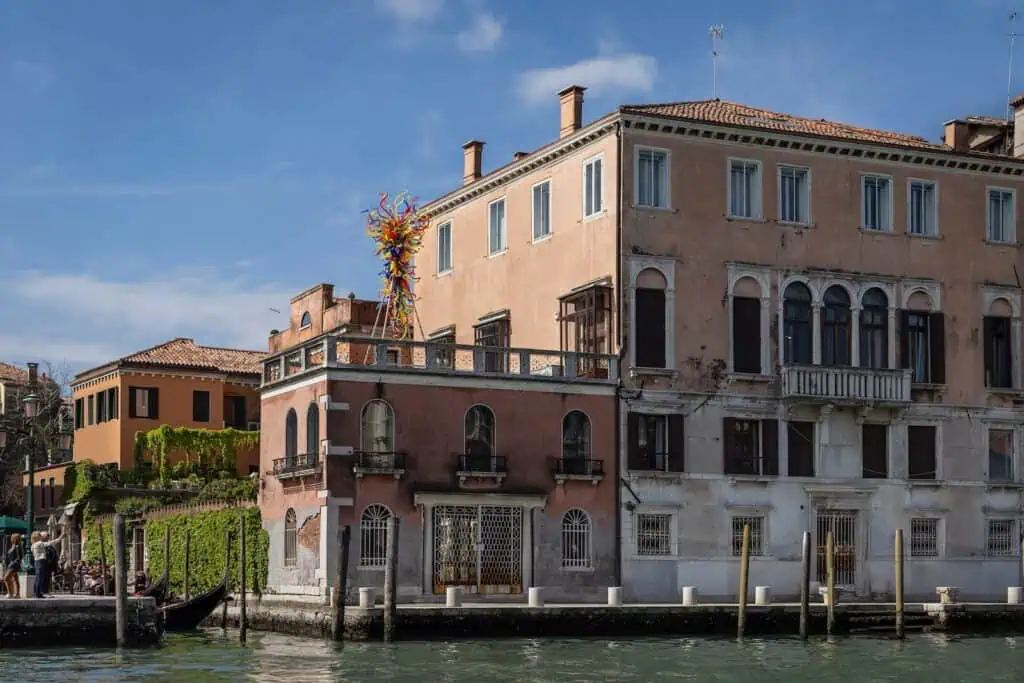
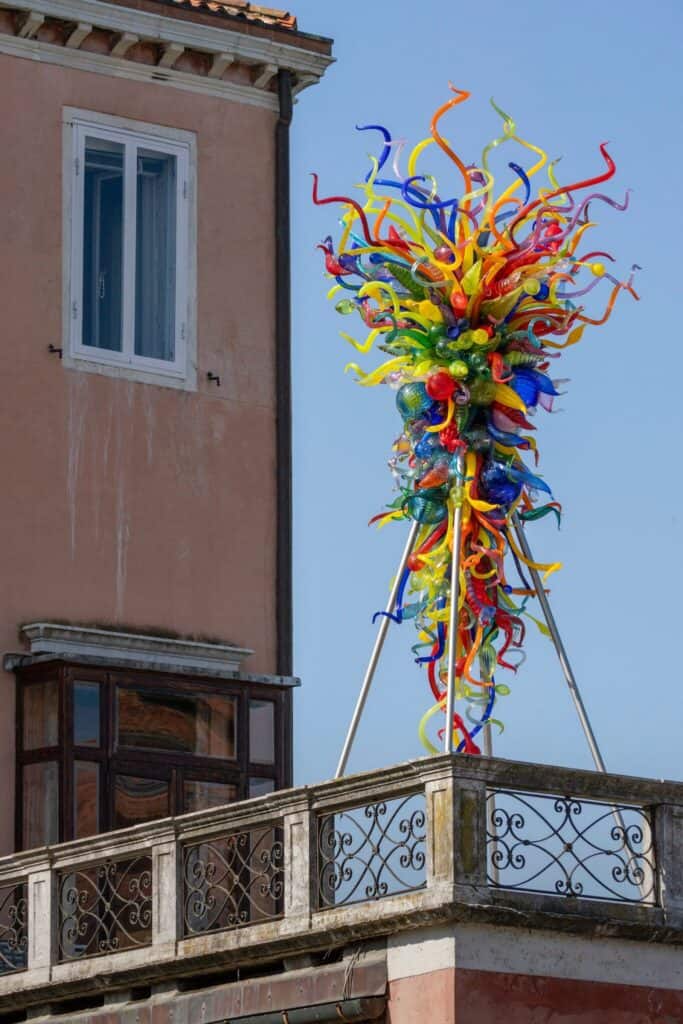
CHIHULY: Venice 2026 consists of three new works. There’s no mistaking Chihuly’s signature twisting glass forms. Blue and Green Tower and Gold Tower have self-explanatory titles. The third, End of the Day Chandelier” is a colorful mix of the various pieces left at the end of a day of glassblowing.
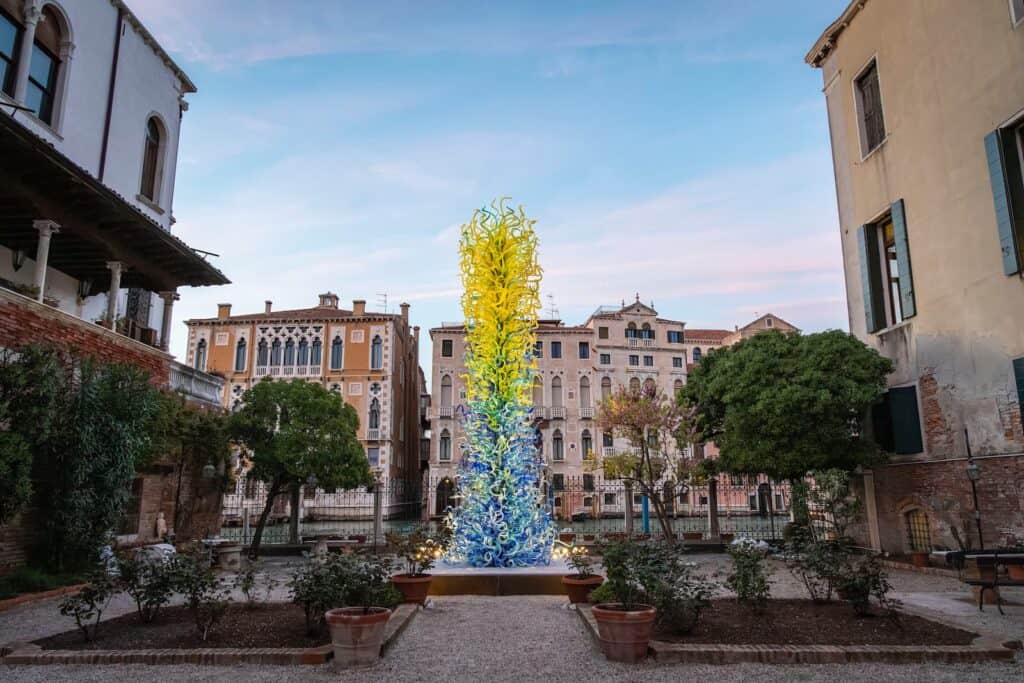
Cornett leads the way down a narrow street and knocks at a green door. Inside are two more Seattleites in Venice: Rick Holland and Alex Scott on lifts, assembling the 26-foot-tall Blue and Green Tower in a private garden facing the Grand Canal. They work section by section, slotting glass forms onto spikes on the steel armature. There’s no manual, and the process looks a bit like colossal flower arranging.
Across the Accademia Bridge, we enter the outdoor café and garden of Palazzo Franchetti and whoa—my heart skips a beat. The afternoon sun hits Gold Tower from behind, and the 31-foot-tall sculpture glows. It looks like it was made to be here.
But of course it was. Leslie Jackson Chihuly, president and CEO of Chihuly Studio, spent two years getting permissions for Venice 2026. (At one point, she wasn’t sure if she could pull it off.) Leslie, who is Dale’s wife, nailed these three sites on the Grand Canal, then Dale designed works that respond to the space.
The sculptures live outdoors, so Chihuly Studio added an indoor counterpart to tell the story of Dale’s history in Venice. We step into the Istituto Veneto, and it takes a minute to adjust our eyes to the intimate gallery space. Italian builders are constructing a 20-foot-long table in the first room on the left.
“Can you take a quick look?” Cornett gestures to Suzanne Geiss, curator of the Istituto Veneto presentation.
“Oh, it’s backwards.” Geiss intervenes in the nick of time, and the Italians give the banner a 180 before framing it in place. Four hundred archival photos are printed on mylar, and the overall effect is like looking at old-school slides on a massive light table. That’s the point.
When Geiss joined the Venice 2026 project, she spent days poring over hundreds of slides documenting Dale’s 1996 show. “How can I edit this down? Let’s show them all,” she decided. “The goal is to experience it as I did, with this overwhelming volume.”
A frenzy of faxes—love that ’90s tech—are tacked on the wall behind the light table. It’s Dale’s exuberant sketches and notes in his own handwriting, all the planning and collaborating and risk-taking it took to get to those final 14 works. A timeline of Dale’s career runs along the opposite wall.
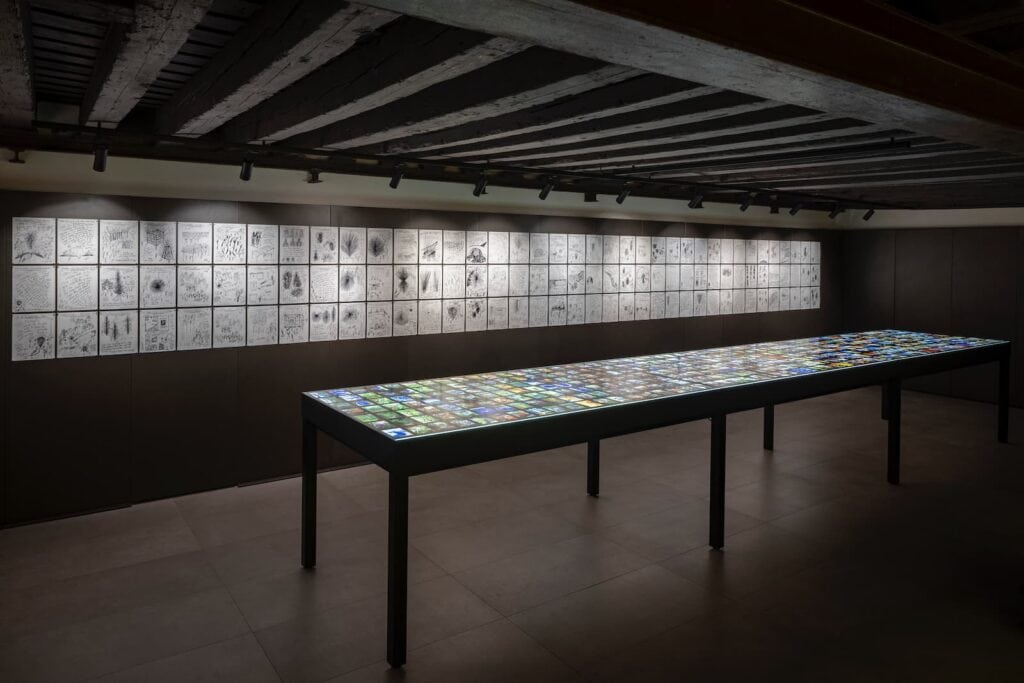
Venice is the historic home of glass, and the city has been a through line in Dale’s work. Geiss points out how Dale took chandeliers from the domestic setting to the outdoors, and pushed the form to architectural scale. His work in glass especially resonates in this city in a lagoon, hanging in balance.
“There are parallels to Venice as a city,” Geiss says. “A city that is decadent and fragile, this tension that exists.”
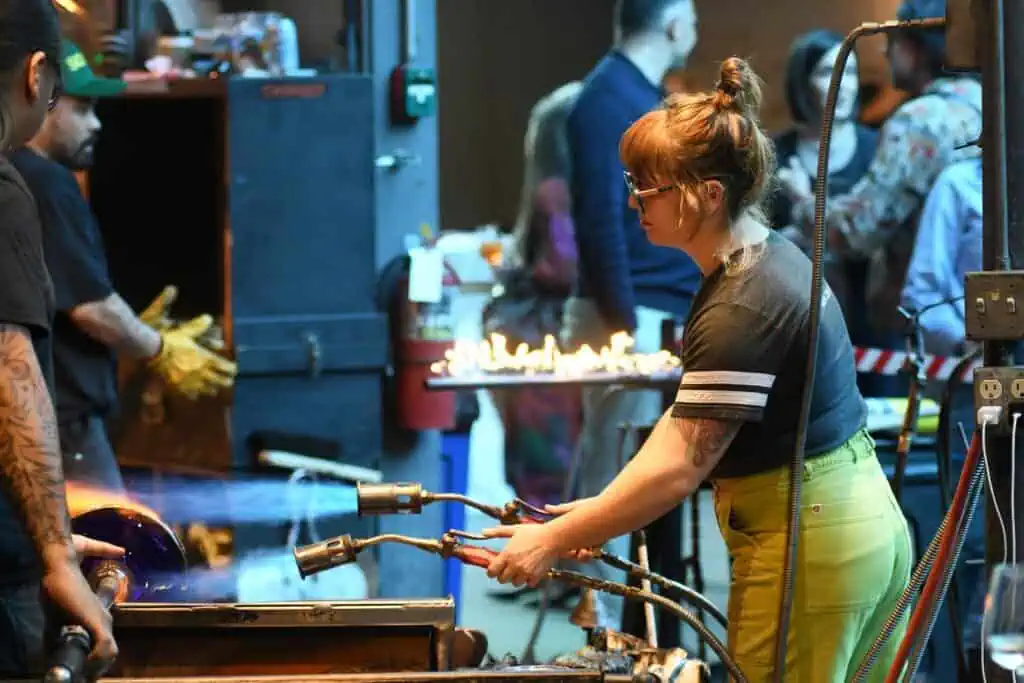
Back in Seattle, Dale and Leslie are color-coordinated in yellow at a party celebrating the Venice show. His hotshop is nicknamed The Boathouse, and here, glassblowers work around the 2,000-degree furnace while guests mingle and enjoy nibbles. Leslie hands Dale the microphone, and he tells the crowd about his first time in Venice. It was 1968, and he was on a Fulbright scholarship to study with the renowned glassblowers on the island of Murano.
“First thing you do is you shave off that beard,” he remembers his buddy telling him. “Second thing is to get a sports coat. Get some wraparound shades and don’t look back.” The crowd chuckles appreciatively.
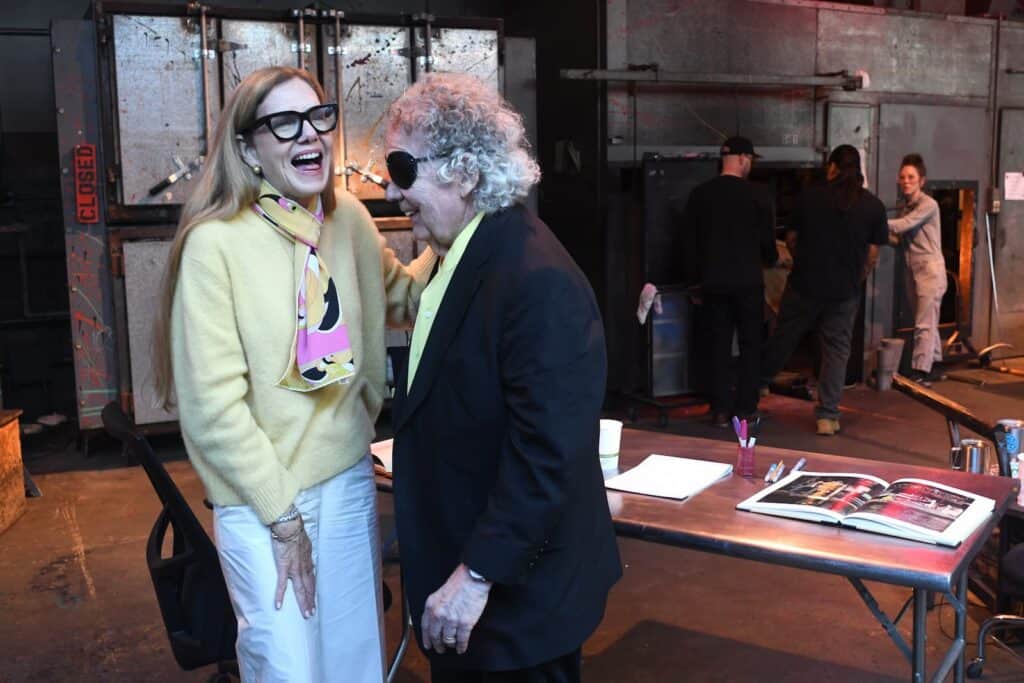
The Chihulys have a family trip to Venice planned for September, near Dale’s 85th birthday. In 1996, Leslie and Dale had just become a couple and she joined his whirlwind international glassblowing tour to spend time together. Chihuly’s team traveled to work with glassblowers in Finland, where Leslie became project manager, as well as Ireland and Mexico, before converging on Venice. Logistical boondoggle aside, the trip was about experimentation and cultural exchanges across continents.
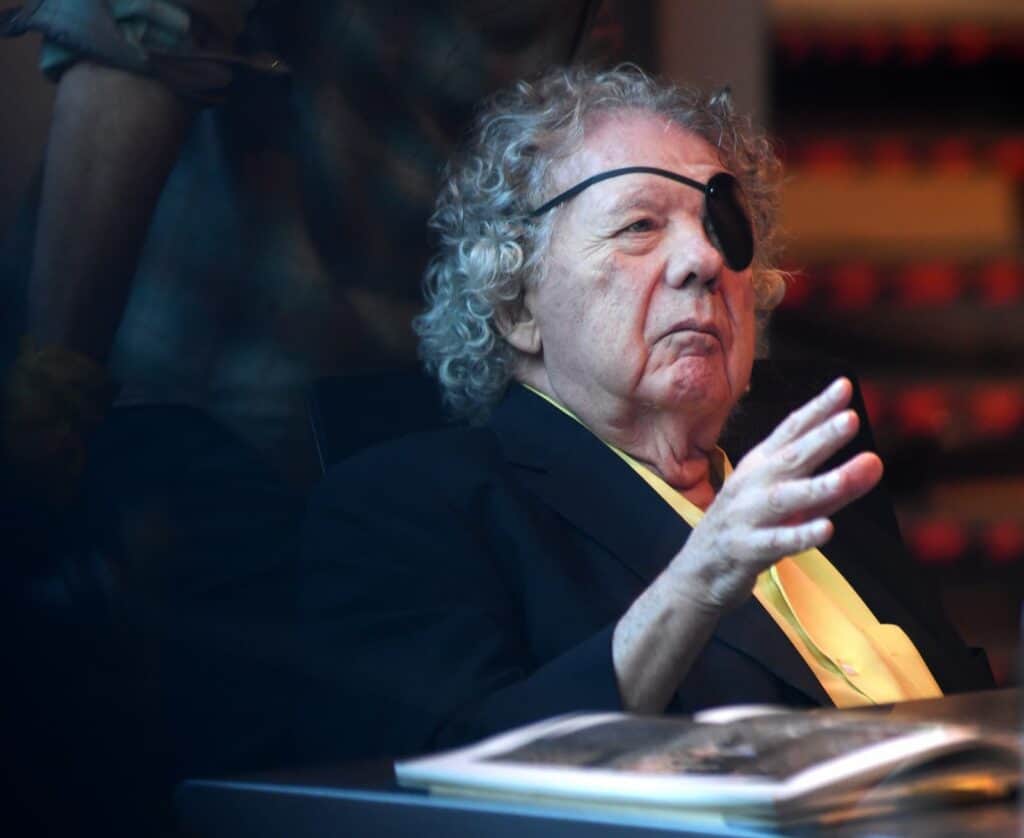
Thirty years on, Dale still comes to work every day. Every day? As in seven days a week? Five days, Leslie clarifies, but Dale would go in seven days a week if other people would go. He always wondered why other people need things like weekends and vacations. Dale gave up blowing glass himself in the late ’70s, after losing an eye in a car accident (hence the eye patch) and injuring his shoulder surfing. Today, Dale acts as art director for a team that numbers 50.
Leslie spearheaded this new show on the 30th anniversary of Chihuly Over Venice. Why? “I wanted to do it,” she says simply. (Also, because “31st anniversary” doesn’t quite have the same ring to it.)
We’re sitting in the upstairs kitchenette of The Boathouse, where the blue sky and even bluer water are visible through the big windows facing Lake Union. Looking out across the open room, you can imagine you’re on a palazzo—but a Pacific Northwest one—and those kayaks might be gondolas.
“Dale doesn’t like to look back. But I said, we gotta do something,” Leslie says. “How amazing. We are still standing. Making art. It’s a gift to be able to do this.”
Follow Us

Studio Sessions: Heidi Grace Acuña
Drawing on her Filipino heritage, interdisciplinary artist Heidi Grace Acuña brings sculpture and fashion together with a spirited approach to ancestral traditions.
Heidi Grace Acuña has made me fond of crocodiles. At her exhibition at ARTS at King Street Station, I could study the little ones alongside their larger companions, peer into mouths lined with uneven gold teeth, and circle their clay bodies with all the curiosity and delight that fear would ordinarily keep in check. The…

CID Night Market Returns This Saturday With a New Food Walk
More than 100 vendors will take part in the free festival, with food specials starting at $6.
My daughter and I were recently watching the Tokyo episode of Eugene Levy’s The Reluctant Traveler, and we couldn’t get over how pretty the lanterns looked along the busy streets. It made me want to be out in a city at night, somewhere with good food and plenty of people. Now in its 19th edition,…

Rearview Mirror: Crocodile Guardians, Late-Summer Potato Salad, and a Halloween Costume Hunt
Things I did, saw, ate, learned, or read in the past week (or so).
COOKING WITH ASTER PANTRY A few leaves turn, my inbox fills with fall festival pitches and cozy brunch menus, and suddenly I want to stay home with a glass of wine and cook. I love this nesting season, though I’m not ready to give up summer produce. Earlier this year, I wrote about Seattle chefs…

WALKDONTRUN Returns This Saturday, Turning Downtown Seattle Into a Sprawling Art Show
In its second year, the free festival brings 200-plus artists to a 20-block route September 19, with a secret garden and a former 7-Eleven stocked with art.
Most walks through downtown Seattle involve trying to get somewhere. On September 19, the crosswalk itself might be the reason to stop. Heap Troupe will turn a four-way crossing into a performance, one of dozens of encounters planned for this year’s WALKDONTRUN. The free, all-ages art walk stretches across more than 20 blocks. From 11…