
After the Line
Two longtime Seattle chefs step away from restaurant kitchens to build Aster Pantry, a free online resource for seasonal home cooking.
 By Sarah Stackhouse January 28, 2026

After years working nights and weekends inside the constant churn of restaurant kitchens, Mac Tadie and Sten Langsjoen found themselves exhausted and in need of a break. They had spent most of their careers in professional kitchens, where speed, repetition, and service dictated everything, and they were beginning to think more seriously about how cooking could fit into their lives outside that system. When they started talking about what might come next, the conversation was driven by curiosity about whether a different kind of food work could exist.
Aster Pantry grew out of those conversations—a free, ad-free recipe website rooted in seasonal home cooking with Pacific Northwest ingredients.
Tacoma-born Tadie began cooking in London at St. John Bread and Wine, where he absorbed a nose-to-tail approach under Fergus Henderson before returning to Seattle to cook at Lark, Sitka and Spruce, and Homer. Minnesotan Langsjoen spent years in Seattle kitchens, including a long stint at Brouwer’s Café and later as chef de cuisine at Brunswick & Hunt, before moving into farming during the pandemic, when many restaurants closed. During that time, he worked at Local Roots, Boldly Grown, and Small Acres.
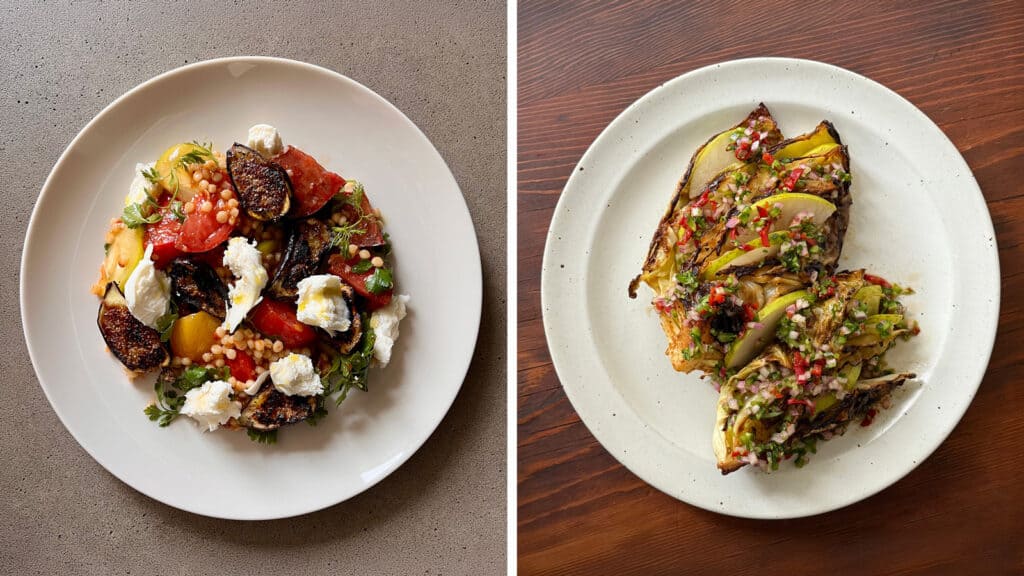
At first, opening a restaurant was still part of the discussion. Tadie drafted a business plan and even looked at a few spaces. But the math never quite worked, financially or personally. “I don’t want to work seven days a week, work that hard, make very little money, and never see my loved ones,” Tadie says. As he and his wife prepared to start a family, the long-term reality of restaurant ownership felt incompatible with the life he and Langsjoen wanted.
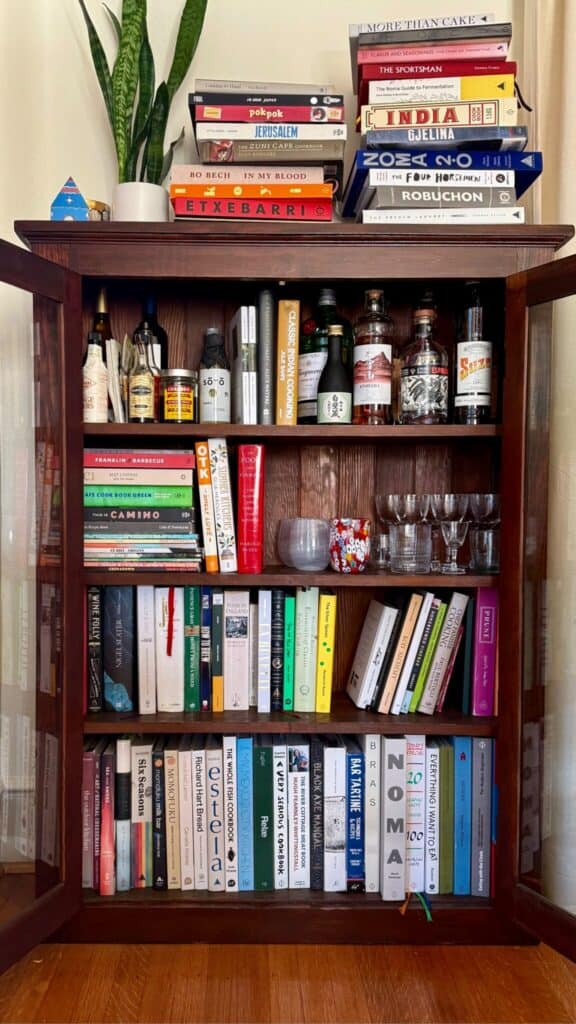
The conversations shifted toward what they already had: half-remembered recipes and hard-earned techniques. Much of it lived in notebooks or memory. “We were trying to make a product that we would actually use,” Langsjoen says. “We all have scattered notebooks of just random things. This was about organizing that into something that’s easy to come back to.”
The site publishes one new recipe and one newsletter each week. Recipes alternate between vegetarian dishes and fish or meat, reflecting how they cook at home. The newsletter, called The Regular, focuses on a single topic at a time, from cast iron pans to marinades. Another section, Elements, breaks down foundational components like sauces, pickles, and vinaigrettes.
Both chefs describe the experience of trying to cook from the internet as frustrating. “If you try and Google a cornbread recipe, it’s a nightmare,” Langsjoen says. “You end up with 15 options.” In professional kitchens, he adds, that kind of excess is a warning sign. “One red flag is when a menu is too large,” he says. “It makes it harder to choose, and there’s no possible way you can do all these things well.” Aster Pantry takes the opposite approach, favoring curation over volume. Making the site free, without ads or pop-ups, was a deliberate choice. “We talked about doing a subscription or a paywall early on,” Tadie says. “But it didn’t feel right. We wanted this to be free. It should be accessible.” The project is supported by voluntary donations from readers.
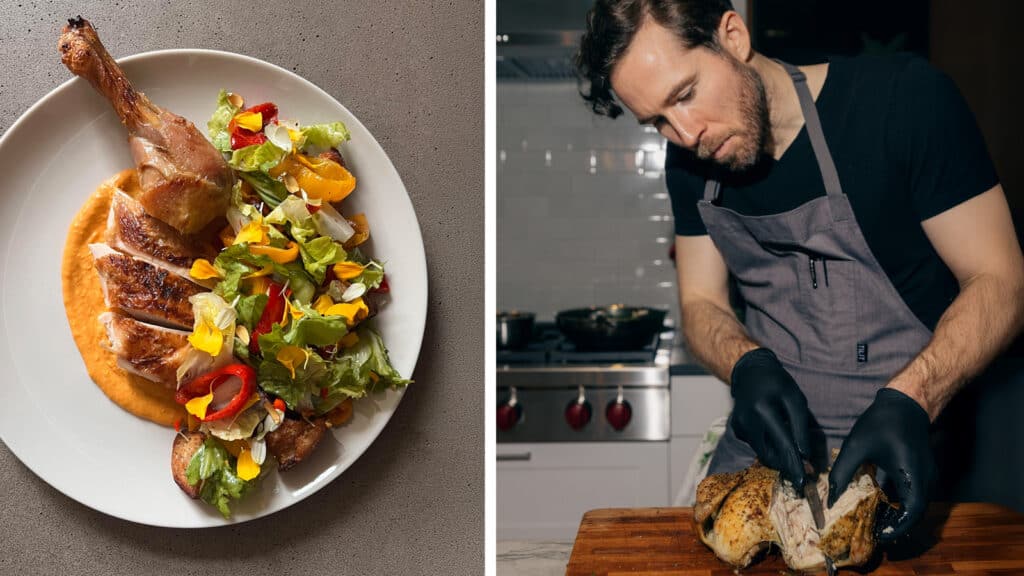
That focus on simplicity and accessibility also reflects Langsjoen’s time farming during the pandemic. Working at Local Roots Farm shifted how he thinks about effort and intention in cooking. “When you have this wonderful produce immediately available to you day by day,” he says, “your focus changes to how can I get out of my own way.”
“Most people cook the same four or five things every week,” Tadie says. “Getting one new thing into that rotation actually matters.” And while the recipes are carefully tested, the stakes stay low. “There’s not a lot that can really go wrong with cooking. The worst thing that happens is you eat something that’s kind of weird, and you try again,” he says.
Today, they both work as private chefs, arrangements that offer stability and a more sustainable pace. Aster Pantry fills the creative space restaurants once occupied without demanding everything in return. “Other than your relationships, what you eat every day really matters,” Langsjoen says.
In the near term, the chefs want to keep building the site’s library, adding recipes and guidance around how to cook well at home. Longer term, they imagine Aster Pantry extending beyond the screen, maybe into a small for testing recipes and hosting occasional meals—something closer to a cookhouse. “That would be the dream,” Langsjoen says. “Something more sustainable for us, and more accessible for people.”
Follow Us

Restaurant Roundup: Smoked Brisket and Baseball Bites
Here’s what was served up recently in the Emerald City.
The Emerald City does St. Patrick’s Day well. Between the brews and hearty meat stews, there are plenty of ways to revel with Irish cuisine while learning about the country’s culture (like how the holiday started with more of a somber tone). Of course, Kells’ festival is already in full swing and you can bring…

5 Dishes to Try in March
Worker-owned restaurants and community-driven kitchens shaping Seattle’s food scene.
Those in the restaurant industry have always faced unspoken challenges. Their stories are often kept behind the fold. Today, we’re hearing more personal accounts of wage theft, abuse, harassment, and a mountain of trauma in an industry built to nourish, celebrate, and commemorate. How does one server, one restaurant take on changing the industry when…

Palace Kitchen Celebrates 30 Years
The Belltown staple still feeds the city after 10 p.m.
After the last tickets come off the rail, floor mats are hauled out to be hosed down, oven hoods are scrubbed, aprons come untied, and someone counts the drawer. It’s a familiar ritual in restaurant cities everywhere. When the shift ends, cooks and servers go looking for a drink and something to eat. For three…

Protein Without the Pressure
In her new cookbook, Seattle author and dietitian Rachael DeVaux keeps healthy eating grounded in real life.
Rachael DeVaux is not afraid of beef. That might sound obvious, but in a wellness culture still haunted by plain chicken breast and low-fat everything, her enthusiasm for grass-fed ground beef feels almost radical. The Seattle-based New York Times bestselling author, personal trainer, and founder of Rachael’s Good Eats has built a following of more than 3.5…