
Coasting Into Calm
After purchasing a weather-worn, ant-infested cabin on an Oregon beach, a Seattle couple hires a regional team to transform it into a stylish weekend retreat.
By Melissa Dalton December 29, 2025

This article originally appeared in the November/December 2025 issue of Seattle magazine.
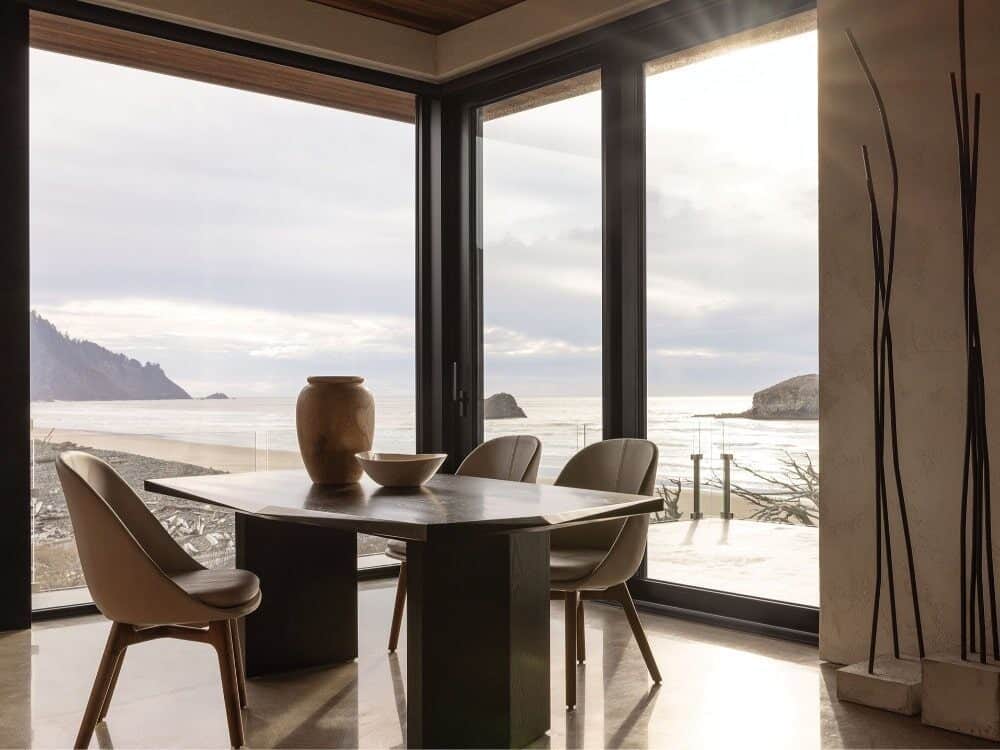
When architect Andrew Montgomery first pulled up to his clients’ house in Arch Cape, Oregon, there were logs in the driveway, courtesy of the sizable swells that come with the coast’s king tides. At just 28 feet above sea level and as close as you can get to the water without being on the beach, Montgomery could tell the home had enviable views. “I do mainly coastal homes, and this is one of the most spectacular sites,” he says. The only problem? The house could still be encroached by larger waves.
The owners, Seattleites who had been married two hours south in Salishan 20 years before (and visited the coast regularly), had bought the small cabin on 2.3 acres in 2012, but eventually tired of the immense wear and tear it suffered over time. “It was a cute little cabin, but it was like it was built out of Lincoln Logs,” says the owner. “There were water stains inside. There were ants that lived in the walls. They would swarm occasionally in the summer on a warm day, and we’d have thousands of little black flying ants coming out of the walls, and we had to vacuum them all up.”
The couple reached out to Montgomery at the Portland-based firm Terraforma Architects for a rebuild plan, with the idea of expanding the footprint and making the house more durable and resilient. Additionally, they wanted the next incarnation to prioritize an unfussy, natural palette and capture the incredible views offered in so many directions, from the ocean’s horizon line to the tangle of coastal forest.
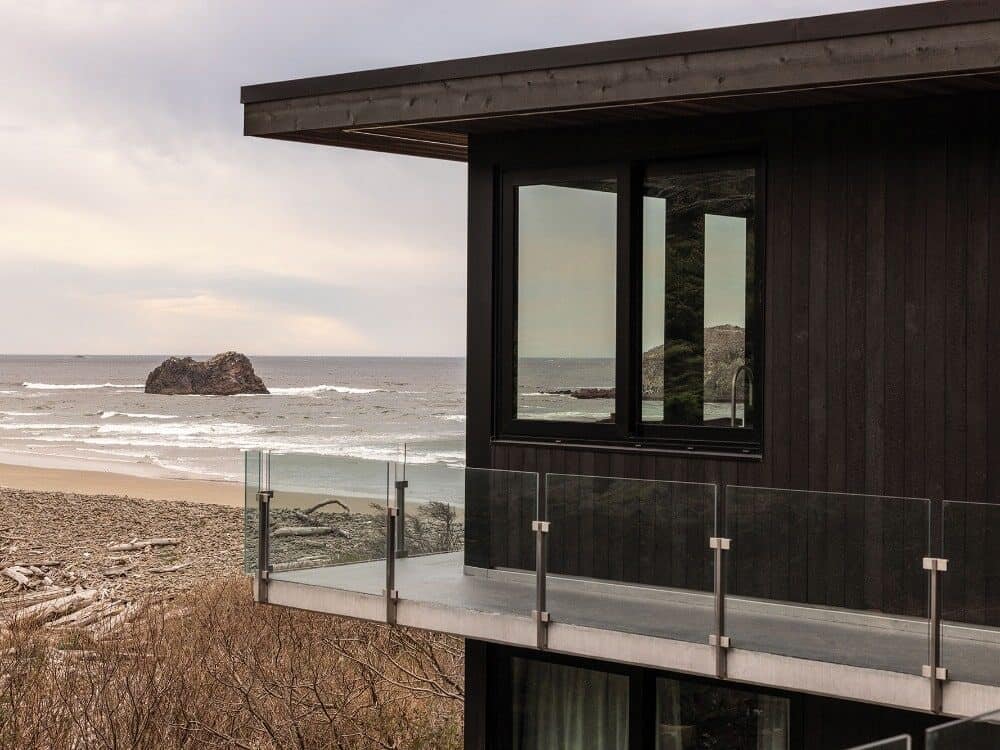
Working with I&E Construction, Montgomery delivered a 4,200-square-foot, two-story design with a stepped façade that comes to the point of a ship’s prow at the front, all atop a pass-through foundation. “The whole house, except for the roof, is concrete,” says the architect, who specified insulated woodchip/cement building blocks from Oregon called Faswall. Exterior “deflection walls” further slow down any oncoming water, while inky Shou Sugi Ban siding lets the house recede into the landscape, and is more durable and rot resistant. Floor-to-ceiling glass meets the clients’ brief to capture the incredible views, and a solar array keeps them prepped for power outages.
“We didn’t want to have to fuss. It’s a place to relax, not a place to do work and cleanup.”—Homeowner
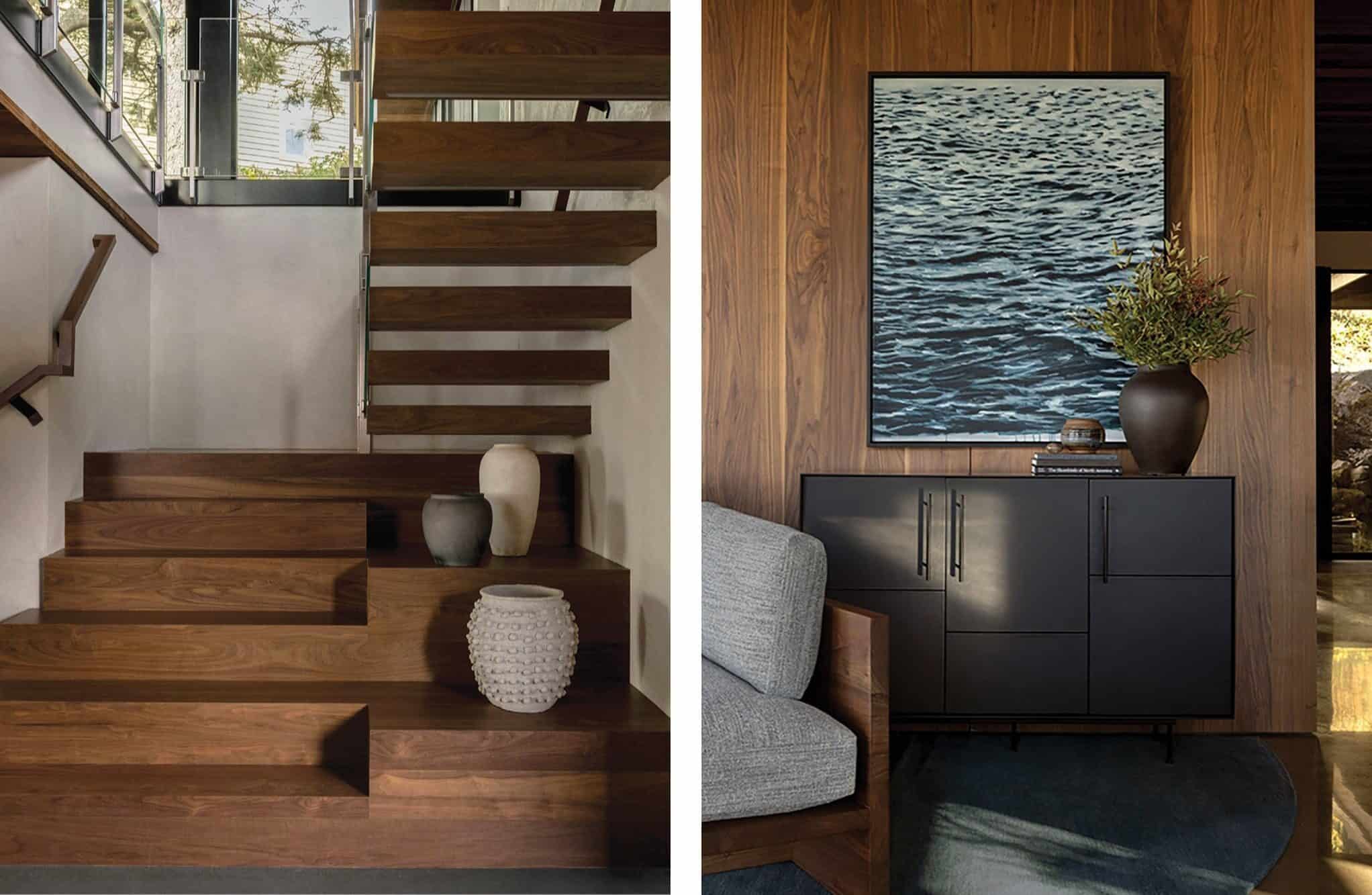
For the interior, the owners opted for polished concrete floors, tadelakt plaster (a waterproof and breathable material), and walnut accent walls. They tapped Seattle interior designer Michelle Dirkse, who was also working on their condo in the city, to complete the scheme. “I knew that they wanted concrete floors, walnut, and plaster walls, and I took that and ran with it,” Dirkse says.
Most important to the clients, was to keep the natural beauty of the site as the star of the show. “We wanted the inside of the house to be fantastic, but we didn’t want it to overwhelm or compete with what you see outside,” the owner explains. Dirkse responded accordingly, starting with the living room, and its custom, wide-angled sectional set-up for wave watching. In front of it sits a coffee table that is actually a Sitka spruce stump salvaged from the property, then given an ebony treatment by a local woodworker. “I think of [the home style] as softly modern with a focus on organic shapes,” says Dirkse. To that end, many pieces veer sculptural, like the dining room’s angular black wood table and the primary suite’s floating soaking tub placed before a window.
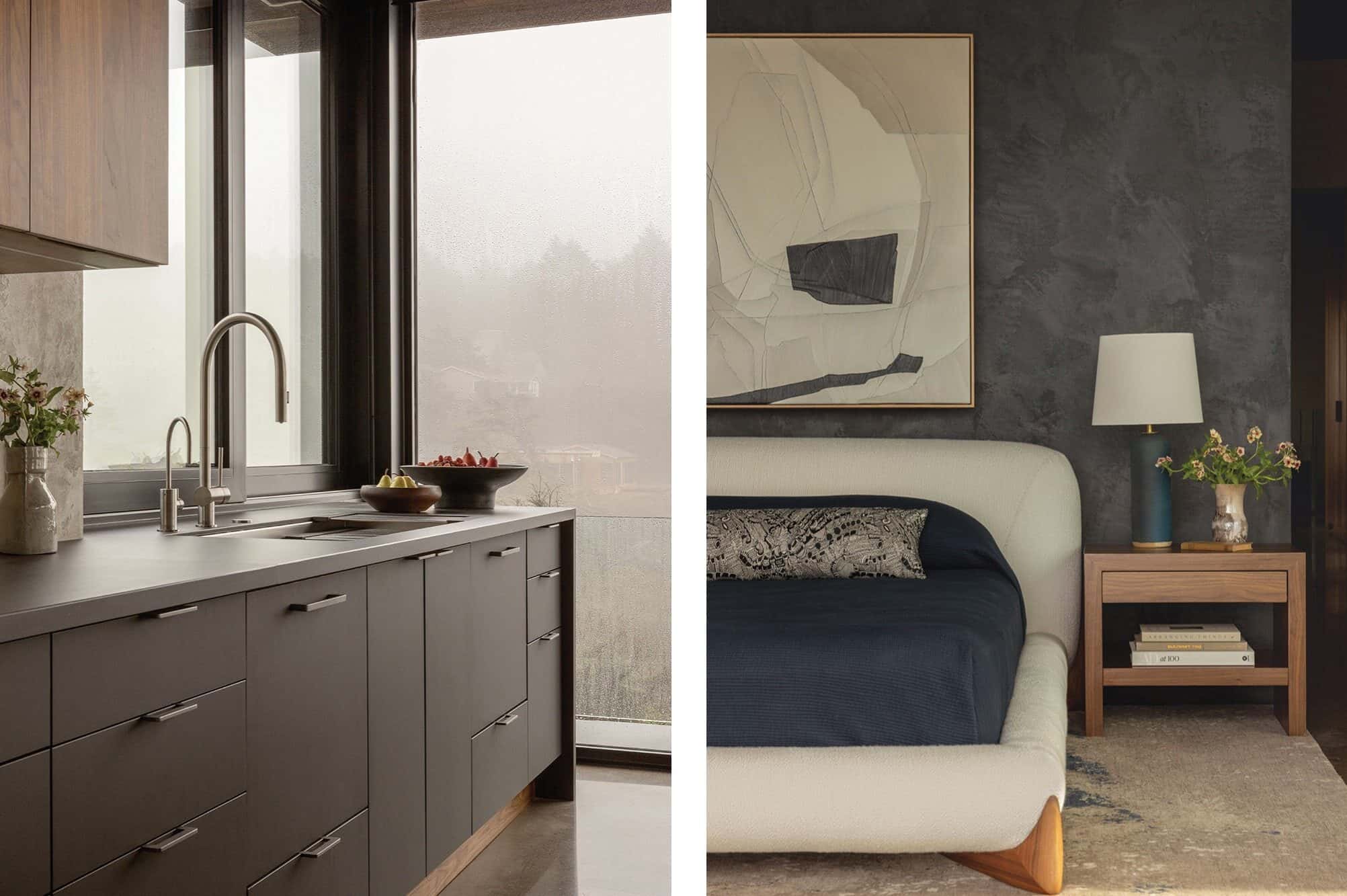
When discussing the options for kitchen cabinetry, Dirkse remembers telling the owners: “It would be my dream to work with Henrybuilt,” the Seattle-based storage systems company. After a tour of the showroom, they were sold, and now walnut and charcoal-toned units are woven throughout the home as a connective thread, including the kitchen, the bathroom vanities, and the laundry room. There’s even a built-in desk niche in the primary suite.
Such is how the renewed home marries style and function, practicality with panache. Even the custom dog bath is sleek, covered in a solid surface material that looks like limestone but is easy to clean. After all, vacation homes should be low maintenance, even with kids, dogs, and sand in tow. “We didn’t want to have to fuss,” says the owner. “It’s a place to relax, not a place to do work and cleanup.”
Follow Us

Your Land, Your Legacy: A New Way to Build at Suncadia
For those who believe that where you live should reflect how you live and how you’ll be remembered Suncadia invites a deeper kind of ownership. It’s an opportunity to create a home that is entirely your own, on some of the most desirable homesites in the Cascades, while benefiting from the ease, support, and long-term…

Settling In, Not Just Moving In: How Seattle Newcomers Find Their Footing
Photos courtesy of Royalty Moving & Storage Seattle. Explore: Seattle Relocation Resources Moving to Seattle is rarely just about transporting belongings from one address to another. For many newcomers, it marks the beginning of learning a city that operates on its own terms, shaped by distinct neighborhoods, changing weather, and an unspoken culture that locals…

Blueprints for Building Community
After tragedy struck a local restaurateur family, one of their daughters stepped in to complete the design for her brother’s unfinished home.
Although he was just 35 when a heart attack took his life, Khoa Pham’s imprint on Seattle’s international district was such that the city quickly designated April 21 as a memorial day in his honor. With his rescue pitbull, Pinky, by his side, Pham cut a colorful figure through Little Saigon and became well known…

Tuft Stuff
Tuft Ruft turns fiber art into a social, hands-on experience in Pioneer Square.
It all started with a bout of pandemic boredom. Like many, when COVID-19 hit, recent graduate Carrie Xiao found herself stuck at home, with extra time on her hands. One day, while scrolling social media, she discovered tufting: a textile manufacturing technique that creates a garment or rug with a “pile,” or raised surface. After…