
The Neighborhood Gym Effect
Inside Seattle Strength and Performance’s small-group training model and welcoming approach to fitness.
By David Gladish February 17, 2026

On a regular Seattle Wednesday morning, a little wet and dreary, I walk into a small gym feeling unsure of what I’ve gotten myself into. It’s late January, a time when many New Year’s resolutions are failing and motivation to keep exercising may be going out the window. I work out consistently—lifting weights, going to the climbing gym, and running—but despite knowing my way around a gym, I’m still intimidated by taking a fitness class. The moment I walk into Seattle Strength and Performance (SSP) and am greeted by founder Chris Travis, I feel at ease. His huge smile and big handshake give off a feeling of confidence and welcome.
Chris opened the Queen Anne location of SSP in 2020 after leaving a corporate job at Amazon that left him feeling burned out. “I was working 80 to 90 hours a week, and my health went completely out the window,” Chris says. He decided to take working out seriously, becoming a trainer before making the leap into gym ownership. Under Chris’s leadership, SSP opened its fourth location in Ballard in 2025, with plans to open another soon.
One of SSP’s main goals is to blend seamlessly into each neighborhood where it’s located. The idea is to feel like a safe place—the place—for locals to get fit, get strong, and build community. How you are greeted at the door matters, Chris explains, and his gyms aim to engage with each client on a personal level, unlike many gyms that feel less intimate and more intimidating.
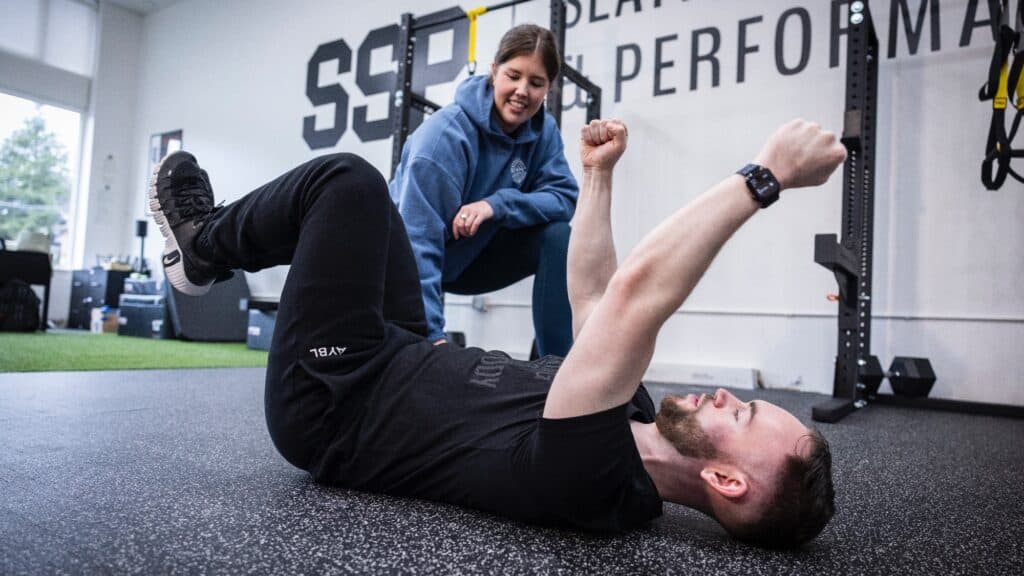
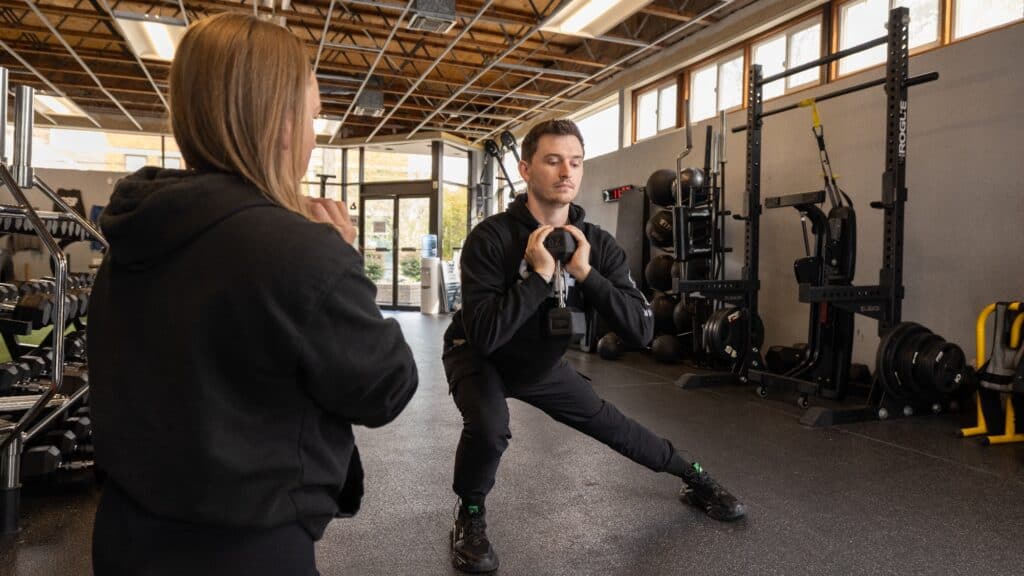
My class, with instructor Taylor Bender, was one of three strength and conditioning classes taking place that day. Most of what SSP offers is small-group or individual personal training based on the results of an initial assessment. About 15 other students and I lined up after a bit of chitchat, and all eyes were on Taylor as she guided us through a warmup. A little stretching led to calisthenics, band work, and some good old-fashioned barbell lifting. Occasionally, Taylor would call out “good job” to someone in the class or make a gentle suggestion on how to improve form. Unlike some other fitness classes I’ve taken in the past, I didn’t feel lost the entire time, the music wasn’t too loud, and I didn’t feel out of place.
Part of what makes the gym so comfortable is that it feels a bit like a home garage gym, with very few bells and whistles—no loud merchandise for sale, and no overly motivational posters or riffraff. Everyone at the gym, from the founder to the instructors and the people taking the class, felt normal, in a good way. Sure, there were some fit-looking people who could probably crush me in a bench press contest, but the gym was full of people of all shapes and sizes, and there was no judgment.
Lack of judgment and inclusivity are a big part of SSP’s mission. Chris doesn’t see other gyms as competition, but more as part of the rising tide of fitness. He believes there is room for many gyms across the city without stepping on each other’s toes. That’s part of why, last year, Chris helped launch the inaugural Seattle Fitness Week, which brought together more than 75 local wellness brands for a week of movement. “It was a lot of work,” Chris says with a smile, but it’s something he’s looking forward to continuing in the future.
After an hour, I left the gym feeling satisfied but not destroyed. “What did you think of the class?” my instructor asked. I spent some time thinking about this on my drive back home. I felt motivated, included, and satisfied. Those are good feelings to have around fitness. Wouldn’t it be nice if we could feel that way about health and fitness all the time? Sometimes, a kick in the pants, like going to a class, is what it takes. Or maybe it’s going on a walk, joining a recreational sports league, or working out at home. I love one of SSP’s core values: “People are capable of much more than they think they are.”
Let’s get out there and move together!
Follow Us

I Experienced a Skincare Treatment on the World’s Most Expensive Bed
A Hästens pop-up is currently running at Penelope and the Beauty Bar.
Last week as I was heading out the door for an appointment at Penelope and the Beauty Bar—the spa inside the Fairmont Olympic Hotel—my fiancé yelled up the stairs, “You better not fall in love with that mattress!” I was on my way to experience the spa’s Oxygen Dome Facial as part of a pop-up…

Serving Holistically
Suzana Sakay leads the Washington Athletic Club into its 95th year.
From answering phones to overseeing more than $1 million in fundraising, there’s no job at the Washington Athletic Club that’s too big—or small—for Suzana Sakay. Fourteen years ago, she began her journey with the organization as a merchandising manager in the spa, and has since moved through the ranks, helping improve membership experience and club…

Eccentric Scents
Lucky thirteen.
Known for his devotion to beauty and patronage of the arts, King Ludwig II is the strange inspiration behind Immortal Perfumes’ newest scent. Developed by Seattle perfumer (and lover of history and literature) Jen Siems, Swanstone Reverie marks the brand’s 13th anniversary, opening “with the sparkle of champagne and ghostly violets, unfurling into a heart…

A Different Way To Date
What happens when dating apps surface real-life chemistry instead of profiles.
The perils of contemporary dating—especially trying to find love, or lust, online—are widely known. Exhausting, disappointing, and in some cases dangerous, swiping on strangers has become the ubiquitous norm. Amelia Bonow, founder of the Shout Your Abortion campaign, hopped on the apps during the pandemic and soon found herself underwhelmed by the selection. “I realized…