
These Women Helped Shape Seattle
From early civil rights leaders to today’s chefs and writers, a handful of women whose work left a mark on the city.
By Alicia Erickson March 16, 2026

Playwrights and authors. Mayors and activists. Chefs and restaurateurs. From its earliest days, Seattle has been shaped by the tenacity of powerful, creative, and innovative women. While there are far too many to include here, in honor of Women’s History Month, we wanted to highlight just a handful of the women whose work left a mark on the city over the decades, both past and present.
The Early Trailblazers:
Pearl Kallappa Warren: 20th century Indigenous advocate
Born in 1911 in Neah Bay and a registered member of the Makah Nation, Pearl Kallappa Warren was orphaned by the age of five. Mostly raised by her grandmother, she grew up with strong Indigenous and Makah values at home while facing discrimination in a predominantly white school. As a young adult, she moved to Seattle, where she helped form the American Indian Women’s Service League (AIWSL) in 1958 and served as its leader until 1969. Under her leadership, the AIWSL established the Indian Center News, raised awareness around Indigenous rights, and brought Indigenous cultural traditions to Seattle. Warren’s legacy continues long after her passing in 1986.
Bertha Knight Landes: First female mayor of a major U.S. city
Although born and raised in Massachusetts, Bertha Knight Landes moved to Washington state in 1895 with her husband, who had taken a teaching job at the University of Washington. In Seattle, Landes built an influential career of her own in the 1920s. Before her political career, she raised three children while holding leadership roles across several Seattle women’s groups and clubs. In 1922, she began her political career with a seat on the Seattle City Council, where she served for four years. In 1924, Landes became acting mayor, and in 1926 she made history as Seattle’s first female mayor and the first woman elected to lead a major U.S. city. Beyond her official roles, she wrote for national publications encouraging women to become involved in politics.
Imogen Cunningham: Pioneering photographer
Born in 1883 in Portland, Oregon, Imogen Cunningham became one of the first professional female photographers, shaping the industry in Seattle, the Pacific Northwest, and beyond. She moved to Seattle to attend the University of Washington, where she studied chemistry and wrote a thesis on the chemical process of photography. One of her first photographs—a nude self-portrait—was snapped on the UW campus. Cunningham began working for Edward Curtis, a Seattle-based photographer, after graduation. Before long, she opened her own photo studio in 1910, establishing herself as one of the first professional female photographers. Although she moved away from Seattle in 1917, she continued to be a force in the photography field and a pioneer for aspiring photographers. A handful of her photographs can be found around Seattle, including at UW’s Paul G. Allen School of Computer Science and Engineering.
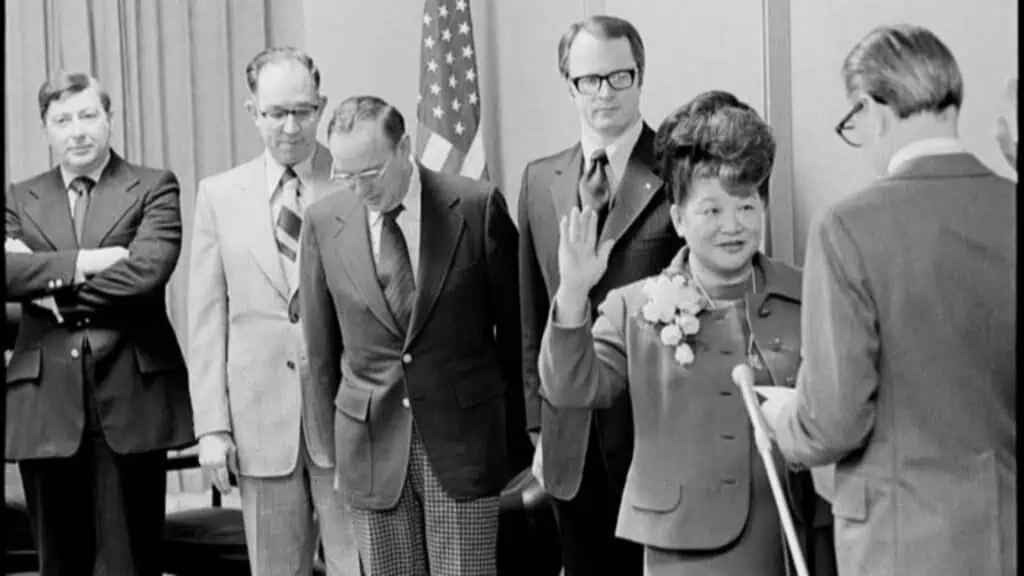
Ruby Chow: Restaurateur and civic leader
Born in Seattle in 1920 to Chinese immigrant parents, Ruby Chow became one of the city’s most prominent business and political figures. In 1948, she and her husband opened Ruby Chow’s Restaurant on First Hill, a popular gathering place for politicians, journalists, and celebrities. The restaurant also employed a young Bruce Lee while he was living in Seattle. Chow used her visibility as a business owner to advocate for Seattle’s Chinese American community and helped start the Seattle Chinese Community Girls Drill Team. In 1974, she became the first Asian American elected to the King County Council, where she served three terms and later became council chair. Over the course of her career, Chow helped bring greater visibility to Seattle’s Chinese American community in civic and political life.
Bertha Pitts Campbell: Civil rights activist
Born in Kansas in 1889, Bertha Pitts Campbell moved west to Seattle with her husband in 1923. After having co-founded a sorority at Howard University and marching in a Women’s Suffrage Procession in Washington, D.C., Campbell continued her activism in Seattle as a community activist and organizer. She worked with several important institutions in the city, including Christian Friends for Racial Equality and the Seattle Urban League, helping expand housing and other opportunities for Seattle’s Black community. Campbell was also the first Black member of the Seattle YWCA’s board of directors. Noticing many inequalities for Black women in the city, she dedicated much of her life to bringing about change.
The Women Shaping Seattle Today:
Ijeoma Oluo: Writer, activist, and speaker
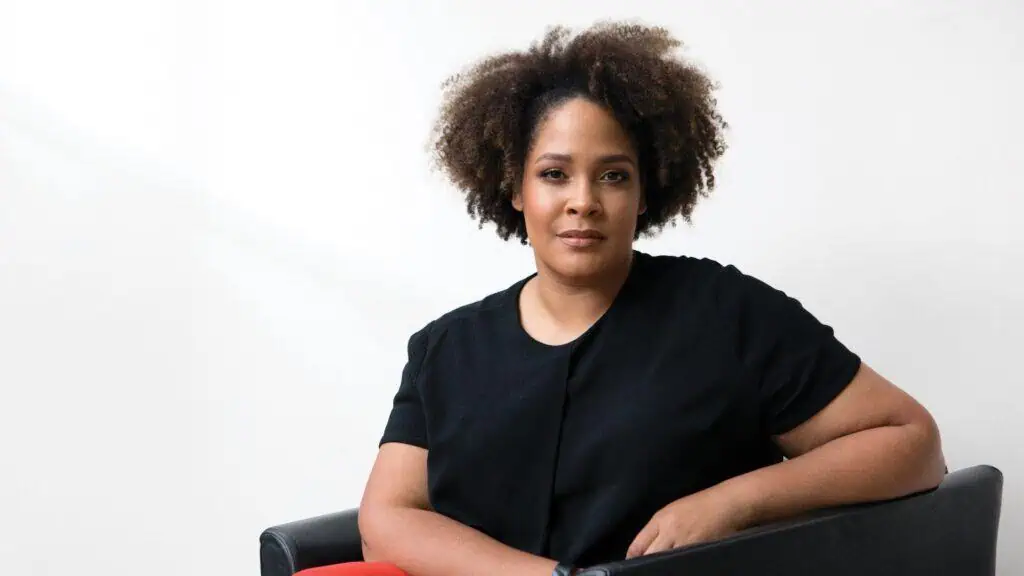
Ijeoma Oluo—born in Texas and raised in Seattle, where she still lives—shifted from a career in technology and digital marketing to writing after the death of Trayvon Martin prompted her to begin speaking publicly about race and social justice. She wrote for major local and national newspapers on race, social justice, feminism, and the Black Lives Matter movement. Oluo’s writing career eventually led to a feminist coloring book and three books, including the New York Times bestseller So You Want to Talk About Race. Oluo has won numerous awards for her work and continues to be an outspoken and influential speaker, writer, and advocate for social justice in Seattle and beyond.
Renee Erickson: Award-winning chef, cookbook author, and restaurateur
Most Seattleites (or at least the foodies among us) can probably name at least one or two of Renee Erickson’s restaurants. She founded and co-owns the restaurant group Sea Creatures, which includes The Walrus and the Carpenter. Raised in Woodinville, Erickson draws inspiration from the flavors and bounty of the Pacific Northwest. Beyond dreaming up some of the city’s most popular dining spots, she has also published three cookbooks and continues to have more restaurants opening on the horizon. This James Beard Award-winning chef has defied gender inequity in the food industry time and again, while continuing to put Pacific Northwest cuisine on the map.
Katie Wilson: Current mayor of Seattle
It would be a challenge to discuss impactful women in Seattle today without mentioning the recently elected Mayor Katie Wilson. Elected as the 58th mayor and sworn in on January 1 of this year, she is a Seattle transplant but has been making waves in the Emerald City since her arrival. Before stepping into her current mayoral role, Wilson has worked to improve access to public transportation in Seattle and King County. The organization she co-founded in 2011, Seattle Transit Riders’ Union (TRU), also advocates for increased minimum wage and renters’ rights. Her progressive mayoral priorities include affordable housing, homelessness, immigrant rights, and anti-ICE efforts.
Fawn Sharp: Quinault Nation attorney and policy advocate
While not Seattle-specific, Fawn Sharp has been immensely impactful in coastal Washington and beyond. Born in Aberdeen and a member of the Quinault Nation, her career has been oriented towards Indigenous political advocacy and law from a young age. She graduated from the University of Washington School of Law in 1995, has worked as an attorney and associate judge in Washington, and went on to serve six terms for the Quinault Indian Nation, five as president and one as vice president. Then, from 2019 to 2023, she served as the president of the National Congress of American Indians (NCAI). She centers Indigenous knowledge in environmental protection and has traveled around the country speaking on behalf of Indigenous and environmental rights.
Follow Us

From the Archives: Most Influential—Before That Was a Thing
Remembering the kind of leadership that built Washington—and still echoes today.
Washington state once had Dan Evans, a leader whose impact still endures, and who governed with a sort of principled presence that helped shape the soul of our region. A three-term governor and later U.S. senator, Evans embodied a kind of civic leadership that feels both mythic and arguably elusive now. He was pragmatic, optimistic,…

The Coach: Sonia Raman
The history-making coach leading the Seattle Storm into the future.
In the early 2000s, Sonia Raman was on the traditional track to a successful career in law, but coaching basketball kept bouncing back to her. A lifelong fan of the sport, Raman—who played at Tufts University and coached throughout her collegiate and post-grad career—eventually heeded the call, making a pivot that would change her life….

The Civic Spacemaker: Tommy Gregory
A next-gen curator improving your airport experience.
“I love the saying, ‘sleep when you are dead.’” Few embody it like Tommy Gregory—tireless artist, curator, and connector who seems to be everywhere at once, installing work, throwing receptions, or plotting the next show. Gregory joined the Port of Seattle as senior project manager in 2019, just as airport art collections were gaining global…

The Piano Teacher: Payam Khastkhodaei
The instructor rethinking the approach to music lessons.
When Payam Khastkhodaei began teaching piano to a family friend’s daughter in his Bothell home at 16, he relied on the same method he had been taught as a kid—classical songbooks, rigid practice, and pieces he never connected with. It didn’t take long to see she was losing interest. “I had learned from the Alfred…