
Howl About That
Woodland Park Zoo welcomes four Mexican gray wolf brothers.
 By Sarah Stackhouse September 25, 2025

The new arrivals at Woodland Park Zoo are, quite simply, incredibly handsome.
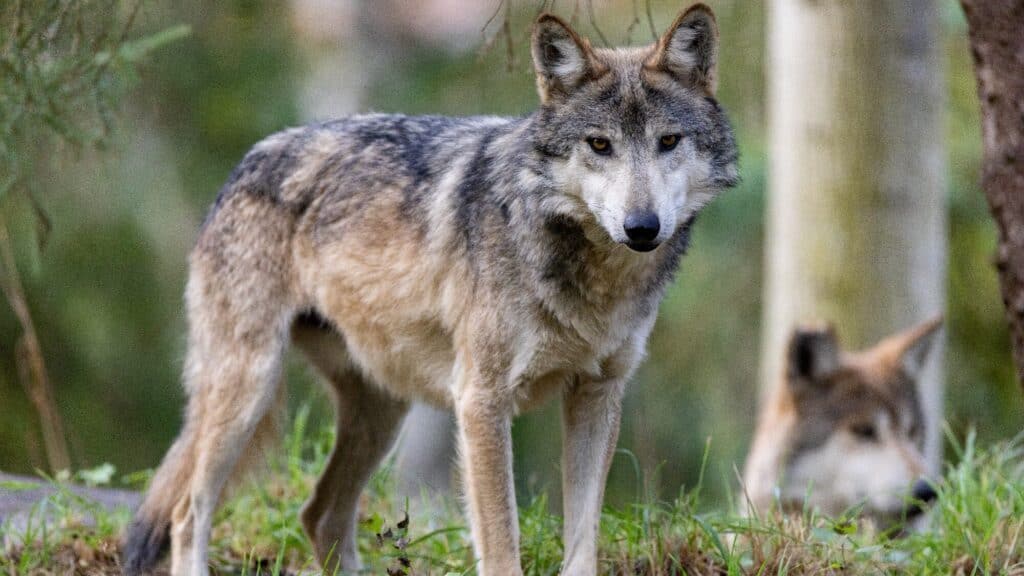
Four Mexican gray wolf brothers, with coats streaked in buff, gray, rust, and black, just moved in from the California Wolf Center. At six years old, they’re still getting their bearings, which means they might be shy at first. “The zoo is a new environment for these wolves so it will take them some time to acclimate,” says animal care manager Pat Owen.
They are part of a critically endangered subspecies of gray wolf. “These brothers will be excellent ambassadors for their wild cousins facing ongoing threats here in the Pacific Northwest and across North America,” Owen says.

Wolves have been a fixture at Woodland Park Zoo for more than 70 years, so their absence over the past year was felt. The zoo has been without wolves since last October, when its last gray wolf, Shila, died. Shila was part of a trio of wolf sisters and lived to 14—an old age for her species. In June, before her death, Woodland Park Zoo veterinarians partnered with a cardiologist to implant a pacemaker after she developed a dangerous heart arrhythmia. Pacemakers are common for humans and even pet dogs, but hers was believed to be one of the first ever placed in a wolf.
Wolves are the largest members of the dog family, thriving in packs of six to 10 relatives. A breeding pair leads the group, often for life, while siblings and adults help raise the pups by sharing food and pup-sitting. That strong, relatable family structure is part of what makes them so compelling to watch.
Across the U.S., wolves were nearly hunted out of existence, and Mexican gray wolves—the smallest and rarest subspecies in North America—vanished from the Southwest by the mid-1900s. Listed as endangered in 1976, they’ve made a slow recovery: today about 280 live in the wild in Arizona and New Mexico, with fewer still in Mexico.


At Woodland Park Zoo, the brothers are part of the Association of Zoos and Aquariums’ SAFE program, which zeroes in on threats, develops recovery plans, and measures progress. “It’s an incredible opportunity for people of all ages to connect with wolves at the zoo and learn about this remarkable species,” Owen says. “There is so much to discover about the challenges these apex predators face in the wild, their contribution to our ecosystems, and the beauty and complexity of wolf dynamics.”
Closer to home, the zoo supports wolf recovery efforts in Washington, backing science-based decision-making, legal protection until populations stabilize, and nonlethal methods to reduce livestock conflict.

The wolves’ arrival also highlights the zoo’s long-standing reputation for care. Woodland Park Zoo was just reaccredited by the Association of Zoos and Aquariums, a credential it’s held since 1982 and considered the gold standard for animal care and conservation. Every five years, AZA teams comb through everything from veterinary programs to conservation work to safety for staff and visitors before deciding if a zoo makes the cut. This year, Woodland Park Zoo was praised for its naturalistic spaces, strong staff support, and a DEAI program that tracks progress.
If you visit the new pack, resist the urge to howl—zoo staff say it stresses them out. Better to let these dashing young brothers settle in and feel at home.
To learn about the zoo and its upcoming developments, listen to our recent podcast with Woodland Park Zoo president and CEO Alejandro Grajal.
Follow Us

82 Million Tons of E-Waste by 2030. Now What?
Smart ways to handle old electronics after a holiday upgrade.
Every holiday season, our houses fill with upgraded gadgets and the promise that we’ll deal with the old stuff later. Meanwhile, the drawer of mystery cords multiplies, and some items just get tossed out. Most of us mean well, but those castoff electronics often end up somewhere they really shouldn’t. And with about 59% of…

Going to the Mountains This Winter? Read This.
A new online tool breaks down avalanche basics for anyone planning snowy fun off the beaten path.
I’m a rule follower when it comes to the outdoors. This summer, my family did some backcountry hiking in Whistler and made sure to do everything by the book—texting friends our plan and location, and wearing a bear bell even though it felt a little dorky. It’s reassuring to know you’ve covered the basics before…

Historic Flooding Prompts WA Governor to Declare Emergency
Rivers are surging around the state amid days of heavy rainfall.
As floodwaters swelled around Washington, threatening low-lying communities along rivers, Gov. Bob Ferguson signed a statewide emergency declaration on Wednesday. Ferguson says he’ll also seek an expedited emergency declaration from the federal government in response to the flooding, which is the result of an atmospheric river that has dumped multiple inches of rain in parts…

Barnes & Noble Is Coming Back to Downtown Seattle
The bookseller will open a new flagship at 520 Pike, marking the largest retail lease in downtown Seattle since 2020.
Barnes & Noble is returning to downtown Seattle for the first time since early 2020. The national bookseller has signed a 10-year lease for a new flagship at 520 Pike Street, a 29-story tower, taking over 17,538 square feet on the corner of Pike and 6th Avenue. The store is expected to open in the…