
Hives Among the Headstones
Inside a north Seattle project reimagining cemeteries as sanctuaries for pollinators.
By Bess Lovejoy October 20, 2025

In many old stories, bees are more than just insects. They’re messengers—tiny intermediaries between the living and the dead. There was once even a custom in Europe and America known as “telling the bees:” When a family member died, or another significant life event occurred, someone would go to the hive to share the news. It was a gesture of respect, acknowledging that these small, humming creatures were part of the family—and, perhaps, attuned to mysteries beyond our own.
“In multiple cultures, there’s this understanding of bees as having something to do with life and death,” says beekeeper Annie Reading. “There is this kind of deep, ancient relationship there.”
At Evergreen-Washelli Cemetery in north Seattle, Reading and her colleagues are bringing the custom back—with some twists. On a recent fall afternoon, Reading bent over an observation beehive outside the cemetery’s lobby, reading a message left by a mourner. Inside the lobby, a small display explains the “telling the bees” tradition and offers cards for visitors to write messages to the bees. Reading whispers them to the creatures each time she tends the hive.
Reading is the co-founder of the Catacomb Bee Collective, a group of local beekeepers that also includes Madison Opp, Niya Weedon, and Colin Johnson. While the group first came together at the cemetery in 2021 with a different company, they formed their own operation under the current name in March 2025. The idea for the collective wasn’t born from folklore but from a need to find new spaces for these important little pollinators.
At first, Reading wasn’t even thinking about cemeteries. But while searching Google Earth one day for large patches of green, the cemetery’s 140-plus acres stood out. When she approached the cemetery, they were immediately interested, she says.
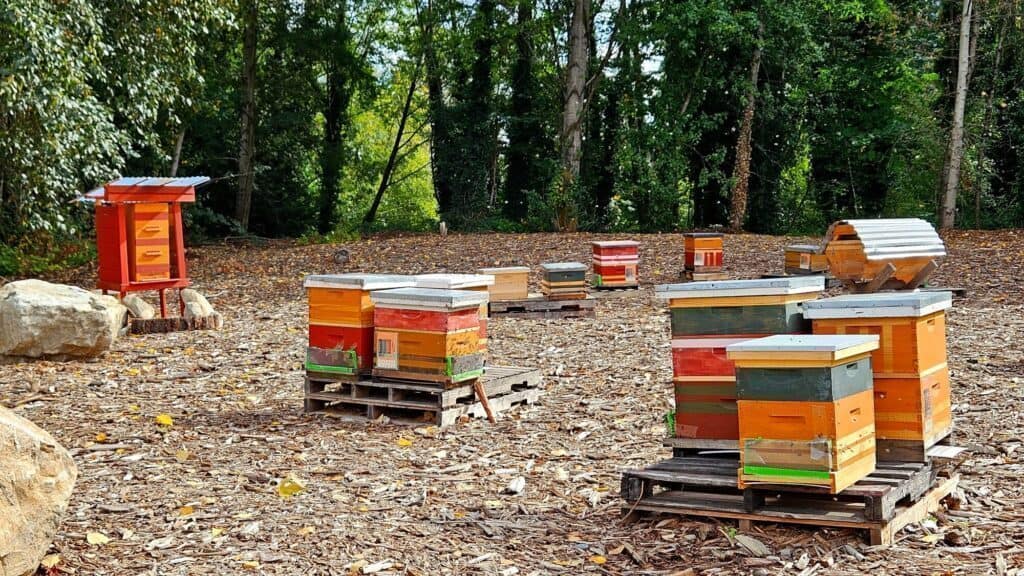
The partnership bloomed quickly. Evergreen-Washelli, one of Seattle’s oldest cemeteries, offered a large, overgrown corner of its grounds—a space that had once been a wetland and occasional dumping site. Together with Seattle Tree Care and volunteers, the cemetery cleared brush, laid wood chips, and reshaped the land into a sanctuary for the bees. Today, around 20 colonies of honeybees hum through this corner of the cemetery and swoop off to collect nectar nearby.
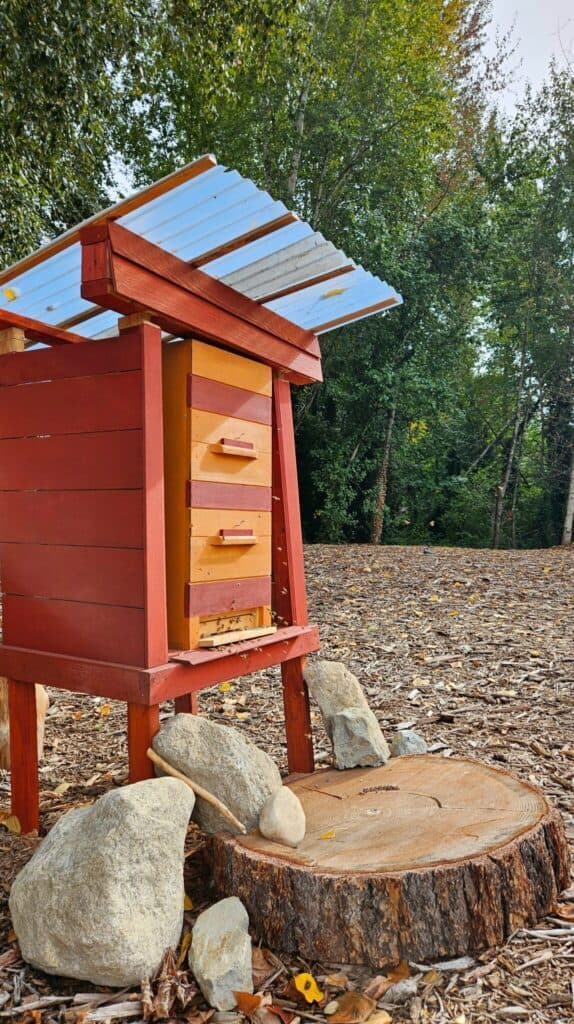
“It’s been a beautiful, natural partnership,” Reading says. The cemetery gets the ecological benefits of having hives, which pollinate the landscape, and the collective gets to use the space for free.
The bees, for their part, thrive. Cemeteries, with their mix of native and ornamental plants (plus the occasional graveside flower offering), can offer unusually rich and continuous forage compared to wilder landscapes, where there can be a dearth of food sources at certain times of year. And at Evergreen-Washelli, the staff has made deliberate changes to support the bees.
“We’ve switched almost all of our herbicide applications,” explains Aaron Sholes, the cemetery’s superintendent. Instead of spraying during warmer weather when weeds grow, they now spray in late fall and winter, when the bees aren’t active. “Not only has this yielded a much better end result for us, but it helps protect the bees,” Sholes says. “Being able to host all of these amazing little creatures is a privilege that we do not take lightly.”
What began as a practical partnership has deepened. A few families have even requested burial plots near the hives, Sholes says. “I think it brings people peace to know that even after they’ve passed they can continue to give back to nature,” he explains. The funeral home also offers small jars of the cemetery’s honey to bereaved families—a little sweetness in a bitter time.
As for concerns about swarming or stinging, Reading says they’ve been few. The Catacomb Bee Collective goes out of its way to maintain gentle bees. And these European honeybees are far more docile than many people think. Plus, honeybees are already around us all the time, she says—at least if we’re lucky.
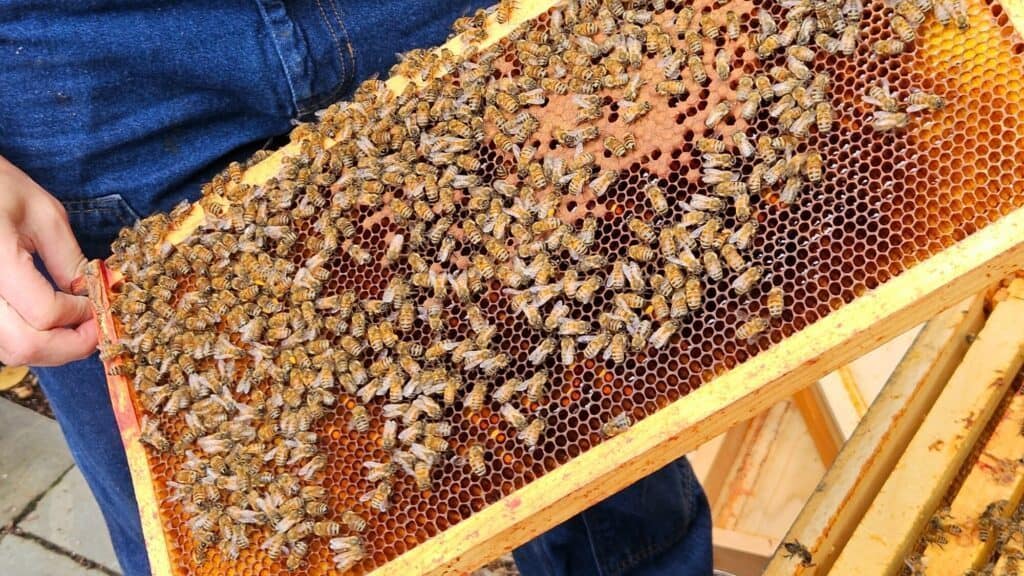
Educating the public about bees is a key part of the collective’s mission. From spring through fall, the group hosts public “honeybee experiences” at Evergreen-Washelli. Visitors don white bee suits, open a hive alongside Reading or one of her colleagues, and taste honey fresh from the comb. They also lead team-building sessions and presentations for workplaces (Google was one recent participant).
Two of the collective’s hives now live at elementary schools in Maple Leaf and Bellevue, where students can watch bees at work and learn how pollinators keep ecosystems—and lunchboxes—thriving. There’s another hive at a senior living community in Lacey, where residents sometimes gather in a circle of wheelchairs and walkers to greet beekeeper Colin Johnson’s arrival.
Reading freely admits she was not a cemetery person before the project. Now, she says, tending to the bees in this necropolis has changed her thinking—and she’d love to expand into other cemeteries too. “Culturally, we don’t really interface with death nearly as often as we could, and as people around the world do,” she explains. “When I come here, it does feel like it’s enriched my understanding of life, my thinking about cycles and thinking about renewal. That’s something that’s been surprising—this space actually makes me feel really alive, really plugged into like what it means to be alive.”
Sholes agrees. “Initiatives like this shift perceptions of cemeteries from mere places of sorrow to ones of life, renewal, and community involvement,” he says.
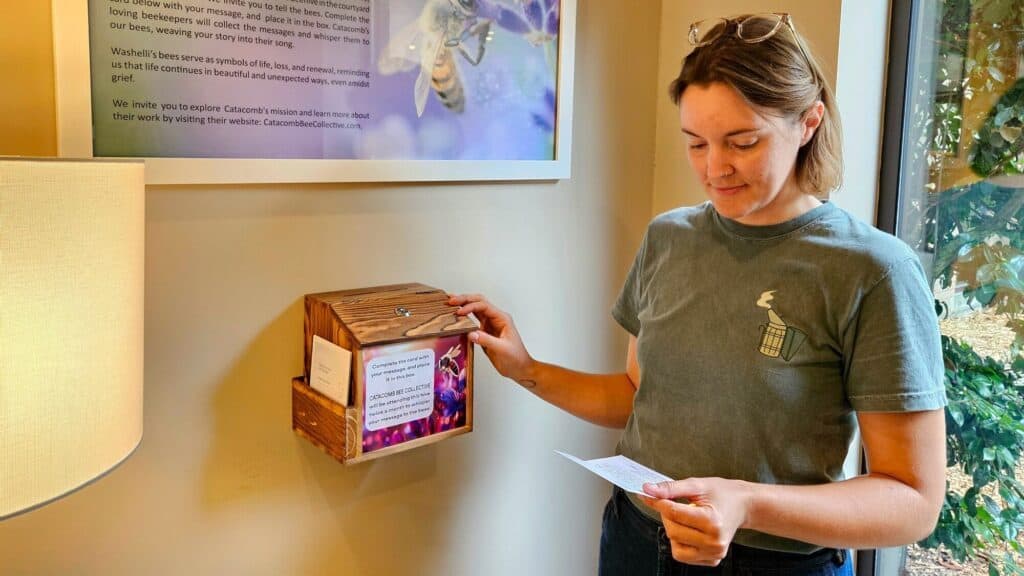
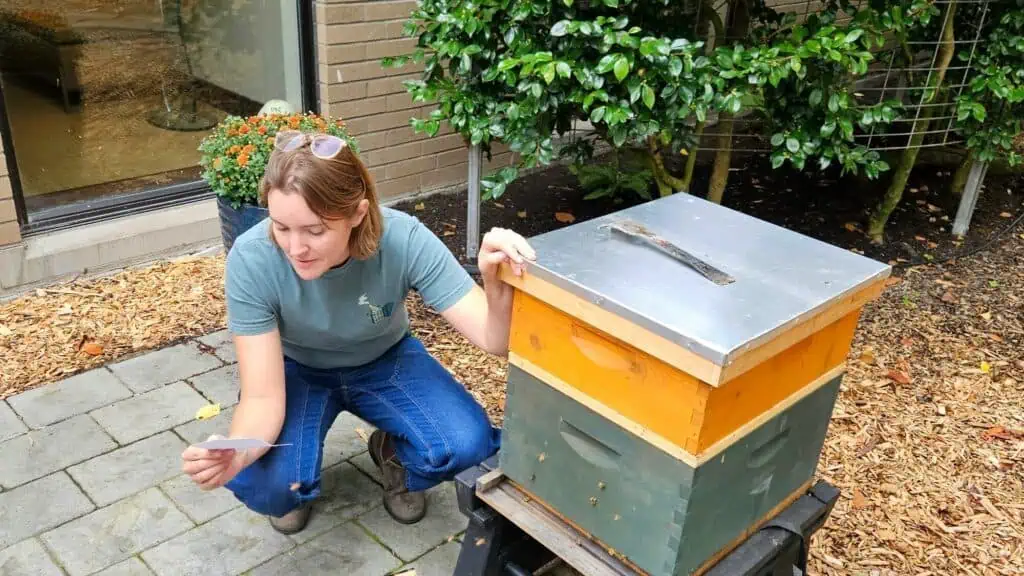
Even mourners benefit from the bees, and not just in the form of those jars of honey. The “Telling the Bees” cards fill up quickly with notes to lost loved ones. “We weren’t sure people would want to do it,” Reading says. “But people love it. It’s this outlet—like, ‘I’m holding these feelings, and I can share them with these bees.’”
For those curious about a taste of the honey (the bees made a definite surplus this year), keep an eye on Salmonberry Goods, a spring collaboration with the restaurant Off Alley, and the Catacomb collective’s Instagram for other initiatives, which might include a honey CSA.
That fall afternoon at the cemetery, a finger stuck into the honeycomb yielded honey that was rich and sweet with flavors far surpassing any of the store-bought stuff. While the finger in the comb left a scar, Reading assured me the bees would soon get to work refilling it. After all, they’re flourishing in their new home, and have plenty to spare.
Follow Us

Grange Estate Brings Modern Luxury to Dundee Hills
Foley Wines created a hidden-gem hospitality experience in Oregon’s popular vineyard region.
I have a confession. Although I have long loved Pinot Noir, it wasn’t until January of this year that I visited Oregon’s Dundee Hills, a 12,500-acre American Viticultural Area about 30 miles southwest of Portland. I’ve spent time in the Tri-Cities, Walla Walla, the Columbia Gorge, and even Portland proper, but for some reason had…

Like Nowhere Else
Muckleshoot Casino Resort. The biggest and best in the northwest.
Photos courtesy of Muckleshoot Casino Resort. Located south of Seattle, Muckleshoot Casino Resort offers a truly unforgettable escape—one with indulgence, relaxation, and exhilaration, all right at your fingertips. Whether you’re planning a thrilling night out, a spontaneous staycation or a memorable weekend away, this is the experience you’ve been looking for. Our luxurious hotel has…

Winter Isn’t Over Yet
Why now might be the best time to take your kids skiing.
For many avid skiers in the Pacific Northwest, this winter has been a bust. Drier-than-normal conditions and a lack of snow have put a real damper on powder days, lift operations, and access to the mountains. As an avid backcountry skier, I’ve noticed the lean conditions and have not made it a priority to get…

The Rise of the Experience Economy
REI brings back guided travel, betting that memories matter more than stuff.
In my household, with two young boys under the age of five, we often have to remind them to take things back. Did you really mean to tell dad that his dinner isn’t good? You might want to take that back. Did your brother deserve to be hit? Let’s rethink that one. Extreme analogies aside,…