
Honoring Native Heritage Across Washington
From Port Townsend’s storytelling trail to Tulalip’s cultural center, these sites invite reflection and honor Indigenous history and living traditions.
By Alicia Erickson November 3, 2025

Washington State is the Indigenous land of 29 federally recognized Native American tribes, including the Makah, Muckleshoot, and Lummi Nations. In Seattle, we are privileged guests living on the Native land of the Duwamish Tribe. From trails through state parks and landmarks within the city to well-known sites like Snoqualmie Falls (sacred to the Snoqualmie Tribe), Washington’s land is deeply intertwined with Native history and roots—but so much of that history and culture is only recently surfacing and being honored.
Since 1990, November has been recognized as Native American Heritage Month, making it a good time to honor and explore some of Washington State’s abundant and incredibly important Native history and heritage. Pay these sites a visit now, or any time of the year, to learn from these places safeguarding Indigenous knowledge and heritage.
ĉiĉmәhán Trail (Port Townsend)
Hike three, six, or twelve miles along the ĉiĉmәhán Trail (Cheech-ma-han), while exploring sites of historic significance to the Jamestown S’Klallam Tribe. Meaning “strong people,” the S’Klallam people have lived across the North Olympic Peninsula, Vancouver Island, the San Juan Islands, and Bellingham area for thousands of years, living in sync with the natural rhythms of the Northwest Coast. This all began to shift when European settlers arrived in the 19th century, determined to make Port Townsend—an area which the S’Klallam people called “qatáy”—a trade port.
A few years of fundraising, speech-giving, and planning went into developing the trail, which was honored by a ceremony and opened to the public in 2019. The goal of ĉiĉmәhán Trail is to educate the public about the S’Klallam tribe’s deep connection to the surrounding land and sea, as well as their encounters with European settlers. Eighteen sites are connected by signs telling stories about important locales within Port Townsend, offering an opportunity to learn about the Native history of this popular Washington town.
The three-mile loop focuses on historic sites in downtown Port Townsend, including Point Hudson, which was originally a clamming beach for S’Klallams and landing point for tribes across the Olympic Peninsula. The six-mile loop has additional sights, such as Laurel Grove Cemetery. And if you’re feeling inspired, follow the full 12-mile loop, which extends all the way to North Beach and Fort Worden.
Celeste Dybeck, a lead on the trail development and elder from the Jamestown S’Klallam Tribe, notes that the bench at the cemetery on top of the hill is one of her favorite spots on the trail. “As you sit there, you can look over the entire town. It’s very peaceful,” she says. The Totem Pole—featuring the Supernatural Carpenter, the Spirit of the Cedar Tree, and Chief ĉiĉmәhán standing at Sentinel Rock—located at the entrance to the Northwest Maritime Center is another highlight for her.
Hibulb Cultural Center and Natural History Preserve (Tulalip)
A dream 30 years before its opening in 2011, Hibulb Cultural Center has served as a learning and conservation space for the history, culture, and storytelling of the Tulalip and Snohomish Tribes for the past 15 years. Often referred to as “the salmon people,” Tulalip tradition is deeply entwined with salmon and the salmon ceremony. The center’s primary goal is to serve as a community gathering and educational space for the Tulalip people to share their knowledge and stories among one another.
“Indigenous people have been so largely unrepresented,” says Mytyl Hernandez, Hibulb’s Museum Manager. She remembers hearing stories about the Tulalip culture from her grandparents growing up, but never had access to a public space meant for sharing stories from her people. “As an Indigenous person, I never learned about our own indigenous people—it’s so important that our people and our youth can find accessibility and representation,” she says.
Today, Hibulb is home to a longhouse and canoe hall, including rotating exhibits that illuminate the history of the Tulalip peoples. On Nov. 8, a new exhibit showcasing Coastal Salish basketry will open. Hibulb hosts events and workshops, including poetry and storytelling events, and weaving workshops. Also taking place on Nov. 8 is the Hibulb Cultural Center Film Festival, showing films centered around this year’s theme of “cultural resilience.”
“The goal of the center is teaching the true and accurate culture of the Tulalip and Snohomish People,” Hernandez says. Once you explore the artistic and historic offerings, walk through the expansive natural preserve—home to Native species including rosehips and nettles—reflecting the potent Indigenous respect for and coexistence with the natural world.
Taqwsheblu Vi Hilbert Ethnobotanical Garden (Seattle University)
A small patch of land on Seattle University’s campus has been transformed into an ethnobotanical garden designed to include local Indigenous plant species, including sitka spruce (c ̓əlqay’ac) and black huckleberries (s.weda?Xac). The entrance sign encourages visitors to imagine Seattle in its original form: a forest rich in plants, trees, and flowers that held deep importance for the Native communities, providing medicine, food, materials for ceremonies, and housing.
The garden is divided into four sections representing the Pacific Northwest’s ecosystems: alpine, wetlands, lowland forest, and prairie. Signs with the plant names are also in the Lushootseed language. Take time to wander through the garden, where the flora shifts with the seasons. Then, take a seat on one of the tree stumps to look, listen, and learn from the surrounding foliage.
Yakama Nation Cultural Center
Experience the Yakama Nation’s history and culture at the expansive cultural center, home to photographs, archaeological artifacts, artworks, and ethnographic collections of the Yakamas. The history of the Yakama people—also known as the Plateau People— spans the Yakama Nation Museum, while the theater shows films, documentaries, and performances.
Built in 1980, the museum is among the oldest Native American museums in the U.S. and serves as a place of education, conservation, and reflection. Stop by the on-site library to explore its collection of Native American literature and reference materials.
In and around Seattle
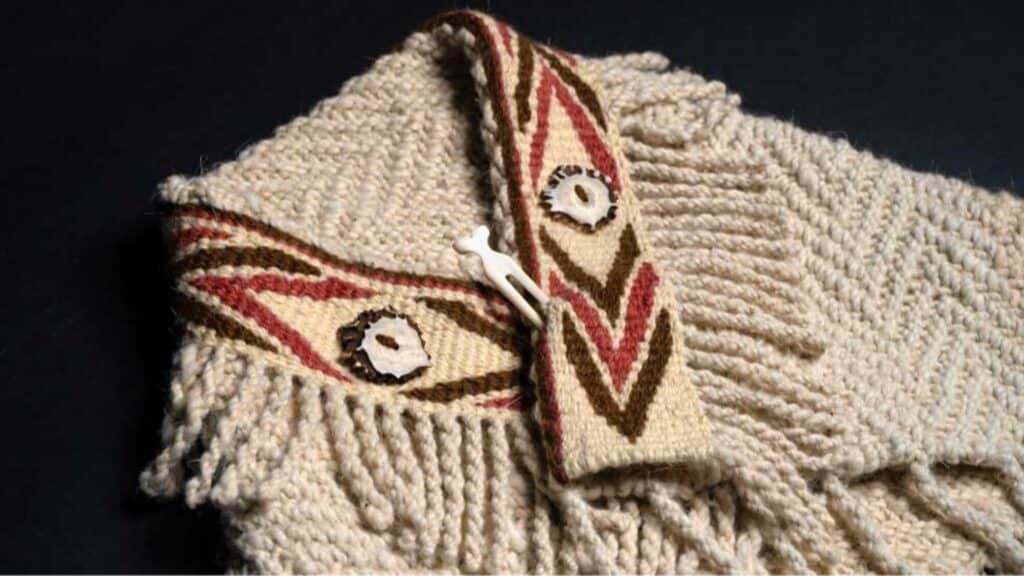
Within the city this month, the Frye Museum has launched new exhibits featuring work from Indigenous artists, ranging from Camille Trautman’s photographs to Priscilla Dobler Dzul’s mixed media pieces. Explore the cultural and scientific knowledge of Indigenous weaving at Woven in Wool: Resilience in Coastal Salish Weaving, on view at the Burke Museum through August 2026. And stop by Tidelands Native Art Gallery downtown, a creative space dedicated to hosting art exhibits, events, and performances, as well as providing a production hub. Join Tidelands on Nov. 18 for a special event honoring Sean Sherman’s new book, Turtle Island: Foods and Traditions of the Indigenous Peoples of North America, which explores how to reclaim ancestral foodways.
And remember, in the words of Mytyl Hernandez: “Every day is Indigenous Peoples’ Day, every day is orange shirt day.”
Follow Us

Rearview Mirror: An Oyster Party, Money for Art, and Mac & Cheese at 30,000 Feet
Things I did, saw, ate, learned, or read in the past week (or so).
We Partied for Art I love a party, and I love art, so when the Henry Art Gallery invited me to its annual fundraising gala, it was paddle’s up from the get-go. Held on the floor of Pioneer Square’s Railspur building in a space managed by Rally, Angela Dunleavy’s latest venture (read all about it…

Urban Grit Meets Wild Beauty: Inside Seattle Art Museum’s Beyond Mysticism
Seattle’s history is rooted in its fascinating juxtaposition of industry and nature, inspired by the region’s dramatic landscapes and rapidly changing cityscape. Seattle Art Museum’s current exhibition, Beyond Mysticism: The Modern Northwest, invites you to meet the artists who captured that tension and transformed it into a bold new vision of Modernism. Modernism, Made in…

Our March/April Issue Has Arrived!
Inside you’ll find Best Places to Live, a packed spring arts guide, and more stories from across the region.
The future’s bright, and so is the cover of Seattle magazine’s March/April issue! Featuring a mural by local artist (and 2023 Most Influential pick) Stevie Shao, the colorful cover is a snap from Woodinville, one of the six “Best Places to Live” featured inside. While we usually focus on Seattle neighborhoods, this year we expanded…

Supporting Roles
Three women in the Northwest are helping local artists through newly launched residencies outside of Seattle. Here, we take a look inside these thoughtfully designed spaces, and learn what drove their founders to become cornerstones in the creative community.
Iolair Artist Residency Eastsound, WA Years ago, after studying photography and earning a Bachelor of Fine Arts at the University of Washington, Pacific Northwest native Linda Lewis realized that she didn’t want to spend the rest of her life behind a camera. “The minute I graduated from school, I was far more inspired by the…