
A Mix Of Fantasy And Reality
Kirsten Anderson found success selling outsider art. Now, nearly 30 years after founding Roq La Rue Gallery, she’s staying the course in a brand new location.
 By Rachel Gallaher June 10, 2025

This article originally appeared in the May/June 2025 issue of Seattle magazine.
Gallerist Kirsten Anderson is having a full-circle moment. In March, she opened the doors of the newest location of Roq La Rue, the arts space she launched 27 years ago in Belltown. Now, after hop-scotching through the city — 13 years and several locations downtown, three years in Pioneer Square, a stint on Capitol Hill, then Madison Valley — Anderson has returned to Belltown, landing at the outermost northern edge of the neighborhood in a spacious, wood-floored space at the NW
Work Lofts.
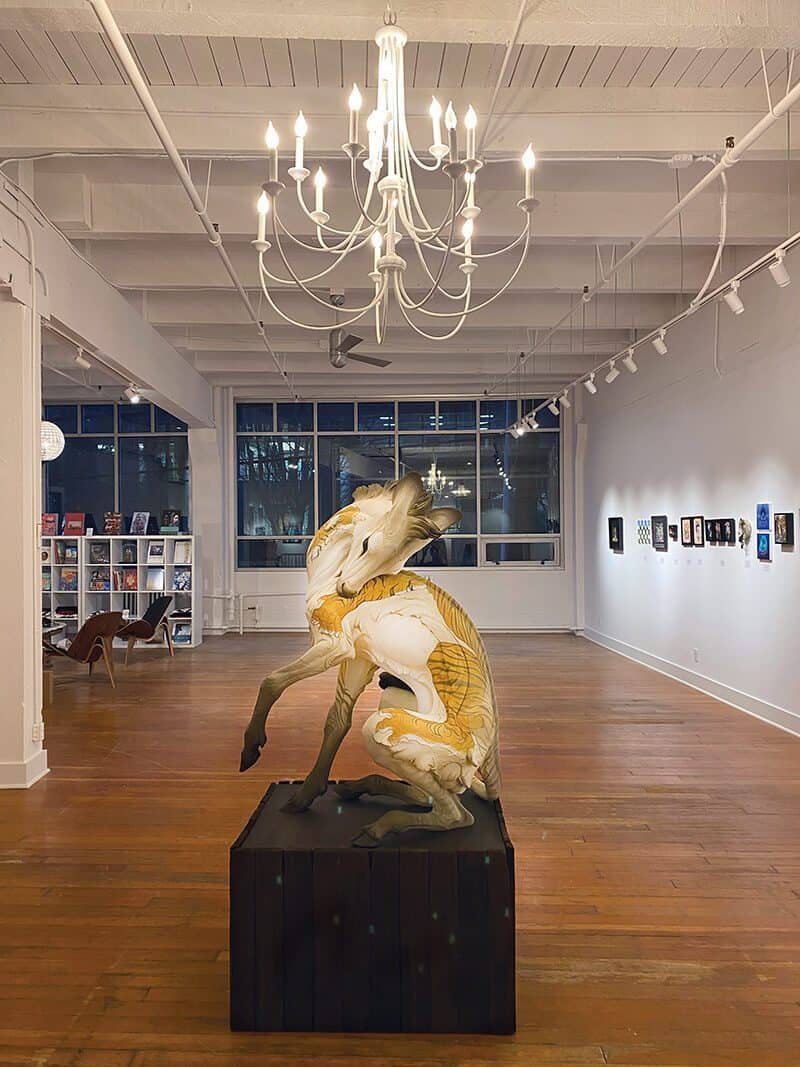
Kicking off Roq La Rue’s next chapter, the gallery re-opened with three concurrent shows: Unveiled, a mix of large-scale works including paintings and sculptures, Spectacle Du Petite, featuring small-format pieces from more than two dozen artists, and a solo presentation from California painter Frank Gonzales. When asked how she’s kept her venture afloat without being independently wealthy or catering to mass-market tastes, Anderson is blunt.
“There are a couple of things,” she says. “One is unwavering faith in my taste. It sounds egotistical, but I think you have to have it to do this job. I also treat artists like grown-ups, and I pay them. That’s the No. 1 thing: If we don’t have money, the door is shut. I never put off paying artists.”
Part of this approach comes from Anderson’s background, in which she started out as an artist before trying her hand at curating. Originally from Canada, Anderson arrived in Seattle with her family in 1982, and after high school attended college to pursue a career as a painter. In 1996, she had a show at Capitol Hill’s now-defunct Café Paradiso (the space that currently houses Caffé Vita) when the owners asked her if she knew other artists interested in showing their work.
“That was the defining moment when I left behind being an artist and became a curator,” Anderson says. She started mounting shows at smaller venues such as Paradiso and The Crocodile, while holding down a job at Seattle Art Supply. One day a coworker asked her what she would do if she were free to pursue anything in the world without having to worry about money.
“I said, ‘Open a gallery,’” Anderson recalls. Within two months, she did just that. At the time, the lowbrow art movement was big in California, and Anderson adopted it at Roq La Rue. Influenced by comics, street art, and whimsical or cartoonish imagery, lowbrow art uses humor and kitsch to cement itself firmly outside of the traditional canon. The work that Anderson shows is always highly technical, often with a dark or fantastical edge. Some collections — from the likes of Peter Ferguson, Dawid Planeta, and Ben Ashton — are highly unsettling, almost anxiety-inducing. Think classical-style oil paintings where the subjects’ faces are morphed, blurred, or melting, such as a woman dressed up in dark Victorian garb walking a many-legged spider, and shadowy wildlife with glowing-orb eyes.
“I grew up learning about the classical art world, but I was also into the punk and New Wave subcultures,” Anderson says. “The lowbrow art movement was basically like a punk-rock art movement that didn’t want to be embraced by the establishment.” Anderson remembers that it took awhile for Roq La Rue to catch on. “People would say the art I was showing was kitschy and silly, but then things started to evolve, and I was still around after 10 years and selling a lot of art.” Anderson had tapped into some sort of creative zeitgeist that appealed to a certain crowd.
“One is unwavering faith in my taste. It sounds egotistical, but I think you have to have it to do this job. I also treat artists like grown-ups, and pay them. That’s the No. 1 thing: if we don’t have money, the door is shut. I never put off paying artists.”
Anderson says that most of her clients are outside of Seattle — “The rise of the internet was huge in the dissemination of our art” — and that many of her buyers come from the video game world. It’s one of the reasons she’s willing to forgo a street-level storefront for a space that feels more like a studio or living room. With shelves of books and magazines and a cozy seating area, the new space lives up to Anderson’s wish that it become an “art oasis.” She envisions people coming in “to have a cup of coffee, hang out, and spend time with the art.”
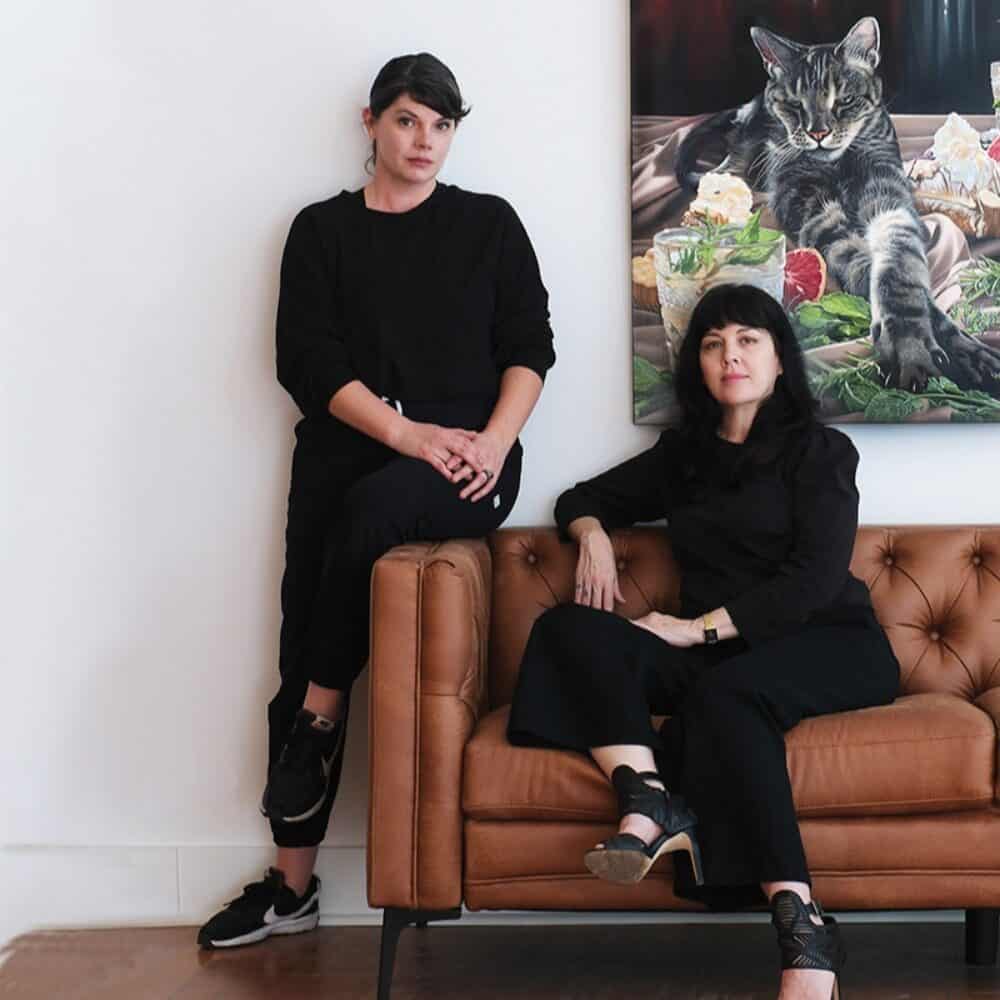
Roq La Rue, which Anderson runs with gallery director and artist Kari-Lise Alexander, will run much like it always has, with monthly shows, an opening that coincides with the Belltown Art Walk, and open hours on weekends. But Anderson also hopes to expand the private art dealing side of her business, curate shows in other cities, and ultimately put together an exhibition for a museum. After nearly 30 years, in a city and age that make it increasingly more difficult to run an independent gallery, she remains optimistic.
“There is a lot of conversation about the collapse of culture and art,” Anderson says, “but I think we’re in a golden age of art. I cannot believe the stuff I see and how many young people are so skilled, with their visions fully fleshed out already. It astounds me daily.”
Follow Us

Rearview Mirror: An Oyster Party, Money for Art, and Mac & Cheese at 30,000 Feet
Things I did, saw, ate, learned, or read in the past week (or so).
We Partied for Art I love a party, and I love art, so when the Henry Art Gallery invited me to its annual fundraising gala, it was paddle’s up from the get-go. Held on the floor of Pioneer Square’s Railspur building in a space managed by Rally, Angela Dunleavy’s latest venture (read all about it…

Urban Grit Meets Wild Beauty: Inside Seattle Art Museum’s Beyond Mysticism
Seattle’s history is rooted in its fascinating juxtaposition of industry and nature, inspired by the region’s dramatic landscapes and rapidly changing cityscape. Seattle Art Museum’s current exhibition, Beyond Mysticism: The Modern Northwest, invites you to meet the artists who captured that tension and transformed it into a bold new vision of Modernism. Modernism, Made in…

Our March/April Issue Has Arrived!
Inside you’ll find Best Places to Live, a packed spring arts guide, and more stories from across the region.
The future’s bright, and so is the cover of Seattle magazine’s March/April issue! Featuring a mural by local artist (and 2023 Most Influential pick) Stevie Shao, the colorful cover is a snap from Woodinville, one of the six “Best Places to Live” featured inside. While we usually focus on Seattle neighborhoods, this year we expanded…

Supporting Roles
Three women in the Northwest are helping local artists through newly launched residencies outside of Seattle. Here, we take a look inside these thoughtfully designed spaces, and learn what drove their founders to become cornerstones in the creative community.
Iolair Artist Residency Eastsound, WA Years ago, after studying photography and earning a Bachelor of Fine Arts at the University of Washington, Pacific Northwest native Linda Lewis realized that she didn’t want to spend the rest of her life behind a camera. “The minute I graduated from school, I was far more inspired by the…