
Seattle Center Festál at 30
How community backlash to a Disney plan helped shape one of Seattle’s most expansive cultural traditions.
 By Sarah Stackhouse February 12, 2026

In the late 1980s, Seattle Center was staring down an identity crisis. The city had hired the Disney Corporation to produce a redevelopment plan for the 74-acre campus—the most significant reimagining since the 1962 World’s Fair. When the final proposal was released, the reaction was immediate. Community groups pushed back, arguing the vision felt imported and disconnected from what people wanted.
So leadership did something unusual. Instead of refining the plan behind closed doors, they went out into the region—hosting roughly 100 community meetings across King County and Olympia—asking residents what they thought Seattle Center should be used for.
Former Seattle Center director Virginia Anderson stepped into the role in 1988 and helped lead the regional meetings. From that outreach came a mission statement that still frames Seattle Center today: The Center exists to “delight and inspire the human spirit and bring us together as a rich and varied community.” Festál would become one of the clearest expressions of that idea.
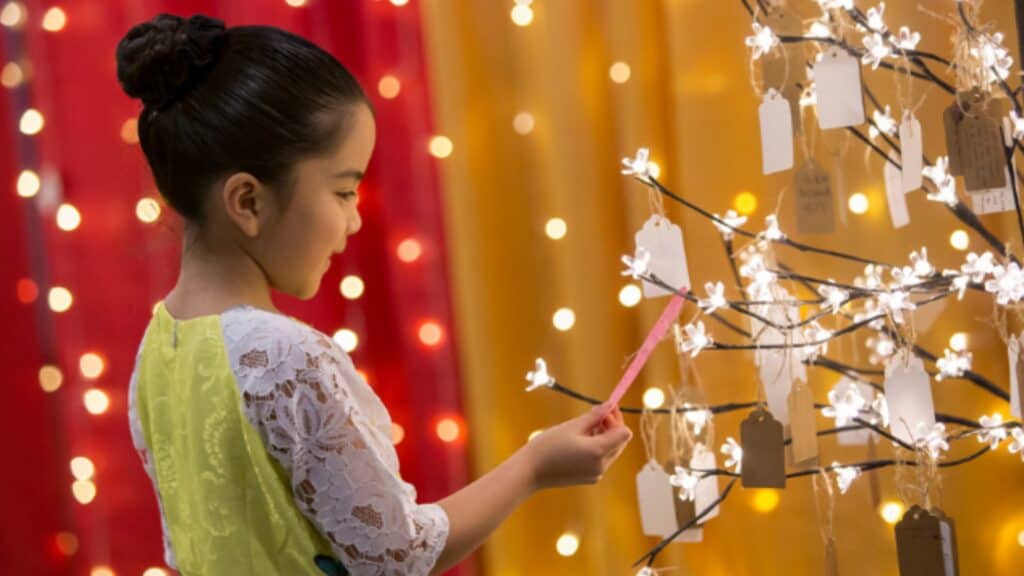
Launched formally in 1997, the series gathered cultural festivals already happening across Seattle—about eight at the start—and brought them into the center of the city. Today, nearly 30 years later, Festál includes 25 festivals running from February through November, each free to attend and created in partnership with the cultural organizations that put them on. The 2026 season opens Feb. 14-15, with Tết in Seattle—Vietnamese Lunar New Year—marking both the start of the festival calendar and the 30th anniversary of that specific celebration itself.
Some festivals predated Festál’s formal creation. The Cherry Blossom & Japanese Cultural Festival, for example, was already underway as Anderson and her team at Seattle Center were developing the series. First held in 1976 following Japan’s gift of 1,000 cherry trees to Seattle for the U.S. Bicentennial, the festival began as an annual outdoor celebration each April at Seward Park before moving to Seattle Center in 1979 for relief from the usually rainy weather.
As festival leaders Yutaka and Tazue Sasaki explain, the Cherry Blossom Festival’s presence at Seattle Center helped demonstrate what cultural celebrations could look like in the space. Food and arts programming drew audiences beyond the Japanese American community, creating a framework future groups could see themselves in. Throughout the city, other long-running events like Festival Sundiata—first held in 1980 and now the region’s longest-running African American festival—were also building momentum. Anderson saw an opportunity to bring those events together by giving them a shared civic platform. “If they stay in certain neighborhoods, everyone might not get to experience them,” she says. “We asked ourselves, ‘how can we bring those festivals into the very heart of the city?’”
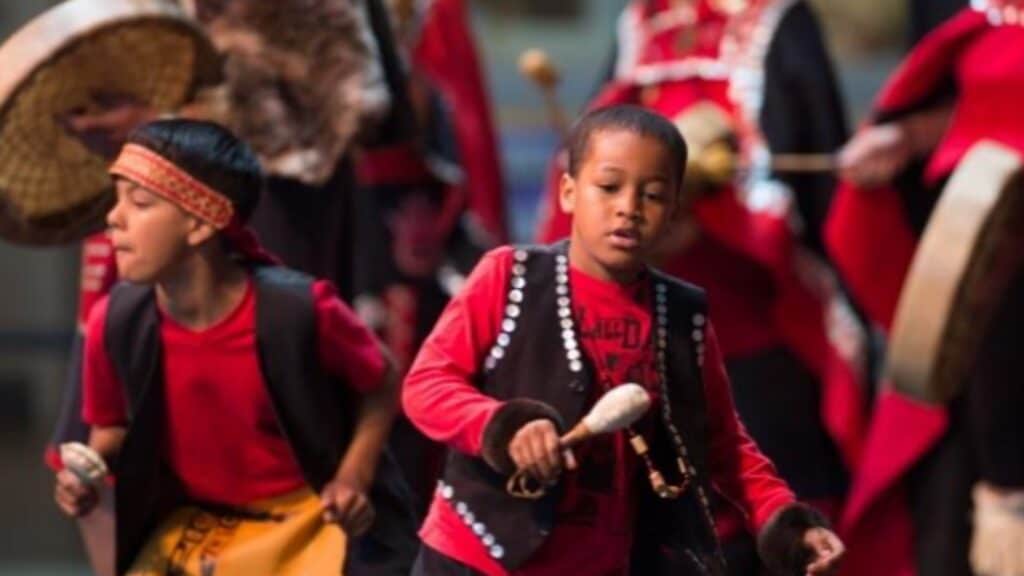
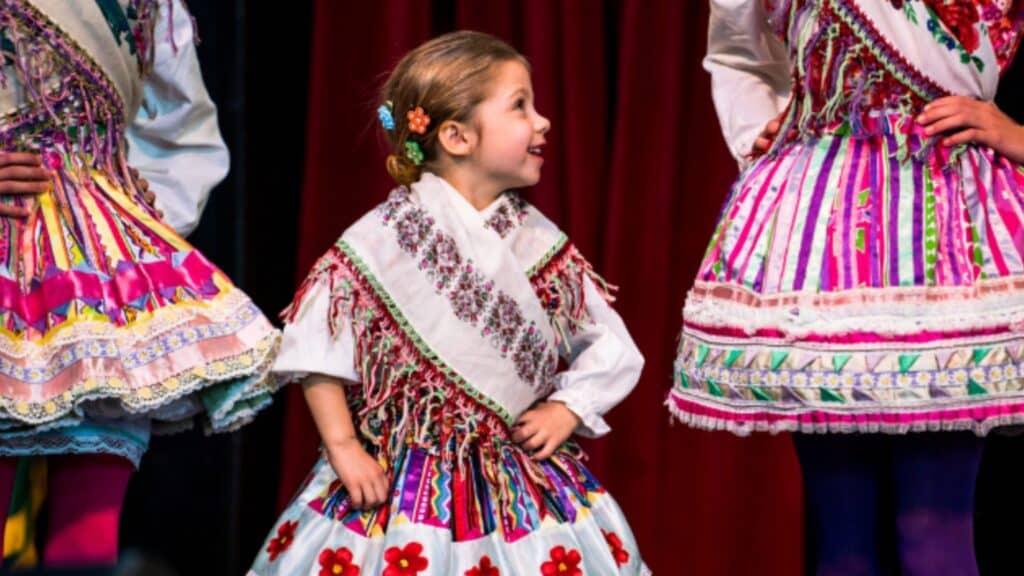
Seattle Center would provide the space, infrastructure, and operational support while each festival would remain community-produced. Organizers would determine their own celebration. “We worked with the festivals, but they did the programming,” Anderson says. “They decided what they needed, what they wanted to say, what their theme was.”
Anderson recalls the Vietnamese organizers approaching Seattle Center about hosting their Lunar New Year celebration. “I didn’t know anything about Vietnamese New Year,” she says. “We were shocked when 10,000 people showed up.” The scale of the turnout underscored both the size of the community and the importance of having a central public space to gather. Visitors might be at Seattle Center for a concert or sports game and suddenly find themselves moving through lion dancers, fashion shows, food vendors, and traditional music from communities across the globe. The location—and the free admission—create encounters without requiring travel or prior knowledge.
“We worked with the festivals, but they did the programming,” Anderson says. “They decided what they needed, what they wanted to say, what their theme was.”
For the leaders who produce these festivals, the work carries weight far beyond a weekend of programming. Yutaka and Tazue Sasaki describe it as both preservation and celebration. Through dance, music, and performance, traditions are passed forward, shared within the Japanese American community and with the broader public. “It’s almost like a yearly family reunion,” says Roberto Jourdan, president of Festival Sundiata Black Arts Fest, noting that people come back each year, bringing their kids.
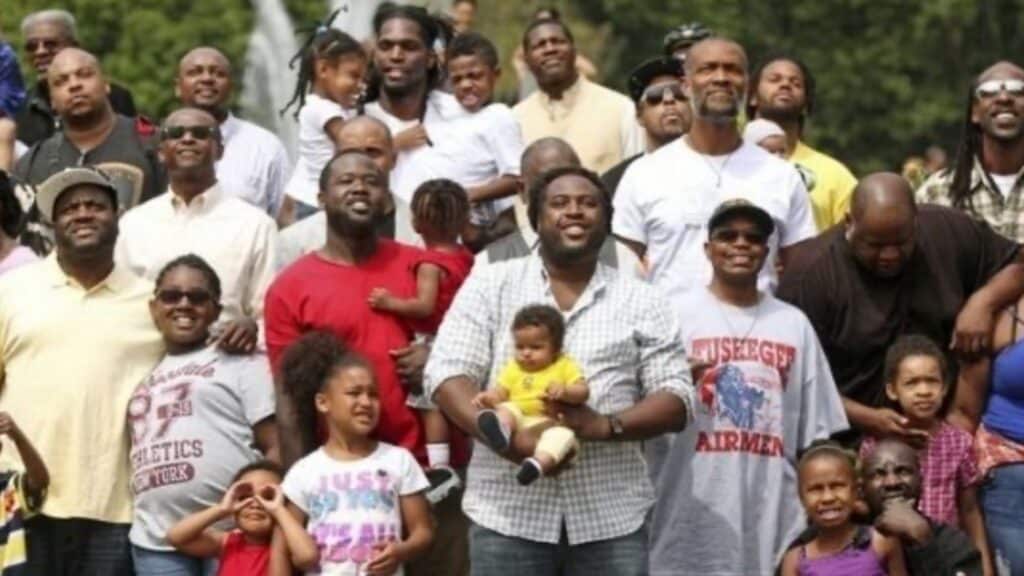
The festivals are all volunteer lead and organizers remain in close contact throughout the year, meeting monthly to share resources and production strategies. That collaboration has created a support network among festivals that might otherwise operate independently. Jourdan calls the exchange of knowledge and support “a wonderful thing to behold.” For Tết in Seattle, preparation begins six to eight months in advance. Michelle Tran, who has been involved since 2019, says, “Tết in general is about continuity. It’s a time to honor ancestors, customs, and remind the generation where they came from. It means to us our culture still matters here.”
The series has also had to adapt over time. Managing artistic director of cultural programs Heidi Jackson, who began her role in April 2020, stepped in just as the pandemic forced everything online. Virtual programming replaced in-person gatherings, with Seattle Center converting performance spaces into recording studios. While digital celebrations lacked the richness of live events, they created new connections, allowing diaspora audiences around the world to tune in. Some festivals still stream performances today for relatives abroad.
Festál now offers new events an incubation process, so emerging celebrations can pilot participation before joining the lineup. Budget and calendar constraints limit how quickly the series can expand, though Jackson says there are still many communities she hopes to include in the future. Through it all, the founding idea still holds. Anderson describes Festál as an ongoing civic experiment. “I always felt like it was an expression of democracy,” she says. “A place for everybody.” Visitors stumble onto performances, while locals plan their calendars around them, and communities see themselves reflected onstage. For Jackson, it comes down to shared human experience. “Everyone eats. Everyone has music and dance and traditions,” she says. “There’s a common thread, people being humans and enjoying their culture together.”
It’s a model that feels very Seattle in its forward-thinking—a city funding and hosting cultural celebrations in its civic core while leaving the storytelling to the communities themselves, an approach that’s especially relevant in a moment when cultural identity is being debated across the country.
Today, Seattle Center welcomes between 11 and 12 million visits annually—a figure projected to reach as high as 13.5 million in 2026—generating more than $1 billion in visitor spending and supporting more than 18,000 jobs across the region.
Other festivals in the Festál lineup include Northwest Folklife, Día de Muertos, Hmong New Year, and Tibet Fest, among others. You can find a complete list of events here. If you’re interested in supporting Festál, donations can also be made here.
Follow Us

Rearview Mirror: A Better Bath, a Bright Riesling, and Les Mis
Things I did, saw, ate, learned, or read in the past week (or so).
Moon Bath Last week, I went to a spring workshop at SLU BRU, the newish beer hall at Dexter Yard in South Lake Union. Open since November 2025 and operated by Gourmondo, it’s definitely ready for nicer weather, with big garage-style windows that open onto the sidewalk. The night was hosted by Orange Moon, the…

Studio Sessions: Lauren Boilini
Seattle artist Lauren Boilini talks about animal behavior, field research, and the whale fall installation she counts among her proudest works.
Lauren Boilini has spent years building dense, teeming painted worlds full of animals, movement, and tension. Her work often starts with close observation—time in the field and conversations with scientists—and turns that research into large-scale paintings that feel charged, layered, and alive. Born and raised in Bloomington, Indiana, Boilini studied painting and art history at…

The Story Behind the Bing Cherry
A new picture book follows Ah Bing from orchard history into folklore.
Seattle illustrator Julia Kuo first came across Ah Bing in a history book. She was reading The Making of Asian America: A History when a detail caught her attention: the Bing cherry, the most popular sweet cherry in the United States and a signature fruit of the Pacific Northwest, was tied to a Chinese immigrant….

Staying in the Pocket with True Loves
The Seattle funk powerhouse heads to Jazz Alley for five soulful nights.
If you were to pull aside any casual music fan and ask them to cite quintessential Seattle music, you’d get a lot of grunge, the indie-rock explosion and folk revival of the ‘00s and ‘10s, and maybe some of the hip-hop that came bursting from the underground in the last 15 years. Your average person…