





Music
Read More ›
Beyond the Notes: Xian Zhang Expands Seattle Symphony’s Reach
The music director talks representation in classical music and the work of bringing new audiences into the concert hall.

As Xian Zhang prepares to lead the Seattle Symphony into its 2026/2027 season, the acclaimed conductor returns to one of the city’s most storied cultural institutions. A Grammy and Emmy-winning maestro with an international résumé spanning the New Jersey Symphony, The Philadelphia Orchestra, Los Angeles Philharmonic and major opera houses across Europe, Zhang’s relationship with Seattle has been years in the making. Since her Benaroya Hall debut in 2008, she has built a deep rapport with both musicians and audiences, including returning to conduct during the orchestra’s post-pandemic reopening.
Now, as the first woman appointed music director in the Symphony’s history, Zhang is shaping an ambitious season that balances beloved masterworks with contemporary voices. Highlights include an Opening Night Concert featuring Yuja Wang and a slate of music from Ludwig van Beethoven and Vaughan Williams, among others.
For Seattle magazine, Zhang spoke about leadership, representation, and accessibility in orchestras.
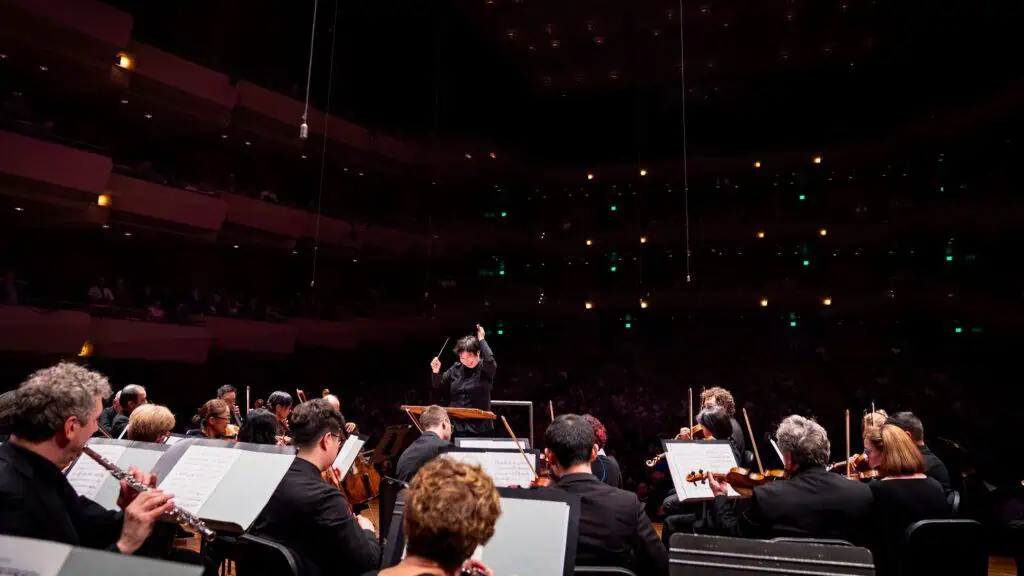
Your relationship with the Seattle Symphony began when you were a guest conductor. What was it about those experiences in Seattle that made you want to take on this position?
Each time I visited Seattle and worked with the Symphony, I felt a deeper connection, not just musically, but humanly. The musicians have a remarkable combination of precision, curiosity, and openness. As a guest conductor, you can sense when an orchestra is truly listening and responding, and in Seattle, that dialogue felt natural. Beyond the orchestra itself, I was deeply struck by the community—the audience’s enthusiasm, their willingness to embrace both core repertoire and new voices. Over time, those experiences made it clear that this was a place where we could build something meaningful together. That sense of shared purpose is what ultimately drew me to take on the role of music director.
You are the first woman to be named music director of the Seattle Symphony. What does that milestone mean to you personally, and how do you think it shapes the broader future of orchestral leadership?
Personally, I see it as both an honor and a responsibility. I have always focused on the work itself—on the music, the musicians and the artistic vision. If my appointment helps broaden the perception of who can stand on the podium, then that is meaningful. I hope it encourages young musicians, especially women, to see this role as something that is fully within their reach.
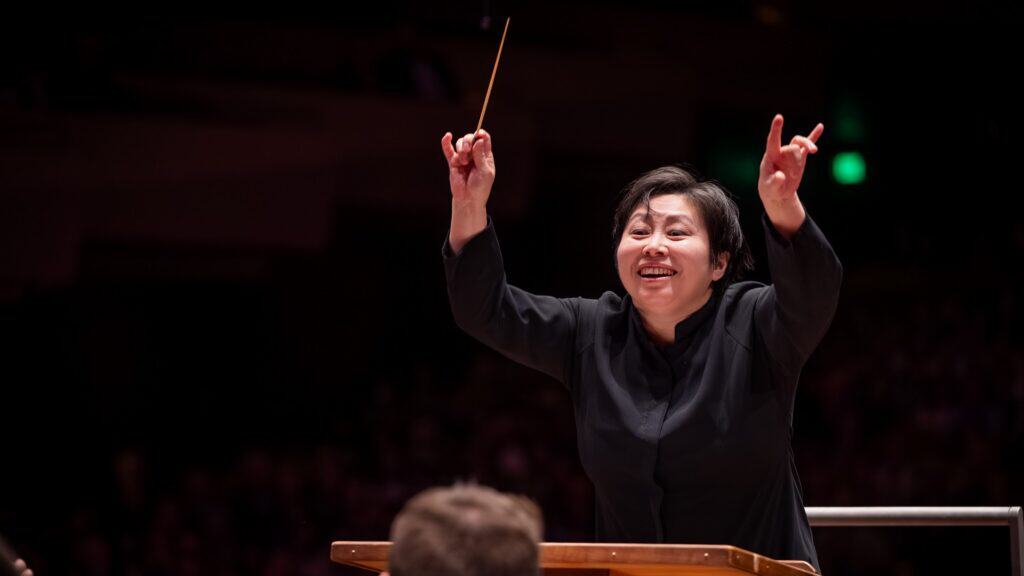
You grew up during the Cultural Revolution, when your father famously built a piano for you by hand. How did that experience, and your parents’ support, shape your relationship to music and your understanding of dedication, sacrifice and courage from a young age?
I have so many fond memories with my mother and father, playing on the piano he built for me. During that time, music was not easily accessible, and yet my parents believed in it deeply enough to make extraordinary sacrifices. From a young age, I understood that music was something precious, something meaningful to me.
Looking back on your training—from the Central Conservatory of Music to your studies in the U.S.—what is something foundational from your education that still guides you today? And what is something about conducting that no amount of schooling can truly prepare you for?
One of the most important lessons from my education is the importance of listening beyond the notes, understanding structure, color and intention. At the same time, conducting is ultimately about human connection, and that is something no classroom can fully teach. Every orchestra has its own personality, and every rehearsal is an evolving process. You must learn how to communicate clearly, to inspire trust and sometimes to adapt in the moment.
You’ve built an international career across China, Europe, and the United States. What were some of the biggest cultural or professional adjustments you faced when you began conducting in the U.S.? Did you ever feel a need to prove yourself in a different way?
I have always tried to put music as the focus to lead my way through work. It is challenging enough by itself. Any more need to self-prove is adding unnecessary burden to something already intimidating and complex.
What excites you most about the upcoming Seattle Symphony season, and are there any particular programs or works that feel especially meaningful to you right now?
I’m thrilled to conduct the 2026/2027 season’s Opening Night Concert, which will also be the reopening of Benaroya Hall and pianist Yuja Wang’s orchestral debut with the Seattle Symphony. While she has given recitals at Benaroya Hall, this marks her first time performing alongside Seattle Symphony musicians. Yuja’s interpretation of Prokofiev is nothing short of electrifying, and we chose to pair it with Lieutenant Kijé to create a dynamic showcase for the full power and color of the orchestra. Later in the season, I’m excited to lead a three-week festival celebrating nature, featuring some monumental works—Beethoven’s “Pastoral” Symphony, Grieg’s Peer Gynt Suite, Webern’s Im Sommerwind (In the Summer Wind), Vaughan Williams’ The Lark Ascending, and Respighi’s Pines of Rome.
Timothée Chalamet’s comments about ballet and opera opened a wider conversation on the accessibility of classical arts. How do you see the current state of orchestras, and what initiatives or ideas are you most interested in exploring to bring new audiences into the concert hall?
I think it’s an important and necessary conversation. Orchestras today are making meaningful progress with more diverse programming, new concert formats, and stronger connections with the communities. For me, attracting new audiences and making classical music more accessible starts with broadening what’s presented on stage. That means highlighting a wider range of voices, embracing music across genres, and rethinking how concerts are experienced, so they feel engaging and relevant.
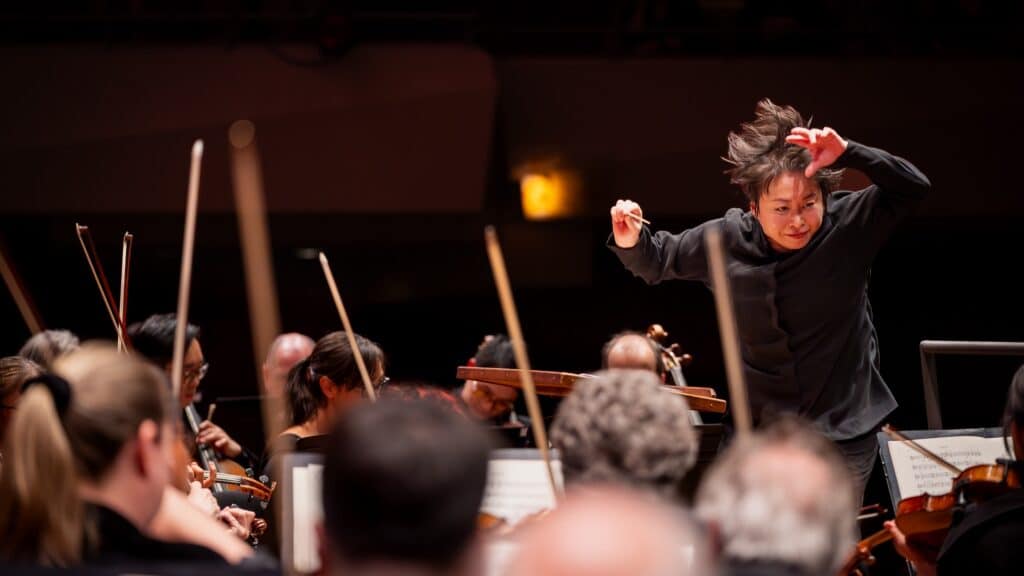
At the Seattle Symphony, we offer a wide range of programming—from concerts designed for families to the traditional performances that most people think of when they hear “symphony orchestra.” We also present a number of contemporary works in Benaroya Hall’s Octave 9: Raisbeck Music Center and special concerts featuring movies and game scores. All of this helps create welcoming entry points for people who might not otherwise see themselves attending a Symphony concert.
As we celebrate AAPI Heritage Month, what advice would you offer to young Asian musicians—especially those who aspire to leadership roles in classical music?
Focus on things we can change or improve. Filter out the things we can’t control. We can’t change what background we were born in, so embrace it and use our energy to improve on something we can control or contribute to other people.
Lastly, I always ask people their favorite places to eat in Seattle.
No. 9 Alley Hot Pot in Bitter Lake.
Follow Us

SENSORIUM Takes on Our Screen Addiction
Dance, drag, and immersive art collide in an eight-week exploration of our phone-obsessed lives, with a few surprises along the way.
What do drag queens, smartphone addiction, art installations, and an old luggage shop have in common? According to longtime Seattle choreographer Alana O’Farrell Rogers, a lot. “There’s no dead time anymore,” says Rogers, explaining how the proliferation of smartphones fills the empty spaces that once served as time for rest or connection. Where we snuggled…

Salt-N-Pepa on Breaking Barriers and Staying Power
Ahead of their performance at Seattle’s Museum of Pop Culture gala, the hip-hop pioneers talk about creative ownership, connecting with new generations, and the songs that still resonate.
The Museum of Pop Culture (MOPOP) will host its annual ICONS of Pop Culture Gala in Seattle on October 22, honoring five artists and institutions whose work has helped shape entertainment and culture. This year’s honorees are martial arts and film legend Bruce Lee, fashion designer Jeremy Scott, the video game franchise Halo, hip-hop pioneers…

Studio Sessions: Christopher Paul Jordan
Drawing on childhood memories, neighborhood history, and salvaged materials, Christopher Paul Jordan’s latest show at Cornish’s Behnke Family Gallery explores how the past stays with us.
Start in the middle. It’s good advice for telling a story, and a way into Christopher Paul Jordan’s paintings. By the time you encounter them, their materials have already been something else, and who knows what they might move on to become. The Tacoma interdisciplinary artist works with salvaged objects, including screens, picture frames, canvas,…

Rearview Mirror: Wedding Bells, A Furniture Launch, and the Symphony’s New Look
Things I did, saw, ate, learned, or read in the past week (or so).
WEDDING BELLS I’ve been a bit absent from this column lately, but I think I have a pretty good excuse: I got married! It’s already been three weeks since my September 19 wedding, but I’m still reflecting on the magic of the day. My fiancé, well husband now (I can’t get used to saying it!),…