





Music
Read More ›
Salt-N-Pepa on Breaking Barriers and Staying Power
Ahead of their performance at Seattle’s Museum of Pop Culture gala, the hip-hop pioneers talk about creative ownership, connecting with new generations, and the songs that still resonate.

The Museum of Pop Culture (MOPOP) will host its annual ICONS of Pop Culture Gala in Seattle on October 22, honoring five artists and institutions whose work has helped shape entertainment and culture.
This year’s honorees are martial arts and film legend Bruce Lee, fashion designer Jeremy Scott, the video game franchise Halo, hip-hop pioneers Salt-N-Pepa, and the Wing Luke Museum. The evening’s theme, “The Future Is Now,” reflects the continuing impact of these cultural figures and institutions. Salt-N-Pepa will also perform at the gala, joined by original DJ Spinderella. Proceeds support MOPOP’s exhibitions, youth education programs, and community initiatives.
“At MOPOP, we believe pop culture is one of the most powerful forces shaping who we are, and the ICONS Gala lets us honor the people who have moved it forward,” says Michele Y. Smith, the museum’s CEO. The selection process, she explains, considers how an honoree’s work continues to affect the way people live, create, and understand themselves. “Fashion, film, gaming, and music are part of our DNA, and they are the core pillars of our strategic and operational plan,” Smith says.
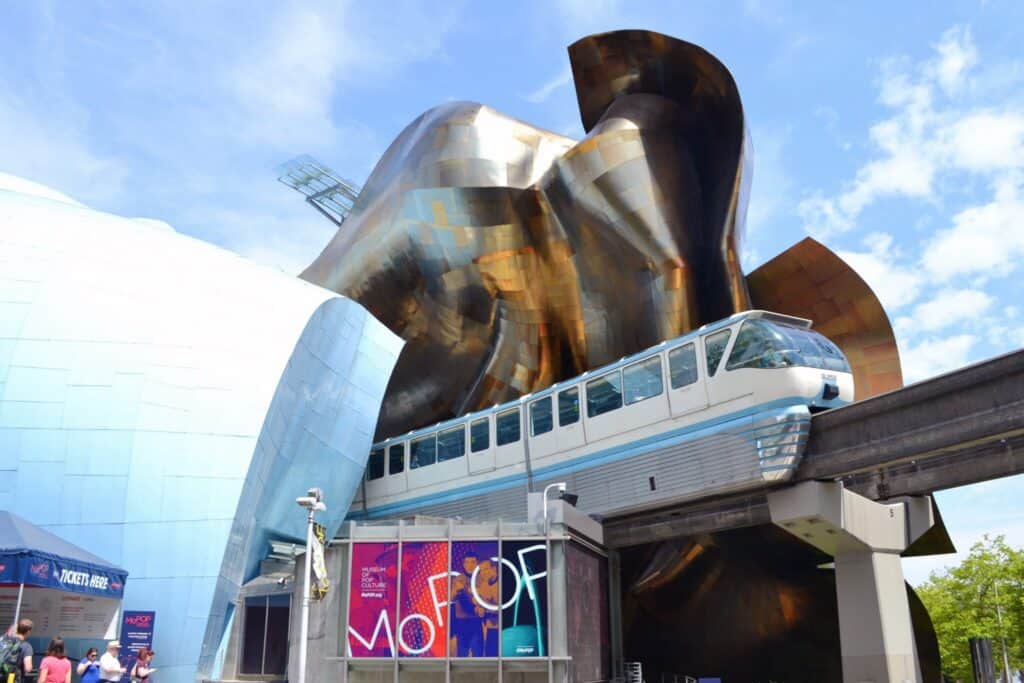
The 2026 class spans those creative fields while recognizing the power of cultural storytelling. Smith credits Lee with redefining what an international film star could be, while Scott has demonstrated how fashion can combine boldness with playfulness. Halo helped shape modern gaming and brought players together around an expansive fictional universe. The Wing Luke Museum, meanwhile, has spent decades preserving Asian Pacific American stories and presenting them on their own terms.
Salt-N-Pepa’s selection recognizes the group’s role in expanding opportunities for women in hip-hop. As Smith puts it, the artists “changed who gets to take center stage in hip-hop and gave women a language for their own desire and power.” From “Push It” to “Let’s Talk About Sex,” the group’s music challenged conventions while helping make women’s voices and perspectives central to the genre.
“Their work didn’t wait for the world to be ready, but showed us what was possible and invited us to catch up,” Smith says of the honorees. She points to Salt-N-Pepa’s continued connection with younger audiences, the ongoing relevance of Lee’s philosophy, and the new generations of players discovering Halo as examples of cultural legacies that remain active long after their beginnings.
That history is also reflected in two exhibitions currently on view. Styled by the Streets explores how Black women have shaped hip-hop fashion, from streetwear to couture and the influence of hair, nails, and jewelry. Rebels + Icons brings together photographer Janette Beckman’s images of punk, hip-hop, and street style during the early stages of those movements. Smith says the exhibitions preserve the work of artists who helped define their respective scenes before mainstream recognition arrived.
For her, the timing of this year’s gala and exhibitions is particularly fitting. “The fact that Salt-N-Pepa are with us for ICONS while these two exhibits are still on view feels like exactly the kind of full-circle moment this museum was built for.”
Ahead of the gala, Salt-N-Pepa chatted with Seattle magazine about the significance of having their music preserved in a museum and what they hope the next generation of women in hip-hop will carry forward.
What does it mean to you to be honored as MOPOP’s Music ICONS, particularly at a museum dedicated to preserving and celebrating pop culture?
It means our music is history worth preserving, and we don’t take that lightly. Hip-hop was born from the stories of people, our friends, who were told their stories didn’t matter. So there’s something powerful about seeing that culture preserved and taken seriously by an institution like the Museum of Pop Culture. We spent our careers making music that had messages relevant to the moment that we hoped would last beyond those times. To see our work in a museum means those voices, those conversations, and that part of our history are being kept. That’s bigger than an award to us.
The theme of this year’s gala is “The Future Is Now.” You helped change what was possible for women in hip-hop decades ago. When you look at the genre today, what excites you about where hip-hop is headed, and what do you hope its future looks like?
What excites us is how expansive hip-hop has become. It’s gone from a subculture to a mainstream industry with global influence that transcends music, from fashion to film and even other genres. We also love how much room there is for women to be fully themselves. All we could ever ask for is to see the culture expand and not leave women behind, and it’s bigger than that. Women take up more space in the industry than ever before and are doing it on their own terms. The leader of the museum hosting this gala is a woman, and a Black woman at that. We want to see that continue throughout the arts until it’s the standard.
You’ve spent decades breaking barriers for women in music. What’s a barrier you still think needs to be broken for women artists in 2026?
Ownership. Women are still fighting for control over their own work, image, and stories. The public conversation around masters and intellectual property is only just beginning, and needs to stay alive. You can’t really have creative independence if somebody else ultimately controls the work you created. We want to see more women walk into this business understanding what they own, what they’re giving away, and what parts they want to keep.
What advice would you give to young women artists or groups who are trying to build the kind of longevity and creative independence that you’ve had?
Know your worth before you walk in the room. Read every contract. Ask questions, even the ones you’re afraid will make you look uninformed. Focus more on finding people who will tell you hard truths versus friends, because friends will come. And don’t chase every trend. You’ll have to chase a few, but chasing a few too many may cause you to lose who you are. Trends come and go, but if you build something that’s genuinely yours, people can find their way back to it years later. And that’s longevity.
You’re currently on the It’s Iconic tour with TLC and En Vogue, but rather than treating it like three separate sets, you’ve approached the show almost like a mixtape, weaving the groups and songs together without a traditional break or intermission. What has it been like collaborating and playing off one another in that way?
It’s been a celebration every single night. These are women we came up alongside, and we were all fighting different versions of the same battles at the same time. It’s pretty special to share the history of that era, and still be doing it now three-plus decades later.
After performing songs like “Push It,” “Shoop,” “Whatta Man” and “Let’s Talk About Sex” for so many years, are there songs that have taken on a different meaning for you or that you’ve developed a new appreciation for over time?
“Let’s Talk About Sex” has definitely grown in ways we couldn’t have predicted. When we made it, we were pushing people to have an honest conversation about sex at a time when no one was talking about it. If you look back at when that song was released, in the summer of 1991, it was a peak time to talk about sex, and big cities like New York were seeing what happens when we don’t. We loved that at the time, and even today, it’s a song seen as an entry point to conversations between children and parents or sex educators and students about body autonomy, sexual safety, and consent. Not all music passes the test of time, so we’re happy to see that this particular record has been able to.
You’re performing for multiple generations now, including fans who weren’t even born when some of your biggest songs came out. What is it like seeing younger audiences connect with your music?
Honestly, it’s one of the best parts of the whole journey. When a young woman who wasn’t even born when “Shoop” came out knows every word, you realize the song belongs to her generation, too. The same thing happens with “Push It,” “None of Your Business,” and “Whatta Man.” Each song had origins in one generation but found itself relevant to many others. That tells us the words spoken in the records still ring true. The technology, slang, and world changes, but the desire to dance, flirt, speak your mind, or tell somebody to mind their business remains.
You’re coming to Seattle for the gala and performance. Is there anything you’re especially excited to see, eat, or experience while you’re here outside of the event itself?
We definitely want to spend real time inside MOPOP. If our work is being honored there, we want to experience it as fans, too. Seeing what’s preserved, hearing the Salt-N-Pepa story they’re telling, and taking it all in. And Seattle has such a deep music history that we want to continue to explore. We’ve heard about the seafood. We’ll investigate that and report back.
Follow Us

SENSORIUM Takes on Our Screen Addiction
Dance, drag, and immersive art collide in an eight-week exploration of our phone-obsessed lives, with a few surprises along the way.
What do drag queens, smartphone addiction, art installations, and an old luggage shop have in common? According to longtime Seattle choreographer Alana O’Farrell Rogers, a lot. “There’s no dead time anymore,” says Rogers, explaining how the proliferation of smartphones fills the empty spaces that once served as time for rest or connection. Where we snuggled…

Studio Sessions: Christopher Paul Jordan
Drawing on childhood memories, neighborhood history, and salvaged materials, Christopher Paul Jordan’s latest show at Cornish’s Behnke Family Gallery explores how the past stays with us.
Start in the middle. It’s good advice for telling a story, and a way into Christopher Paul Jordan’s paintings. By the time you encounter them, their materials have already been something else, and who knows what they might move on to become. The Tacoma interdisciplinary artist works with salvaged objects, including screens, picture frames, canvas,…

Rearview Mirror: Wedding Bells, A Furniture Launch, and the Symphony’s New Look
Things I did, saw, ate, learned, or read in the past week (or so).
WEDDING BELLS I’ve been a bit absent from this column lately, but I think I have a pretty good excuse: I got married! It’s already been three weeks since my September 19 wedding, but I’m still reflecting on the magic of the day. My fiancé, well husband now (I can’t get used to saying it!),…

Get Blown Away: Seattle’s Glass Art Scene Takes Center Stage
Now in its 8th year, Refract Seattle is the region’s premier celebration of glassblowing—arguably the most famous visual art genre in the Pacific Northwest. Pioneered by names like Dale Chihuly, Ginny Ruffner, Lino Tagliapietra, and Preston Singletary, glassblowing has remained among the area’s most prolific creative outputs, with contemporary talents such as John Hogan, Julie…