





Music
Read More ›
Seattle’s Brudi Brothers Go From Busking to Big Time
The local band is bringing its analogue Americana to Climate Pledge Arena with Kacey Musgraves.

In discussions of film and T V, there’s a phrase that sometimes comes up: “They have a face that looks like it’s seen an iPhone.” The same can be said of music, especially as vintage inspirations and pastiche have become more standard. Some bands sound like contemporary interpreters, some sound like tourists, and a few sound like they could legitimately have occupied the era they’re recreating.
The Brudi Brothers pass this test like few others. George, Conrad, and Johannes—actual siblings who grew up in North Seattle’s Wedgwood neighborhood—got their start playing music together as kids. In high school, Conrad, the middle brother, went to stay with their grandparents in Germany, where he learned that American GIs in WWII had brought along an appreciation for early Americana music.
“We started with Lead Belly songs, and stuff from the Alan Lomax songbook,” says Conrad, gleaning knowledge from his grandpa, who played banjo and was still keeping the flame of this music genre alive in Germany.
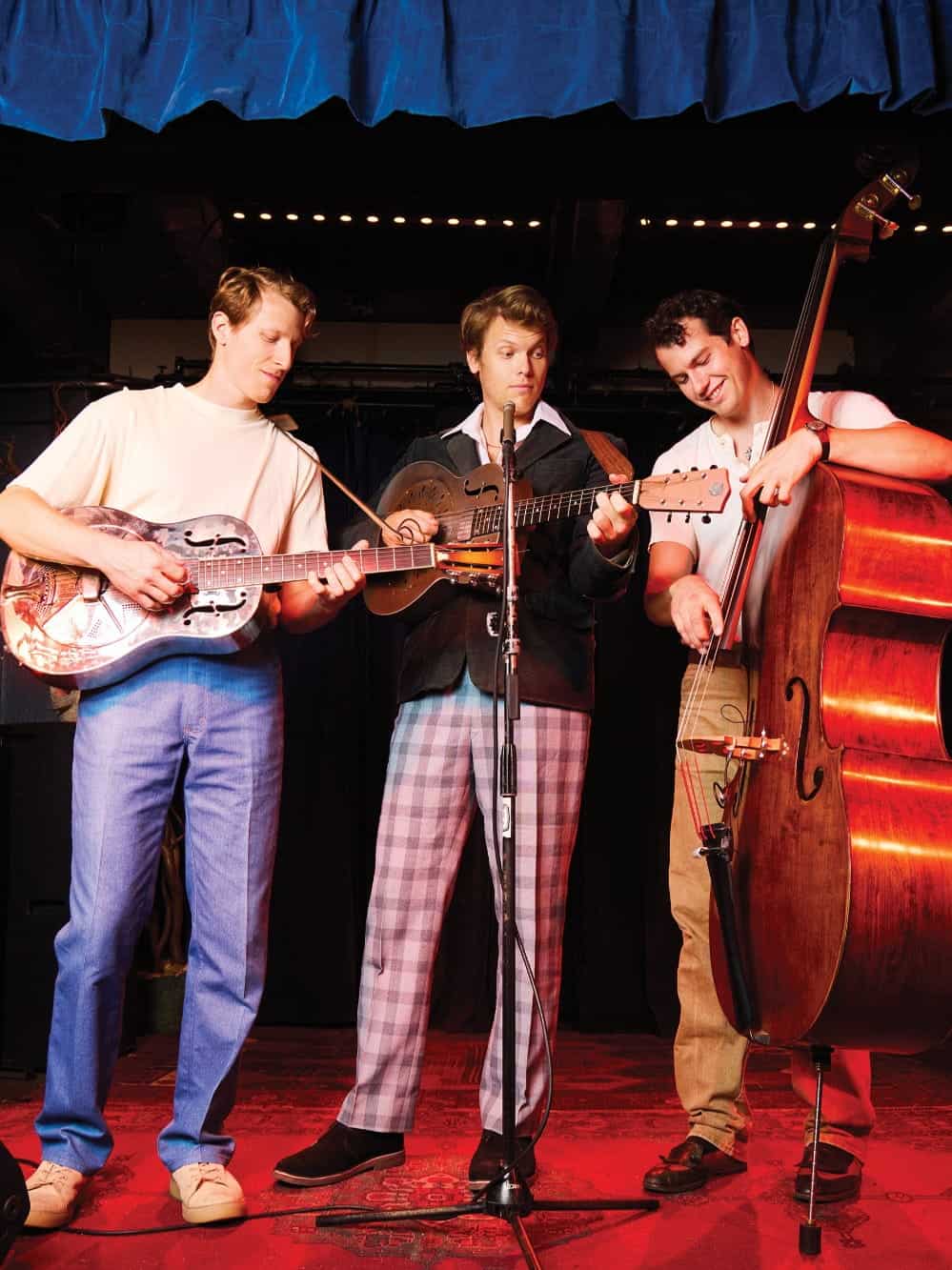
In 2013, George joined Conrad in Europe, and their lives as buskers began. The practice of playing for spare change on the streets hardened and honed them as artists, and eventually Johannes rounded out the trio. Like many family bands, their similarities in voice and temperament lent them an incredible instinct for harmonies and a unifying front.
“Our father, who lost his brother when he was in his 20s, instilled in us that you have to try to stay close to your family, because they’re really the people that will be with you for the rest of your life,” says George. “So, to be able to work together, and kind of be inseparable because of the work, but also because we want to be close to each other, is nice to close that gap a little bit.”
History being littered with family bands that ended in tragedy, Johannes is quick to address that there may be fights, but it’s all flesh wounds. During our interview, one of the brothers asks about “the other night,” when they messed up their nice new clothes by wrestling in front of a campfire, and a consensus is reached that a court would likely label that as “horsing around.”
“[Being together] turns us back, for the better and worse, into children again,” Johannes says. “I think we’re getting used to getting over whatever squabble we have with each other. Conrad and I realized yesterday that we kinda do it as a little bit of a sport … When we’re in a band, we can’t physically fight, so it’s just verbal harassment and joy.”
United, the Brudi Brothers craft an ode to Americana, roughly spanning the 1920s to the ’60s, that rarely breaks the illusion that these are unearthed songs from yesteryear. One of their only songs that flirts with modernity granted them viral fame, which came as a complete shock to the boys, given that it was originally written as a spontaneous, quasi-joke the band never planned to record.
“Our father, who lost his brother when he was in his 20s, instilled in us that you have to try to stay close to your family, because they’re really the people that will be with you for the rest of your life.”—George Brudi
The song, “Me More Cowboy than You,” is an ode to tech bros dressing up like cowboys in Silicon Valley. With its caveman lingo chorus and withering take on the false bravado of rich posers, the ditty quickly garnered tens of millions of streams on social media, catapulting the Brudi Brothers to a level of notoriety that they hadn’t ever imagined.
When asked if they had dreams of making it big while spending all that time busking on street corners in places like Pike Place and Ballard Farmers Markets, they say they had no fantasies of success.
“I don’t think anything humbles you more than busking because it doesn’t matter how good you really are, you’re still playing on the street,” says George. “People may stop and listen, and you may get a big crowd, but it never gives you the idea that you’re going to make it big. It’s glorified begging, really.”
Rather than the old -fashioned method of being discovered by a music producer in a stroke of luck, the Brudi Brothers found their slice of fame in a thoroughly modern way.
“I was delighted when the lads started taking off,” says fellow folk rambler Robert Leslie. “For me, the feeling was just fantastic—the good guys can still win, this kind of music still has mass appeal, all great news. You always wonder how the sausage of success is made, but in this case, I watched them make it, and I can tell you it’s nothing but good stuff in there. And they’re sharing that success.”
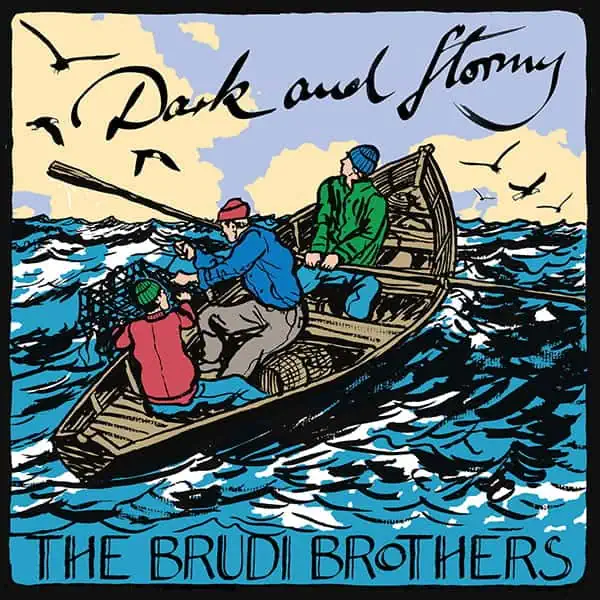
Last November, Leslie opened for the brothers at the Crocodile and at the Mercury Lounge in New York. They’ve also been talking about opportunities to record together.
“They’re boat guys. They know all about rising tides,” Leslie continues. “The one downside is that we have to miss them now that they’re on the road so much. But I love that they’ve been touring with Sierra Ferrell. She got her start as a busker, too, a real road soul. To this day, the folks at Pike Place talk about how she’d belt it out there. Seattle’s busking scene is still an incubator; the city should be proud of that.”
After a summer of touring—first Europe, then Montana, and the East Coast—the big coronation moment on the horizon is the Brudi Brothers opening for Kacey Musgraves, the closest thing we have to a crossover country megastar in 2026. The shows are set for Climate Pledge Arena on October 26-27, with the brothers opening as returning heroes in the largest venue they’ve played to date. After the show wraps, George, Conrad, and Johannes plan to get back into the studio to record their next album, which is tentatively slated for a spring 2027 release.
To listen to the soulful, intimate, and analogue music of the Brudi Brothers, it seems anathema to the nature of arenas that they might be performing at one. Still, in an age of encroaching technology and dehumanization, maybe the thing we need most is reassurance that boots-on-the-ground, street-level musicians—with real voices and artfully crafted words—can still touch at the heart of what it means to be human.
Follow Us

Henry Mansfield Wins a Spot at Northwest Tune-Up
A new contest for Washington musicians wrapped earlier this month in Bellingham. Nearly 200 artists entered, and it came down to five finalists.
Earlier this month, Seattle-based queer indie artist Henry Mansfield won the final round of Doc Swinson’s Opening Act Contest at Wild Buffalo House of Music, earning a slot on the Northwest Tune-Up Festival main stage this July. Mansfield makes loud, anthemic pop rooted in storytelling, with songs that move between grief and joy and pull…

Nordic Pop Comes to the Nordic Museum
An afternoon concert brings Seattle singers, strings, and percussion together for a dreamy midwinter dance party.
January in Seattle is a mood. The light is thin all day, and by midafternoon it starts to collapse into night. It’s the time of year when any plan that involves leaving the house has to earn its keep. This is where Nordic Pop comes in. On Sunday afternoon, January 18, Seattle musician and producer…

How a Local Teen Explained Auto-Tune to the World
High school senior Jason Zhou is among 30 teens recognized for a standout science explainer video.
A two-minute film on the math behind Auto-Tune has put 17-year-old Jason Zhou of Redmond in the running to win the Breakthrough Junior Challenge, an international contest where students explain complex scientific ideas with clarity and creativity. The challenge is open to students ages 13 to 18, and each video must come in at two…

I’ve Completely Slept on Shibuya HiFi
The Japanese-style listening bar is an absolute must-visit for music lovers.
Every once in a while, I stumble upon something in Seattle that I either didn’t know about or knew about but didn’t experience for months (or years), and become completely, can’t-stop-telling-people obsessed with it. Some examples include the Lonely Siren bar, Kraken games, and Lagree Pilates. My latest discovery is Shibuya HiFi, the Japanese-style listening bar…