





Visual Arts
Read More ›
Studio Sessions: Jade Solomon Curtis
With an interest in how bodies retain memory, emotion, and experience, the award-winning choreographer and interdisciplinary artist Jade Solomon Curtis presents an immersive work at Seattle’s historic Union station.
 By Rachel Gallaher July 23, 2026

It feels futile to try and assign Jade Solomon Curtis a singular title. Dancer, Choreographer, Director. Teacher, Curator, Creative Director. Wife, Friend, Daughter. All of these apply, and yet they all seem too limiting to contain Curtis’ creative force. She arrived in Seattle in 2012 to join Spectrum Dance Theater, where she danced for four years before leaving to pursue a solo career and launch several projects. One the projects, Solo Magic, (developed through the organization Pan African Center for Empowerment) is an experimental platform dedicated to supporting multidisciplinary artists by creating access and opportunity for new ideas, performances, texts, and creations—especially those that might not fit neatly in existing channels. Curtis is also the creator of the Radical Black Femme Project, a global residency that highlights the cultural and political contributions of Black femme-identifying artists.
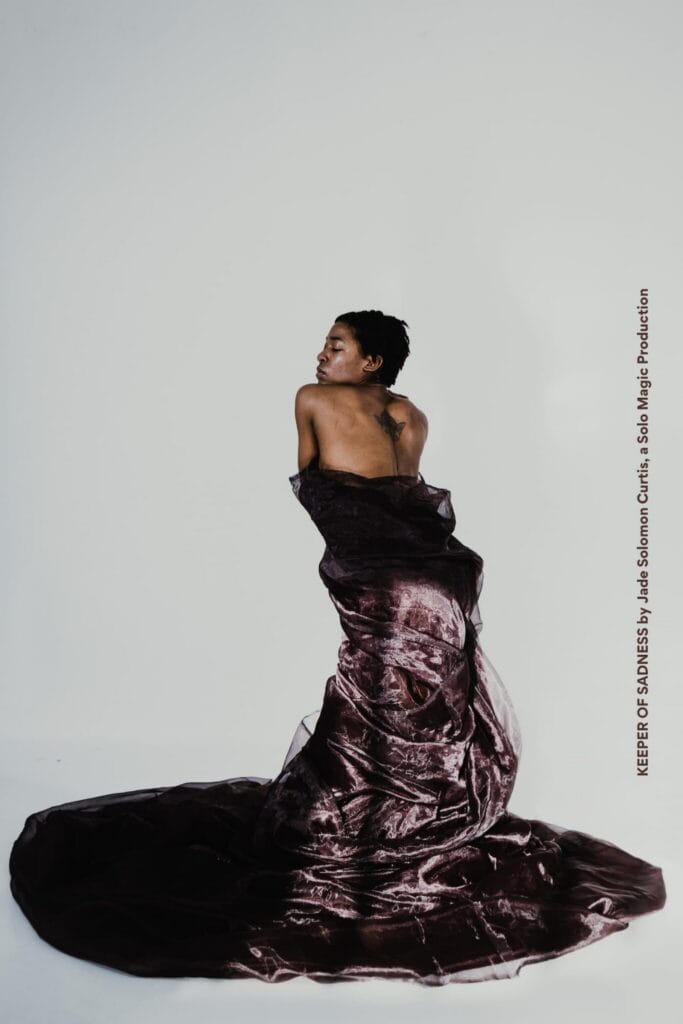
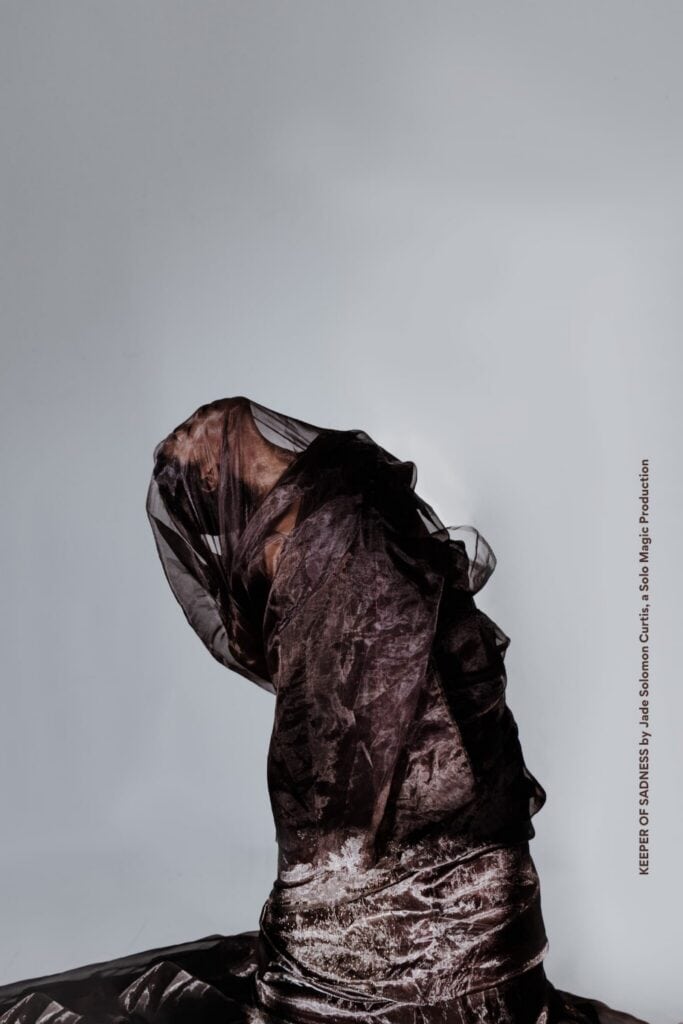
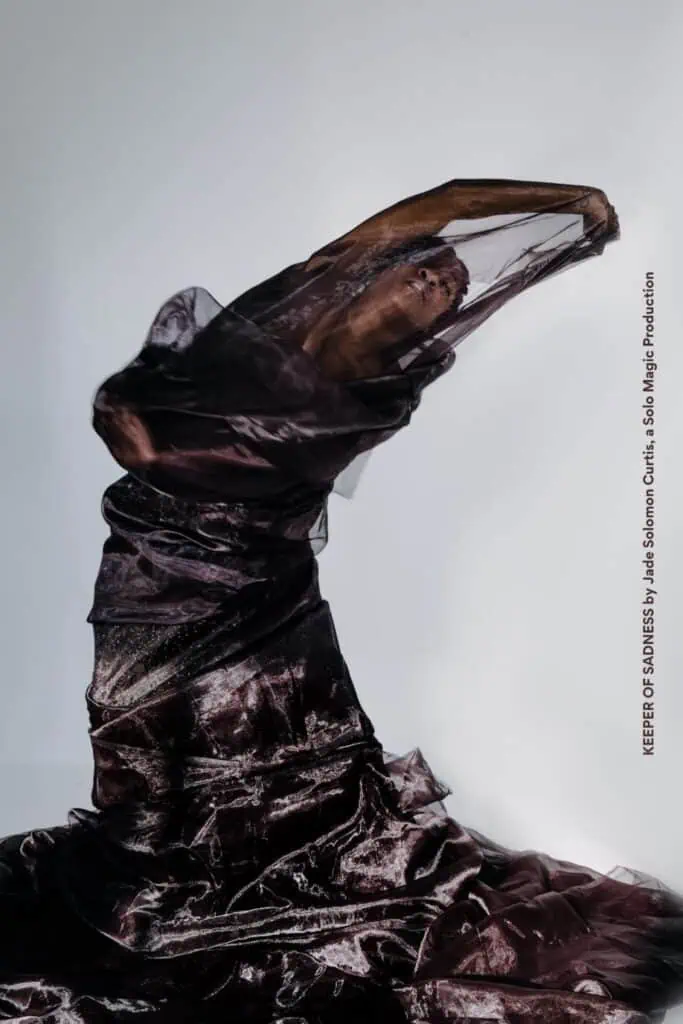
Leaning into tough questions and political discourse, Curtis creates honest, unflinching work with powerful emotionality. Her forthcoming work, Keeper of Sadness, is “immersive performance-installation and living historical archive centering Black Womxn’s grief and stories of transformation,” she notes. “It across three movements: The Unraveling, The Grief, and The Joy, and weaves live dance, sound design, proprietary ethical AI systems, projection media, fabric architecture, and community testimony into an experience that is not only watched but entered. At its center is the Ancestral Avatar, an ancestral intelligence formed by compositing thirty consent-based interviews with Black Womxn in Seattle.”
Eight years in the making, the piece will unfold over two nights in Seattle’s historic Union Station, with viers positioned within the work—a dynamic viewpoint that encourages them to view creative work from a new perspective.
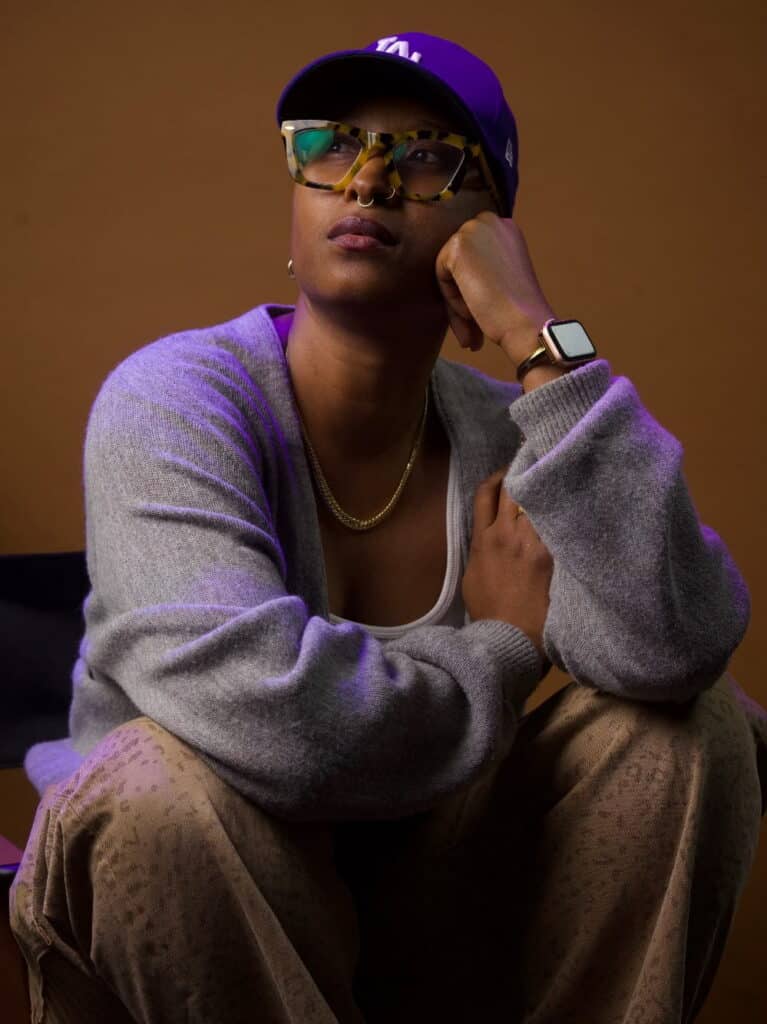
Keeper of Sadness runs August 1 & 2 at Union Station. Tickets are free and available here.
Hometown:
Lubbock, TX
Discipline:
Dance
Favorite Spot in Seattle:
The Union
Describe Your Work in Three Words:
Spirit-led. Expansive. Unflinching.
When did you know you wanted to be an artist?
My nickname growing up was Cree the Creator. I made up dances in my living room, choreographed for my friends, and organized people in nearly every room I stepped into. I observed, I absorbed, and it always came out in movement. Movement was how I understood the world. At that time, my body knew, but I had no idea I could be an artist. My first formal dance class was an audition for a performing arts middle school. It was then that I knew I could be a dance artist.
Where do you find inspiration?
I find inspiration in life: the day-to-day, the struggles, and the complexity of being. No single body, sound, or image is where inspiration lives for me. It is an amalgamation of nuance, and at the intersection where things crash together. In that friction, I am inspired.
What are you working on now?
I am currently investing my time and energy into the Solo Magic platform. I have long been building space for Black artists to experiment, take risks, innovate, and simply be in their genius, not based on how others define them, but by pushing the limits of any container they may have been placed in or even placed themselves in. I am building something I have always needed and a place so many others have also needed. After the August offering of Keeper of Sadness, my team and I will continue to improve the technology process. With the goal of taking this work to other communities as an offering to what often goes unspoken and hidden, we have built an ethical process that holds this work and returns it back to the people and communities it touches.
What draws you to your particular medium?
I am drawn to movement because of what it can embody: what lives in the body, how it reveals itself, how it attempts to conceal itself, and how the body can never lie. Embodiment is the challenge. There is a particular channeling that has to take place, a certain ownership of the emotion, and a realization of how one connects to it. For me, seeing and generating movement makes it real, living, breathing, and undeniable. And knowing that I come from a body, a people who have been stripped of their histories, movement in its purest, most honest form is a language that speaks to and channels a truth I am not sure can always be named. However, it can be felt and witnessed in the body as one of the most profound forms of recognition I know.
Tell us about your proudest moment as an artist.
There are so many proud moments. Sharing my work with my family, speaking deeply about our generational patterns, and seeing those conversations become the impetus for personal change and shifting how we move through the world. Working with artists who understand the complexities in my mind while I am constructing a work and navigating all the moving parts are proud moments and breaths of fresh air. Watching my work impact young people, spark conversation, and prompt reconsideration of a perspective, or hearing someone speak about the work’s impact years later. Or simply seeing the manifestation of a vision made a tangible experience. That is when I know something real happened. That is when I am proudest.
Share one piece of advice you wish you knew when you were first starting out.
The journey of an artist will require a thick skin. Money does not always flow. People will tell you no. People will tell you they cannot see the vision, or that it is not right for the political atmosphere. Do it anyway. Stay pure to the work and maintain your integrity. The vision is yours. Protect it.
Define success on your terms.
Success is building something that outlives the moment it was made in. It is work that changes how someone sees themselves or the world. It is being in full creative integrity and making what needs to be made, not what is easy or expected. It is sustaining my practice long enough to keep going and find peace in the process.
Who are some of your favorite local collaborators?
My favorite local collaborator is my husband, Arif Gursel, who has documented and supported all of my work from the moment I decided to fully invest and transition from company work to a solo artist. He has worn many hats in my productions, from sound designer to website designer, documentarian, technology consultant, and cinematographer.
The community of artists, facilitators, and collaborators who have shown up for this work over the years has roots in Seattle. Each person I have worked with to make my work real approaches the work with a very similar ideology: to make the vision possible. The list of local collaborators I have worked with on many of my projects includes, but is not limited to, Cristina Orbe, Ronalee Wear, Akoiya Harris, Sara Torres, Nia-Amina Minor, and Dani Tirrell.
What do you still hope to accomplish?
I want Keeper of Sadness to engage new voices in every city it reaches and return what it gathers to those communities that helped evolve it. I want Solo Magic to become a sustained platform that provides real pathways for the creation and care of multidisciplinary Black artists. And I want to keep making work that matters long after the performance ends.
If you weren’t making art, what would you be doing?
Making art is at the core of who I am. It is where I feel safest and most true to myself. Art is my dialogue. It is where I can see, hear, and feel. I would be a maker in every lifetime.
Follow Us

Rearview Mirror: Crocodile Guardians, Late-Summer Potato Salad, and a Halloween Costume Hunt
Things I did, saw, ate, learned, or read in the past week (or so).
COOKING WITH ASTER PANTRY A few leaves turn, my inbox fills with fall festival pitches and cozy brunch menus, and suddenly I want to stay home with a glass of wine and cook. I love this nesting season, though I’m not ready to give up summer produce. Earlier this year, I wrote about Seattle chefs…

WALKDONTRUN Returns This Saturday, Turning Downtown Seattle Into a Sprawling Art Show
In its second year, the free festival brings 200-plus artists to a 20-block route September 19, with a secret garden and a former 7-Eleven stocked with art.
Most walks through downtown Seattle involve trying to get somewhere. On September 19, the crosswalk itself might be the reason to stop. Heap Troupe will turn a four-way crossing into a performance, one of dozens of encounters planned for this year’s WALKDONTRUN. The free, all-ages art walk stretches across more than 20 blocks. From 11…

At Two Dot Schoolhouse, Ruth Marie Tomlinson Builds an Artistic Community
For nearly 20 years, the Seattle artist and her husband have welcomed artists, writers, and musicians to a historic Montana schoolhouse. Now they’re searching for its next stewards.
At her solo exhibition last year at The Vestibule, Seattle artist Ruth Marie Tomlinson presented a new series of work inspired by her close readings of British nature writer J.A. Baker’s The Peregrine and Icelandic author Sjón’s The Blue Fox. As if on sheets torn from a sketchbook, her pages included excerpts and outtakes of…

Rearview Mirror: Seahawks Off the Field, Seattle on the Board, and Smoked Oysters
Things I did, saw, ate, learned, or read in the past week (or so).
HOOKED ON KNOCKS Admittedly, I am late to this one. The Seahawks’ first season of Hard Knocks, the HBO series that follows NFL teams through training camp, premiered in August, but until last week, I had never heard of it. To be honest, my football knowledge starts with knowing what a touchdown is and doesn’t…