




Visual Arts
Read More ›
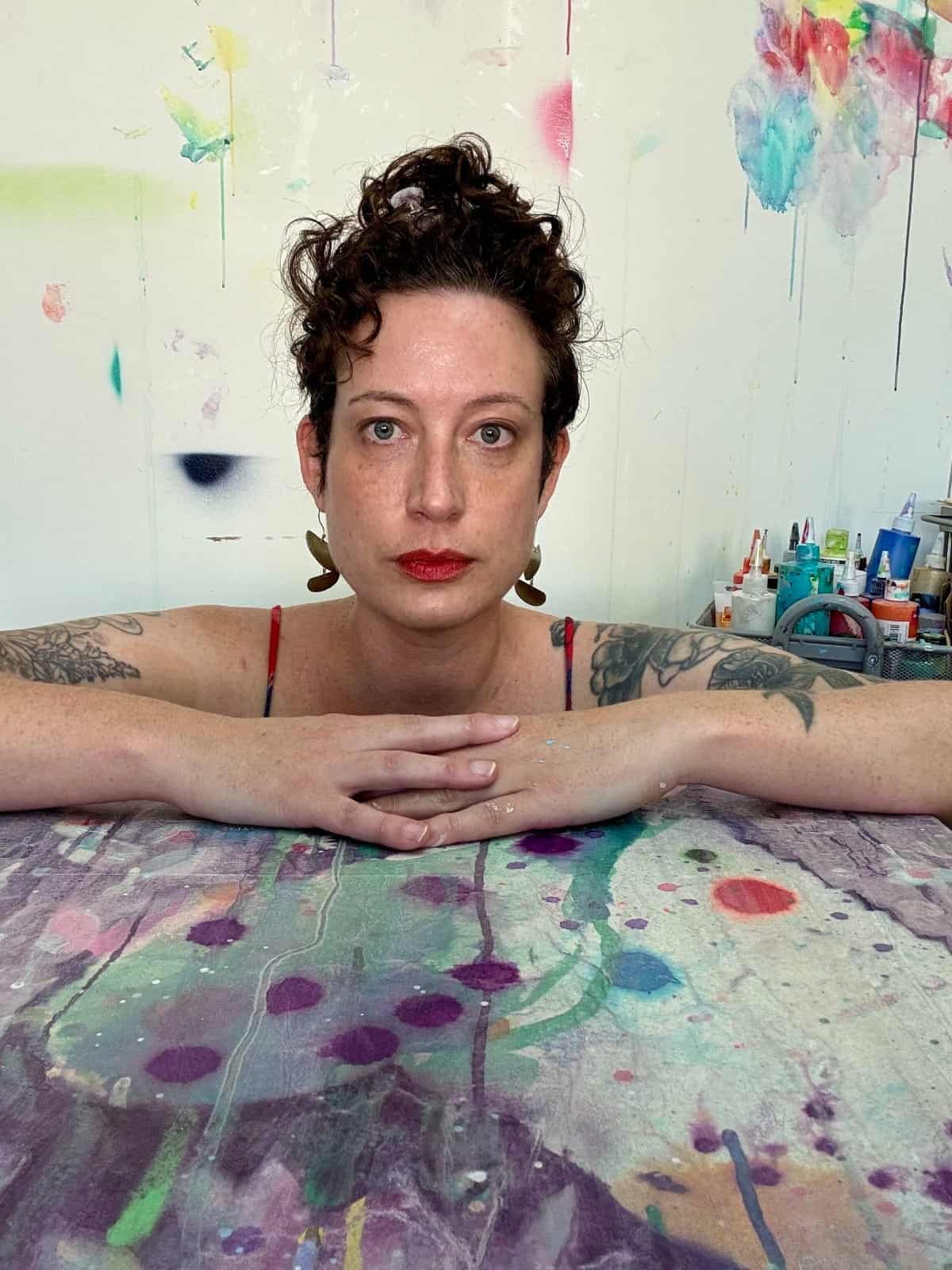
Studio Sessions: Liz Tran
After 26 years in Seattle, artist Liz Tran returned to Oregon, but her impact on our city’s art scene will always remain.
 By Rachel Gallaher August 7, 2026

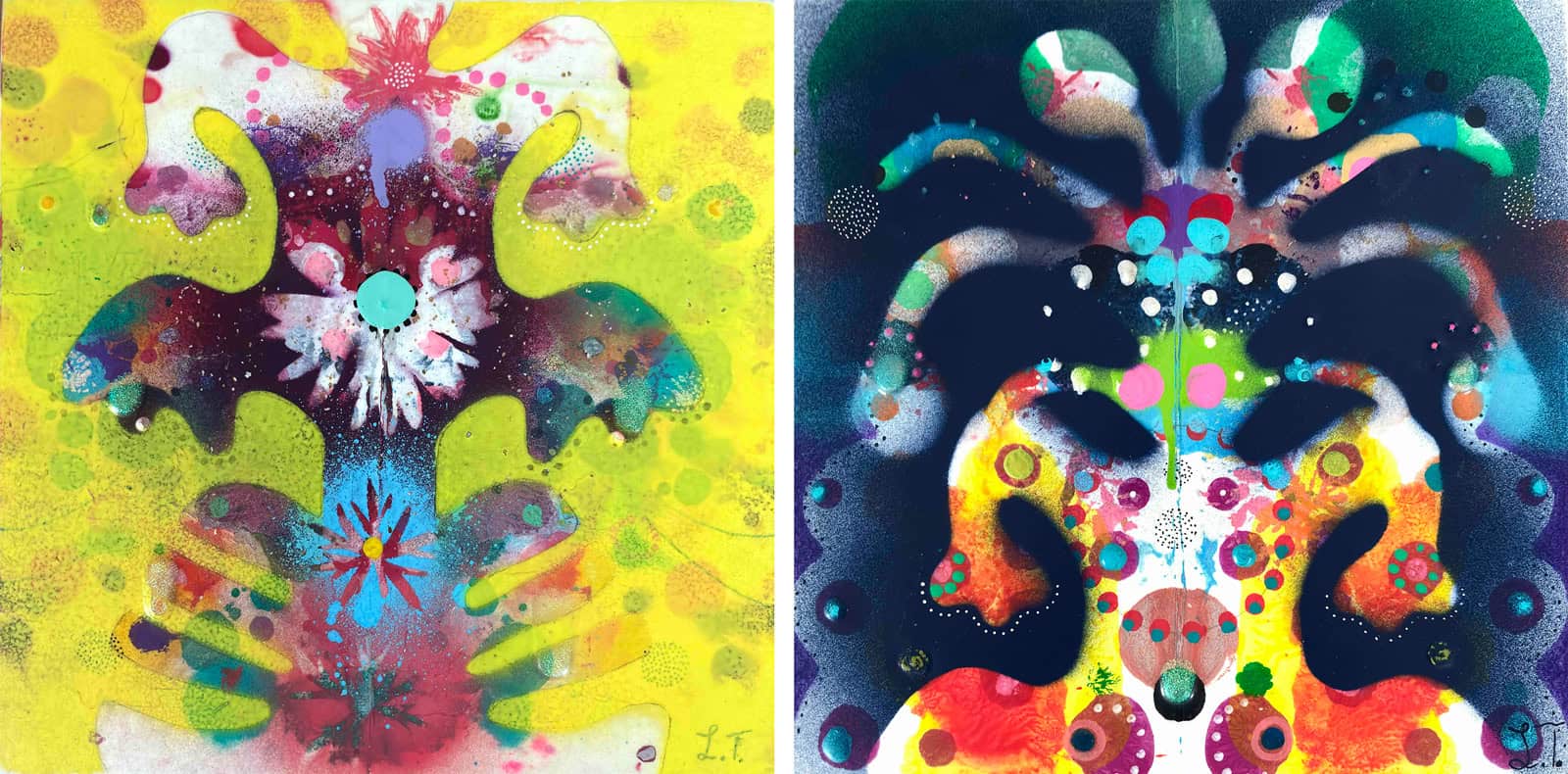
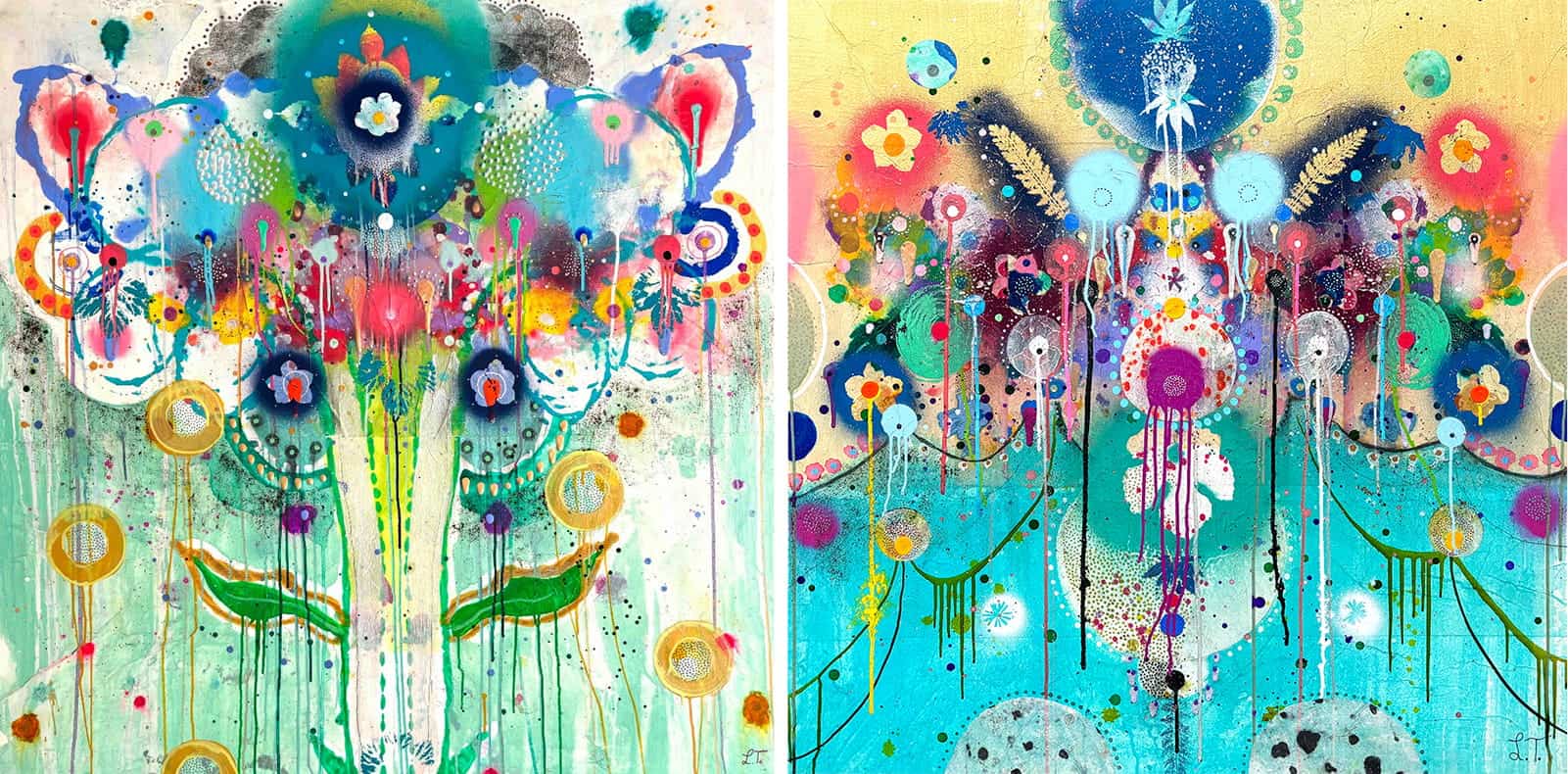
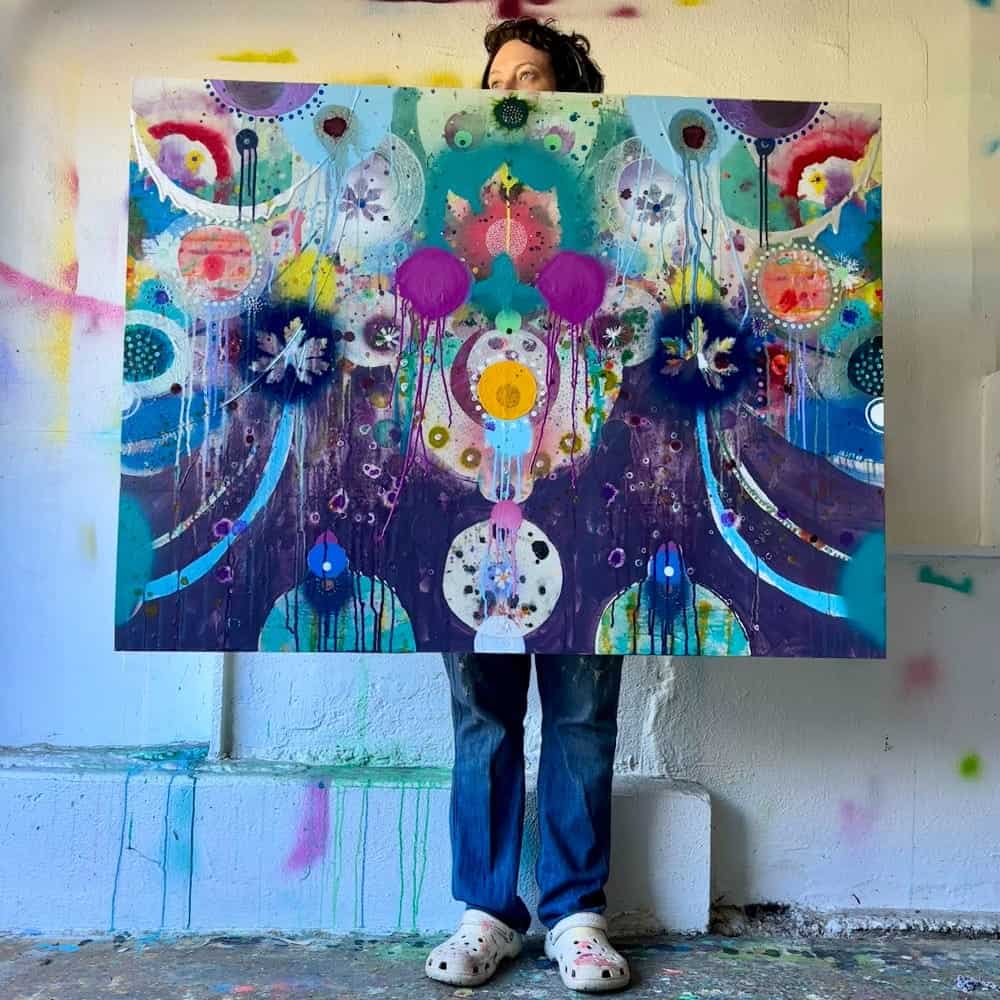
Liz Tran’s work blooms with color, energy, and emotion. Bright drips and drops, petal-like shapes—in Tran’s skillful hands, canvas, paint, and fabric burst into dynamic studies of nature, transformation, life. Born and raised in Oregon, Tran spent the past 26 years in Seattle, returning to her hometown, Eugene, to be closer to her family—and the nature that abounds in the area. Although she’s moved, Tran has left a mark on the city with her work, which remains in dozens of spaces including Harborview Medical Center, the King County Public Art Collection, the City of Seattle’s Portable Works Collection, Vulcan, and others.
A year ago, Tran launched KEACALI with three friends. The social impact strategy firm that offers coaching, organizational mediation, and events/gatherings to spark creativity and connection—and encourage everyone, regardless of industry or job description, to tap into their inner artist as a way to access joy, healing, and grounding. Tran is working on a show for Morton Fie Art in Washington, D.C. that will open this September, but Seattleites can catch her work at the Seattle Art Museum Gallery.
Name: Liz Tran
Hometown: Eugene, Oregon
Discipline: Multi-disciplinary
Favorite Spot in Seattle: The Volunteer Park Conservatory
Describe your work in three words: Energetic. Intuitive. Rhythmic.
When did you know you wanted to be an artist?
Being an artist was never a conscious choice, as I have been continually creating since I was old enough to pick up a crayon.
Where do you find inspiration?
Inspirations that come immediately to mind most readily are nature, magic, the human psyche, music, mycelium, and fellow creatives. In truth, there are far too many to name and some may even exist in realms I have yet to perceive.
What are you working on now?
I’m working on setting up my studio after a big move. Soon, I’ll continue my “Plant Body” series – anthropomorphic shapes naturally growing out of previous paintings.
When is your next show, installation, publication, etc.?
My next show is this September at Morton Fine Art in “the other Washington.”
Tell us about your proudest moment as an artist.
I can’t narrow down my proudest moment to one achievement; instead, it’s a collection of experiences. Seeing my work displayed in healthcare settings, and bringing large, community-based art projects to life has been especially meaningful. Among the most memorable are my collaborations with the artists of Vibrant Palette; a progressive art studio for artists with developmental disabilities, and a large-scale mural collaboration with the students and faculty of Hilltop Elementary School. Because these projects were created during and shortly after the pandemic lockdown, they hold a deeper significance for me. I hope they hold the same sense of meaning for those I had the privilege of collaborating with.
Share one piece of advice you wish you knew when you were first starting out.
Prioritize your well-being and be careful with who you trust. Not everyone has your best interest in mind.
Define success on your terms.
My definition of success is constantly evolving; but it’s currently happiness, sustainability, and the ability to create meaningful impact in an increasingly difficult world.
Thoughts on the current art market?
Artists have never had it easy, but it’s becoming much more difficult (and sometimes dangerous) to operate as an artist in the current climate. Creatives are most needed during challenging times, but that also tends to be when they have the least support.
Where can people see your work right now?
In Seattle, you can see, purchase and even rent my work at the Seattle Art Museum’s sales/rental Gallery.
What do you still hope to accomplish?
One of my long term goals is to create an accessible, welcoming space where people can explore their creativity. I truly believe that the world would be a much better place if everyone had a creative outlet. That vision is already beginning to take shape through KEACALI, a business my friends and I started a year ago. We currently offer a virtual, creative experience called Liberation Lab, and we would one day love to bring it into a physical space where people can gather, create and connect in person.
If you weren’t making art, what would you be doing?
I’d be wandering the forest, foraging for mushrooms.
Follow Us

Rearview Mirror: Crocodile Guardians, Late-Summer Potato Salad, and a Halloween Costume Hunt
Things I did, saw, ate, learned, or read in the past week (or so).
COOKING WITH ASTER PANTRY A few leaves turn, my inbox fills with fall festival pitches and cozy brunch menus, and suddenly I want to stay home with a glass of wine and cook. I love this nesting season, though I’m not ready to give up summer produce. Earlier this year, I wrote about Seattle chefs…

WALKDONTRUN Returns This Saturday, Turning Downtown Seattle Into a Sprawling Art Show
In its second year, the free festival brings 200-plus artists to a 20-block route September 19, with a secret garden and a former 7-Eleven stocked with art.
Most walks through downtown Seattle involve trying to get somewhere. On September 19, the crosswalk itself might be the reason to stop. Heap Troupe will turn a four-way crossing into a performance, one of dozens of encounters planned for this year’s WALKDONTRUN. The free, all-ages art walk stretches across more than 20 blocks. From 11…

At Two Dot Schoolhouse, Ruth Marie Tomlinson Builds an Artistic Community
For nearly 20 years, the Seattle artist and her husband have welcomed artists, writers, and musicians to a historic Montana schoolhouse. Now they’re searching for its next stewards.
At her solo exhibition last year at The Vestibule, Seattle artist Ruth Marie Tomlinson presented a new series of work inspired by her close readings of British nature writer J.A. Baker’s The Peregrine and Icelandic author Sjón’s The Blue Fox. As if on sheets torn from a sketchbook, her pages included excerpts and outtakes of…

Rearview Mirror: Seahawks Off the Field, Seattle on the Board, and Smoked Oysters
Things I did, saw, ate, learned, or read in the past week (or so).
HOOKED ON KNOCKS Admittedly, I am late to this one. The Seahawks’ first season of Hard Knocks, the HBO series that follows NFL teams through training camp, premiered in August, but until last week, I had never heard of it. To be honest, my football knowledge starts with knowing what a touchdown is and doesn’t…