
Woven Wonders
Coast Salish weaving, past and present, on view at the Burke Museum.
By Seattle Mag April 1, 2026

This article originally appeared in the March/April 2026 issue of Seattle magazine.
On display now at the University of Washington’s Burke Museum of Natural History and Culture, Woven in Wool: Resilience in Coast Salish Weaving examines the traditional art form and its importance to Coast Salish communities.
“This exhibition broadens the definition of American art by incorporating Indigenous voices and artistic practices historically marginalized due to biases against Native art and women’s work,” says Katie-Bunn Marcuse, Burke Museum’s curator of Northwest Native Art.
Working with artisans at the Coast Salish Wool Weaving Center, the Burke provides a platform for storytelling and cultural revival. The exhibition features both contemporary and historic items, including blankets, tunics, hoods, and skirts, and examines the seasonal cycle and intricate techniques behind the process.
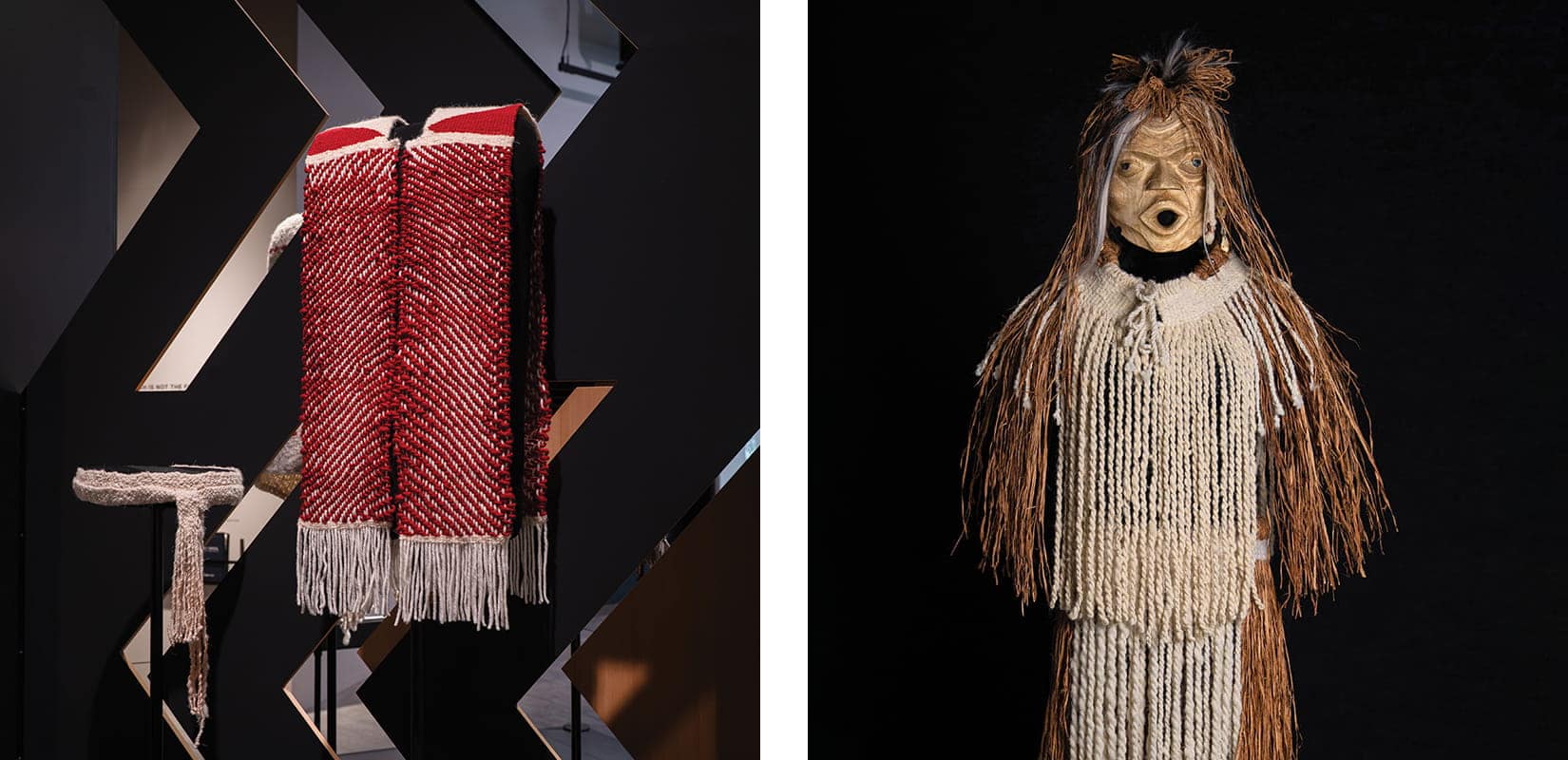
Woven in Wool: Resilience in Coast Salish Weaving runs through August 30. Tickets here.
Follow Us

Lifting the Fog
Beyond Mysticism at Seattle Art Museum broadens the old story of Northwest art.
For a long time, Northwest Modernism got boxed into one idea: mysticism—a way of describing the region’s art as inward-looking, spiritual, and closely tied to nature. That goes back to a 1953 Life magazine story about Mark Tobey, Kenneth Callahan, Guy Anderson, and Morris Graves, the four artists most associated with the Northwest School. Beyond…

Studio Sessions: Cristina Martinez
On the cusp of a new group show, Northwest artist Cristina Martinez reflects on storytelling, motherhood, and personal success.
Artistically inclined from a young age, Cristina Martinez was attending fashion school when she had a realization: Her passion wasn’t necessarily sparked by the clothes she was sketching, but by the stories behind her work. Drawing from her Black and Mexican roots, and from the lives, histories, and cultures of the community around her, Martinez…

Fave Five: Early Signs of Spring
Where to go when everything starts waking up.
March and April always blend together in my head. Around here, there’s still plenty of rain, but it feels a little more manageable as the green sprawls and the crocuses unfurl right before our eyes. This is the time when things respond to moisture and attention, and when getting back into it feels better than…

An Ear For Good Design
Integrated design firm Mithun creates impactful spaces through a culture of listening.
At design firm Mithun, communication plays an indispensable role in the workplace culture. It doesn’t have a single discipline—the practice encompasses architecture, landscape architecture, interior design, and urban design. It doesn’t have a single specialty, with projects spanning educational, cultural, civic, and business sectors. And it doesn’t have visual trademarks: each project is hyper-tailored to…