





Architecture + Design
Read More ›
An Ear For Good Design
Integrated design firm Mithun creates impactful spaces through a culture of listening.

This article originally appeared in the March/April 2026 issue of Seattle magazine.
At design firm Mithun, communication plays an indispensable role in the workplace culture. It doesn’t have a single discipline—the practice encompasses architecture, landscape architecture, interior design, and urban design. It doesn’t have a single specialty, with projects spanning educational, cultural, civic, and business sectors. And it doesn’t have visual trademarks: each project is hyper-tailored to the client’s needs, rather than an in-house style.
“We listen to our clients, we listen to [the] community, we listen to the environment, we listen to the site,” says Dave Goldberg, president of Mithun, when talking about what defines the company’s work. “People feel good in these places and sometimes aren’t quite sure why, but I think it’s a result of skillfully moving through that process of listening.”
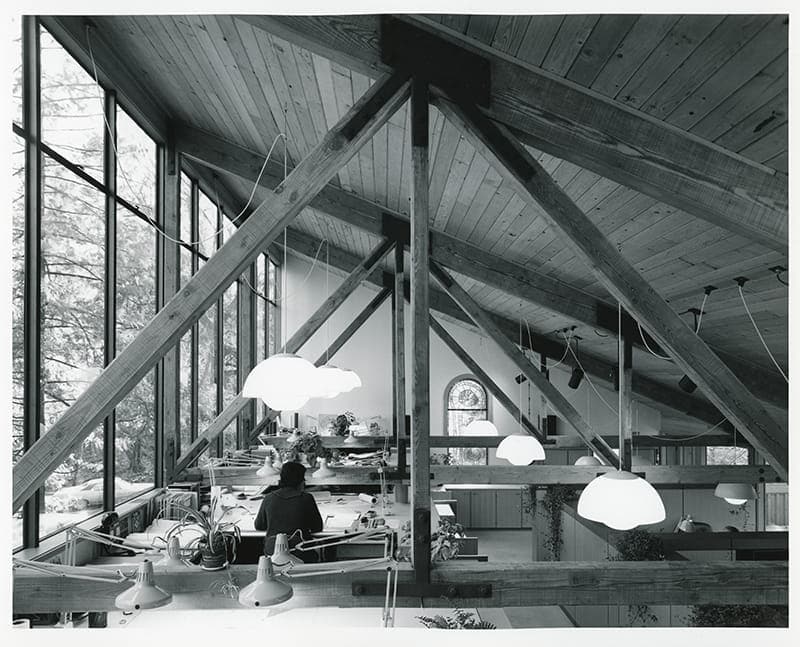
What sets Mithun apart is something you can’t see or quantify, but feel and take part in. If you’re a partner, it’s the curiosity. And if you’re walking within one of its buildings or sites, it’s the experience you have: the result of its efforts to create harmony among the human, natural, and built environments.
Founded in 1949 by Omer Mithun, a professor of architecture at the University of Washington, the firm opened in Bellevue with a handful of staff members working primarily on mid-century modern designs. Mithun now has offices in Seattle, San Francisco, and Los Angeles, with more than 200 staff and a wide range of project types across the country. In 2023, it was recognized with the industry’s highest honor, the American Institute of Architects (AIA) Architecture Firm Award. In 2026, as the firm enters its 77th year, it is scheduled to debut several projects for high-profile Seattle cultural institutions that highlight its longstanding and deep impact on the city, in ways both visible and invisible.
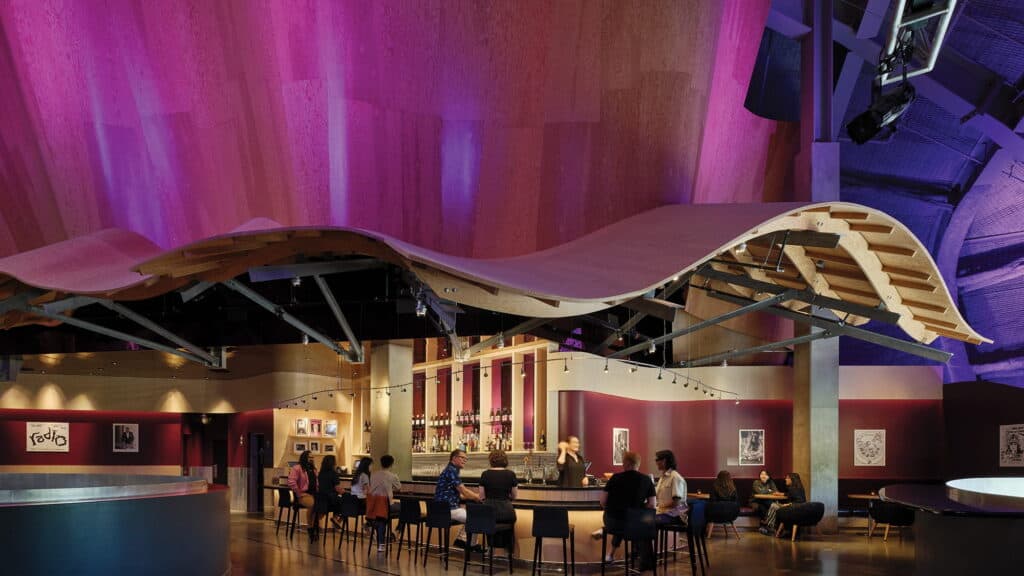
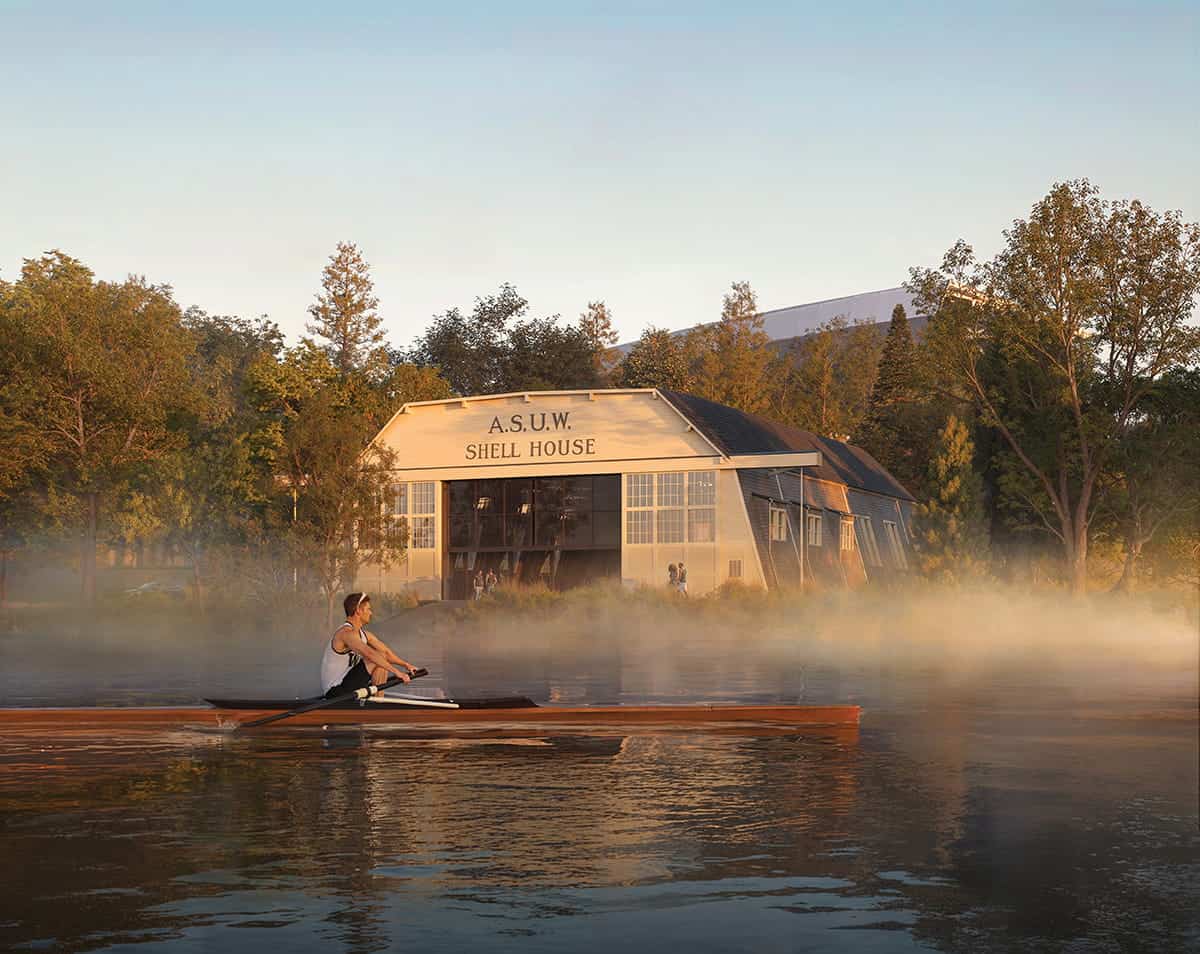
Seattleites can enjoy Mithun’s recent work on MOPOP’s café and lounge spaces, and this fall, the reimagining of Benaroya Hall’s public spaces, which will make people want to arrive early or stay later for a drink and conversation around a performance or event. Not as easily seen (yet) are its urban planning efforts with the Public Development Authority on the Pike Place Market master plan, which was completed in 2024 and will now be implemented during the next few years. And this fall, the 108-year-old Associated Students of the University of Washington (ASUW) Shell House will become a new home for student life and learning.
A 1978 multipage spread in Family Circle magazine offers a revealing look into the firm’s DNA and how it carries on today. The article’s headline proclaims “Solar Energy House,” and the images—plants and a netted hammock in the solarium, a red-wire grid wall system in the kitchen, colorful floor pillows in the living room—would get Instagram likes today. The house was the first in a series of passive solar homes by Mithun; the southern-facing solarium halved heating costs, and its water conserving plumbing and specially designed lighting cut the cost of electricity used for lighting by 60 percent. Partner and architect Rich Franko reflects that rather than a specific design or project blueprint, a design’s embodied values make up the genes of Mithun. “It wasn’t like, ‘Hey, here’s the cool building we’ve been doing, but let’s make it more sustainable,’” says Franko. “It’s saying, ‘As we pull back and look at all these elements—whether it’s community engagement or sustainability—how can it inspire form? How can it inspire the design?’”
Following experimental residential projects like the solar homes, Mithun established itself early as a leader in the sustainable design movement that emerged in the 1990s and early 2000s. The firm now tallies more than 100 LEED [Leadership in Energy and Environmental Design] projects completed and 12 in process. Seattleites may be most familiar with the award-winning REI Seattle flagship store with its iconic freestanding climbing tower. Completed in 1996, the building revitalized a bedraggled area of downtown and reimagined what a retail space could be. Franko also views it as a bellwether moment for the firm, one that planted seeds that continue to sprout in numerous ways throughout its various projects.
“Occasionally, I’ll use REI as an example,” he says almost incredulously, noting that initial designs for the project would have begun as early as 1994,“because it’s such a strong weaving in of landscape, experience, and sustainability.”
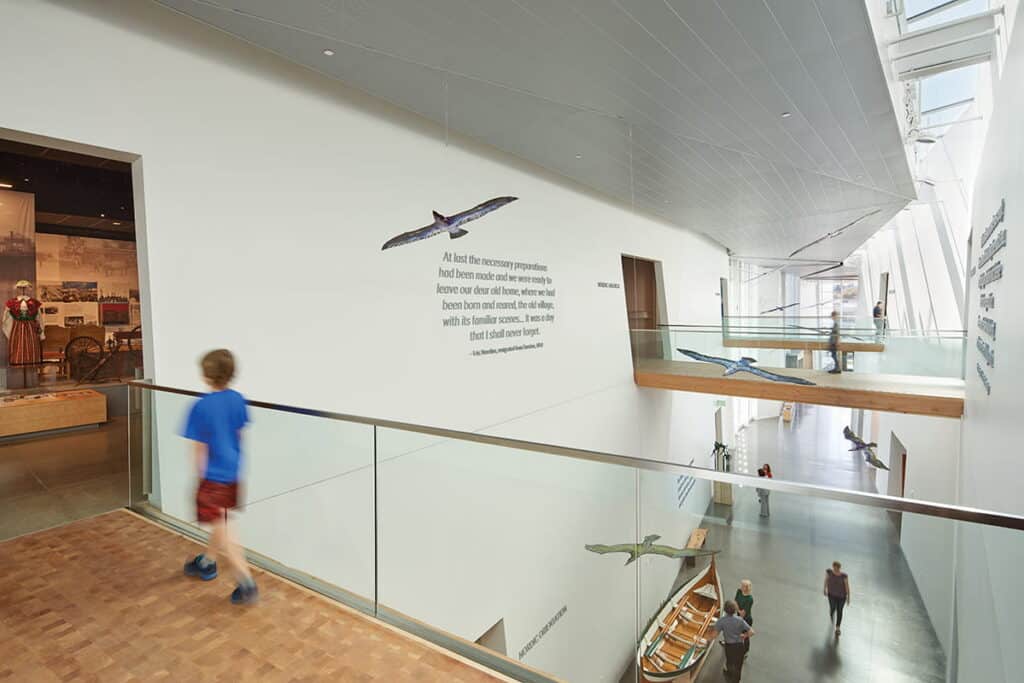
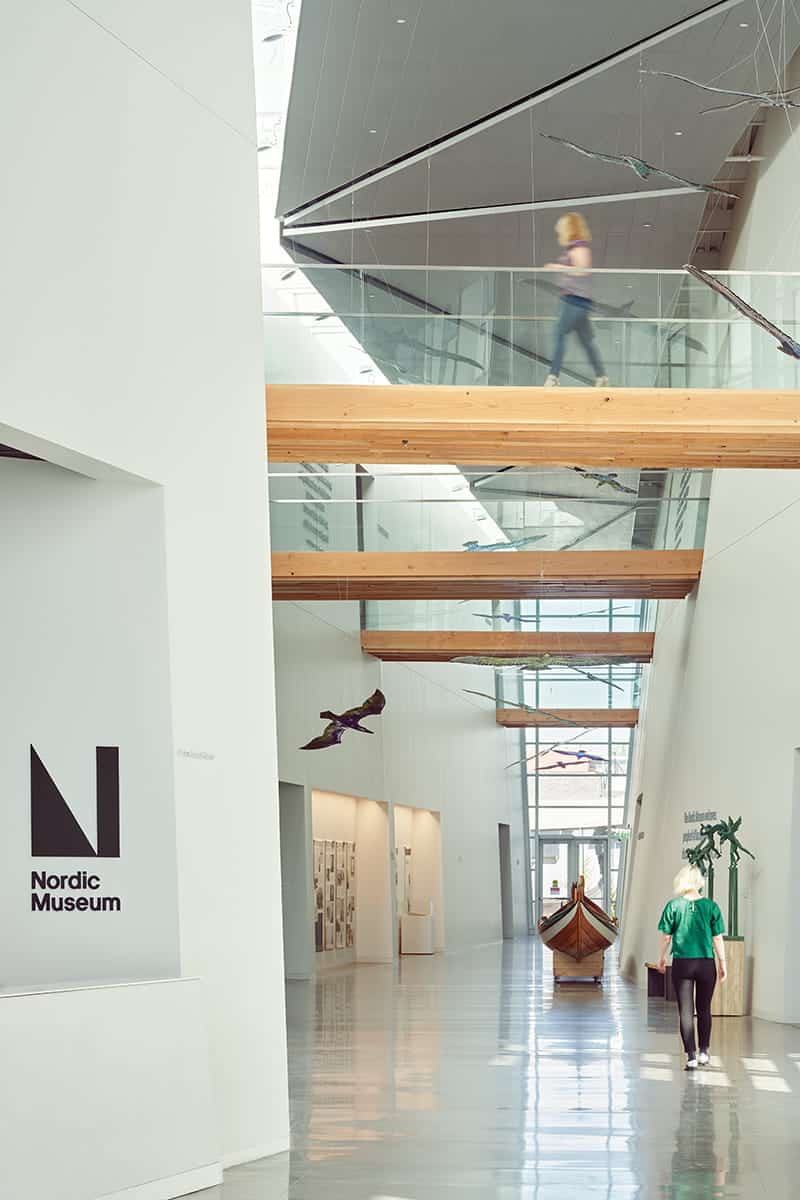
He follows the throughlines, name-checking IslandWood, the environmental education nonprofit on Bainbridge Island, completed in 2002, and Ballard’s National Nordic Museum, opened in 2018. Both are LEED Gold certified (IslandWood was one of the first certifications in the world at the time), and both feature what Franko calls “the choreography of experience,” in which the design incorporates arrival moments to guide visitors through the building. He notes that the two projects also represent Mithun’s continued endeavors in both educational and cultural spaces over the years. It’s developed more than 25 housing projects on campuses nationwide, and designed many cultural institutions, including the Suquamish Museum (2012) and the Louisiana Children’s Museum in New Orleans (2019), which won over 10 awards for its innovative, trauma-informed design created in the wake of Hurricane Katrina.
Mithun’s forthcoming renovation of the university of Washington’s Shell House represents an apotheosis of its practice, bringing its varied disciplines—architecture, interior design, and landscape architecture—to bear on a cultural, educational, and historical space all at once. Situated on the southeasternmost point of the UW campus, the building looks out over where the Montlake Cut opens into Union Bay. For 8,000 years before the cut was made in 1916 as part of the Lake Washington Ship Canal connecting Lake Washington, Lake Union, and Puget Sound, it was a shallow isthmus used as a natural canoe portage, called stex̌wugwit (“Carry a Canoe” in Lushootseed).
The current building was first constructed by the US Navy in 1918 to store seaplanes. George Pocock began his renowned rowing shell workshop there in 1922, alongside the UW men’s rowing team, which used it as a shell house from 1920 to 1949; the crew’s 1936 Olympic gold medal win was made famous in Daniel James Brown’s best selling 2013 novel, The Boys in the Boat, and subsequent Hollywood adaptation. It was this renewed attention to the space, dormant since 1976, that spurred renovation efforts.
In approaching the project, the firm first recognized the site’s significance as a resonant palimpsest of the area’s history. Franko notes the literal palimpsests inscribed there as well: a board with chalk writing from the crew, the outline of dripping varnish from boat hulls in the Pocock shop. Exhibits created in collaboration with Ralph Appelbaum Associates will educate visitors on the building’s history, and visitors will walk through Pocock’s restored workshop. The present and future experiences of the shell house will be served by a flexible event space and meeting rooms for public and student gatherings.
Carmen Scraper, a project manager at the University of Washington who facilitated discussions between Mithun, UW, and contractors, brought up familiar words when talking about the work. “What came through during the process was Mithun’s openness and willingness to listen to feedback when challenged,” she says.
At one point (when the design was well over half completed), the project hit a two month delay and needed some reevaluations. The sticking point? A mezzanine area—planned as a space for gathering that connected the main and second floors—had been successively pared down for budget and code constraints until it no longer excited anyone. The Mithun team suggested going back to the drawing board. The new design is a waterfall of discrete seating areas that reintroduces the dynamic energy needed for the space, now with a clever nod to bleacher seating. It also ingeniously managed to fit in much-needed storage space underneath. Rather than the budget concern being a hindrance, it was an invitation to be more creative, and the solution was an improved design that found yet another way to reflect the soul of the space. “Our job as designers,” says Goldberg, “is to synthesize all this information and try to help a community or an institution or city realize its goals and make something that’s exceptionally beautiful.”
Follow Us

Studio Sessions: Heidi Grace Acuña
Drawing on her Filipino heritage, interdisciplinary artist Heidi Grace Acuña brings sculpture and fashion together with a spirited approach to ancestral traditions.
Heidi Grace Acuña has made me fond of crocodiles. At her exhibition at ARTS at King Street Station, I could study the little ones alongside their larger companions, peer into mouths lined with uneven gold teeth, and circle their clay bodies with all the curiosity and delight that fear would ordinarily keep in check. The…

CID Night Market Returns This Saturday With a New Food Walk
More than 100 vendors will take part in the free festival, with food specials starting at $6.
My daughter and I were recently watching the Tokyo episode of Eugene Levy’s The Reluctant Traveler, and we couldn’t get over how pretty the lanterns looked along the busy streets. It made me want to be out in a city at night, somewhere with good food and plenty of people. Now in its 19th edition,…

Rearview Mirror: Crocodile Guardians, Late-Summer Potato Salad, and a Halloween Costume Hunt
Things I did, saw, ate, learned, or read in the past week (or so).
COOKING WITH ASTER PANTRY A few leaves turn, my inbox fills with fall festival pitches and cozy brunch menus, and suddenly I want to stay home with a glass of wine and cook. I love this nesting season, though I’m not ready to give up summer produce. Earlier this year, I wrote about Seattle chefs…

WALKDONTRUN Returns This Saturday, Turning Downtown Seattle Into a Sprawling Art Show
In its second year, the free festival brings 200-plus artists to a 20-block route September 19, with a secret garden and a former 7-Eleven stocked with art.
Most walks through downtown Seattle involve trying to get somewhere. On September 19, the crosswalk itself might be the reason to stop. Heap Troupe will turn a four-way crossing into a performance, one of dozens of encounters planned for this year’s WALKDONTRUN. The free, all-ages art walk stretches across more than 20 blocks. From 11…