





Features
Read More ›
K9s For Warriors Helps a Whidbey Island Veteran Get Back Out Into the World
With his service dog Atlas beside him, Navy veteran Justin Hughes is finding his workdays—and everyday outings—easier to navigate.
 By Sarah Stackhouse September 22, 2026

When Justin Hughes gets frustrated while on his computer at work, a nose sometimes appears between the armrest and the back of his chair. It belongs to Atlas, his service dog, who has been resting on a bed behind him. Hughes runs simulators for the military, and irritation can build before he recognizes what’s happening. Atlas gets up and pushes his nose through the gap. Hughes turns to pet him, and a few minutes later, he sometimes can’t even remember what made him so angry.
For Hughes, an Oak Harbor resident who spent 12 years in the Navy, these interruptions have changed the experience of getting through the workday. He describes Atlas as an anchor, although anyone walking past might miss the attention the dog pays him. Atlas nudges his leg as they walk and looks up to check his response. Even during our phone interview, Hughes tells me Atlas is pressing his head into him. “So there’s a lot happening between those ears all day long,” he says.
Hughes enlisted at 20, after about two years of college, and deployed four times to the Middle East and Africa. The Navy was the only job he’d had since leaving his family’s home. His usual workplace was the back of an airplane, and within about a month of leaving the military, he found himself struggling to concentrate in an office, frustrated by the chatter around him. Over the following months, his emotions became harder to manage. When the German shepherd he shared with his wife, Liz, died, he realized how much the dog’s joyful greetings had helped him at the end of the day.
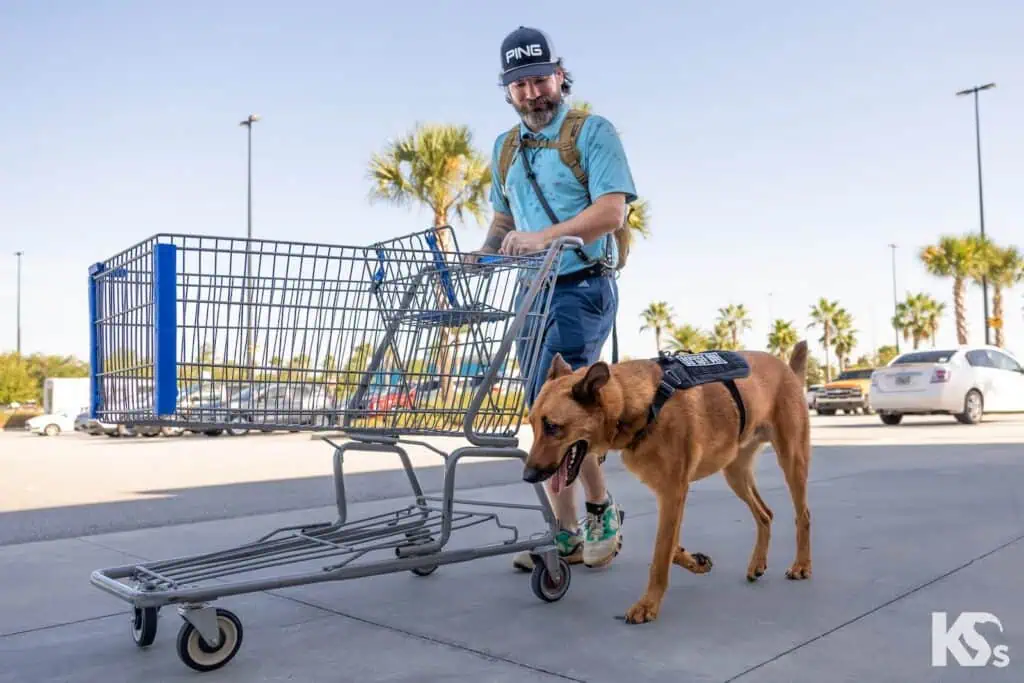
Hughes searched online for a service dog after Liz suggested it. His search brought him to K9s For Warriors, a nonprofit that trains service dogs for veterans with PTSD, traumatic brain injury or military sexual trauma. The organization draws many of its dogs from shelters and provides the dog and residential training at no charge to the veteran.
The need is substantial. Nearly 20 veterans die by suicide each day nationwide, according to the Department of Veterans Affairs’ 2023 data. Founded in 2011, K9s For Warriors reported in August that it had paired more than 1,350 veterans with service dogs and rescued more than 2,500 dogs from shelters across the country. In Washington, the organization had paired more than 20 veterans with service dogs as of June, with another 12 accepted into the program.
Hughes spent about two days searching for a catch (what would he have to pay, and what would be required of him?) before deciding to apply. Then came a wait of roughly a year and a half, during which staff called regularly to ask how he was doing. They wanted to understand his routines, including which hobbies he had given up and hoped to try again.
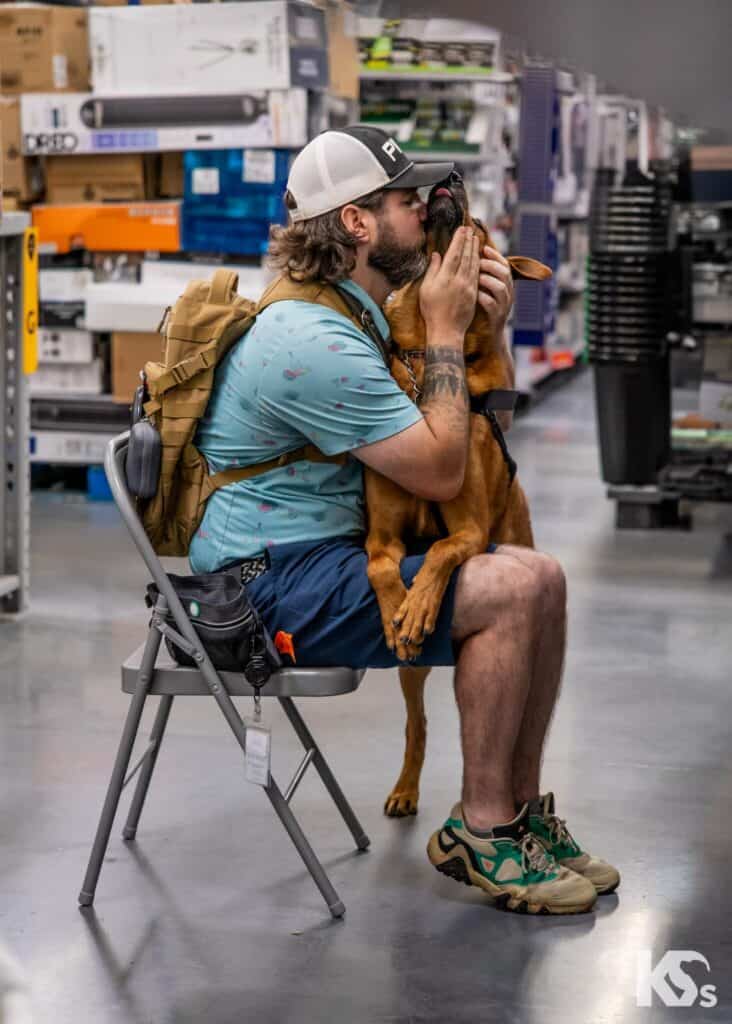
“We look at the Veteran’s individual needs, lifestyle, personality and goals, and then consider which dog’s temperament and abilities are best suited to them,” explains Lindsay Grayson, K9s For Warriors’ chief revenue officer. The dogs learn tasks such as creating space around their handlers in crowds and using their bodies to apply pressure. Veterans attend an 18-day residential program to learn to work with their already-trained dogs.
Hughes’ match was Atlas, a large, energetic mixed-breed rescue dog with expressive eyebrows and a habit of putting his whole hip into an affectionate lean. “He’s a beautiful specimen. He’s an absolute goofball when he wants to be,” Hughes says. He recalls his trainer describing an outdoorsy dog who liked staying close to his person. Hughes traveled to the organization’s Florida headquarters for training in 2024.
After veterans return home, staff remain in contact and provide support, including case management and mental health resources. Grayson says some of the changes veterans report involve activities they had stopped doing, such as grocery shopping or attending social events. “For many Veterans, the relationship with their Service Dog helps them regain a sense of independence and confidence. Ultimately, it’s about helping Veterans reclaim parts of their lives that may have felt out of reach.”
For Justin and Liz, changes began within about a week of coming home with Atlas. They started going out together again. They saw a movie; Hughes estimates he hadn’t been to one in 15 years. Liz enjoys farmers markets, which he had avoided because of the crowds. With Atlas, he began thinking about how much the dog might enjoy walking around and smelling everything. “I don’t even put myself in the equation,” he says. An outing could begin with wanting Atlas to have fun. “And then I end up having fun too.” At home, the couple began joking around the way they had early in their marriage. “Atlas definitely woke the house back up,” Hughes says.
He also began talking to strangers instead of pretending he hadn’t heard their questions. He and Liz are now active at their golf club, where Atlas accompanies him for every round.
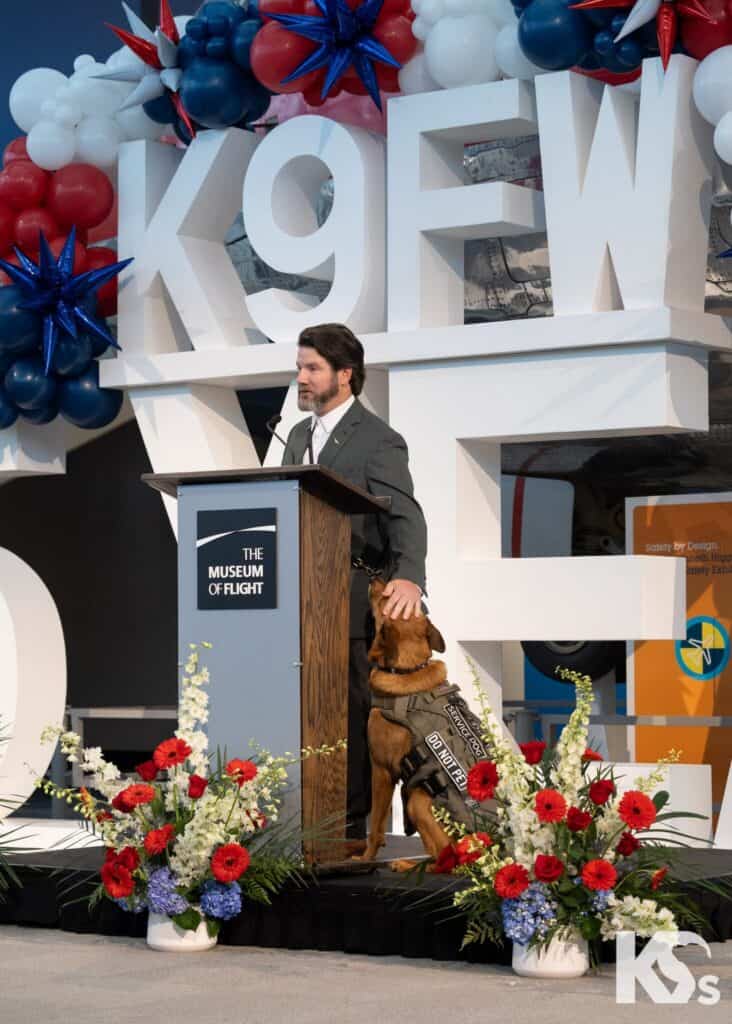
In June, Hughes faced an audience at K9s For Warriors’ 15th anniversary celebration at Seattle’s Museum of Flight. “That was terrifying,” he says. Atlas was beside him as he spoke, and Hughes, an aviation enthusiast, found that looking at the aircraft helped distract him from his nerves. Going places with Atlas gives him opportunities to practice managing situations he once would have avoided. He also wanted the organization’s supporters to meet the dog he loves so much. Atlas’s former life in a shelter stays with Hughes, who’s happy to report that these days, the dog rides in the back of a Cadillac with his own seat spacer. “Why would I not give everything to make sure he’s having a great time?” he says.
That concern for Atlas’s enjoyment has made some unlikely outings worthwhile. During a winter freeze, Liz, who was learning to golf, suggested they go play. The course was too icy for a proper round, but they whacked the ball around anyway. Atlas usually likes to flop onto his back and rub against the closely cut grass. On the ice, he was “sliding all over the place, just having a blast,” Hughes says. In telling the story, Hughes contrasts the outing with the option of staying in his warm house with a cup of hot chocolate. “I would rather be out there, you know?”
If you or someone you know is struggling or having thoughts of suicide, call 988 and press 1 to reach the Veterans Crisis Line, or text 838255. Veterans interested in applying for a service dog can learn more at K9s For Warriors.
Follow Us

Seattle Sauna Festival Returns to Ballard for Another Round
Mobile saunas from around the Northwest will gather at the National Nordic Museum November 7-8.
In Seattle, November is usually something to face in a raincoat. At the National Nordic Museum, you can meet it in a bathing suit. The Seattle Sauna Festival returns to Ballard November 7-8 for its second year, bringing mobile saunas from around the Northwest onto the museum grounds. Visitors can try several, cool off in…

Seattle Is Changing the Conversation Around Death
Death is one of life’s few certainties, yet it remains remarkably difficult to talk about. Across Seattle, a growing network of practitioners, advocates, and entrepreneurs is trying to change that. From grief walks to death doulas, Seattle is building a new language around loss, and one woman wants to bring more of that conversation into…


Do These 10 Popular Health and Wellness Trends Actually Work?
Local experts break down the results, risks, time, and cost behind everything from contrast therapy and red light masks to protein, Pilates, and rucking.
If you’re online at all, you’ve likely been exposed to any number of must-try workouts, don’t-miss beauty tips, and change-your-life diet suggestions purporting to help you lose weight, look younger, feel more energized, and sleep better. Scrolling social media often feels like a never-ending advertisement for new ways to spend money, presented through the shiny,…