
The Seattle Naturals
Gaurav Tiwari and Andy Comer are on an unadulterated mission: to bring awareness of naked wine to the masses
By Stefanie Ellis December 20, 2023

This article originally appeared in the November/December 2023 issue of Seattle magazine.
A year ago, at a cocktail bar in Reykjavik’s Hlemmur Food Hall, the bartender recommended pairings for my smoked cod with potato mousse, and said he just got a beautiful pet-nat from France. Though not a wine critic by any means, I’ve had my fair share of wine from all over the world, even geeking out over Vinho Verde for a time, but I had no clue what a pet-nat was. When a glass of sparkling white wine was placed before me, I liked that its bubbles were only mildly flirtatious, keeping me entertained by its delicate effervescence. My first sip reminded me of an apple just before it begins to ripen.
I’ve since learned that pet-nat, or pétillant-naturel (which means natural sparkling), is often viewed as a funkier cousin to Champagne, though the two wines employ different fermentation techniques and originate in different parts of France. But when most people who know pet-nat think of it, they don’t think about geography or fermentation. They think about the fact that it’s a natural wine.
And though a relatively new beverage trend in the U.S., natural wine is, of course, not new. It’s simply on more people’s radar, and its environmentally sound production methods help wine consumers make more informed choices about what’s in their glass.
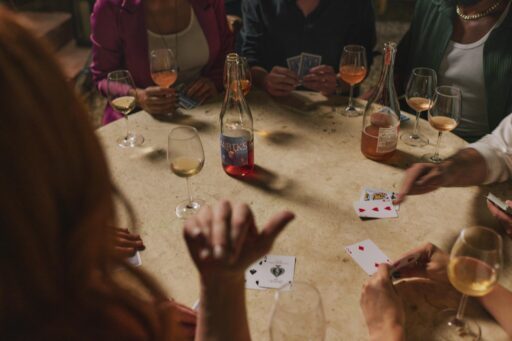
It’s a new frontier in which Gaurav Tiwari and Andy Comer, co-owners of The Waves — an ecommerce-based natural wine club whose mission is to educate consumers on the benefits of natural wine while supporting the small-scale farmers who produce it — hope to serve as tour guides.

Both transplanted New Yorkers who made their way to Seattle just two years apart, Tiwari and Comer met at school functions for their kids, and discovered they shared a love for wine.
“Andy and I got together often and were sort of nerdy about wine,” Tiwari recalls. “We realized we were intellectually curious about wines, read a lot about them, and it was still very hard to understand and shop for wines. And finding good natural wines added even more complexity to a category that was already hard to shop. We realized shopping for wines has not kept up with how consumers make decisions and shop these days. It’s not very digital friendly, and keeps people out.”
Comer, the first digital editor for monthly men’s magazine GQ, later became the founding wine director for Tomo, where he earned the Seattle restaurant a 2022 James Beard Award nomination for Outstanding Wine Program. His career path taught him how to take difficult topics and make them more relatable to people, and natural wine often requires a good deal of education, which he delights in doing.
“I don’t think people are conscious of the fact that natural wine is the way wine was made for thousands of years,” he says. “Most consumers think wine is a natural product anyway, but wine has a serious transparency problem. It’s very difficult to tell what’s actually in what you’re drinking.”
Tiwari adds that there is no singular agreed-upon definition of what natural wine is. It’s often a debate among wine critics, but the definition he and Comer use at The Waves is simple: low-intervention, organically-farmed grapes with no synthetic additives.
They admit that, even as longtime wine connoisseurs, they were not fully aware of the vast disparities that can exist from bottle to bottle.
“We were pretty shocked by what we learned,” says Comer, which was that “a lot of the wines we were drinking had chemicals in them we were not aware of. We learned up to 76 additives — including things vegetarians could not ingest, like fish bladders, egg whites, gelatin — are allowed without any disclosure to the consumer in the U.S. These additives are not innocent, harmless things as they are made out to be, and it really concerned us.”
The duo sources products from only organic farms, something Comer says makes up just 5% of the world’s vineyards.
Tiwari, whose background is in technology and innovation, worked at Amazon nearly a decade, leading teams responsible for category management, technology, data science, and product development. He loves looking at the wine selection process from both the consumer and technical aspects, creating what he says is a unique algorithm.
“You reach out for wine when you’ve had a hard day at work or you’re hosting a dinner party or going to a friend’s house,” he says. “Wine is not sold that way. You can go to a grocery store and see it’s sold by grape varietal, or by country or a random point system, but for us, the best wine experiences happen when there is a knowledgeable person helping you. We converted our expertise into an algorithm. The only way to shop our store is by lifestyle.”
Recommendations for the 350-plus wines in The Waves’ digital store are based on specific occasions, such as birthdays, weddings, or anniversaries.
Comer says the digital experience they’ve created replicates what you’d find by visiting a great restaurant or wine shop, but adds in a lot of personal touches, such as introducing you to who made your wine, where it comes from, and by something much less stuffy than talk of tannins or grape varietal: the vibe.
The duo believes people want their wine to complement their lifestyle, and taste is just as important as the feeling they are going for when choosing a beverage.
Tiwari notes that natural wines are not just cloudy orange wines and pet-nats, the media darlings most people hear about. He adds that it’s important not to assume that just because you prefer traditional, classic wines, it means you wouldn’t enjoy natural wine. Waves sells natural wines that aren’t funky, cloudy, or different in flavor.
Flash back to me in Iceland, sipping my pet-nat surrounded by bartenders and locals waxing poetic about natural wine. Why were they talking about it more than my friends in the U.S.? Is it because all natural wine comes from Europe?
France emerged as the epicenter for natural wine in the mid-20th century. “Countries in the EU have thousands of years of tradition making wine, but that’s where you saw the culture of traditional wine production rise up against the tide of industrialization,” he says. “That movement toward rejecting chemical arming is so much a part of the DNA of the culture in Europe.”
Because the winemaking tradition is so much younger in the U.S., he explains, the number of winemakers creating natural wine here is much smaller. But that’s not to say The Waves’ curators don’t put a great deal of effort into finding U.S.-based growers and winemakers to supply their catalog. You’d expect nothing less from industry legends Rajat Parr, a winemaker, sommelier, author, and three-time James Beard Award winner — who serves as partner in the business — and sommelier Billy Smith, whose work at The Four Horsemen in Brooklyn led the restaurant to the 2022 James Beard Award for Outstanding Wine Program. He is the chief wine officer.
About 10% of ingredients come from the U.S. Up to 80% comes from continental Europe in countries like Austria, Georgia, the Czech Republic, and Hungary. Some also come from South Africa and Australia.
“Our calling is not to sell wine,” Comer says. “It’s to spread awareness (about) the virtues and benefits of organic farming for the planet and communities, and to bring the creative products of the world’s great ethical farmers to people’s door. It just makes better wines. Period. And we want to share that.”
Follow Us

Palace Kitchen Celebrates 30 Years
The Belltown staple still feeds the city after 10 p.m.
After the last tickets come off the rail, floor mats are hauled out to be hosed down, oven hoods are scrubbed, aprons come untied, and someone counts the drawer. It’s a familiar ritual in restaurant cities everywhere. When the shift ends, cooks and servers go looking for a drink and something to eat. For three…

Protein Without the Pressure
In her new cookbook, Seattle author and dietitian Rachael DeVaux keeps healthy eating grounded in real life.
Rachael DeVaux is not afraid of beef. That might sound obvious, but in a wellness culture still haunted by plain chicken breast and low-fat everything, her enthusiasm for grass-fed ground beef feels almost radical. The Seattle-based New York Times bestselling author, personal trainer, and founder of Rachael’s Good Eats has built a following of more than 3.5…

Restaurant Roundup: Nordic Cuisine and a Brazilian Brick-and-Mortar
Here’s what was served up recently in the Emerald City.
Monday nights are worth celebrating—you made it through the first day of the week, so why not treat yourself to a delicious meal? Unfortunately, but understandably, plenty of restaurants are closed. But at these spots, not only are the kitchens still serving, the quality doesn’t drop off post-weekend, providing a perfect opportunity for a surprise…

Whisky in the Wild
Good spirits.
Over the summer, Westland Distillery announced a new offering, inspired by Washington State. Made in Seattle and taking cues from the Northwest outdoor lifestyle, Watchspot Whiskey blends eight-year-old Westland American Single Malt with grain whiskey from America’s heartland, resulting in a pour that has notes of toasted grain, milk chocolate, biscuit, apricot, and cherry pie….