
The Houses That Fufu Built
Two Seattleites turn culinary holes in their hearts into popular West African restaurants
By Naomi Tomky August 12, 2024

This article originally appeared in the July/August 2024 issue of Seattle magazine.
Fufu, the shared starch of West African cuisines, is a soft pillow of slightly stretchy dough from which eaters pull chunks to use as a utensil and blank canvas for spicy soups. It represents the long traditions of pounding tubers — plantain, cassava, taro, or others, depending on where and by whom — even when prepared from flour on the stove top. For the West African community in Seattle, fufu represents comfort. But until recently, not a single restaurant in the city served it.
No restaurants served egusi soup when Chiedu Idayi moved to Seattle in 2011. Coming from Dallas, he missed the efo riro, a spinach stew, and asun, peppered goat, he could find at Nigerian restaurants there. Tina Fahnbulleh couldn’t believe not a single place offered sweet potato greens, a staple of the Ghanaian and Liberian cuisines she grew up on when she arrived from Philadelphia in 2016.
Both slowly found the same solution: opening their own restaurants. Idayi’s University District ghost kitchen, Pass D Jollof, and Fahnbulleh’s elegant First Hill restaurant, Gold Coast Ghal Kitchen, each serve a menu redolent with the culinary legacy of West Africa.
Pass D Jollof
Idayi opened Pass D Jollof in late 2022 with his mother, Victoria Idayi, who planned to retire and split her time between Seattle and Nigeria. But when her husband’s health issues meant staying stateside indefinitely, she took the opportunity to live out another dream.
“We’d always talked about doing this. My mom loves cooking. That’s her passion,” Idayi says, explaining that she had previously operated a restaurant in Nigeria. “And I love eating, especially Nigerian foods.”
When a TikTok about egusi went viral, Idayi served it to curious diners eager to try the savory, hearty soup made from melon seeds and flavored with onions, tomatoes, ground crayfish, and dried fish. “The Nigerians are excited to get the suya,” he says, describing the smoky, charred beef skewers. His customers from across Africa love the spiciness of asun, roasted goat meat sautéed with habanero and bell peppers. Eating these with fufu moderates the powerful dishes.
“When you look at all the different parts of Africa, there is a form of dough that is called something different,” he says. Known collectively as swallows, each country or region has its own starchy, stretchy version used to eat vegetables or as a vessel for soup. In Nigeria, each ethnic group has its own style, and at Pass D Jollof, the Idayis serve Yoruba-style amala, made from the outside of the yam, and Igbo-style fufu, made with the inside of the yam.
Eating Nigerian cuisine is about the full experience, Idayi says: the still steaming amala trembling on the plate, hot soup poured over top, digging in with bare hands until the spice sends sweat dripping down your face. He hopes to eventually open a full-service restaurant, but even limited to takeout, Pass D Jollof does what Idayi set out to do: share his tastes of home with a wider audience, alongside his mother, doing what she loves. “You can’t beat that.”
Gold Coast Ghal
Unlike Chiedu, Fahnbulleh is far from family. But in building Gold Coast Ghal, she created a community around the food she cooked in Liberia, where she was born, and Ghana, where she lived as a child. In the Ghanaian capital of Accra, fufu is the main staple.
At Gold Coast Ghal, she usually makes it with plantain, and sometimes with cassava or cocoyam, also known as taro. She designed the menu to imitate the chop bars of Ghana, casual restaurants with open kitchens and outdoor seating. “You’ll see the man and woman working, pounding the fufu,” she says. “Then, on the fire, you’ll see an array of soups, and you just tell them which one you want.”
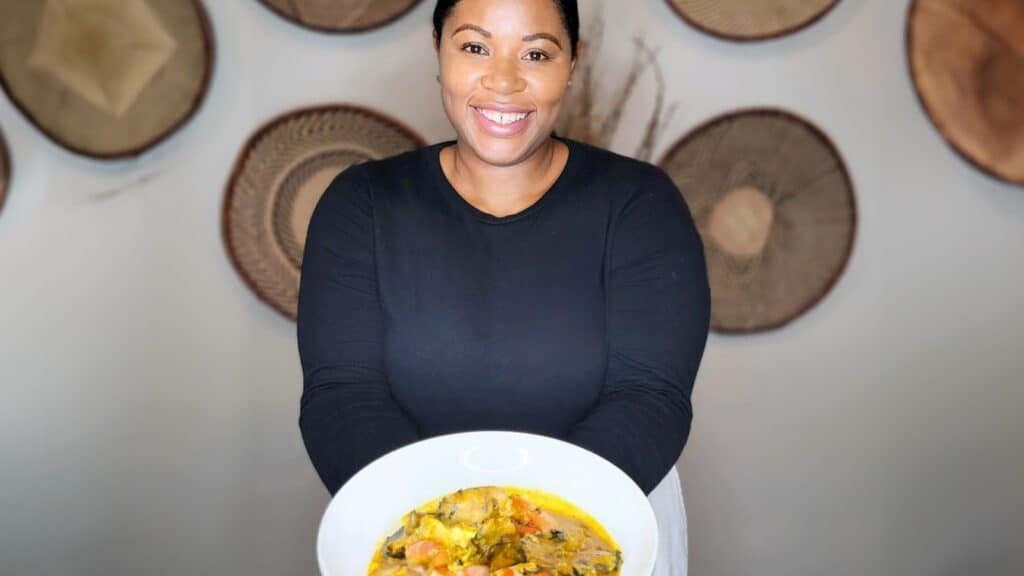
The limitations of staffing and restaurant size mean that she keeps it to two soups at any given time, but those change often and seasonally, depending on what ingredients she can source.
When Fahnbulleh first got to Seattle, she could only find frozen sweet potato greens, which turned black when defrosted. In Philadelphia, she and her family went to rural areas and picked their own, fresh, something local African restaurateurs did, too. She approached a number of Seattle markets and eventually worked with Hau Hau Market, in Little Saigon within the International District, to supply fresh sweet potato greens for her Seattle kitchen. She stews them with chicken, melting them into a smooth, buttery-soft, tangled mess that tints the chunks of meat and white rice.
Gold Coast Ghal began in 2018, as a pop-up. During the pandemic, Fahnbulleh tired of her day job and committed to her business full time, posting menus on Instagram, cooking and delivering the meals herself. When a real estate agent reached out about the former Little Neon Taco space, she turned it down because she didn’t feel ready for her own spot yet, and she always envisioned opening on Capitol Hill. But, she says, “He was very, very persistent” and she began to consider it. “This is something our community needs. The West African population is growing here,” she says. “We’re looking for community, and part of community is food.”
She opened her restaurant to the public late last year, and decorated the blank slate of white walls with elegant woven baskets and Liberian traditional dolls. The community she knew was here showed up for waakyé, a layered breakfast dish of rice and black-eyed peas, spaghetti, beef stew, shrimp pepper sauce, fried plantain, and more.
The community she didn’t know was also out there, like a woman who had lived in Liberia in 1971 and came in speaking Liberian English to her. Someone else she met a decade ago made a catering order for their office. “It’s so odd to me that strangers are proud of me,” Fahnbulleh says. “I hadn’t realized how much support I had.”
Pass D Jollof and Gold Coast Ghal prove that Seattle is hungry for fufu, and that the love for that staple starch is as strong as the arms of the generations who pounded it from tubers and those that stirred it on stovetops, thousands of miles from its ancestral home.
More Tastes of Africa
Afella Jollof Catering at the Delridge Farmers Market. Find Adama Jammeh and Oumie Sallah serving up Senegambian cuisine at this BIPOCcentered market in White Center from 10 a.m. to 2 p.m. on Saturdays through the end of October.
Soccer coach Priestwick Sackeyfio opened his food truck BlackStar Kebab to feed hungry players after evening games. Now, he mostly sells his Ghanaian family recipes including meat skewers, rice, and sides to hungry drinkers at local breweries.
Follow Us

Palace Kitchen Celebrates 30 Years
The Belltown staple still feeds the city after 10 p.m.
After the last tickets come off the rail, floor mats are hauled out to be hosed down, oven hoods are scrubbed, aprons come untied, and someone counts the drawer. It’s a familiar ritual in restaurant cities everywhere. When the shift ends, cooks and servers go looking for a drink and something to eat. For three…

Protein Without the Pressure
In her new cookbook, Seattle author and dietitian Rachael DeVaux keeps healthy eating grounded in real life.
Rachael DeVaux is not afraid of beef. That might sound obvious, but in a wellness culture still haunted by plain chicken breast and low-fat everything, her enthusiasm for grass-fed ground beef feels almost radical. The Seattle-based New York Times bestselling author, personal trainer, and founder of Rachael’s Good Eats has built a following of more than 3.5…

Restaurant Roundup: Nordic Cuisine and a Brazilian Brick-and-Mortar
Here’s what was served up recently in the Emerald City.
Monday nights are worth celebrating—you made it through the first day of the week, so why not treat yourself to a delicious meal? Unfortunately, but understandably, plenty of restaurants are closed. But at these spots, not only are the kitchens still serving, the quality doesn’t drop off post-weekend, providing a perfect opportunity for a surprise…

Whisky in the Wild
Good spirits.
Over the summer, Westland Distillery announced a new offering, inspired by Washington State. Made in Seattle and taking cues from the Northwest outdoor lifestyle, Watchspot Whiskey blends eight-year-old Westland American Single Malt with grain whiskey from America’s heartland, resulting in a pour that has notes of toasted grain, milk chocolate, biscuit, apricot, and cherry pie….