





Lifestyle
Read More ›
From Ph.D. to Paralympics
She found adaptive sports while pursuing her doctorate. Now the UW alum and world-class Para Nordic skier is racing in Italy.

Nicole Zaino should have been working on her Ph.D. qualifying exam. It was 2019, her second year as a graduate student in the University of Washington Department of Mechanical Engineering, and though Zaino was excelling academically and enjoying her coursework, something was missing. “I was feeling burnt out and a little too stressed,” she says. “I was like, ‘I need some balance, some community that isn’t tied to a lab or academics.’”
Some quick online searching led her to Seattle Sled Hockey, which happened to be having an open practice that weekend. It turned out to be just the respite she needed from the rigors of her Ph.D. research in biomechanics.
Seven years later, she’s maintained that healthy balance as a part-time research scientist working for LUCI Mobility, which adds smart technology to power wheelchairs, and as a full-time athlete. This month, Zaino will compete in Para Nordic skiing, including cross-country skiing and biathlon, at the 2026 Winter Paralympics in Italy.
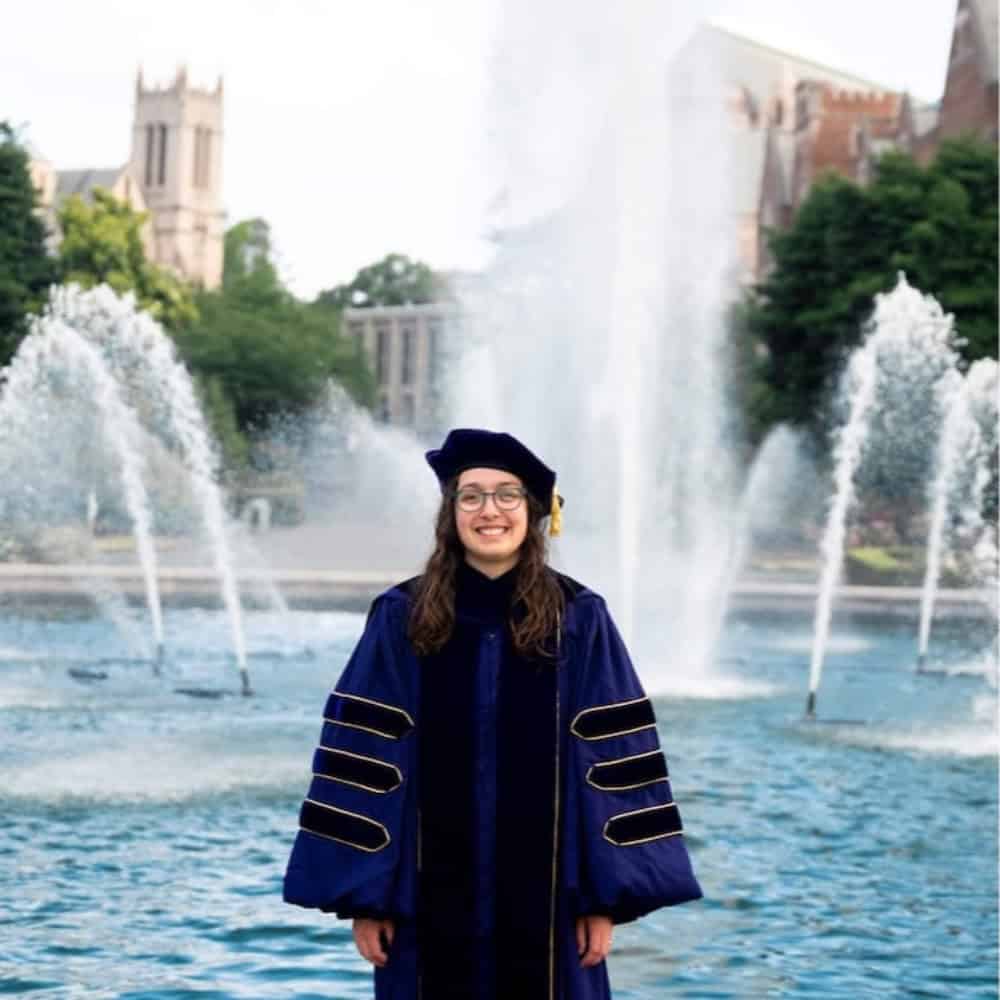
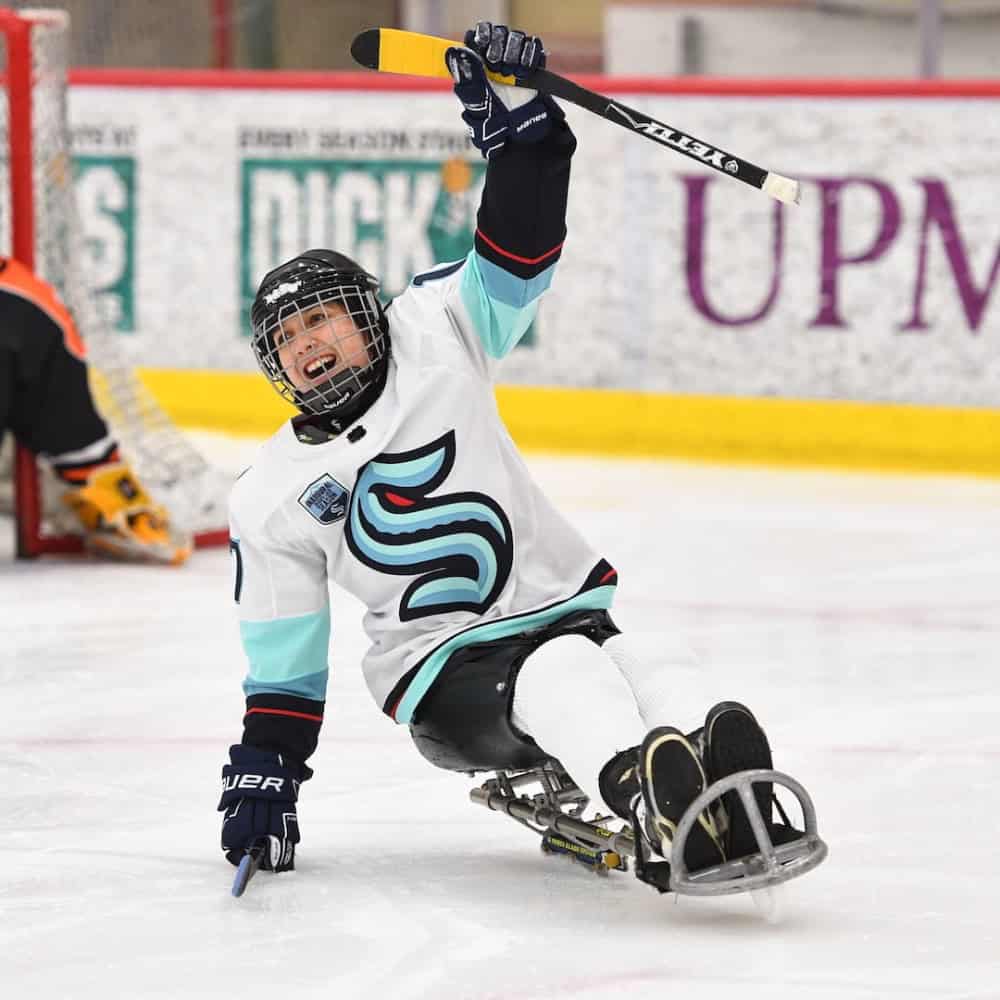
Zaino, ’23, had a stroke at age 8 that resulted in paralysis on her left side. She continued to dance and stayed active with her family, but she says adaptive sports—where athletes use mobility aids to level the playing field—weren’t nearly as prevalent at that time. Because she didn’t use a wheelchair, she didn’t consider herself a candidate anyway. The four years she spent on the Seattle Sled Hockey team, which became an affiliate of the Seattle Kraken in 2021, marked the first time she truly felt like an athlete.
That experience defined her future as much as her studies did. Though she loved the co-ed sled hockey community, Zaino says she wasn’t fond of “getting checked into walls by guys twice my size.” In 2022, she decided to try Nordic, or cross-country skiing, with a rented sit-ski and immediately fell in love. “When I sit-ski, it feels so amazing and graceful and freeing,” Zaino says. “Apparently, I love endurance sports! I love finding the ‘pain cave’ and pushing it. And my knowledge of biomechanics and physics has definitely helped me understand what the most efficient position for maneuvering is, for climbing hills with my disability.”
Eventually, she had a custom sit-ski built for her specific needs, which gives her lower-body stability on the skis. As a graduate student, her fascination with mobility aids like this informed her area of research. Her dissertation (under advising from Katherine Steele in the UW Department of Mechanical Engineering and Heather Feldner in UW Medicine’s Department of Rehabilitation Medicine) examined how individuals use and are impacted by mobility aids. “I’ve always been interested in adaptive equipment—that’s what can really change somebody’s life after acquiring or being born with a disability,” Zaino says. “That’s what gives you access and levels the playing field with freedom and independence, all of those important things.”
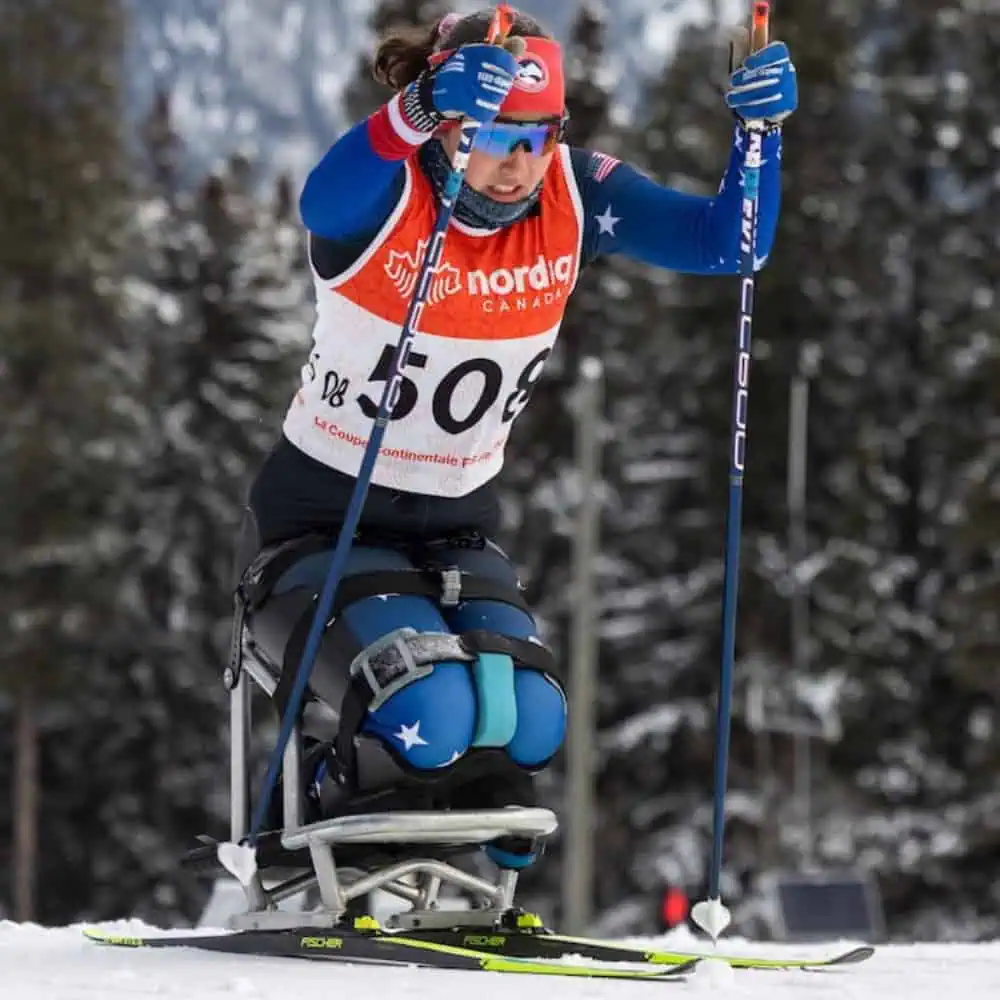
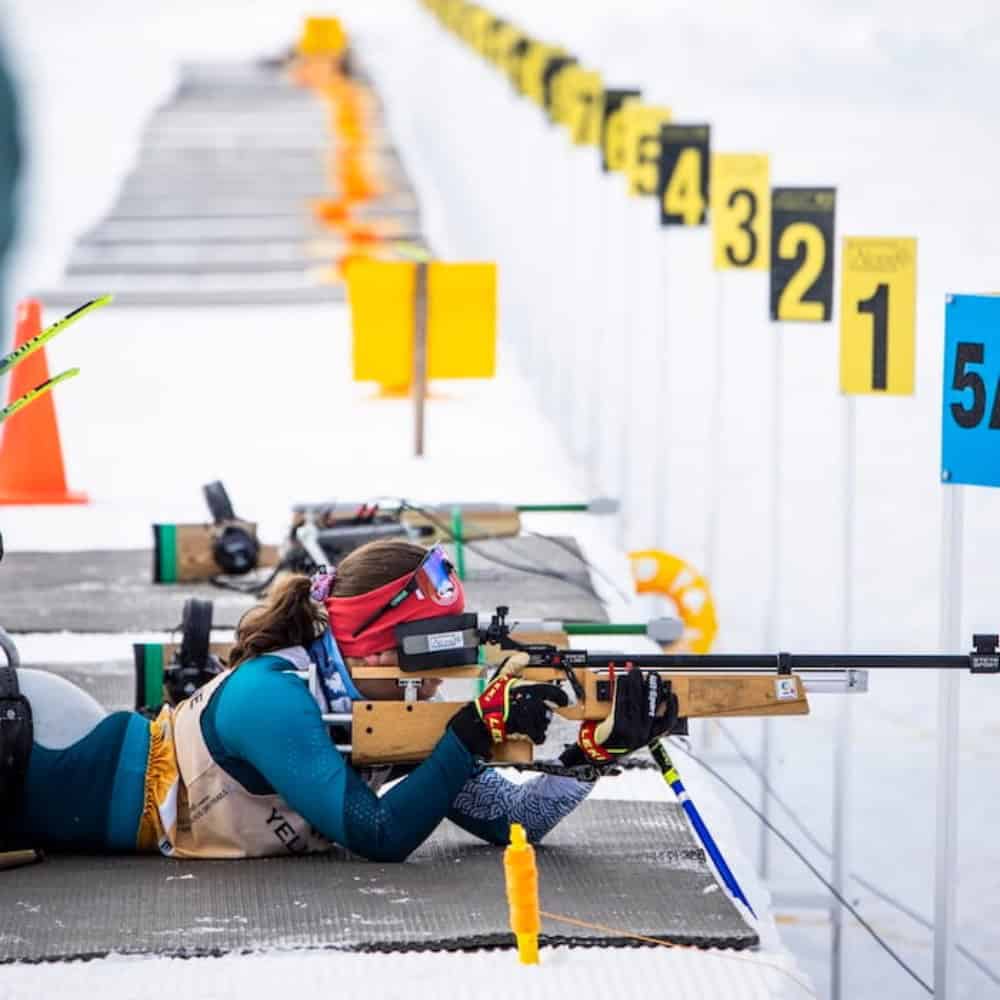
Now living in Bozeman, Montana, Zaino trains six days a week, 11 months a year. Her hard work has paid off—she competed in her first World Cup in March 2024 and first World Championship in February 2025. In February 2026, she made Team USA for Para Nordic skiing. “I love that [these events] are individual—you’re not on a track, and it’s not always the same conditions, so you can’t compare race to race,” she says. “I’m always just comparing myself to the day before.”
Zaino’s races take place throughout the Paralympics, which run March 6-15, and can be streamed on Peacock or the Paralympics’ official YouTube channel. She encourages people to tune in, not just for visibility but “because the sports are really exciting and competitive to watch.”
Chelsea Lin is a writer at the University of Washington.
Follow Us

Finding Fortitude Through Triathlon
More than 2,000 athletes will take on IRONMAN 70.3 Washington Tri-Cities Sept. 20, testing their endurance—and finding benefits that go far beyond physical fitness.
In 2005, Jennifer Comfort was a new mom who wanted some exercise. She joined a gym, where she met a fellow Jen who had just done a triathlon. Comfort had no idea what that meant—it’s a sporting event with a swim, bike, and run component—but she signed up for one anyway. “I doggy-paddled the swim,…

Helsinki is Like Seattle—Only More Hockey-Obsessed
As the Kraken head to Finland in November for their first regular-season games outside North America, Seattle fans will find ferries, coffee, craft beer and a familiar devotion to life by the water.
We were maybe 15 minutes into our inaugural Helsinki stroll when my kid asked the question my jet-lagged brain had mulled over but filed under “later”: “Where are all the cars?” We were walking down Esplanadi on a bright June evening near the summer solstice, and the street noise was mostly gulls and the whine…

Who Let the Dogs In? The Mariners’ Bark at the Park Is Seattle at Its Best
Baseball is better with a few hundred dogs in the stands.
Every so often, a city reveals its personality in the smallest and most delightful of ways. In Seattle, that might just be a baseball game … with dogs! The Seattle Mariners host “Bark at the Park” several times each season at T-Mobile Park, and if you haven’t been, you’re missing out on a high dose…

Why I Built a Pickleball Club With My Daughter
My father showed me how to turn my love of sports into something lasting. Pickle at the Palms carries that lesson forward.
Looking back, I wouldn’t say my family teaming up to launch Pickle at the Palms—a new 20-court indoor pickleball club—was inevitable, but it may have been predictable. Sports have shaped my life for more than 50 years. I fell in love with rowing as a 17-year-old college freshman and went on to compete on two…