





News
Read More ›
United Nations Honors Seattle’s Urban Forests
Green Seattle Partnership earns World Restoration Flagship status, highlighting the city’s role in global ecosystem recovery.

Last week, the Environment Programme (UNEP) and the Food and Agriculture Organization (FAO) of the United Nations recognized Green Seattle Partnership as a World Restoration Flagship for its urban restoration work in Seattle’s forested parklands. The designation honors large-scale, long-term ecological recovery initiatives that embody the 10 restoration principles of the UN Decade on Ecosystem Restoration as part of a global effort to restore one billion hectares of degraded ecosystems by 2030.
“The United Nations understands that there’s this really important moment to see opportunities for building green infrastructure, and [recognizes] green spaces in cities as part of that,” says Lisa Ciecko, ecology team manager and plant ecologist for Seattle Parks and Recreation. “It’s also a really special opportunity for us to see ourselves in this global ecosystem and to really recognize that Seattle plays a critical role in hosting biodiversity.”
Founded in 2005 through a collaboration between local communities, nonprofit organizations, Tribal Nations, and volunteers, Green Seattle Partnership has been caring for Seattle’s urban canopy for more than 20 years.
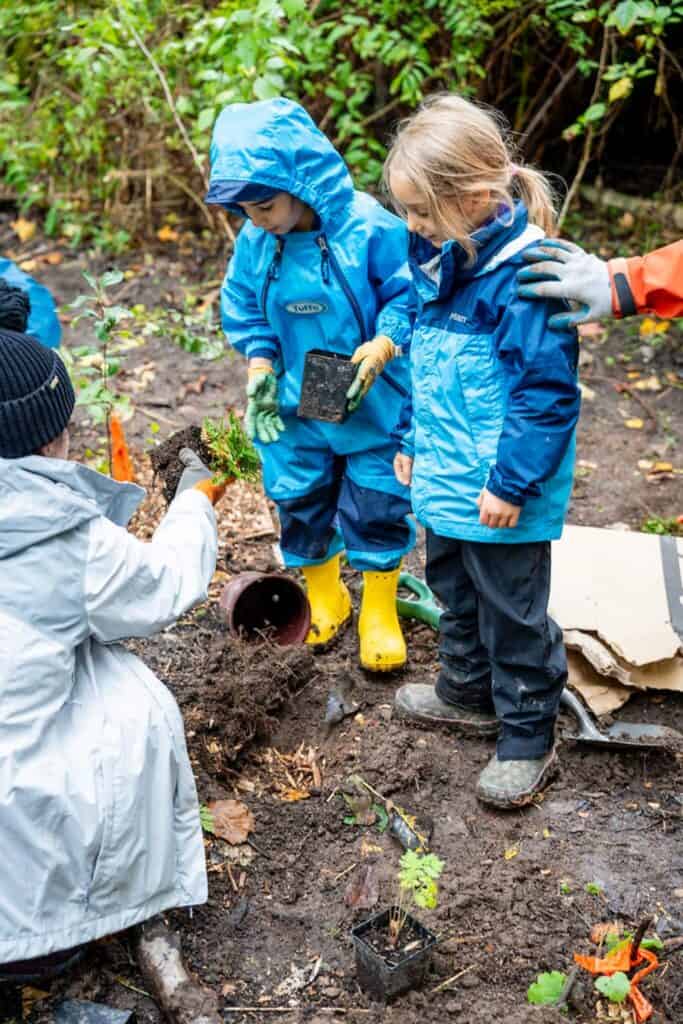
Since its inception, the partnership has amassed about 1.5 million hours of volunteer work, planted about 1.5 million plants, and restored 831 hectares, about 98% of its 2030 target of 850 hectares.
Alongside these accomplishments, Green Seattle Partnership has also developed a leadership program among its volunteers that allows them to keep better track of the ecological progress of a particular restoration site.
“Our forest stewards are an incredible asset to the program,” says Ciecko. “They really bring their creativity, their love for a site, their neighborhood connections, and their really detailed view of what’s going on on the land and in the forest. So we’ve seen quite a success with a lot of their restoration sites where they’ve been able to kind of track the progress of that one weed.”
Green Seattle Partnership currently has a cohort of about 200 forest stewards spread across the city, but by 2030, it estimates it will have trained nearly 500.
The partnership also offers paid roles for job training, providing eligible participants with an opportunity to learn ecological restoration skills while earning a wage. “We now, on an annual basis, are able to offer 100 paid roles for youth and adults who are doing job training work alongside that land work,” says Ciecko.
Some of the work Green Seattle Partnership does is not attached to any particular program. The organization employs ecologists whose sole job is to do restoration work in the field. “They take care of these really big spaces,” explains Ciecko. “A good example is if you’re driving on I-5 coming into the city from the South End, there’s forest on your right side and there’s folks that are working this 50-acre stretch, planting trees and tending to that area.”
In the last two decades, the organization’s restoration work has come quite far. When Ciecko started working with Green Seattle Partnership in 2005, she was still in grad school and the trees kept dying. “At the time, the staff at the parks department were really interested in understanding why some of the trees they were planting were dying and how they could improve survivorship,” she says. “They were making a huge investment in trying to get this future forest to grow, but they were seeing a lot of issues with that.”
Through trial and error, Green Seattle Partnership eventually found its way out of the issue. “It has taken a lot of experimentation—scientific experimentation, yes—but [moreso] less technical, more creative experimentation along the way to grow the methodology, and there continues to be lots of that happening right now,” says Ciecko.
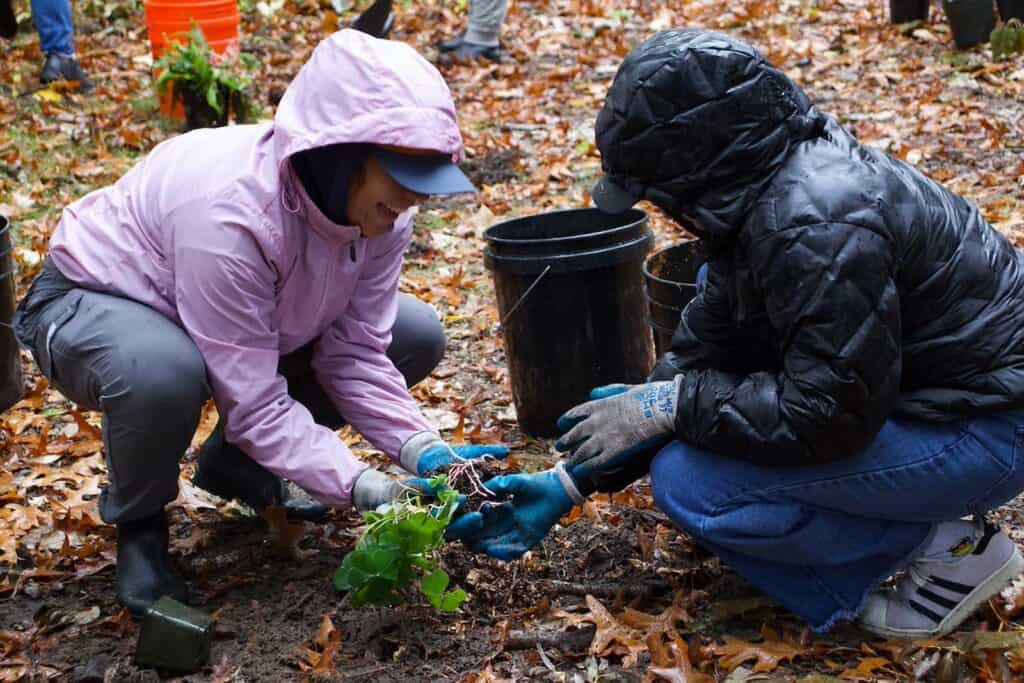
The partnership continues to change its methodology as new ecological needs are identified. In the last few years, its ecologists have been refining their methodology for meadow development.
“Meadows are such an important critical landscape for pollinators and I don’t think it had been worked on previously because it’s really hard work and we just didn’t understand how to do it,” says Ciecko. Meadow work can be difficult because grasses are aggressive and hard to manage.
“The root structure is really dense and thick and it outcompetes the species that we’re trying to prioritize,” explains Ciecko.“There’ve been a couple forest stewards who have just been innovating and trying things, so now we have these beautiful meadow spaces now that bloom in the spring and summer and are home to lots and lots of insect biodiversity.”
Restoration initiatives in China, Colombia, Ethiopia, and Italy also received recognition from the United Nations. An upcoming documentary will explore Green Seattle Partnership’s work. Watch the trailer below.
Green Seattle Partnership is also getting ready for Seattle Forest Week, which will take place Nov. 7 to Nov. 15. The week features community events hosted by the partnership and Trees for Seattle, inviting people to parklands to plant native trees, shrubs, and other foliage to restore the city’s canopies.
Follow Us

Photo Essay: Behind the Seams
A single thread can be beautiful on its own. Delicate and capable of stretching. Left alone long enough, the world slowly wears it down. But then we learn to weave. Threads intersect—over and under, until they become something greater than themselves. Behind the seams, a story carried across skin and across culture becomes a fashionable…

Broken? Ballard Has a New Shop for That.
At We Fix Old Stuff, two Seattle designers are giving treasured belongings a second life.
A woman had found a busted Sesame Street lamp just like the one her husband remembered having as a child. It wasn’t his original lamp, but she wanted to get it working again for his office. She brought it to Ashley Zaworska and David Nebert, two Seattle designers with a knack for fixing things. The…

Seattle’s Dancing Zombies Return This Saturday for 20th Annual Thrill the World
No brains required, just a little rhythm. Performers head to Woodinville for a Halloween dance synchronized across eight countries.
Maybe you’ve had the pleasure of stumbling upon a group of zombies dancing to Michael Jackson’s “Thriller” somewhere around Seattle. With their tattered clothes and sunken faces, they’re just the sort of wonderfully strange encounter I think we’re all secretly hoping for when we leave the house in October. These flash-mob-style performances can seem to…

Your Guide to Halloween in Seattle and Beyond
The Pacific Northwest was made for this time of year. Here’s how to celebrate it.
It’s spooky season in Washington, which means haunted farms, fall festivals, pumpkin carving, costume contests for pets and people alike, and more. Here are some of the best ways to celebrate Halloween in Seattle and beyond. Halloween Fun and Frights in Snohomish October 10-11, 16-18, 22-25, 29-31, November 1 Stocker Farms Visiting a pumpkin patch…