





News
Read More ›
More Than a Watch Party
At the Museum of Flight, Seattle celebrated Artemis II with real ties to the mission.
 By Sarah Stackhouse April 2, 2026

A moon mission lifted off in Florida on Wednesday, but one of the most interesting places to see it was Seattle.
On April 1, the Museum of Flight hosted a free public watch party for Artemis II, NASA’s first crewed mission around the moon in more than 50 years. The event included a live broadcast, remarks from people in the local space community, and experts on hand to answer questions. When the countdown hit zero, people packed into the museum’s viewing rooms and broke into cheers as the rocket lifted off.
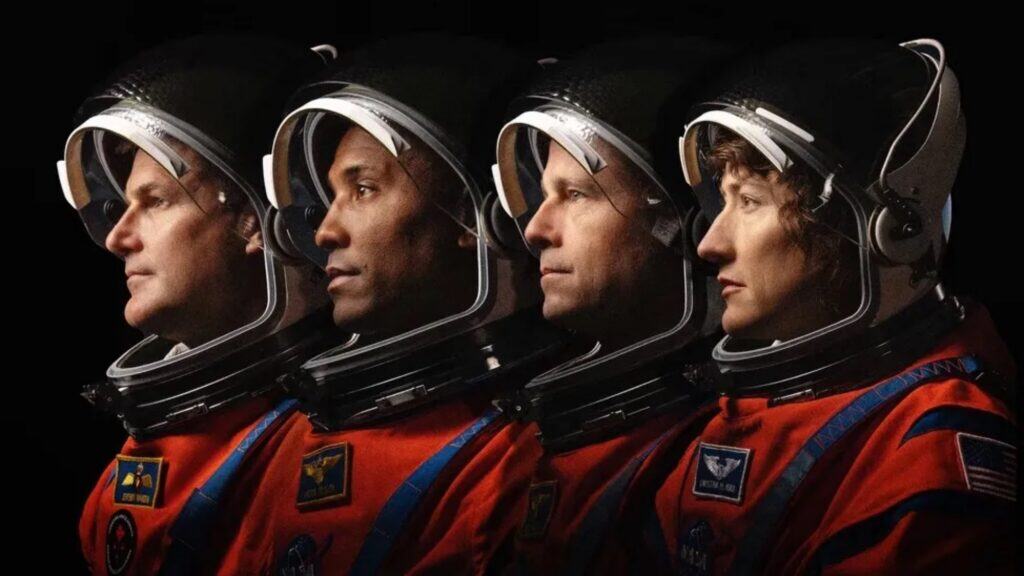
The mission launched from NASA’s Kennedy Space Center with four astronauts aboard—Reid Wiseman, Victor Glover, Christina Koch, and Canadian astronaut Jeremy Hansen. The crew is expected to spend about 10 days in space and travel about 685,000 miles as they loop around the moon before returning for a splashdown in the Pacific Ocean. Among them are the first woman and the first Black astronaut to fly on a lunar mission: Koch and Glover. NASA says Artemis II will test the Orion spacecraft and other deep-space systems before future missions.
Seattle has a stake in this story, too. The Space Launch System core stage that powered Artemis II was Boeing-built. “Today we witnessed our friends embark on a historic mission aboard our rocket,” says John Shannon, vice president of Boeing’s Exploration Systems business. “Our focus has been on prioritizing the quality of the vehicle and the safety of the crew as they begin their journey. This rocket is designed to withstand incredible forces while speeding through the atmosphere, and it performed exactly as intended.” The core stage stands 212 feet tall and carries 196,000 gallons of liquid oxygen and 537,000 gallons of liquid hydrogen. Boeing says the next core stages, for Artemis III through V, are already in production.
Forty-one Washington companies also supplied key components for the mission. Karman Space & Defense’s Mukilteo campus produced Orion hatch release mechanisms and forward bay cover thrusters, and L3Harris in Redmond manufactured thrusters used to help return the crew safely to Earth. “We’re really proud that the state is playing such a big role in solving these space problems,” Sen. Maria Cantwell says. “Ultimately, Artemis is about returning to the moon and building a permanent moon base that can then be used for accelerating our travel to Mars. So this is a really, really big moment for the Pacific Northwest.”
NASA’s live broadcast kept cutting back to the Museum of Flight (one of the best attractions in the city!), along with other watch parties around the world. That alone was pretty great. Seeing humans head back toward the moon is something all of us connect to, no matter where we live. In Seattle, though, with our deep ties to aerospace—and to this mission—it was especially thrilling.
Follow Us

Soapbox Project Founder Nivi Achanta Centers Community and Joy in Climate Justice
The Seattle organizer shares why taking action helps her stay hopeful—and how anyone can get started.
If you were asked to envision what the world could look like in the future, you might take a page out of a dystopian book. But what about imagining a future that feels more hopeful, one where you have access to reliable transit, green spaces, and opportunities to gather in community with others? That’s exactly…

Remember When the Eastside Felt Like a Road Trip?
Months after the Sound Transit 2 Line began crossing Lake Washington, Seattle and the Eastside feel a whole lot closer.
There’s a particular kind of optimism and happiness you feel when a city decides to connect itself to its own future. World-class cities invest in the invisible things that make everything else possible. They make it easier for ideas to collide, for workers to access opportunity, for culture to flow. The East–West light rail Crosslake…


World Cup 26 Is Keeping the Region Busy. So Are Its Recycling Bins.
A local expert explains what actually happens after a plastic bottle leaves the bin.
Seattle is buzzing right now. In the first 11 days of World Cup 26, Waterfront Park recorded more than 451,000 visits, including nearly 85,000 on June 19 alone. SEA Airport has also seen some of its busiest travel days ever, with match-day crowds and summer travelers moving through the city. That is a lot of…