





News
Read More ›
This Small Washington College Has a Big Idea About Tuition
As higher education faces growing financial pressures, Whitman College's 10% Promise is attracting attention from other schools.
 By Sarah Stackhouse November 11, 2026

College tuition isn’t exactly known for simple math. Between financial aid forms, scholarships, and income calculations, figuring out what a family will actually pay can be confusing, even intimidating. At Whitman College, a private liberal arts college in Walla Walla, the calculation is considerably easier. Take your family’s annual adjusted gross income, divide it by 10, and you have the maximum amount you’ll pay for tuition.
That’s the idea behind Whitman’s 10% Promise, announced in June and taking effect for incoming first-year and transfer students in fall 2027. A family earning $150,000 a year, for example, would pay no more than $15,000 in annual tuition. The guarantee is available to eligible U.S. citizens and eligible noncitizens who submit the FAFSA and covers tuition, not housing, food, or other expenses, although additional financial aid may help with those costs. The first-of-its-kind initiative attracted national attention over the summer, including coverage in The New York Times and Forbes. Now, other colleges are reaching out to learn how Whitman made it work.
Adam Miller, Whitman’s vice president for admission and financial aid, says the idea grew out of years of efforts to make college more accessible. Over the past decade, Whitman doubled its scholarship and financial aid budget, tripled the number of first-generation and Pell-eligible students, and committed to meeting 100% of financial need. In 2019, it introduced an Early Financial Aid Guarantee, allowing students to learn what aid they could expect before applying. But Miller and his colleagues saw an opportunity to go further. Other universities had introduced free-tuition guarantees tied to income, but those programs could leave out middle-income families or households with assets such as businesses and college savings. “We wanted to build a new approach that more families could see themselves benefitting from,” Miller says.
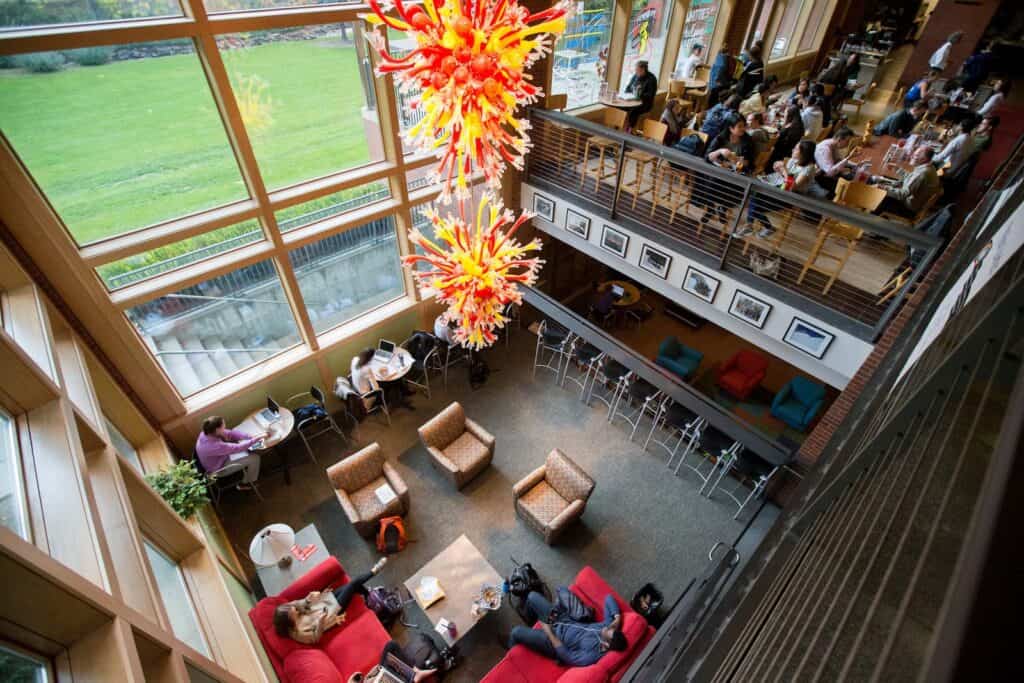
The team considered several models before settling on 10%. “10% of income ends up being pretty close to what most current families at Whitman are actually paying—so for those families, the 10% Promise may not change their bottom line, but it adds transparency and predictability,” Miller says.
That also helps explain how Whitman can afford the program. President Sarah Bolton says the college’s recently completed Upward Together fundraising campaign, which raised $89 million for scholarships, was instrumental in making the guarantee possible. The decision comes as colleges across the country grapple with declining numbers, rising costs, and growing skepticism about the value of a college degree. For smaller private institutions in particular, attracting students while keeping tuition affordable has become increasingly difficult.
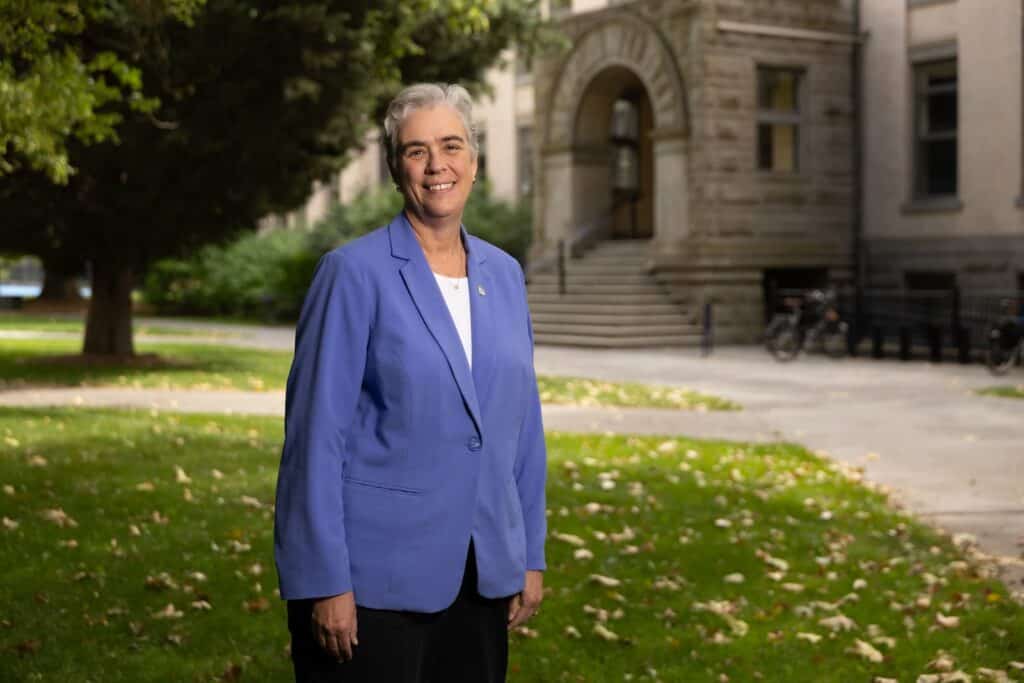
“We also know that, while Whitman’s enrollment remains strong, we can’t stand still,” Bolton says. “With fewer students graduating from high school and with trust in higher education at an all time low, we want to make sure we’re not losing students who would be a good fit for Whitman due to cost uncertainty.”
There are signs the approach is connecting with families. Miller reports an uptick in campus visitors over the summer and fall, some of whom said the promise first put Whitman on their radar. Early applications have also increased substantially.
Other colleges have introduced their own income-based tuition guarantees since Whitman’s announcement. Denison University in Ohio announced percentage-based tuition caps in September, with different rates depending on family income. DePauw University in Indiana also introduced new income-based tuition assistance that month, building on an earlier financial aid initiative. Neither has adopted Whitman’s exact model, but both reflect a growing trend toward giving families a clearer picture of what they’ll actually pay for college.

Several colleges have also contacted Whitman directly to learn about its approach. Miller says their questions reveal just how unusual the idea is. “They assume there are exceptions or underlying criteria that exclude certain students, and I just keep reiterating that while we considered everything they’re asking about, we opted for simplicity at every turn, which meant eliminating all the fine print,” he says.
Whitman isn’t aware of another college offering the same straightforward, across-the-board tuition guarantee without separate income tiers or asset restrictions, Miller says. Whether other institutions eventually adopt its approach remains to be seen, but the college has already attracted interest beyond Washington.
Kelly Harrington, director of college counseling and student services at Seattle’s UPrep Middle and High School, sees the potential for something bigger.
“Washington State has a history of exporting world-changing ideas and companies, from Starbucks to Boeing to Costco,” he says. “My hope is that the Whitman Promise becomes the next great Washington export.”
Follow Us

82 Million Tons of E-Waste by 2030. Now What?
Smart ways to handle old electronics after a holiday upgrade.
Every holiday season, our houses fill with upgraded gadgets and the promise that we’ll deal with the old stuff later. Meanwhile, the drawer of mystery cords multiplies, and some items just get tossed out. Most of us mean well, but those castoff electronics often end up somewhere they really shouldn’t. And with about 59% of…

Going to the Mountains This Winter? Read This.
A new online tool breaks down avalanche basics for anyone planning snowy fun off the beaten path.
I’m a rule follower when it comes to the outdoors. This summer, my family did some backcountry hiking in Whistler and made sure to do everything by the book—texting friends our plan and location, and wearing a bear bell even though it felt a little dorky. It’s reassuring to know you’ve covered the basics before…

Historic Flooding Prompts WA Governor to Declare Emergency
Rivers are surging around the state amid days of heavy rainfall.
As floodwaters swelled around Washington, threatening low-lying communities along rivers, Gov. Bob Ferguson signed a statewide emergency declaration on Wednesday. Ferguson says he’ll also seek an expedited emergency declaration from the federal government in response to the flooding, which is the result of an atmospheric river that has dumped multiple inches of rain in parts…

Barnes & Noble Is Coming Back to Downtown Seattle
The bookseller will open a new flagship at 520 Pike, marking the largest retail lease in downtown Seattle since 2020.
Barnes & Noble is returning to downtown Seattle for the first time since early 2020. The national bookseller has signed a 10-year lease for a new flagship at 520 Pike Street, a 29-story tower, taking over 17,538 square feet on the corner of Pike and 6th Avenue. The store is expected to open in the…