




Lifestyle
Read More ›
Seattle Artifacts: The Derelict League
An obscure, amateur baseball league grew from Seattle’s hippie culture

This article originally appeared in the November/December 2022 issue of Seattle magazine.
Somewhere, deep in the archives of local sports history, sits a curious entry regarding a forgotten baseball league that once dominated Seattle’s playfields and ballparks. You will not find any trading cards for this particular franchise, nor will you find any of its memorabilia on eBay. The top players were never recruited to the major leagues, though it’s doubtful that any of them had such aspirations.
Despite their lack of brand-name recognition, they played with the same grit and determination as their professional counterparts. The teams consisted of an eclectic mix of misfits, outcasts and ne’er-do-wells who dutifully played season after season their own, unique version of baseball in which victories were celebrated, losses were mourned and championships were memorialized with impressive trophies.
To some, this hodgepodge assortment of players was nothing more than an adult version of the Bad News Bears, while to others they represented the true spirit of the game. There were many teams with many colorful names, and together they were known as the Derelict League.
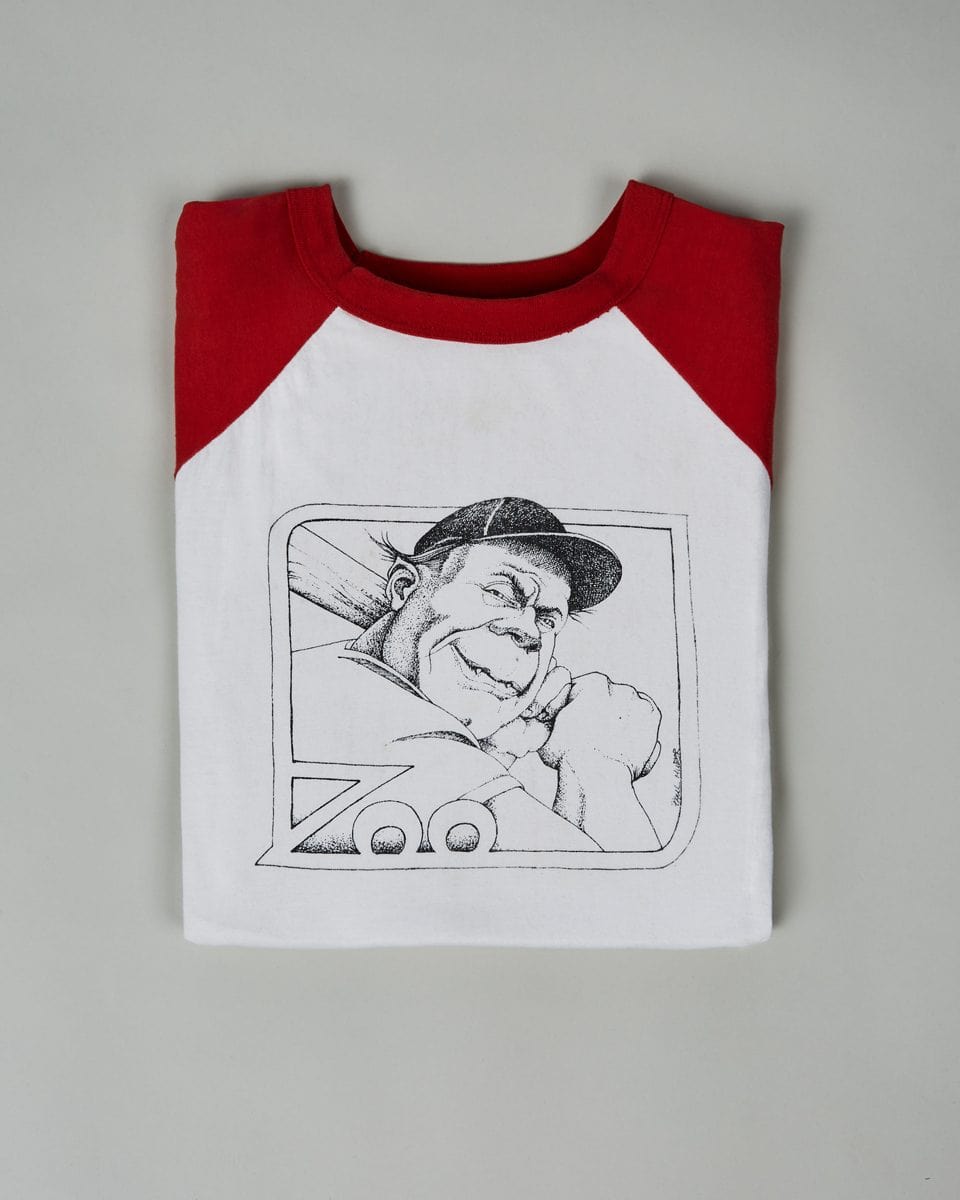
I first learned of this quasi-legendary baseball club while talking to the owner of the Eastlake Zoo Tavern. As he nostalgically recalled, the Zoo even had its own team. A name as catchy as the Derelict League certainly invites a lot of questions, and after I asked him more about it, he excused himself to an upstairs storage room and returned a few moments later with a handful of items, including an old, beer-stained jersey.
The front of the garment displayed the bar’s name along with an ogre-looking creature clutching a bat. The knowing smirk on the creature’s face indicated that it was ready to play some serious ball. “This was our team shirt,” he proudly boasted.
After seeing the logo and hearing the name, I was determined to learn more, though to my dismay, I discovered that very little had ever been written about the league.
I eventually achieved a major breakthrough on one of my social media pages. A posting I had made about this baseball collective had apparently made its way through the local grapevine and one member decided to reach out. “Hello,” read the message. “I was the commissioner of the Derelict League.”
John Bixler was the author of that message and served as one of the league’s top “officials,” though such a word proves to be rather nebulous when it comes to this particular brand of baseball. With an impressive mustache and a graying ponytail, Bixler resembles many of his former teammates, all of whom are now well past retirement age. To this day, many of them still regularly meet at a local brewpub to laugh about old times and fret about the current state of things. I recently joined up with this old baseball crew at one of their weekly gatherings, where I was able to learn more about their rather unconventional history.
It all started in 1971. Seattle was a much different town back then. Rent was cheap and enjoying life without a high-paying job was much easier to accomplish. In fact, for many of the league’s founding members, no job at all was even quite feasible. At the time, Seattle had a fairly robust hippie movement with a sizable contingent living aboard a small community of Lake Union houseboats, while many others were centralized in the University District, hanging out at such popular gathering spots as the Blue Moon Tavern.
Over in Queen Anne, where several long-haired occupants shared a large house, plans were put into place to assemble some baseball teams and start playing games. Between tokes, the one thing they all agreed on was that their version would lack the formality of regular baseball. In fact, theirs would lack any rules at all that weren’t deemed completely necessary.
For one, umpires would not be needed as any disagreements on the playfield would simply be settled with a coin toss. Of top importance, though, was that everyone have a good time; therefore, both men and women were encouraged to play and a full keg of cold beer would be a requirement for each and every game. As word about this new and unorthodox baseball enterprise spread throughout the city, teams began forming and by summer of that year, the Derelict League was born.
At first, teams in the Derelict League would simply show up and play ball at any available field. However, as the number of teams grew and the games became more formalized, they eventually had to be scheduled through the Seattle Parks Department. This helped to shape the league into more of an official entity, which in turn, encouraged a higher degree of competitiveness. Team rivalries often formed, though the league’s countercultural spirit always helped to maintain a nice, mellow simmer on the field. Part of this was likely attributed to an obscure book, “The Zen of Base and Ball,” which became quite popular amongst the different players.
Looking over the roster of team names certainly sheds light on the league’s collective personality: The Blue Moon Nine, The Lynn St. Dogs, The Crabs, The Lowballs and The Fremont Tavern Muff Divers. At some point, an infamous hippie cult group known as the Love Israel Family even decided to form its own team. Several members recall playing a game at the cult’s sprawling Arlington farm where a full-sized baseball diamond had been built in one of the pastures. The Love Israel Family even provided the mandatory keg of game beer, though it insisted on serving everyone, causing a minor kerfuffle as the opposing team wanted to pour its own beers. Peace ultimately prevailed after the cult finally acquiesced and allowed self-pours.
The Derelict League managed to survive for nearly a decade but eventually succumbed to the ravages of adulthood as people married, started families and began careers. In the end, grown-up responsibilities gradually replaced the leisure of baseball, and by everybody’s estimate, the last of the games was played in 1979.
All that remains of the league today is the occasional jersey that emerges from the dark depths of storage, or the stories that are still shared between its surviving members. The city may be a much different place now but certain things remain timeless, and that includes this odd chapter of local baseball history.
Brad Holden is an amateur historian and the author of two books: “Seattle Prohibition: Bootleggers, Rumrunners and Graft in the Queen City” and “Alfred M. Hubbard: Inventor, Bootlegger and Psychedelic Pioneer.” Check out his Instagram page @seattle_artifacts, for more interesting tidbits about Seattle’s history.
Follow Us

Your Guide to Halloween in Seattle and Beyond
The Pacific Northwest was made for this time of year. Here’s how to celebrate it.
It’s spooky season in Washington, which means haunted farms, fall festivals, pumpkin carving, costume contests for pets and people alike, and more. Here are some of the best ways to celebrate Halloween in Seattle and beyond. Halloween Fun and Frights in Snohomish October 10-11, 16-18, 22-25, 29-31, November 1 Stocker Farms Visiting a pumpkin patch…

5 Cozy Fall Outings
Sweater weather is here. These five adventures make a strong case for getting out and embracing it.
Autumn is the absolute best. I start pulling out sweaters and scarves before the weather even remotely justifies it, then spend weeks happily overdressed. I love the whole production—noodle soups, spicy drinks, crunchy leaves, dark afternoons, fogged-up windows. Bring it on! Here are five ways to make the most of every minute. 1. Dates after…

Soapbox Project Founder Nivi Achanta Centers Community and Joy in Climate Justice
The Seattle organizer shares why taking action helps her stay hopeful—and how anyone can get started.
If you were asked to envision what the world could look like in the future, you might take a page out of a dystopian book. But what about imagining a future that feels more hopeful, one where you have access to reliable transit, green spaces, and opportunities to gather in community with others? That’s exactly…

Remember When the Eastside Felt Like a Road Trip?
Months after the Sound Transit 2 Line began crossing Lake Washington, Seattle and the Eastside feel a whole lot closer.
There’s a particular kind of optimism and happiness you feel when a city decides to connect itself to its own future. World-class cities invest in the invisible things that make everything else possible. They make it easier for ideas to collide, for workers to access opportunity, for culture to flow. The East–West light rail Crosslake…