





Lifestyle
Read More ›
Seattle’s BLOCK Project is expanding
THE INNOVATIVE BLOCK PROJECT IS GROWING IN SEATTLE AND EXPANDING TO OTHER STATES

This article originally appeared in the March/April 2023 issue of Seattle magazine.
Editor’s note: The homeowners requested that their last name or neighborhood not be used.
In the early days of the pandemic, Sarah and her husband, Robbie, looked around at their safe and comfortable home and couldn’t stop thinking about how people experiencing homelessness were faring during those tense weeks and months of social distancing.
Years earlier, Sarah had heard of The BLOCK Project, a program run by social services organization Facing Homelessness (FH), which builds 230-square-foot tiny homes in people’s backyards for those in need of housing.
“I just remember loving it (the BLOCK Project) right away. How creative. How radical and transformative,” Sarah says. “I truly believe the world would change in a beautiful way if we each thought about what we can influence and started the work right there.”
The BLOCK Project thoroughly researched her family and its lifestyle and Sarah ended up with a good fit.
The BLOCK Project was an idea born from father and daughter architects Rex Holbein and Jennifer LaFreniere. When Facing Homelessness was founded in 2013, it had 100 people willing to open their hearts and backyards.
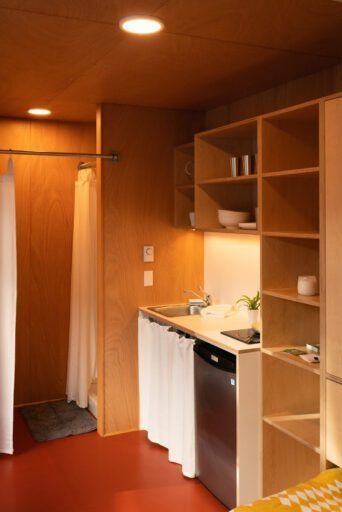
In 2021, FH celebrated one resident’s fifth year of living in a BLOCK home. Today, that’s 14 homes and 19 residents, with the goal of reaching 17 homes by the end of 2022.
“The way we look at it, we’ve surpassed providing 10,000 nights of stable housing to our residents,” says Phoebe Anderson-Kline, FH’s assistant director of community programming.
Facing Homelessness’ mission is to inspire community engagement as the pathway to ending homelessness and to put humanity at the forefront of this fraught national conversation. Plus, it challenges Seattleites to put their backyards where their mouths are.
Yet it’s been a journey to refine the process and house as many people as possible. And since the pandemic, Seattleites have acutely felt the consequences of a homelessness crisis spiraling out of control.
“Covid revealed what was already there,” Anderson-Kline says. “We were shown how people can be just one disaster away from housing instability, including people who never thought they would be.”
Sarah’s friends and family had questions, of course. Would she get a say in choosing the resident? (No.) What about safety? (The organization thoroughly vets potential residents.) What if she wanted to stop? (She could.) Would she get paid? (No.)
“There’s chaos and disturbance, as in any construction project, and legal and logistical issues to solve and sort through, so there was a lot of action there for a while,” says Sarah, who had a young son not old enough for preschool at the time. “When it was all done, all quiet, all settled, and peaceful, it felt just like it was meant to be.”
Several organizations, including FH, provide health services and employment training to residents once they are housed. The homeowners, Anderson-Kline says, are there to “walk along with, but not fix, save, or guide” the residents of their BLOCK homes.
Last year, FH completed a pilot program to provide a BLOCK house kit to other organizations interested in the model. The first is with Indigenous-led advocacy organization NDN Collective in Rapid City, S.D., where both organizations will work together to build a 20-plus cottage village this spring. FH’s construction manager, Bernard Troyer, says, “We are happy to share the BLOCK Project model with other communities.”

“I truly believe the world would change in a beautiful way if we each thought about what we can influence, and started the work right there.”
Troyer adds that a new design makes it possible for any volunteer to contribute to building, so a BLOCK house can go up in four days instead of one month. The cost has gone from $120,000 to $75,000. Facing Homelessness Executive Director Kevin Glackin- Coley says traditional affordable housing units start at $300,000 to build. Nearly 75% of Seattle is zoned for neighborhood residential housing (the city’s new name for “single-family,”) which limits the amount of low-income housing opportunities.
“The BLOCK Project crashes through that barrier,” Troyer says, because homes are built on single-family lots.
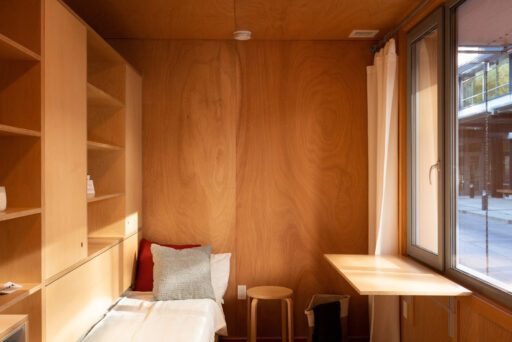
In July 2019, the Seattle City Council voted to loosen regulations surrounding Attached and Detached Accessory Dwelling Units (ADUs and DADUs), which created more Block home-eligible properties.
Notable changes included reducing the minimum lot size required for DADUs from 4,000 to 3,200 square feet, increasing the maximum build size from 800 to 1,000 square feet, and allowing for both an ADU, such as a basement apartment, and DADU to exist on the same property. The seattle.gov website states that if just 5% of eligible lots in the city built ADUs, it would create about 4,000 additional housing units.
The growth of The BLOCK Project has been organic, with much of Seattle’s design community stepping up to donate funds and services. This spring, FH will launch its first campaign to draw more eligible hosts.
Sarah’s advice for anyone considering being a host is to remember why you felt inspired to get involved.
“Trust in your instinct and be clear in your ultimate motivation,” she says. So, in the challenging times like when your backyard is all dug up, when you worry about who will move in, and how you’ll adjust when people make insensitive comments, you’ll be able to return to the reasons why you stepped into this.”
BLOCK Project Step-by-Step
- Fill out a host interest form or an assessment of your lot’s eligibility. You must live in Seattle, have a lot that is at least 3,200-square feet, no current DADU, and the 230-square-foot BLOCK house can’t exceed 35% of the lot coverage.
- Have a casual meet-and-greet with FH for initial questions.
- Fill out a host application that goes more in-depth about you and your home, and add three references. FH does a background check on all hosts.
- Attend a group interview with members of the FH staff.
- Complete a construction feasibility walk. Sewer complications are among the most cost-prohibitive problems.
- Get connected with CAST Architecture, which helps with permitting at no cost. Site plans are drawn. It takes approximately three months to secure a building permit if there are no complications. The BLOCK Project has designed a standard plan for the city of Seattle that has reduced the permitting time from previous years.
- Enter into a ground lease with FH, which requests five years to ensure stable housing — though this number is negotiable. FH offers a stipend for or pro-bono independent legal counsel to homeowners.
- The matching process begins, and meetings are set up to see the BLOCK home and homeowners. Residency agreements are annual, and FH works closely to help avoid eviction should any issues arise. If they ever do, case managers find alternative housing.
- The rest of the building process takes another three months. A BLOCK home is considered either a permanent housing option or stepping-stone, depending on the resident. FH owns the BLOCK homes, and they can only be used for the project purpose.
- FH hosts monthly group meetings with host families to coach and support them. If a host decides to move or sell the house and a new owner doesn’t want to participate, the BLOCK house will be removed
Follow Us

Your Guide to Halloween in Seattle and Beyond
The Pacific Northwest was made for this time of year. Here’s how to celebrate it.
It’s spooky season in Washington, which means haunted farms, fall festivals, pumpkin carving, costume contests for pets and people alike, and more. Here are some of the best ways to celebrate Halloween in Seattle and beyond. Halloween Fun and Frights in Snohomish October 10-11, 16-18, 22-25, 29-31, November 1 Stocker Farms Visiting a pumpkin patch…

5 Cozy Fall Outings
Sweater weather is here. These five adventures make a strong case for getting out and embracing it.
Autumn is the absolute best. I start pulling out sweaters and scarves before the weather even remotely justifies it, then spend weeks happily overdressed. I love the whole production—noodle soups, spicy drinks, crunchy leaves, dark afternoons, fogged-up windows. Bring it on! Here are five ways to make the most of every minute. 1. Dates after…

Soapbox Project Founder Nivi Achanta Centers Community and Joy in Climate Justice
The Seattle organizer shares why taking action helps her stay hopeful—and how anyone can get started.
If you were asked to envision what the world could look like in the future, you might take a page out of a dystopian book. But what about imagining a future that feels more hopeful, one where you have access to reliable transit, green spaces, and opportunities to gather in community with others? That’s exactly…

Remember When the Eastside Felt Like a Road Trip?
Months after the Sound Transit 2 Line began crossing Lake Washington, Seattle and the Eastside feel a whole lot closer.
There’s a particular kind of optimism and happiness you feel when a city decides to connect itself to its own future. World-class cities invest in the invisible things that make everything else possible. They make it easier for ideas to collide, for workers to access opportunity, for culture to flow. The East–West light rail Crosslake…