




Travel
Read More ›
Indigenous-Led Travel Takes Root in Washington
Taproot Travel Co. co-founder Savannah Romero talks about supporting Native-owned businesses and what it means to be a respectful guest on Indigenous homelands.

Taproot Travel Co. launched this summer, just in time for the World Cup, for which the Puyallup Tribe served as Seattle’s official Host City Supporter. From offering Indigenous-led whale-watching tours in collaboration with the Clipper to creating a directory of Native-owned businesses in the greater Seattle area, it has quickly become a resource for experiencing Washington state from an Indigenous perspective. The company was co-founded by three Indigenous women: Valerie Segrest (Muckleshoot), Savannah Romero (Eastern Shoshone), and Nora Frank-Buckner (an enrolled member of the Nez Perce Tribe of Klamath descent).
As Taproot continues to grow, we sat down with Romero to talk about the company’s vision and how travelers can build meaningful relationships with the places they visit.
What was the goal of forming Taproot Travel?
Our mission is to connect people with Indigenous homeland through immersive, regenerative experiences. The concept originated through the Native Grown & Gathered initiative, which focuses on Native-owned food businesses. We saw a huge opportunity for entrepreneurs in agrotourism and for people to experience their products in a more hands-on way.
There’s such a long and exploitative history when it comes to tourism and experiences within tribal nations. We wanted to create an opportunity for those experiences and stories from an Indigenous perspective to be rooted in the communities, for communities to have authority over what stories are told and what information is held. An opportunity to tell a more authentic story about historic and contemporary experiences. We ended up launching really quickly when an opportunity with the Clipper came about, and also in time for the World Cup and the 250th anniversary of the United States.
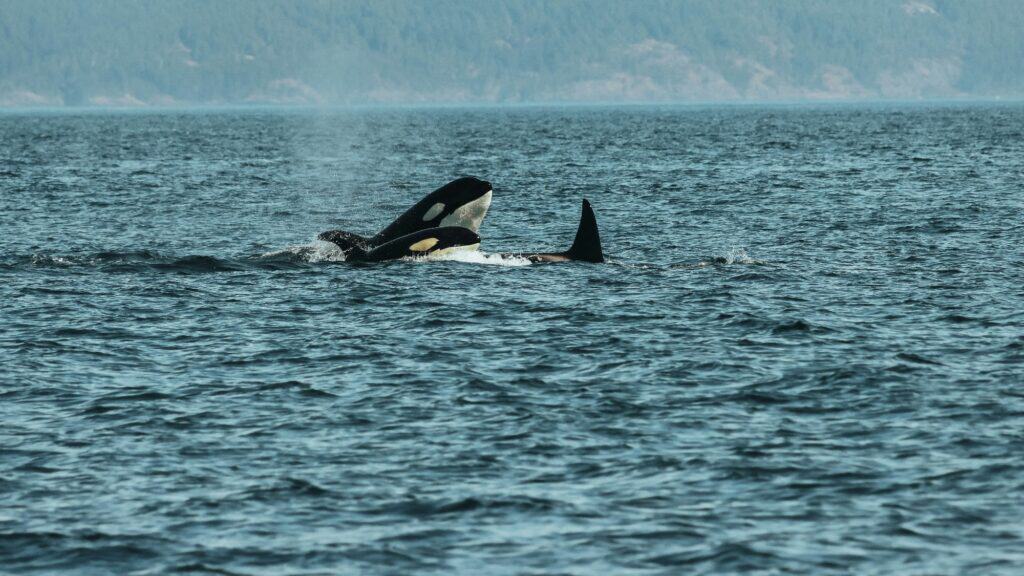
What did the whale-watching tour with the Clipper involve?
We really tried to Indigenize every aspect of the experience. To make sure that it was fully representative and was being reciprocated back to the community. We had a special menu on board just for the tour, collaborating with Native food businesses to bring Native foods on board. We had Fireweed bakery cookies (Native-owned bakery in Spokane), beer from Talking Cedar Brewery (owned by the Chehalis Tribe), and coffee from a Native-owned roastery, Theo’s Longhouse, in Oregon.
Lead tour guide Owen Oliver would share culturally relevant history, teachings, Lushootseed language, and specific sites along the tour. We would often have a co-host to speak about Indigenous food systems. We offered a tea-tasting experience that used traditional plant medicine and shared cultural teachings around plants and benefits, including nettle and how nettle teaches us how to be strong.
Can you tell us more about the three Indigenous itineraries that Taproot offers for download?
We are not focused on creating our own restaurant or hotel, but are focused on bringing awareness to already existing Native-owned businesses. We wanted to create these itineraries to show people they can have an entire experience, whether it is one or multiple days, that gives you a more authentic experience while also supporting Indigenous businesses. When you’re staying at a tribally owned hotel, you’re giving directly to that nation.
Do you have any plans for additional experiences?
We are in the process of brainstorming new experiences and tours that will bring people to Indigenous businesses and initiatives. One thing we just launched is the In Good Relation Retreat, taking place April 12-15, 2027, at the Sacred Waters Retreat Center in Union, Washington. The retreat is about renewal and preparing for spring, a time that comes with a change in what our bodies and minds need. In Indigenous teachings, winter is a time for rest, reflection, dreaming, and creation. Spring is when we come back alive. We are detoxing, we are bringing in new energy to bring into fruition those dreams we seeded during the winter.
There will be herbal medicine and herbal tea workshops, which will include plants that are blooming during that time, like nettle and dandelion. We wanted a retreat for everyone that is grounded in Indigenous knowledge and led by Native practitioners. This type of knowledge is powerful and essential right now, and everyone benefits when we have access to it and are practicing it.
How can locals and visitors respectfully engage with Seattle’s Indigenous communities and cultures?
We have a “Travel with Intention” page on the website that speaks to this. Understand that Indigenous cultures are living communities, not historic artifacts. Recognize what it means to be a guest on Indigenous homelands. Show up respectfully and follow the customs of the home you’re in, like gift-giving and reciprocity (versus the mindset of what am I just taking?). This can look like supporting Native-owned businesses and experiences. Ask questions and be curious.
This is all Native land. Entering with that perspective when visiting is powerful. Native people have constantly been erased. Our lineage, our connection with land and water. Remember that the place names for where you’re visiting probably have Indigenous names that far precede the colonial names. Being curious about that is a really great way to show up as a visitor. Knowing that and holding it at the forefront of your mind, acknowledging that this Indigenous heritage has lasted much longer than the city of Seattle, is a great starting point.
Find more information about Taproot Travel Co.’s tours, itineraries, and traveling with intention here.
Follow Us

Escape the Winter Blues in South Okanagan, B.C.
Discover a different side of British Columbia, where mountain scenery, lakeside retreats, and wine country await in every season.
If you’ve ever planned a trip to B.C., your mind may immediately go to Victoria or Vancouver, which are popular day or weekend trips from Seattle. But if you venture further east, you’ll arrive in the South Okanagan, a region comprising towns including Summerland, Penticton, Naramata, Peachland, Oliver, and Osoyoos. This semi-arid region, dotted with…

Best Resort/Hotel: Populus Seattle
Once again, Populus Seattle has taken the gold for Best Hotel. A gem in Pioneer Square, this 120-room property—part of the neighborhood’s Railspur micro-district—is an adaptive reuse project that converted the century-old Westland Building into an inviting, art-forward space with a beloved rooftop bar, Firn. (It’s the only rooftop bar in the neighborhood.) The rooms…

Best Road Trip: Seabrook
Why not take the long way to the beach? Seabrook is about 145 miles (that’s just under three hours) from Seattle, with no mountain pass or ferry reservation required. Stop for coffee in Olympia, bounce through Elma, Montesano, and Aberdeen, then get a dose of Grays Harbor history at Hoquiam’s Polson Museum before turning north…

Where to See Seattle’s Chum Salmon Run Up Close
Every November and December, one of the city’s most remarkable wildlife spectacles unfolds in a narrow creek tucked into the forest of Carkeek Park.
Each fall, chum salmon, fresh from Puget Sound, muscle their way up Piper’s Creek to spawn, pushing through shallow riffles, around fallen branches and over gravel bars in a final journey that can bring wild salmon within a few feet of visitors. For several weeks in November and December, the park becomes one of the…