





Festivals
Read More ›
Fremont’s Naked Bike Parade Turns 35
What began with four nude cyclists in 1989 has grown into one of Seattle’s most joyful summer traditions.

The summer solstice is celebrated across the Northern Hemisphere. The longest day of the year brings warmer days, late sunsets, and plenty of excuses to spend as much time outside as possible—especially in our environmentally blessed corner of the world.
In Sweden, Midsummer is celebrated with flower crowns, maypoles, folk dances, and eating pickled herring. At Stonehenge, thousands gather to watch the rising sun as it is perfectly framed by the ancient stones. And in Seattle’s Fremont neighborhood, Summer Solstice means a community-driven parade filled with bedazzled floats, eclectic costume ensembles, and performances of all kinds. The streets are filled with unicorn and shark floats, life-size puppets, unicyclists, belly dancers, jugglers, saxophonists, and magical creatures.
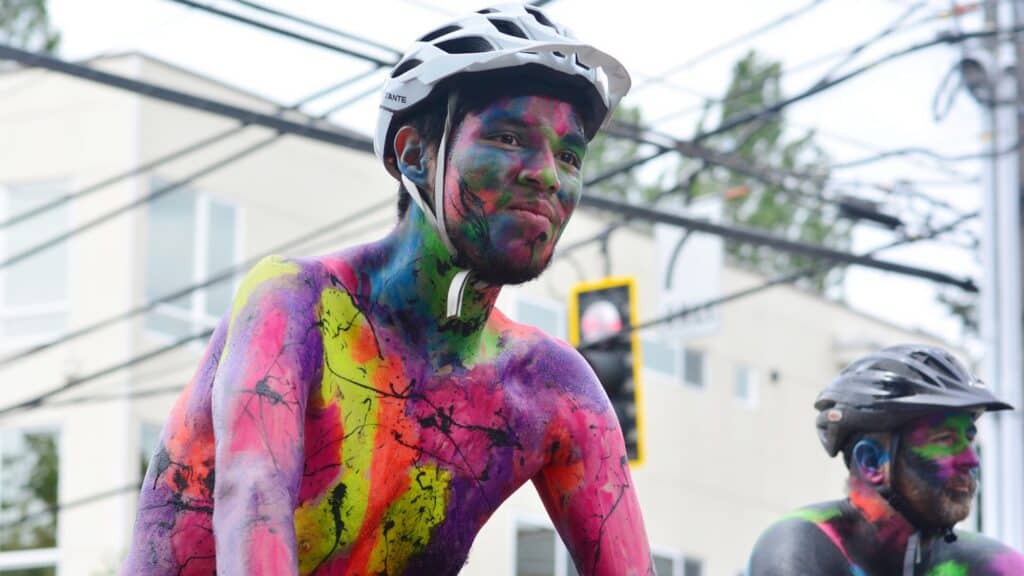
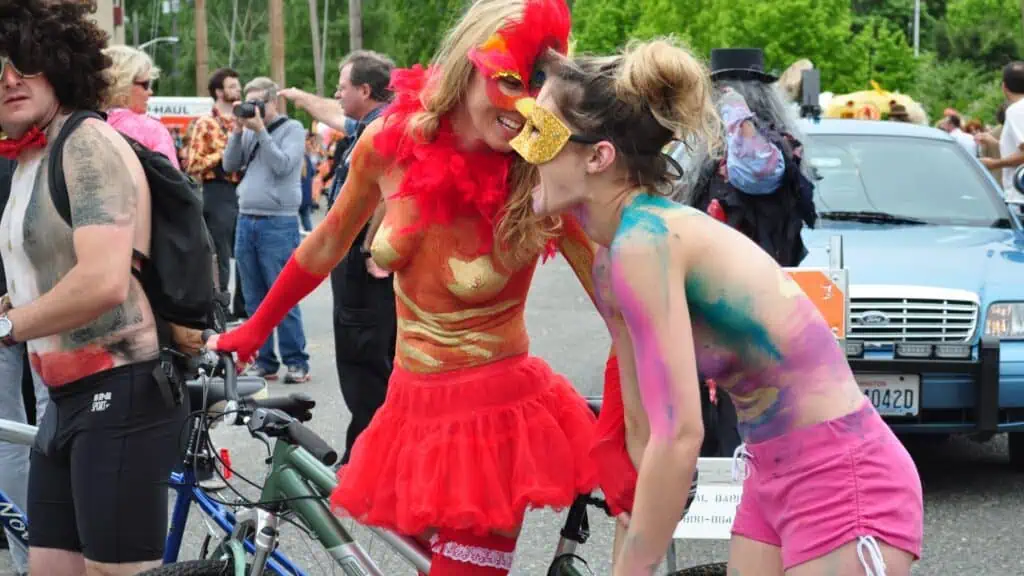
Of course, one of the highlights is the naked bike ride where hundreds of Seattleites strip down and paint themselves before cycling from Gas Works Park and through the streets of Fremont. I’ve seen riders painted as Super Mario Bros. characters, sunflowers, butterflies, sun gods and goddesses, planet Earth, the solar system, and an entire school of fish.
If it seems like you can’t remember a Seattle summer without the Solstice Parade, there’s a reason. Now celebrating its 35th year, the parade began in 1989, when Barbara Luecke and Peter Toms started it as a Fremont answer to Santa Barbara’s Summer Solstice Celebration. “Fremont needed a gathering to bring together the many artists living cheaply around the neighborhood,” says Maque daVis, a Fremont Arts Council board member, longtime organizer, and Solstice original.
The origins of the naked bike ride, now an inseparable part of Fremont Solstice, also date to that first parade.
“At this [first] parade, four naked men on bikes showed up, protesting the commercialism of using women’s partially naked bodies in ads,” says Conny Stephan, FAC board member. “Maque stopped them, asking them to leave. But when listening to their ideas of their protest, he decided to let them go. This is the beginning of the story of more and more bikers showing up every year. And when the city (of Seattle) claimed this is not appropriate, the FAC Board came up with the idea, if the cyclists were painted, it is art!”
Despite a bit of resistance during the early years—including the arrest of a few nude riders in 1998—the naked biker gang persisted, and the Solstice ride lives on. The ride has grown from about 50 cyclists in the early 2000s to nearly 1,000 painted riders today. Paint continues to be central to the occasion, turning nudity into art—and bringing people together through paint parties. Solstice Cyclists help organize the riders and ride ahead of the parade to keep participants on track.
“My favorite thing is seeing the creativity of everyone’s costumes,” says Alina Ptak, who has participated in three solstice bike rides while living in Seattle. “The paint party is also so much fun. It’s very joyous and colorful and there’s a sense of camaraderie and community.”
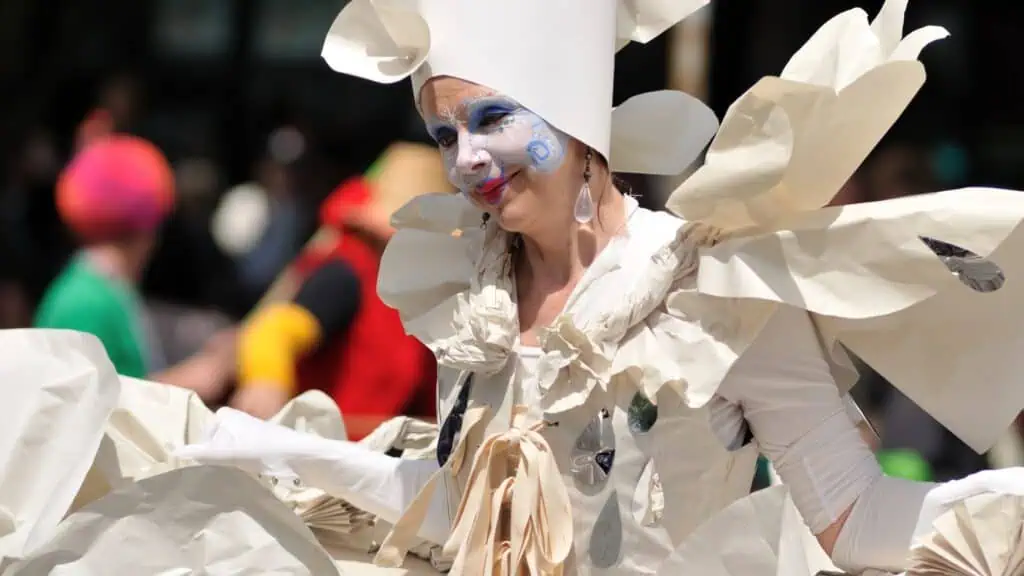
In its 35 years, the Solstice Parade, which is overseen by the FAC, has certainly evolved and grown. However, the core ethos remains the same, with a few simple guidelines: anyone and everyone can be an artist and be part of the parade. The only electric vehicles allowed are motorized wheelchairs. No live animals (except service animals). And there are no printed words or logos.
Part of the magic is that the occasion is created by the community. You can build a float, gather friends for a performance, connect to another group, or simply dress up as your favorite mythical creature, flower, or fairy and join in on the fun.
If you are planning on partaking in the naked bike ride, consider joining the community paint party for the occasion, with this year’s location still to be announced. Painting and clothing optional, though painting is part of the fun. Bike, run, walk, skip, skateboard, or rollerblade your way through the parade.
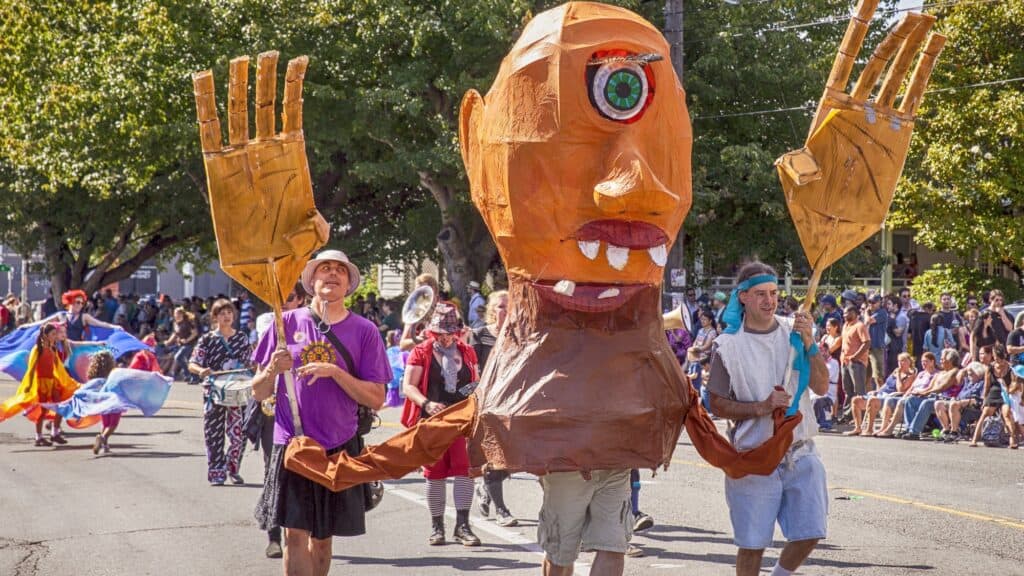
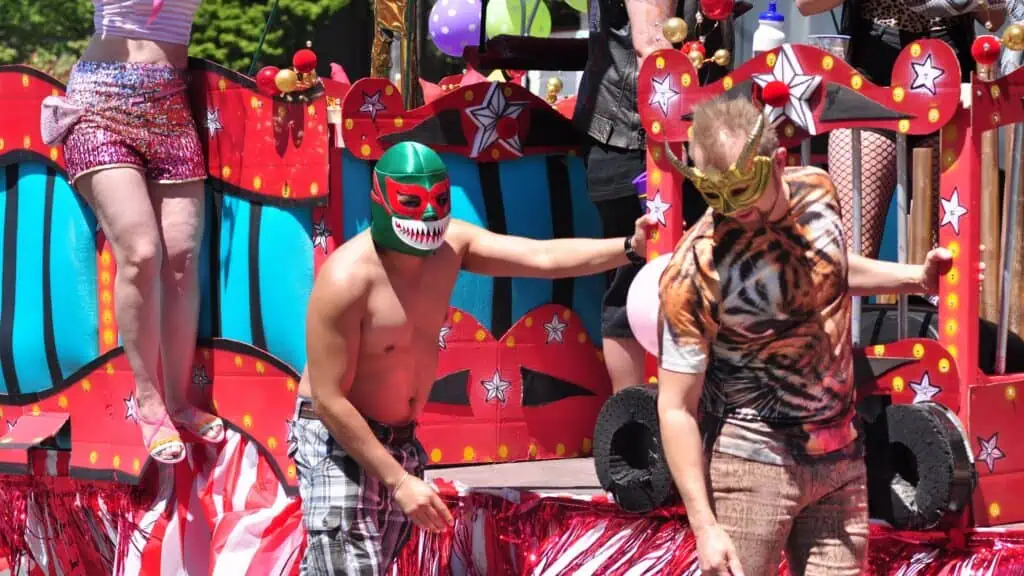
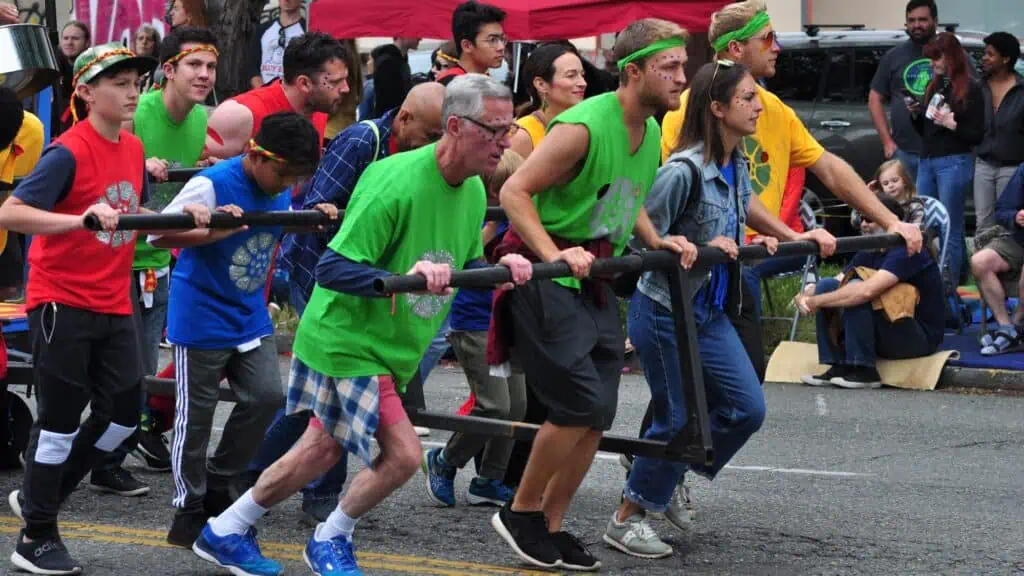
This year’s parade falls on Saturday, June 20. Rideshare or bus in and arrive early, as streets shut down and the area becomes tricky to navigate. The bike ride starts at 12:30 p.m., with the main parade following at 1 p.m. A few of the groups helping bring the magic this year include the Brazilian-style street samba group Samba OlyWa, a World Cup float, and noodle-themed Seattle Pastafarians.
So, whether you choose to shed your inhibitions or spectate from the sidelines, come celebrate the return of the sun on one of Seattle’s most beloved summer days.
Follow Us

Get Blown Away: Seattle’s Glass Art Scene Takes Center Stage
Now in its 8th year, Refract Seattle is the region’s premier celebration of glassblowing—arguably the most famous visual art genre in the Pacific Northwest. Pioneered by names like Dale Chihuly, Ginny Ruffner, Lino Tagliapietra, and Preston Singletary, glassblowing has remained among the area’s most prolific creative outputs, with contemporary talents such as John Hogan, Julie…

Kishi Bashi Is Ready to Feel Everything
Ten years after Sonderlust pushed his music in a new direction, he’s bringing the pivotal album to The Crocodile—and playing it in full for the first time.
Back in March of 2012, I snagged a last-minute ticket to see Of Montreal at the Showbox. As amazing as Kevin Barnes and company were, along with tourmates Deerhoof, the biggest impression made on me was the opener, Kishi Bashi. Armed with little more than a violin, a loop pedal, and a pristine voice, Kishi…

Seattle’s Artists of Color Expo Offers an Inside Look at the Creative Life
The October 9-11 gathering features live art-making and hands-on workshops, with Seattle artist Damon Brown delivering the keynote.
More than 100 artists participate each year in Seattle’s Artists of Color Expo & Symposium (ACES), which brings exhibitions, artist talks, live art-making, and workshops under one roof. Visitors can learn a technique from an artist or hear how a childhood memory became the starting point for a piece. This year’s event takes place October…

Seattle Author Kristen Millares Young Follows Her ‘Desire Lines’
Blurring the lines between desire and expectation, her debut memoir explores what women inherit, sacrifice, and claim for themselves.
In her debut memoir, local author Kristen Millares Young dives straight into precarious experience of being a woman. Blending myth, history, personal essay, and travelogue, Desire Lines (Red Hen Press), out October 6, is an unflinching look at the challenge of balancing one’s own desires with the demands of motherhood, marriage, and work, and the…