





Music
Read More ›
Northwest Tune-Up Bike and Music Festival Brings Big Air and Loud Sets to Bellingham
The three-day festival celebrates its fifth year with bike competitions and a genre-spanning music lineup—plus one unforgettable band of mummies.

If I were to summarize the sensation of attending Northwest Tune-Up, Bellingham’s three-day bike and music festival, in one image, it would be watching Tomomi Nishikubo—a Japanese street trials biker—doing acrobatic acts of derring-do on his bike while Seattle rockers Thunderpussy shred in the distance.
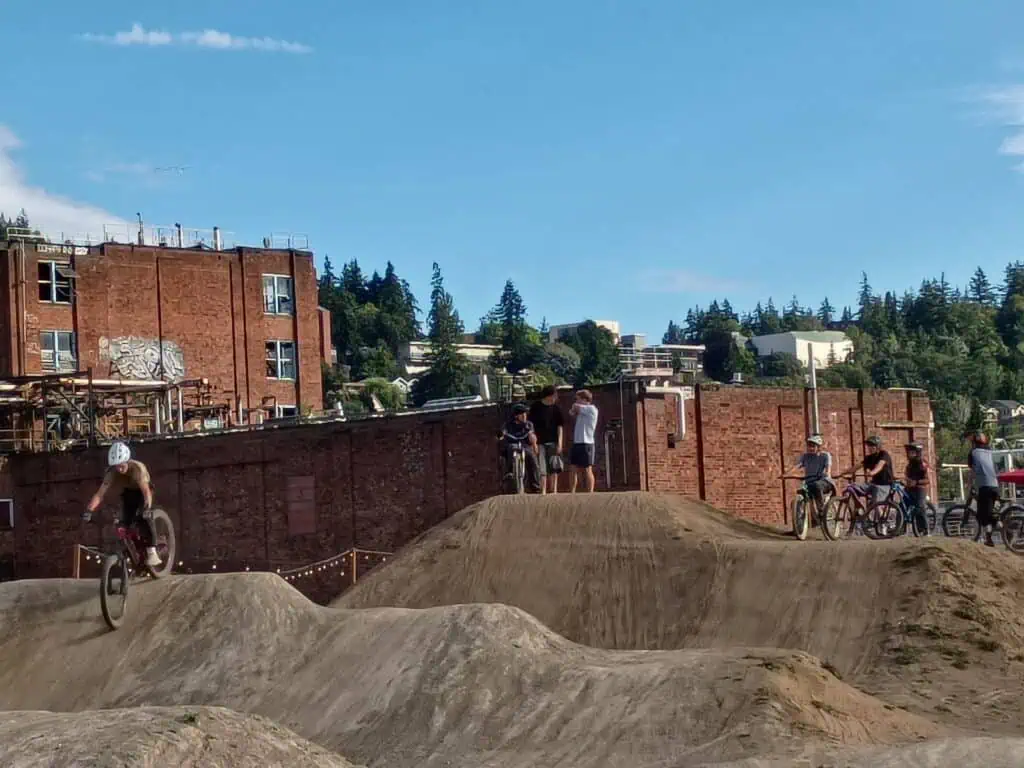
My second lasting impression of the festival would be rounding the corner on Granary Avenue and getting an aerial view of just how massive Tune-Up is. I let out a laugh of shock and delight as I saw the sizable stage next to the expansive dirt track that would be devoted to races and freestyle competitions. For a festival just entering its fifth year—and with such a seemingly niche clientele—Tune-Up seems to have firmly established itself as a Bellingham juggernaut for not only bike culture but music culture as well.
As I had been told by many of the participants at the festival, the music is just a bit of set dressing to draw in folks who aren’t necessarily into the main attraction: bicycles, and their various paraphernalia. A bit of press info suggests that Bellingham is uniquely suitable for off-road biking, thanks to the “loamy soil” that makes up its trails, but being a bikeless music journalist, I was only able to bear witness to the truly compelling practice of kids and teens dropping into dirt jumps and racing each other, with hysterical commentators calling the action.
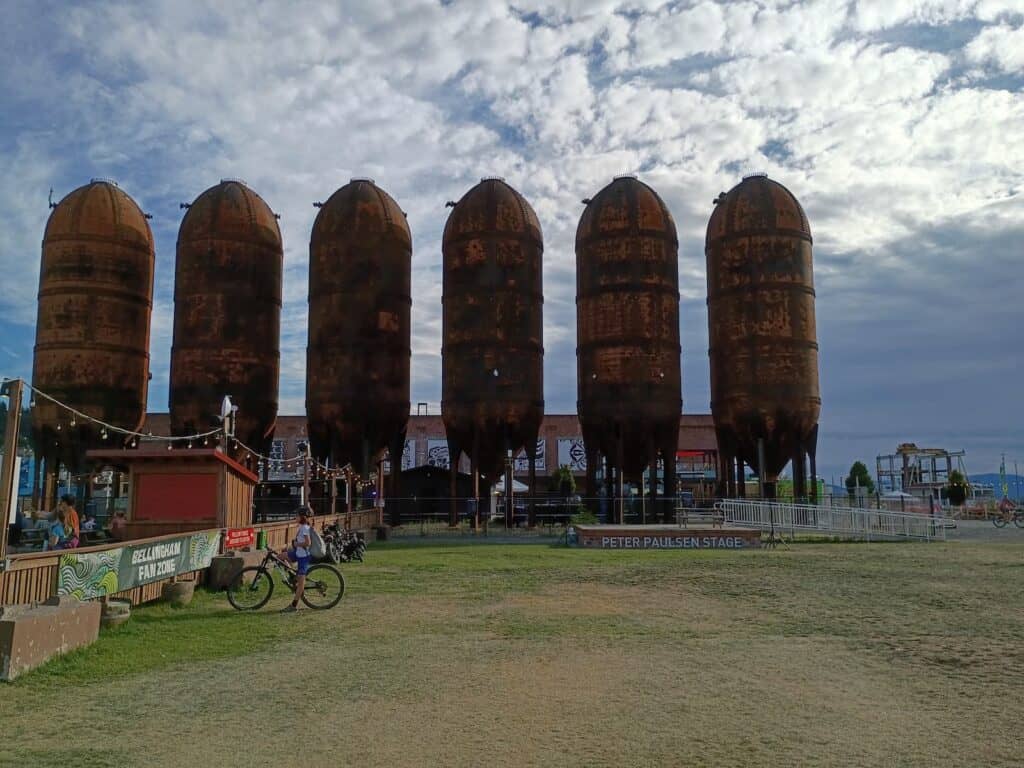
You can get me to travel to Bellingham for bicycling, but music helps tremendously to sweeten the pot, and Tune-Up boasted a lineup that felt like a buckshot blast of genres and vibes. Sponsor Doc Swinson’s Whiskey held a competition to find an opening act for the festival, eventually landing on Seattle’s own Henry Mansfield—necessarily, I think, a performer who can stand out in a crowd.
Mansfield has nailed down a brand of alt-pop, with an emphasis on the pop. Speaking with him before the festival, he mentioned artists he looked up to including Dan Deacon, the Hold Steady, and Feist, which is a wild group of sounds, but makes a certain inarguable sense when listening to Mansfield’s music. His output finds a balance between the universal and the strange, and between the novelesque and the personal. He makes the kind of pop music—especially with something like the recent release “lover boy”—that can be transposed to the ‘50s or ‘60s without changing much about the melody or message.
“I think it’s a fun challenge for me to occasionally consider, ‘What’s the thing that I find interesting about this, and what’s the angle that might allow other people access to it?’” says Mansfield. “So, working from those two places, towards the middle. And it’s tricky, because I have conversations with really hardcore, ‘capital-A Artist’ friends who are like, ‘I’m going to make whatever I want to make.’ And I admire that. There was a time in my life, probably five or six years ago, when I agreed with that. But I’ve found so much benefit in wondering what the light is that I can shine on this thing that allows people to look at it in a way they haven’t before.”
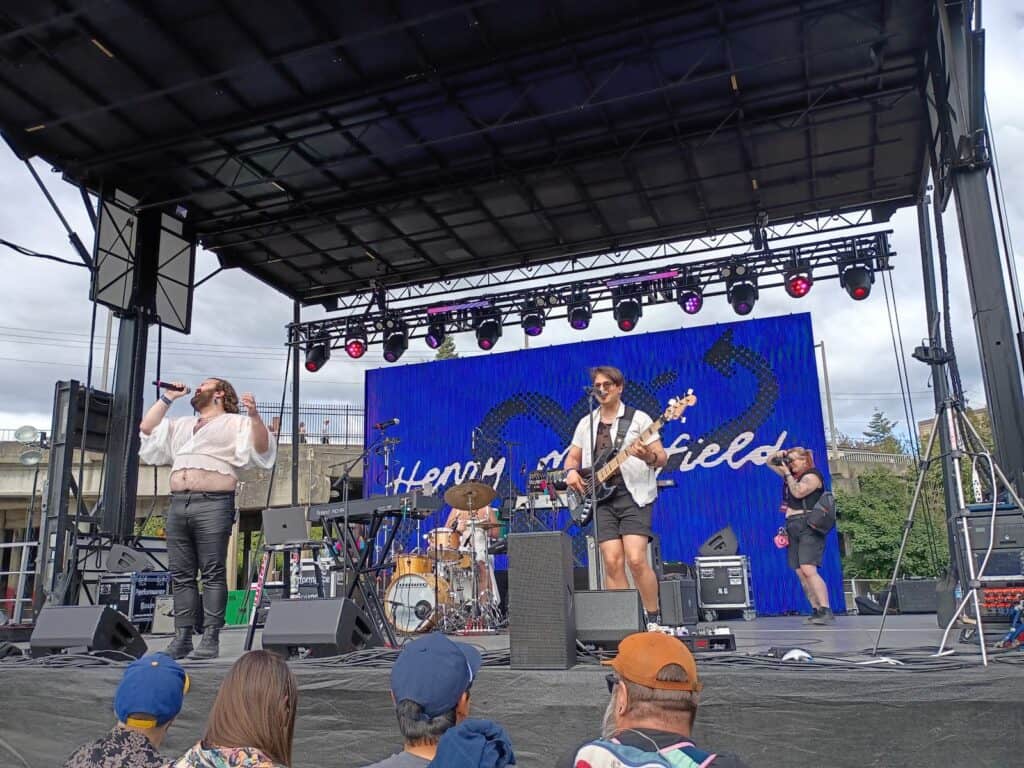
Mansfield’s set opened the music portion of the first day in grand fashion, although it immediately highlighted the strange dichotomy that permeated Tune-Up, at least at Waypoint Park, where all the central action took place. On the one hand, we had a deep and granular bike culture festival, with lines of tents devoted to test-riding bikes, learning about add-ons, and exploring the newest in bike technology. On the other hand, where one might expect a sort of Tony Hawk’s Boom Boom Huck Jam assembly of pop-punk artists, we got a varied and surprisingly mellow group of artists.
Sierra Hull’s brand of Americana possessed a hypnotic mixture of Stevie Nicks and Gillian Welch; Delhi 2 Dublin, true to their name, mashed the spritely sounds of Ireland and India together, with a bit of trip-hop flourishes to keep the groove going. The headliners of the night, Hippie Sabotage, had the kind of laconic, SoundCloud-rap-meets-Southern-rock vibe that just bounces right off of me, so I headed out (word from people the next day was that things got “wild,” so it’s up to our imaginations to determine what that means).
On the second day, in addition to the aforementioned Thunderpussy, I was exposed to one performance that it would be a sin not to mention. If you remember nothing else I’ve said, remember this: if you ever have the opportunity to see a band called Here Come the Mummies, you must take it.
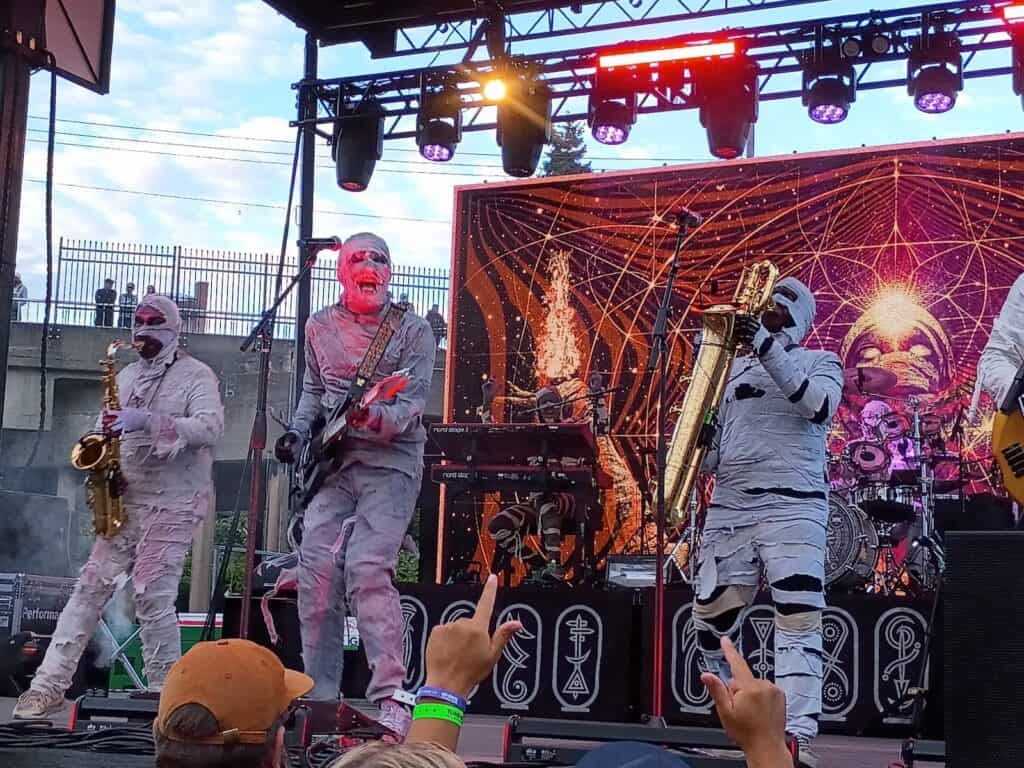
In the week since I saw Here Come the Mummies, I feel like I’ve begun to proselytize them, and I’m not ashamed. They are comfortably one of the best live performances of any kind that I’ve seen. Yes, they are dressed in mummy getups, and their songs are fairly silly (double entendres are their bread and butter), but the band is essentially the Harlem Globetrotters of deep funk. Composed of world-class musicians who remain anonymous—it’s funny that the Nashville-based band mentions how many Grammys its members have among them—Here Come the Mummies feel like seeing a combination of Earth, Wind & Fire and the J.B.’s, with an absurd amount of theatricality thrown in.
If you’ve never seen a man play a baritone sax through his legs—and you haven’t—then you owe it to yourself to see this band.
Tune-Up is a festival that has grown a whole lot in its short life, but its audience seems to have followed it. I’m fascinated to see where it goes from here. Next time, though, I want to drop into one of those steep race tracks. Either I shatter into a million pieces or live on in infamy.
Follow Us

SENSORIUM Takes on Our Screen Addiction
Dance, drag, and immersive art collide in an eight-week exploration of our phone-obsessed lives, with a few surprises along the way.
What do drag queens, smartphone addiction, art installations, and an old luggage shop have in common? According to longtime Seattle choreographer Alana O’Farrell Rogers, a lot. “There’s no dead time anymore,” says Rogers, explaining how the proliferation of smartphones fills the empty spaces that once served as time for rest or connection. Where we snuggled…

Salt-N-Pepa on Breaking Barriers and Staying Power
Ahead of their performance at Seattle’s Museum of Pop Culture gala, the hip-hop pioneers talk about creative ownership, connecting with new generations, and the songs that still resonate.
The Museum of Pop Culture (MOPOP) will host its annual ICONS of Pop Culture Gala in Seattle on October 22, honoring five artists and institutions whose work has helped shape entertainment and culture. This year’s honorees are martial arts and film legend Bruce Lee, fashion designer Jeremy Scott, the video game franchise Halo, hip-hop pioneers…

Studio Sessions: Christopher Paul Jordan
Drawing on childhood memories, neighborhood history, and salvaged materials, Christopher Paul Jordan’s latest show at Cornish’s Behnke Family Gallery explores how the past stays with us.
Start in the middle. It’s good advice for telling a story, and a way into Christopher Paul Jordan’s paintings. By the time you encounter them, their materials have already been something else, and who knows what they might move on to become. The Tacoma interdisciplinary artist works with salvaged objects, including screens, picture frames, canvas,…

Rearview Mirror: Wedding Bells, A Furniture Launch, and the Symphony’s New Look
Things I did, saw, ate, learned, or read in the past week (or so).
WEDDING BELLS I’ve been a bit absent from this column lately, but I think I have a pretty good excuse: I got married! It’s already been three weeks since my September 19 wedding, but I’m still reflecting on the magic of the day. My fiancé, well husband now (I can’t get used to saying it!),…