





Visual Arts
Read More ›
Studio Sessions: Kelly Bjork
Fresh off the opening of a solo gallery show, Kelly Bjork talks working in pencil, the turning point in their career, and staying authentic in their art.
 By Rachel Gallaher October 1, 2026

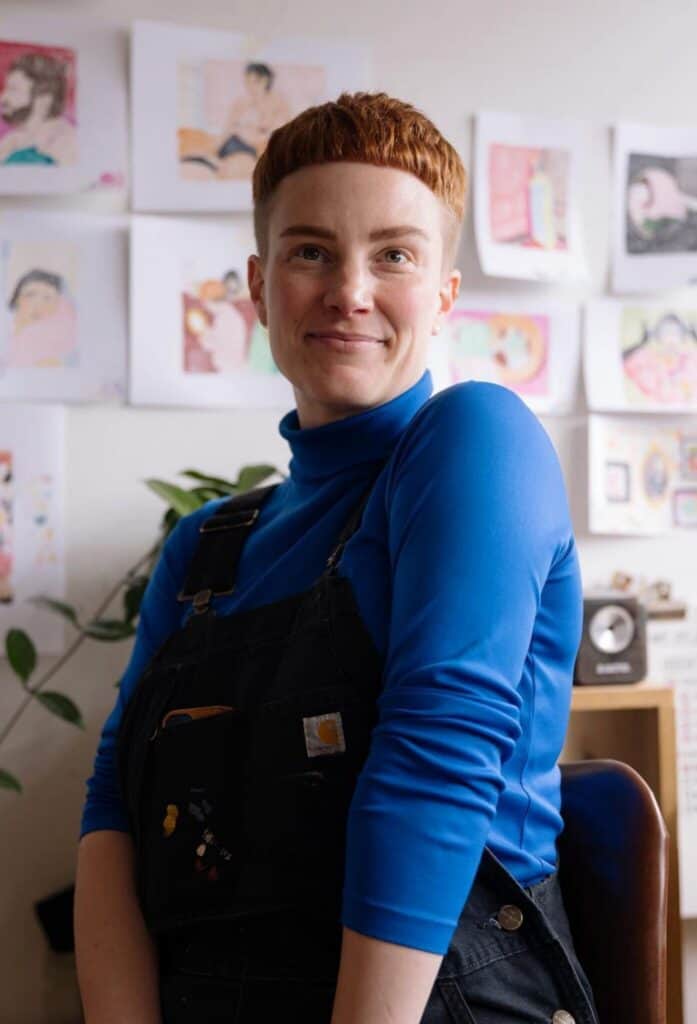
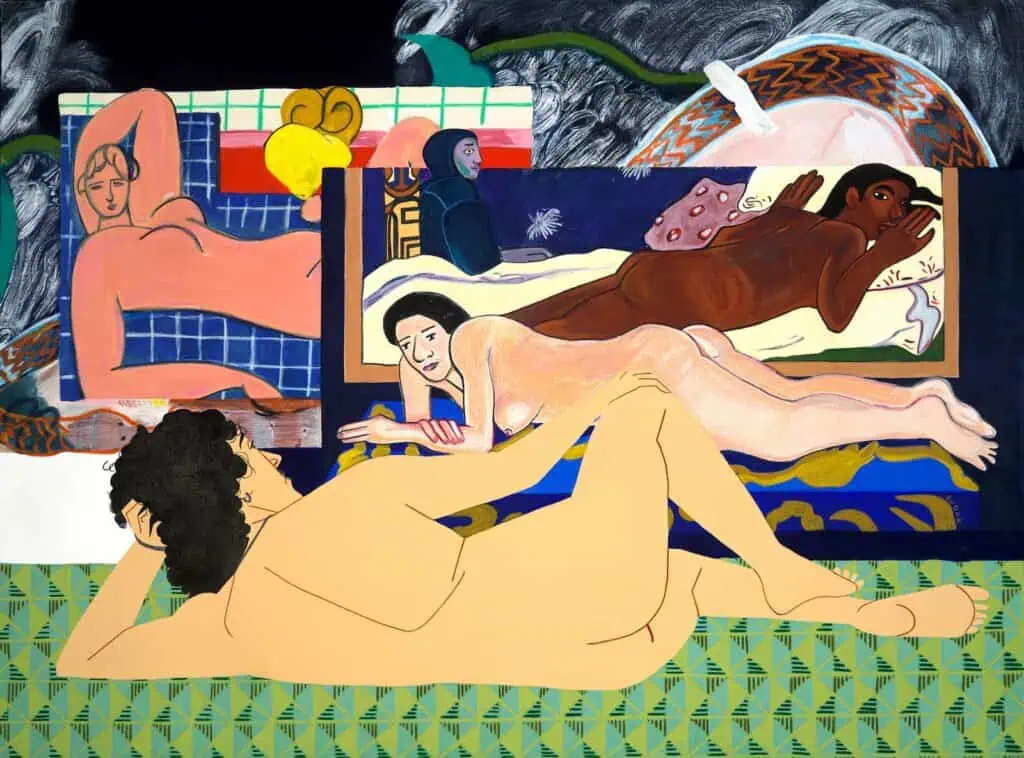
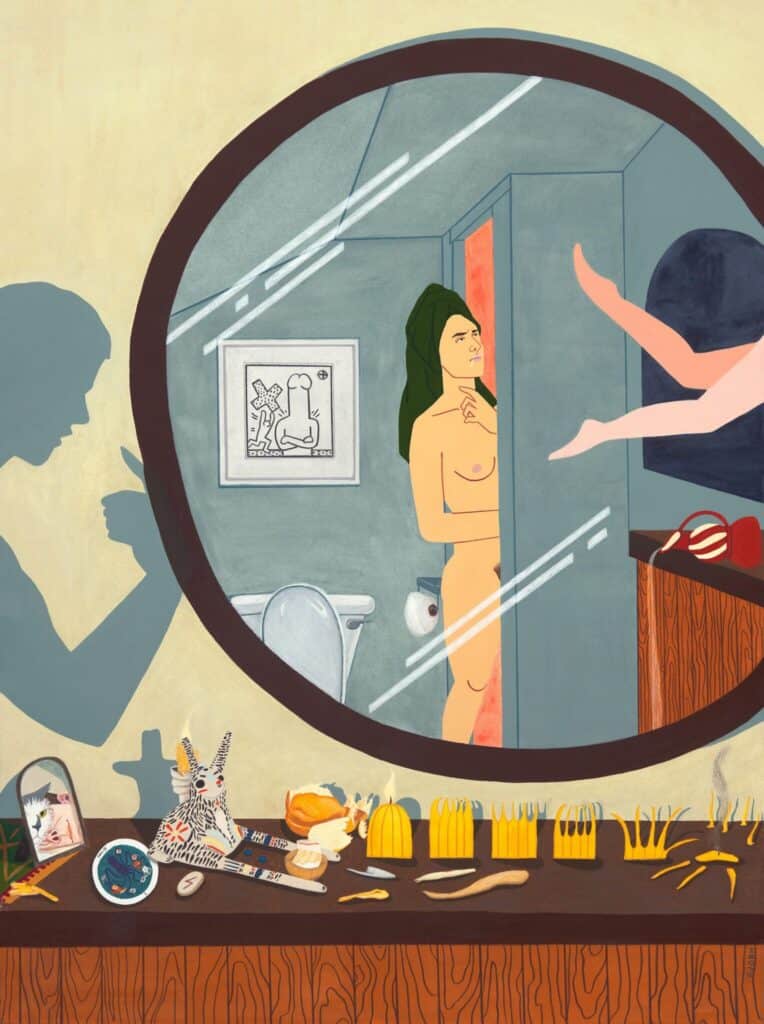
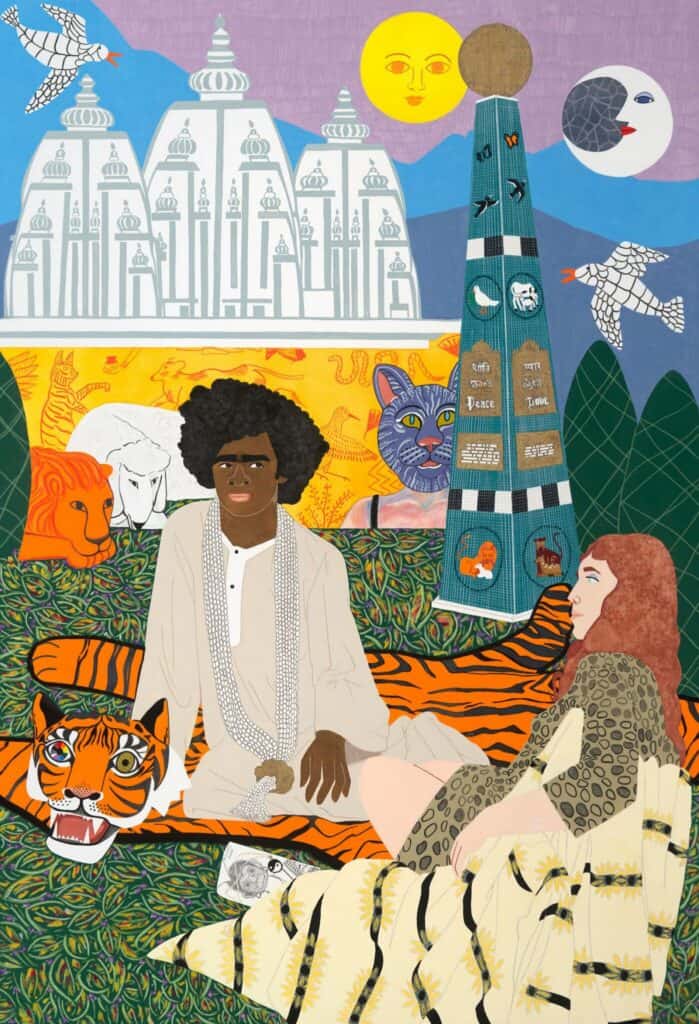
A longtime fixture in the local art scene, Kelly Bjork creates works that are intimate, relatable, and that hum with emotion. Working with pencil and paint, Bjork’s illustrations—often vibrantly colored and patterned—give viewers a glance into scenes of domesticity, highlighting simple moments between humans (or between a human and a place) that make up daily life. A queer artist, Bjork uses their work to celebrate and affirm the queer community against the unfortunate, continued rise of discrimination against it. Looking at these tender, exploratory, joyous scenes, one can’t help but think about the power of humans connecting in love and togetherness.
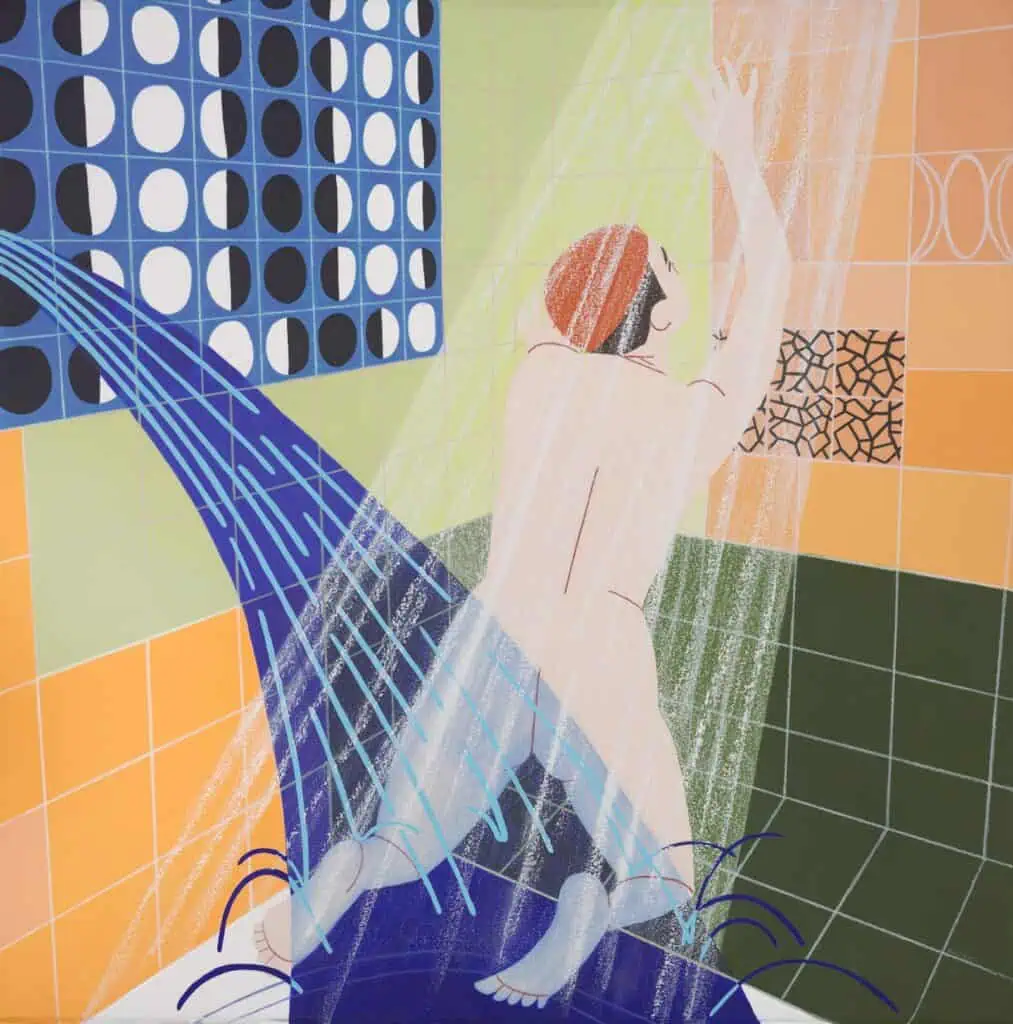
Bjork’s current show, Lunacy, opened last week at Pioneer Square’s J. Rinehart Gallery and serves as an exploration, or perhaps a reckoning, of the specific ways in which a body changes over time—specifically for those entering or undergoing perimenopause. “The show feels like a deep evolution in my work that I’m excited to share,” Bjork says. “People can expect to see another vulnerable side of me that is dealing with aging, perimenopause, personal demons, and searching for ways to cope.”
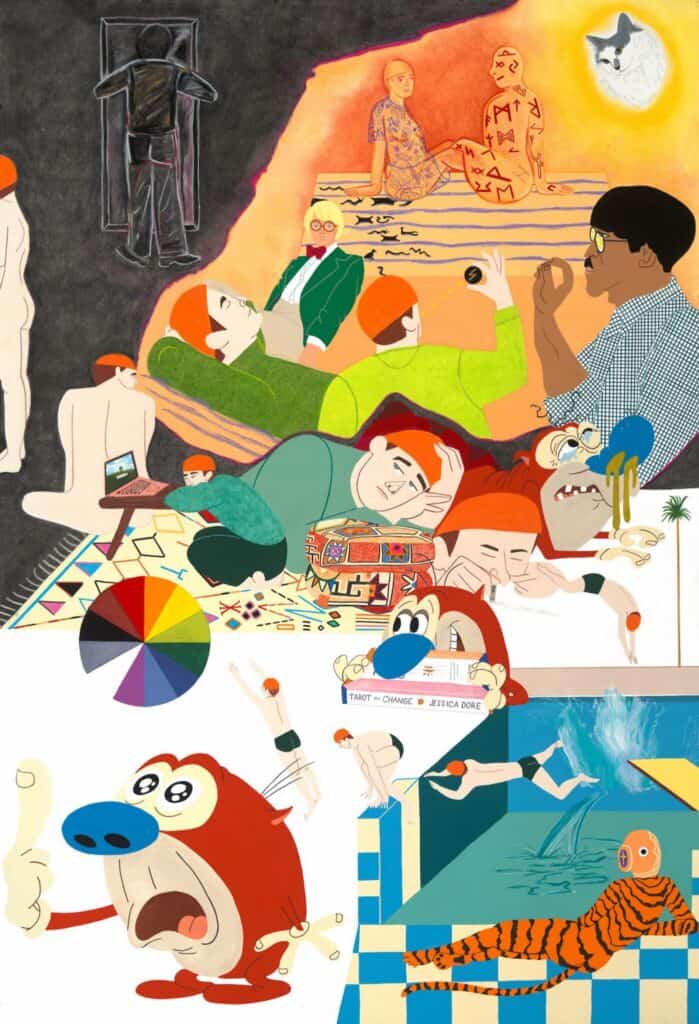
Rendered in Bjork’s signature illustrative style, the works depict their subjects and, according to a description of the show, “the guides they encounter (and reencounter) along the way: that may be another artist, a substance, a symbol, a celestial body, their own changing body.”
Lunacy runs through October 28 at J. Rinehart Gallery. On Saturday, October 17, the gallery will host an artist meet-and-greet from 1 p.m. to 3 p.m.
Hometown
Tacoma
Discipline
Drawing and painting
Favorite Spot in Seattle
Seward Park
Describe your work in three words.
Vulnerable. Playful. Gay.
When did you know you wanted to be an artist?
I don’t think I had a choice in the matter; I’ve been drawing the moment I could hold a pencil! I feel most grounded in myself when I am drawing, and so it has to be done if I want to keep sane. Post schooling, I continued to make and show work. I had a solo show at a local coffee shop (Joe Bar RIP) in 2016 where I made work for myself, and it felt like the first time I really did it unabashedly. From that show my career took off. I started to get regular illustration work, and I believe it was because of the authenticity that was felt in my work from that show. I learned that people will feel and respond to what you put into your work.
What are you working on now?
I just wrapped up a new series for my solo show Lunacy at J.Rinehart Gallery! Now I’m working on a piece for a group show at Seattle Art Source, Form over Function: Held Together, that opens on October 17th in Georgetown. I’m excited (and exhausted) to keep the making-momentum going.
What draws you to your particular medium?
Pencil is my forever love because for me it’s where everything starts, and you can do it literally anywhere. Gouache, though, holds a very special place in my heart for its opacity, flatness and high pigmentation—it’s very satisfying to lay down.
Tell us about your proudest moment as an artist.
I don’t think there was a particular moment, I’m just proud to have made it this far and would really like to keep going.
Share one piece of advice you wish you knew when you were first starting out.
That things always turn out better when you make what you want, not what you think others want to see. People respond to authenticity and can see/feel it right away.
Define success on your terms.
Success for me is being able to continue making work to live the lifestyle I’m living and also grow as an artist. I’m really just a simple guy.
What do you still hope to accomplish?
I’m trying to stay present and not look too far into that future thing.
If you weren’t making art, what would you be doing?
I’d be a worm.
Who do you admire and why?
A big influence for Lunacy was finding the work of Joan Brown, who without this work would not exist. She painted her life and the human experience in the 1960s until her unfortunate death in 1990. She didn’t listen to what was expected of painters during that time and painted what she wanted and knew. She was also an open-water swimmer like me—and learning all of this about her inspired this series.
Follow Us

Rachel Marsh Knows a Good Joke Takes Work
The Bothell-raised actor talks about trusting her comic instincts and making a beloved character her own in the new rom-com The Love Hypothesis.
Rachel Marsh, who grew up in Bothell, has been building an eclectic résumé with roles in Prime Video’s Fallout and Hulu’s Adults. Now she’s stepping into the romantic-comedy spotlight with The Love Hypothesis, which began streaming on Prime Video Sept. 23. Based on Ali Hazelwood’s bestselling 2021 novel, the film stars Lili Reinhart as Olive…

What’s on Screen at Diwa Filipino Film Festival
Family histories, migrant stories, political struggles, ghosts, romance, and an unexpected dose of comedy shape this year’s lineup.
Before Adrian Alarilla had an international film lineup to consider, there was a loft at Seattle Center to fill. Organizers of the Pagdiriwang Philippine Festival—part of the Festál series—wanted to expand their arts programming and make better use of the Armory’s upstairs space. A friend suggested adding movies and recommended Alarilla to lead the effort….

WALKDONTRUN Offers a Different Way to See Downtown
The one-day art festival brings new life to familiar corners of the city.
How often do you linger in the central business district of downtown on the weekend? If you’re like me, not terribly often. Certain blocks can feel a little forlorn once the weekday workers empty out—or perhaps not forlorn so much as waiting for their purpose. On Saturday, September 19, plenty of new purpose flourished (and…

Pacific Northwest Ballet Opens Its Season with Heart
Serenade pairs Balanchine’s romantic sweep with a revealing new work by Jessica Lang and a jubilant finale from Alexei Ratmansky.
Finding stillness can be challenging. To pause without scrolling or anticipating the next thing on a to-do list, especially at the change of the seasons. It is well-timed, then, that Pacific Northwest Ballet’s 2026-27 season-opening program Serenade is rich in sensory experiences: light, color, movement, stillness—and the value of the calm spaces in between. The…