





Features
Read More ›
Actor and Author Ke Huy Quan Shares His Story at Very Asian Foundation’s Annual Seattle Brunch
From his childhood as a refugee to his decades away from Hollywood, Quan opened up about the experiences behind his new memoir, Never Say Die.

At this point, most people with even a passing interest in film know Ke Huy Quan got his start in Hollywood as a child actor in the mid-1980s.
After starring as Short Round in Indiana Jones and the Temple of Doom opposite Harrison Ford, and as Data in The Goonies, Quan acted in a few TV series and films through the late 1990s, but stepped away from the profession as opportunities dried up. He attended the University of Southern California to study film and began working behind the camera as a stunt coordinator and assistant director.
It wasn’t until the 2020s that he decided to get back in front of the camera—and he did it in a big way. Starring as Waymond Wang in Everything Everywhere All at Once, Quan earned widespread praise from critics and fans, along with numerous awards, including a Golden Globe and Oscar for best supporting actor. Since then, he has continued working steadily in film and television.
“I think when people think of me, they often think of the highlight reel: a kid who spent a year in a refugee camp and then got discovered by Spielberg, then got to go on this incredible adventure with Harrison Ford. And then all of a sudden, decades later, out of nowhere, he came back and won an Oscar,” Quan told journalist and Very Asian Foundation (VAF) co-founder Gia Vang during the foundation’s annual Very Asian Brunch on Sunday at the Edgewater Hotel in Seattle.
A life beyond the highlights
During their fireside chat, Quan and Vang touched on other aspects of his life, the parts that aren’t on his highlight reel, including his childhood in Saigon and his family’s three attempts to flee Vietnam after the Vietnam War ended. Ethnic Chinese families, including Quan’s, were targeted because of the “geopolitics between China and Vietnam,” as he describes it. The first two escape attempts were unsuccessful and landed the family in jail—all before Quan, who didn’t know why they were fleeing, turned 8. Once his family was finally able to get out, they spent a year in a refugee camp in Hong Kong before immigrating to the United States.
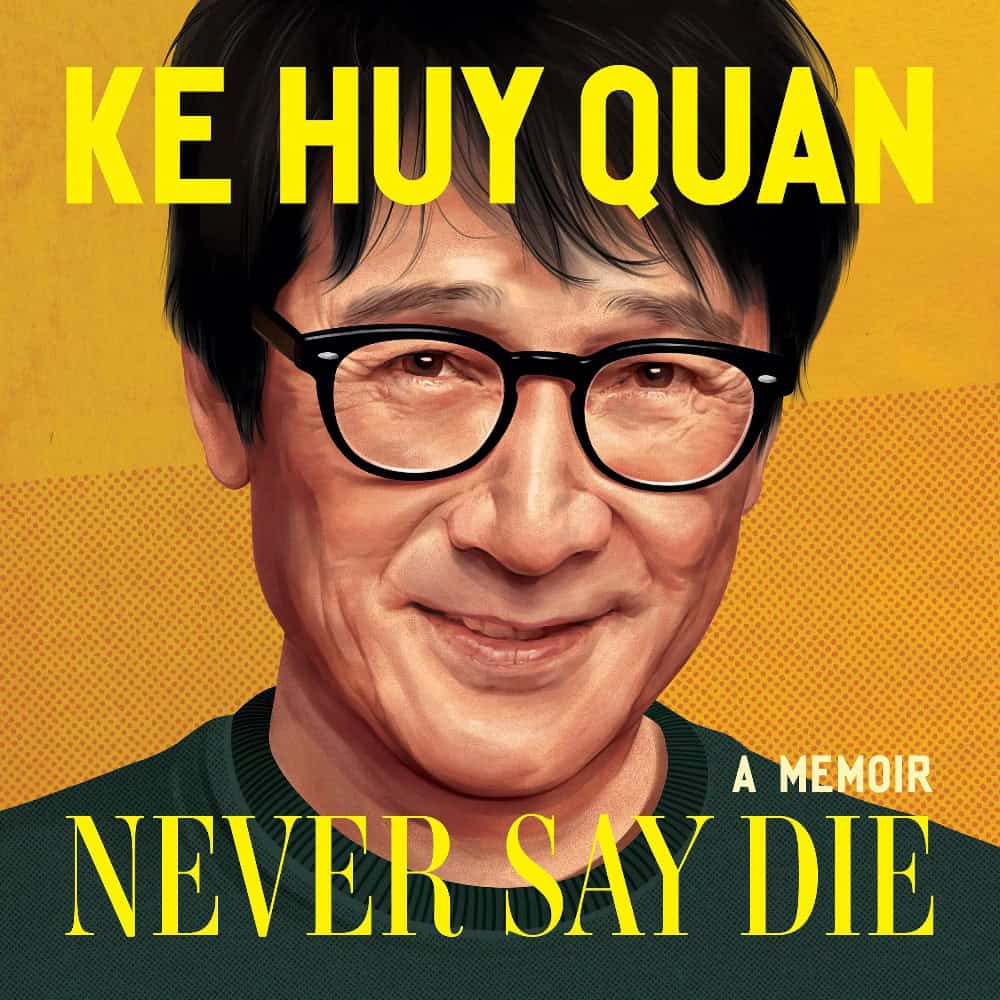
Quan also discussed the stigma that comes with the label of “refugee,” telling Vang, the daughter of Hmong refugees, that he struggled with that identity for a long time. It took attending an event with UNHCR, the UN Refugee Agency, and being confronted with his family’s story—including seeing the passenger log from the boat they escaped Vietnam on, with their names—that he came to appreciate his parents’ sacrifice. Now Quan wears the refugee label proudly.
These are the parts of Quan’s story that most people don’t know, along with what his life was like during the 30 or so years he spent away from acting, which he calls “the quiet years.” He details that story in his new memoir, Never Say Die, which made the New York Times bestseller list within a week and a half of its publication.
Very Asian representation
VAF was co-founded by Vang and fellow journalist Michelle Li, who received a racist voicemail in 2022 after doing a broadcast segment about the types of food people eat to ring in the New Year. Li, who is based in St. Louis, mentioned that as a Korean American, dumpling soup is part of her New Year meal. A viewer called in stating she was being “very Asian” for the ad-libbed line and should keep her Korean to herself. Li posted the voicemail on social media. It went viral and garnered a huge amount of support as other Asian Americans shared their New Year meals and what made them “very Asian.”
This led to Li and Vang starting VAF, which focuses on shining a light on Asian experiences through advocacy and celebration.
One of the ways the foundation does this is through The May Book Project (MBP). In partnership with the nonprofit We Need Diverse Books, MBP helps schools and libraries build and maintain collections of Asian American children’s and young adult literature.
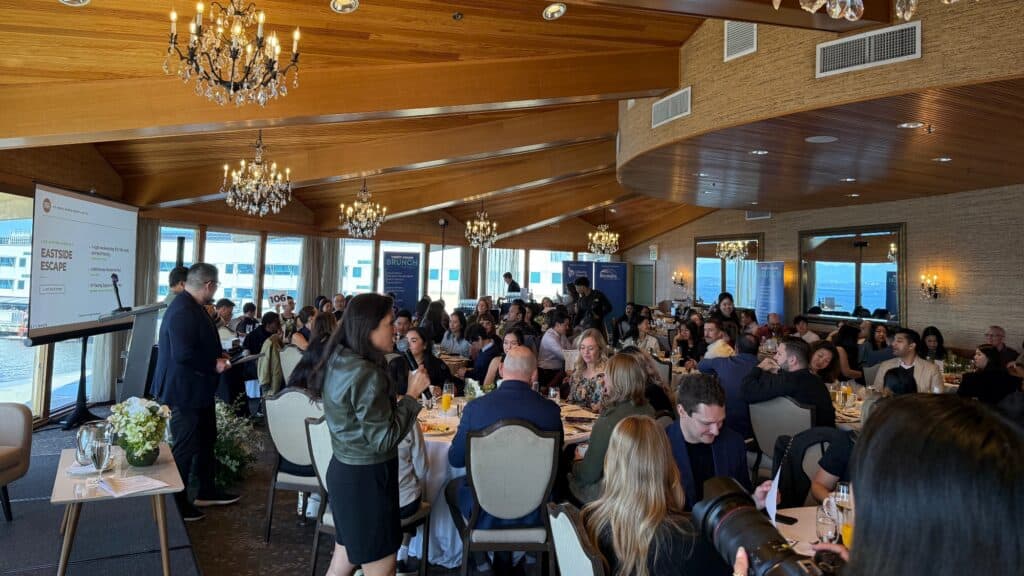
During Sunday’s brunch, VAF Executive Director Soogi Hong discussed the importance of kids seeing themselves reflected in literature. Over the past four and a half years, more than 200,000 kids across 20 states, the Philippines, and Canada have been impacted by MBP. She also noted how many Asian American adults have grown up so accustomed to not seeing ourselves represented in any sort of media that we just didn’t expect it. And as a result, our stories are “treated as exceptions.”
Quan echoed that sentiment when speaking about Asian representation in his industry, saying questions about proper representation are important to ask because the community has been underrepresented for so long. While Hollywood has made a lot of progress, he feels that, given everything going on, the industry has taken a step or two back. That’s why it’s important to keep doing the work and speaking up.
“We must keep asking that question for as long as we have to, until it’s no longer relevant,” he says. “We can’t be complacent just because we’ve had a few movies that made a difference, that won some Oscars, and were able to have some box office success. That’s not enough because it’s not the norm yet. So we have to keep working hard until it’s no longer necessary to ask these questions.”
Learn more about the foundation and its programs at veryasianfoundation.org.
Follow Us

SENSORIUM Takes on Our Screen Addiction
Dance, drag, and immersive art collide in an eight-week exploration of our phone-obsessed lives, with a few surprises along the way.
What do drag queens, smartphone addiction, art installations, and an old luggage shop have in common? According to longtime Seattle choreographer Alana O’Farrell Rogers, a lot. “There’s no dead time anymore,” says Rogers, explaining how the proliferation of smartphones fills the empty spaces that once served as time for rest or connection. Where we snuggled…

Salt-N-Pepa on Breaking Barriers and Staying Power
Ahead of their performance at Seattle’s Museum of Pop Culture gala, the hip-hop pioneers talk about creative ownership, connecting with new generations, and the songs that still resonate.
The Museum of Pop Culture (MOPOP) will host its annual ICONS of Pop Culture Gala in Seattle on October 22, honoring five artists and institutions whose work has helped shape entertainment and culture. This year’s honorees are martial arts and film legend Bruce Lee, fashion designer Jeremy Scott, the video game franchise Halo, hip-hop pioneers…

Studio Sessions: Christopher Paul Jordan
Drawing on childhood memories, neighborhood history, and salvaged materials, Christopher Paul Jordan’s latest show at Cornish’s Behnke Family Gallery explores how the past stays with us.
Start in the middle. It’s good advice for telling a story, and a way into Christopher Paul Jordan’s paintings. By the time you encounter them, their materials have already been something else, and who knows what they might move on to become. The Tacoma interdisciplinary artist works with salvaged objects, including screens, picture frames, canvas,…

Rearview Mirror: Wedding Bells, A Furniture Launch, and the Symphony’s New Look
Things I did, saw, ate, learned, or read in the past week (or so).
WEDDING BELLS I’ve been a bit absent from this column lately, but I think I have a pretty good excuse: I got married! It’s already been three weeks since my September 19 wedding, but I’m still reflecting on the magic of the day. My fiancé, well husband now (I can’t get used to saying it!),…