





Features
Read More ›
How Bing Cherries Led Me to Ah Bing
My final book-tour stop brought me to Milwaukie, Oregon, where the Chinese immigrant behind the famous fruit is finally getting his due.

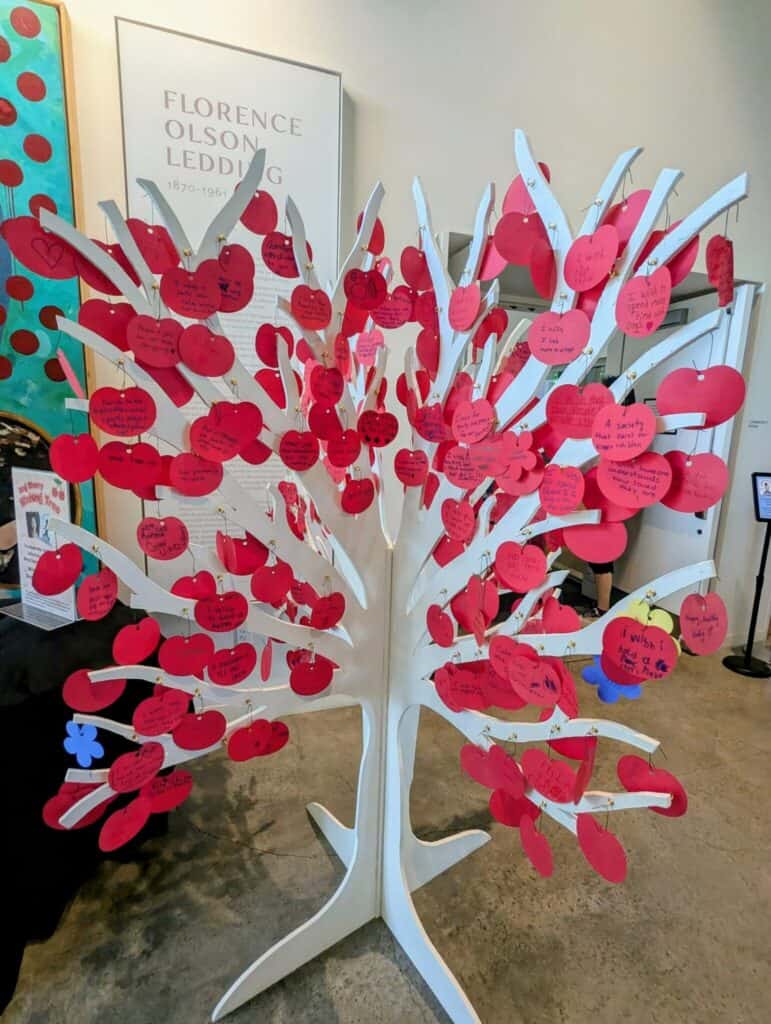
The day I visited Ledding Library, I found a cherry tree in the lobby. Not a real one, but a wooden wishing tree where hundreds of library visitors had hung cherry cut-outs personalized with their own hopes and dreams. I was half an hour early for my talk on my new book Bing’s Cherries and the first visitors were already arriving. I saw a couple wearing matching Bing cherry sweaters and two unrelated visitors each with cherry earrings dangling from their ears.
This library visit was the last stop on my book tour and the culmination of a years-long journey. On a plane flight in 2023, I came across two sentences in The Making of Asian America by Erika Lee: “Among the Chinese in agriculture were two horticulturalists who helped transform the industry. One was Ah Bing, who bred the famous Bing Cherry in Oregon.” Like most Seattle residents, I looked forward to eating Bing cherries every year but had never questioned their origin. Seeing the name Ah Bing, however, struck a chord. “Ah” is a common prefix in Mandarin, especially for nicknames. As a Taiwanese American, I call my grandma Ah Ma and my grandpa Ah Gong. The thought of this popular American cherry being named for a Chinese immigrant was suddenly believable.
I grew up reading American tall tales in school, then going home and hearing bedtime stories about ancient Chinese mythology. I was used to worlds that were either white or Asian, American or Chinese—but never a middle ground that represented both identities. What if there could be a new tall tale featuring an Asian American folk hero, one that could sit on bookshelves between our Johnny Appleseeds and Paul Bunyans? I pitched the idea to author Livia Blackburne. Three years later, we were visiting schools as far as Minneapolis and Taipei to share our newly published picture book, Bing’s Cherries.
I began each talk with the same question. “Everyone knows Bing cherries, but did you know they were bred by a Chinese immigrant named Ah Bing?” The answer was usually no, though people were delighted to learn more. Still, it made me wonder if anyone in modern-day America was aware of Ah Bing’s legacy. Then, an invitation arrived for a library visit in Milwaukie, Oregon, Bing’s hometown. If any community knew and celebrated Bing, it would be this one. I was eager to see if today’s residents were aware of him.
I started my Ledding Library presentation with my usual question. This time, I was delighted to hear some enthusiastic yeses from both children and adults. Many hung around afterward, eager to share what they knew of Ah Bing. One Milwaukie resident told me that the library we were standing in could be the same site where Ah Bing’s quarters stood. A couple more directed me to the city’s enormous Bing cherry statue and placard on Ah Bing’s life. I even learned where his first Bing cherry tree once grew, right at the intersection of Main and Harrison.
The city’s embrace of Ah Bing is a relatively recent development. In 1999 the Oregonian published a story on a Milwaukie Historical Museum curator’s refusal to include Ah Bing in the cherry’s origin story as anything other than a farm worker, despite historical accounts that say otherwise. Perhaps the attempted erasure of Ah Bing’s contribution should be no surprise given the climate in which Ah Bing left America. Records show that Seth Lewelling, the orchard owner, sheltered Ah Bing and his fellow workers during episodes of anti-Chinese violence in Oregon and Washington. The Chinese Exclusion Act, initially passed in 1882, would go on to be extended in various forms until the mid-1960s.
I end every talk asking the audience to come up with a better ending for Ah Bing than one in which he is unable to return to America. The overwhelming audience answer is some version where Ah Bing receives acceptance and appreciation in his lifetime. Surprisingly, the wildest answers come from adults, such as Ah Bing becoming President, going on the million dollar bill, or getting even taller! In contrast, the children’s answers are straightforward and earnest. Without fail, they suggest a version where America welcomes Ah Bing and his entire family, and throws a giant cherry party for them.
Normally these suggestions feel bittersweet. Leave it to our children to envision an America where immigrants are celebrated and reunited with their families. But I have since learned that Ah Bing has actually been getting his giant cherry party, just 150 years later. For the past several years, Milwaukie has hosted a New Year’s Eve celebration called “Bing in the New Year”. More than 2,000 residents of Milwaukie and Portland have gathered annually to watch performances from the Oregon Chinese Coalition and to learn about the history of Chinese immigrants to Milwaukie. The night ends with a giant cherry drop to ring in the new year. What’s even sweeter is that there are hopes to keep this celebration going in future years.
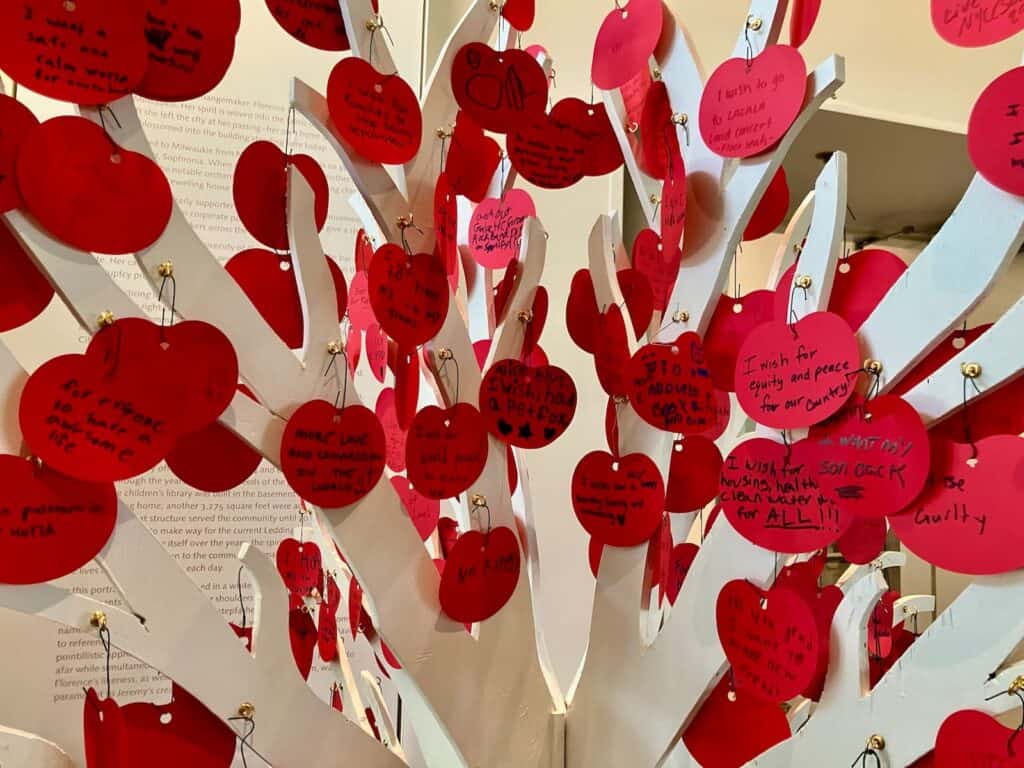
On that last book tour talk at the Ledding Library, I was inspired to propose my own alternate ending to Ah Bing’s story. How about an ending where the very place where Ah Bing lived and worked now knows him and claims him as one of theirs? Where today’s residents—young and old—think of Ah Bing every time they taste a Bing cherry? And what if they continue to honor him by supporting today’s immigrants, those who are currently working hard to build their own lives and legacies? As much as I love a good folktale, I’m wishing for the nonfiction version this time around.
Julia Kuo is a Taiwanese American illustrator who has worked with The New York Times, The Wall Street Journal, and The Economist. She is the illustrator of several picture books including I Dream of Popo, I Am an American: The Wong Kim Ark Story, and Bing’s Cherries. Her author-illustrated books are Home Is a Wish, Let’s Do Everything and Nothing and Luminous: Living Things that Light Up the Night.
Follow Us

Rearview Mirror: Crocodile Guardians, Late-Summer Potato Salad, and a Halloween Costume Hunt
Things I did, saw, ate, learned, or read in the past week (or so).
COOKING WITH ASTER PANTRY A few leaves turn, my inbox fills with fall festival pitches and cozy brunch menus, and suddenly I want to stay home with a glass of wine and cook. I love this nesting season, though I’m not ready to give up summer produce. Earlier this year, I wrote about Seattle chefs…

WALKDONTRUN Returns This Saturday, Turning Downtown Seattle Into a Sprawling Art Show
In its second year, the free festival brings 200-plus artists to a 20-block route September 19, with a secret garden and a former 7-Eleven stocked with art.
Most walks through downtown Seattle involve trying to get somewhere. On September 19, the crosswalk itself might be the reason to stop. Heap Troupe will turn a four-way crossing into a performance, one of dozens of encounters planned for this year’s WALKDONTRUN. The free, all-ages art walk stretches across more than 20 blocks. From 11…

At Two Dot Schoolhouse, Ruth Marie Tomlinson Builds an Artistic Community
For nearly 20 years, the Seattle artist and her husband have welcomed artists, writers, and musicians to a historic Montana schoolhouse. Now they’re searching for its next stewards.
At her solo exhibition last year at The Vestibule, Seattle artist Ruth Marie Tomlinson presented a new series of work inspired by her close readings of British nature writer J.A. Baker’s The Peregrine and Icelandic author Sjón’s The Blue Fox. As if on sheets torn from a sketchbook, her pages included excerpts and outtakes of…

Rearview Mirror: Seahawks Off the Field, Seattle on the Board, and Smoked Oysters
Things I did, saw, ate, learned, or read in the past week (or so).
HOOKED ON KNOCKS Admittedly, I am late to this one. The Seahawks’ first season of Hard Knocks, the HBO series that follows NFL teams through training camp, premiered in August, but until last week, I had never heard of it. To be honest, my football knowledge starts with knowing what a touchdown is and doesn’t…