





Features
Read More ›
Photo Essay: Inside SEA’s Pioneering Raptor Relocation Program
The first U.S. airport to employ a full-time wildlife biologist, Seattle-Tacoma International Airport has relocated more than 2,400 birds of prey to safer habitat in the Skagit Valley.

Driving around the airfield at Seattle-Tacoma International Airport with wildlife biologist Alexander Lauber requires very close attention to everything happening around us at all times. As we move between raptor traps, he stays in communication with the control tower, tracks where aircraft are headed, knows their usual traffic patterns, and remains ready to adjust if anything changes. He says one of the trickiest parts is making sure he never cuts off an aircraft on the taxiways.
Part of Lauber’s work at SEA involves the airport’s raptor relocation program, which has been trapping and moving birds of prey away from the airfield since 2001. The team’s goal, he says, is essentially to put themselves out of a job by making the airfield as unattractive to wildlife as possible so that the two never cross paths. Fatal bird strikes are rare, but they have happened, and even nonfatal collisions can cause significant damage to aircraft.
The Federal Aviation Administration requires airports that have experienced bird strikes to maintain a wildlife hazard management program. Lauber says every airport has had a strike. SEA became the first airport in the United States to employ a full-time wildlife biologist in the 1970s. Today, SEA employs four biologists, with one on call 24 hours a day. Wildlife management programs can look very different from airport to airport, as can the species that pose the greatest risk. At SEA, mallards, bald eagles, and red-tailed hawks are currently the top three species of concern.
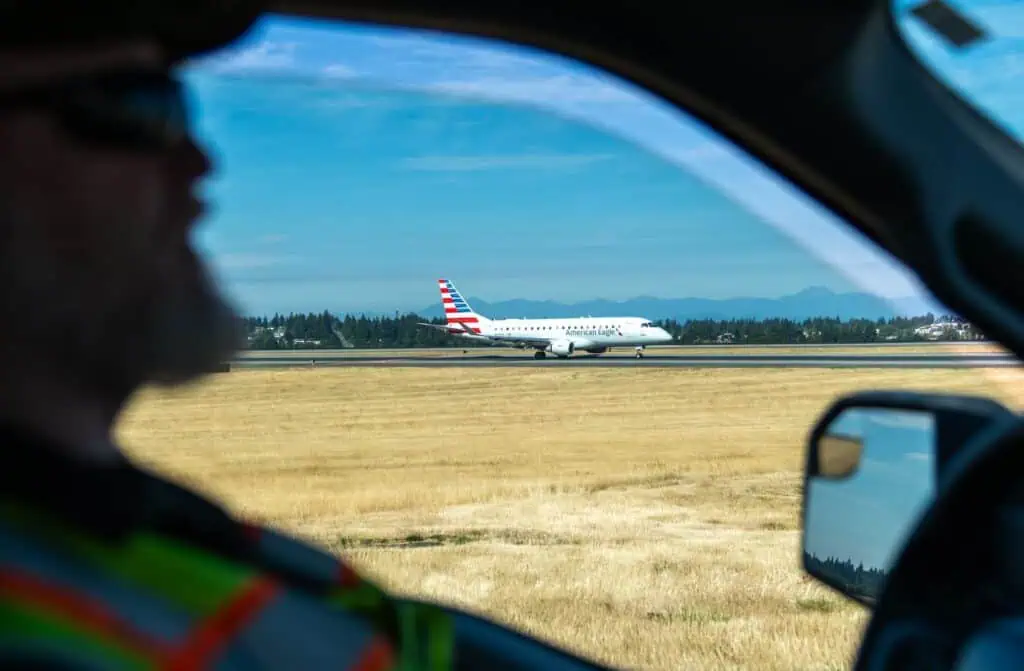
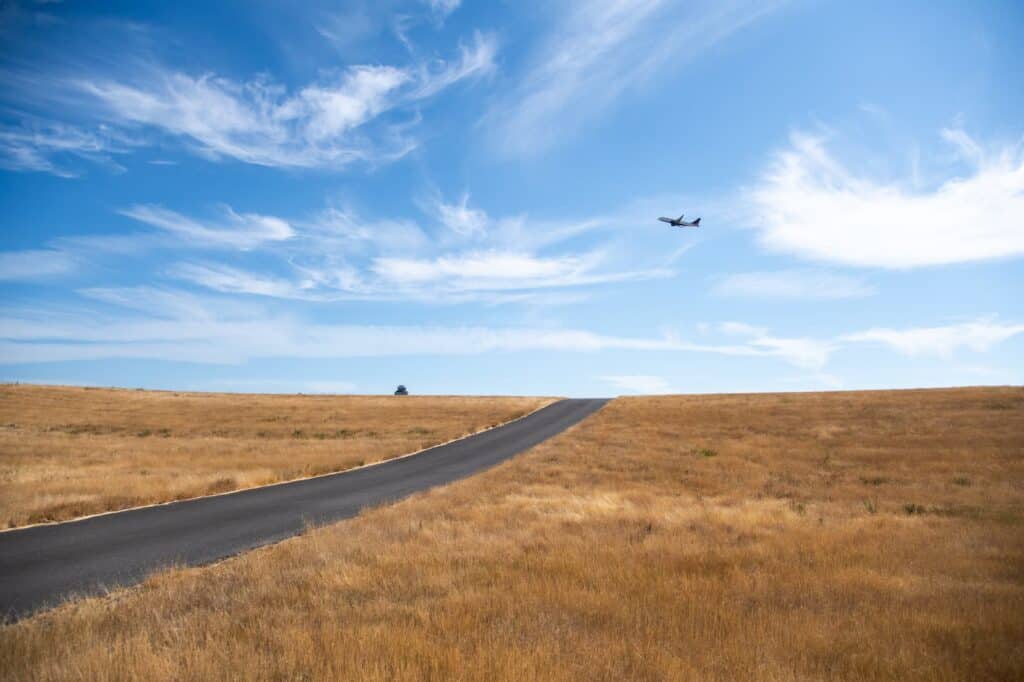
To a raptor passing overhead, SEA looks very inviting. Surrounded by urban development, its expansive grasslands stand out as one of the few patches of open habitat in the area. Rodents and smaller birds provide prey, while nearby woods offer shelter.
Late summer and early fall are especially busy as young raptors leave their nests, prey is abundant, and migration begins. About 90% of the raptors SEA traps are young birds. “Autumn is always when there is the most meat in the sky,” Lauber tells me. In 2025, the wildlife team captured 230 raptors. In each of the last two years, just under 90 were red-tailed hawks. Priorities shift with the seasons. Wet winter conditions, for example, can bring ducks onto the airfield at night, while coyotes can become more of a concern in spring during mating season.
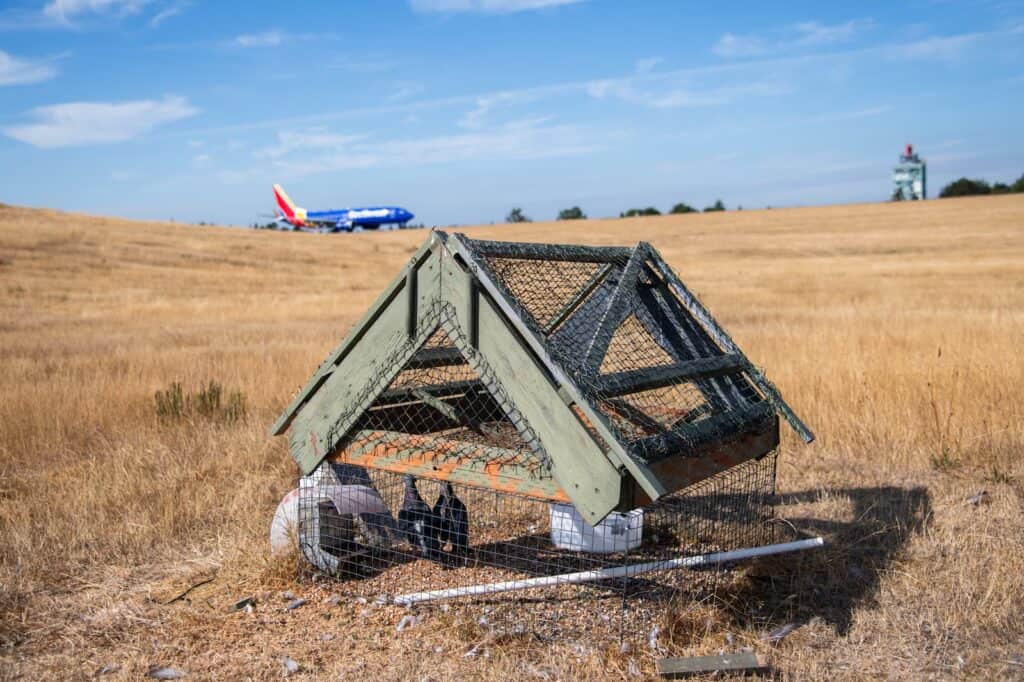
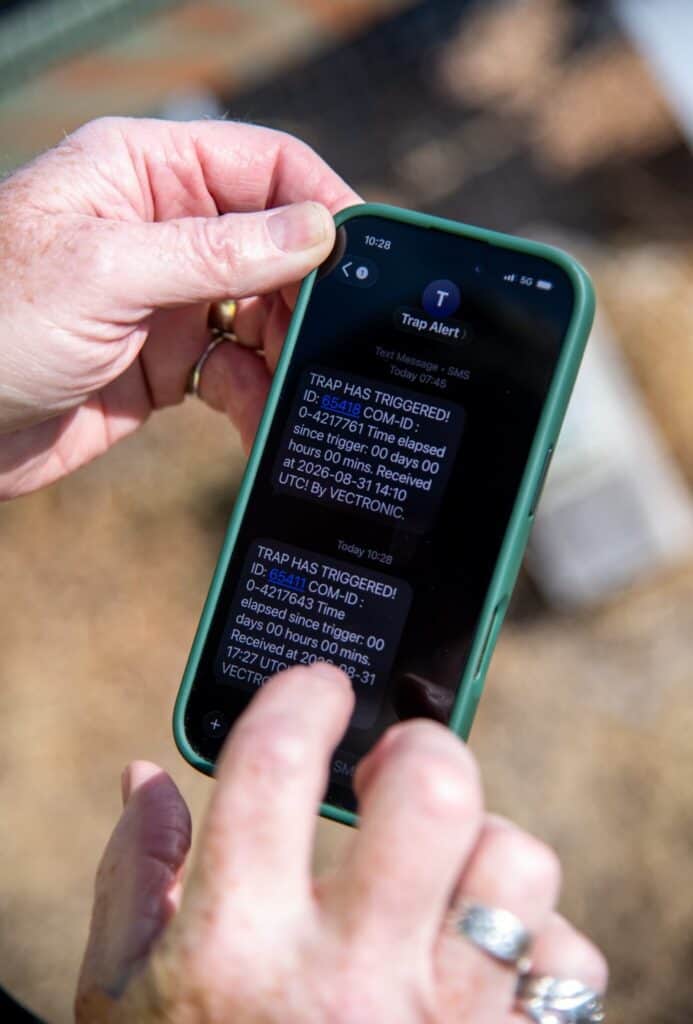
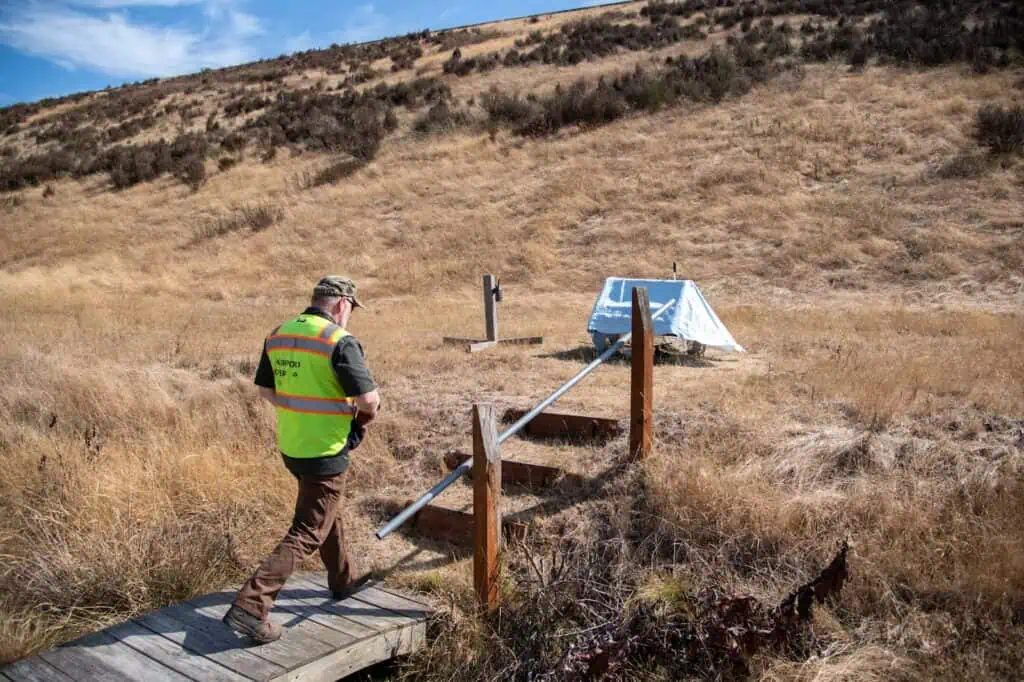
SEA currently uses nine Swedish goshawk traps around the airfield. Two pigeons inside attract a hunting raptor, and when the raptor lands on a trigger stick, the enclosure closes around it. A sensor sends the biologists a text when a trap is triggered, while a camera helps them determine whether they have caught a bird or the wind caused a false alarm. Air traffic safety limits where the traps can be placed, and wind patterns and aircraft movements play a large role in those decisions. The biologists also consider where raptors are likely to ride rising air currents.
The lure pigeons are carefully looked after. The team checks every trap daily to make sure the pigeons have enough food and water, moves the traps periodically to give them fresh ground, provides shade in hot weather, and moves them to a coop during severe winter conditions. Lauber says proper care of both the captured birds and the lure animals is part of the training and certification required for the work.
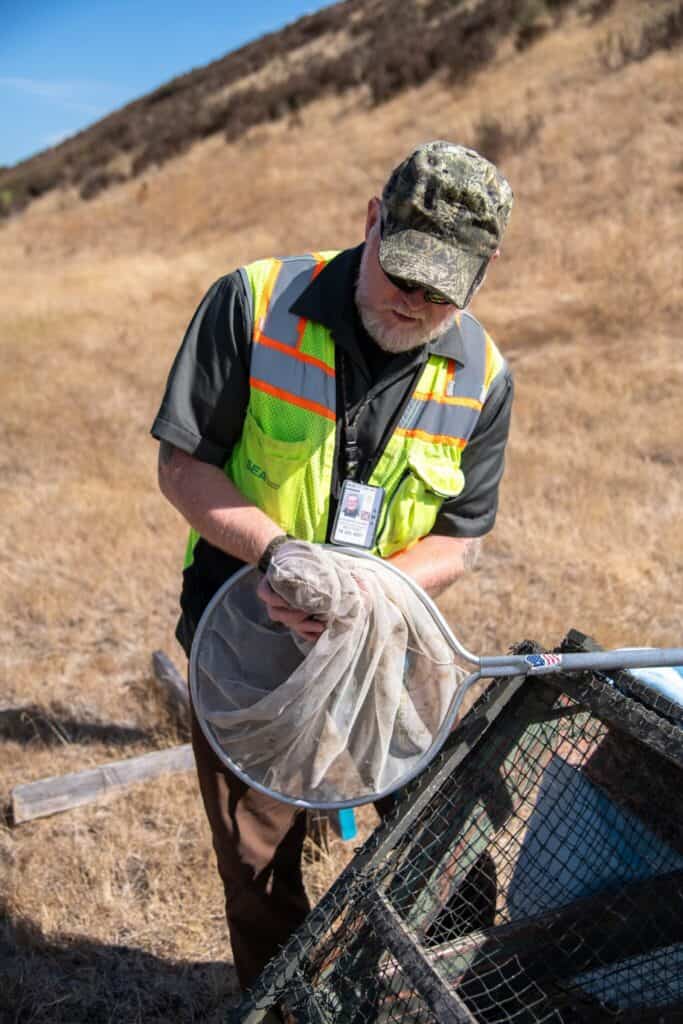
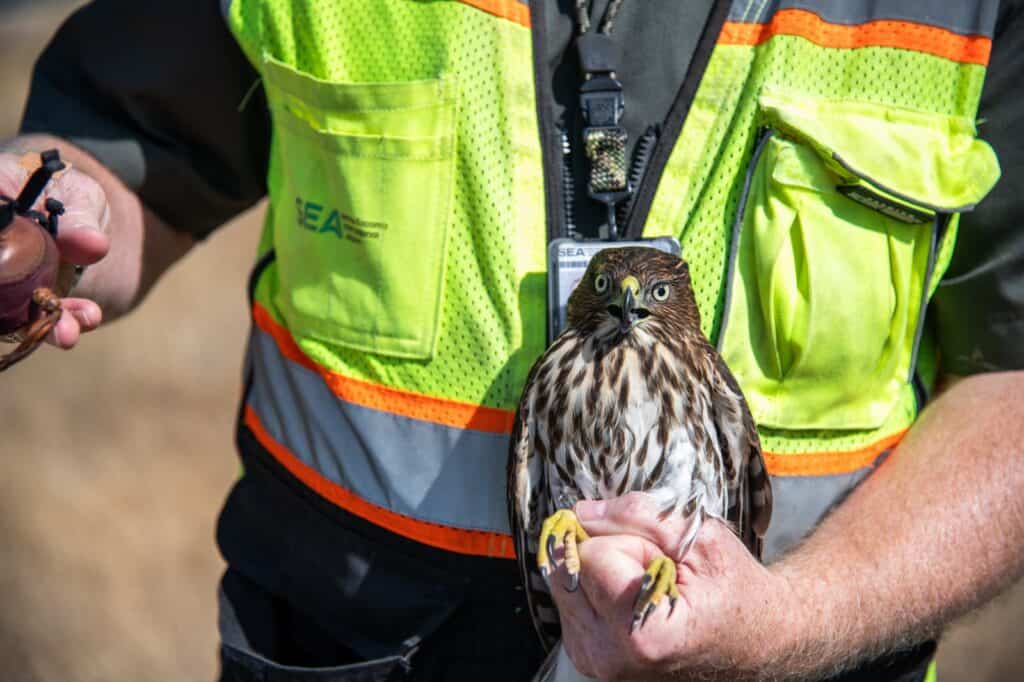
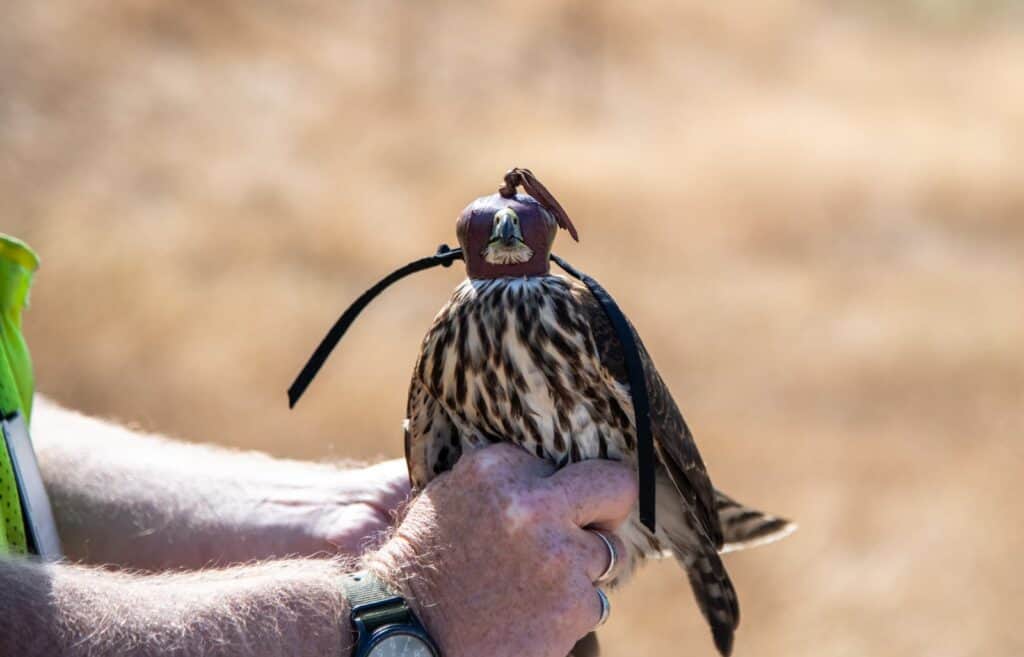
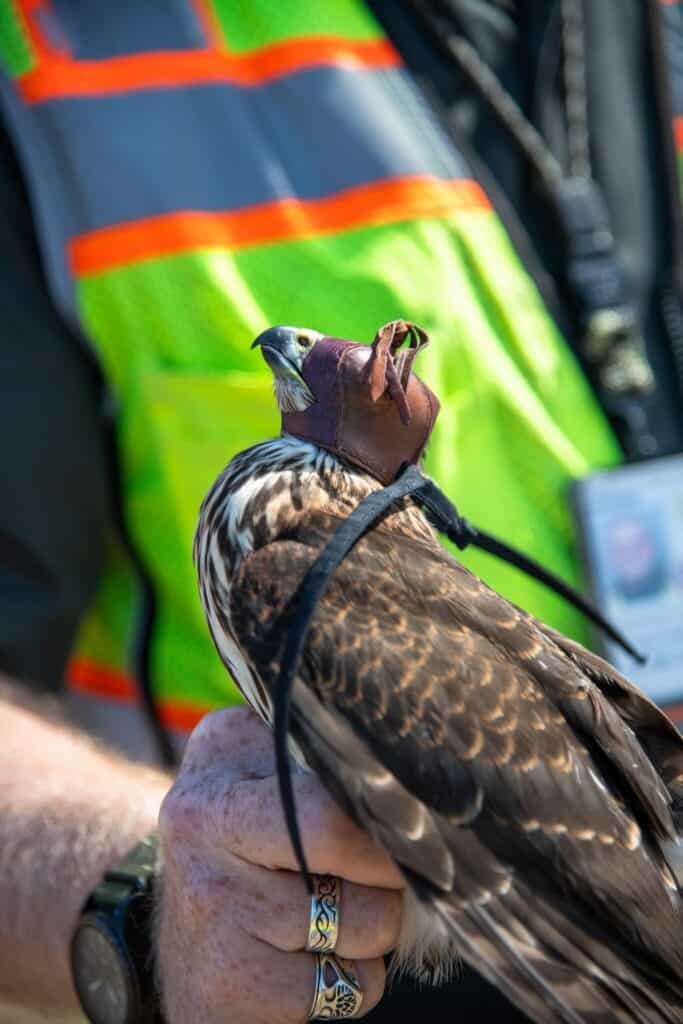
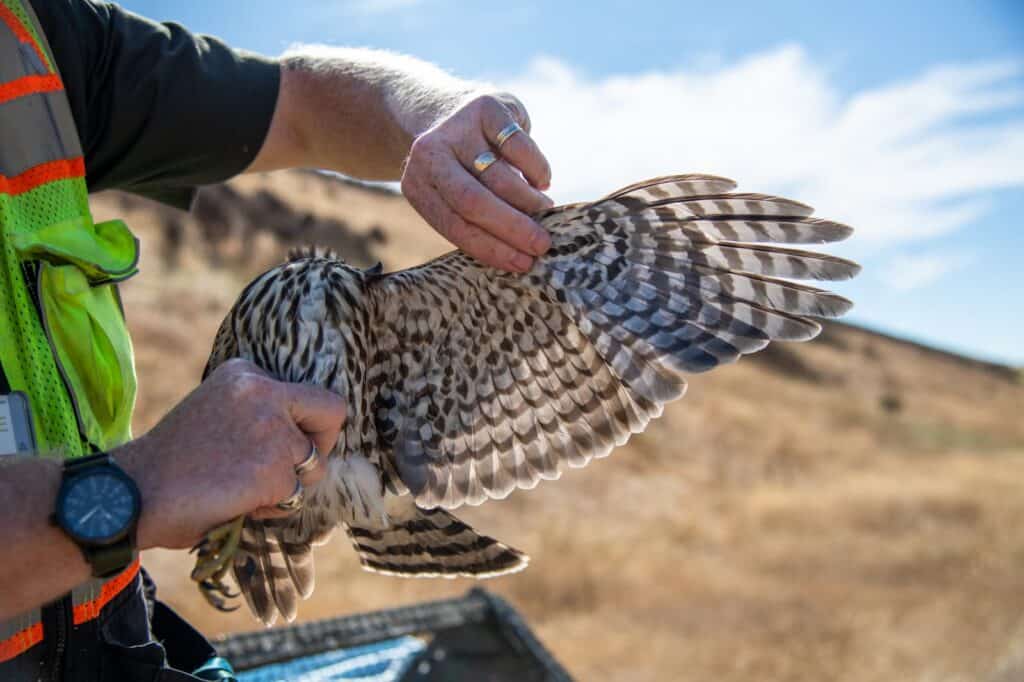
Once a raptor is captured, its species, age, and sex are recorded, along with measurements including mass, wing chord, and tail length. To keep the bird calm while taking measurements, it is placed inside one of several metal cans sized for different birds, with breathing holes punched outward so no sharp edges face the bird. Lauber says this is a widely accepted method in the raptor community. Each bird receives a federal band, while red-tailed hawks also get an airport-specific colored band that makes them easier to identify if they return. Some adult red-tailed hawks over 850 grams, particularly those suspected of living near the airport, are fitted with solar-powered transmitters that allow the team to track their movements after release.
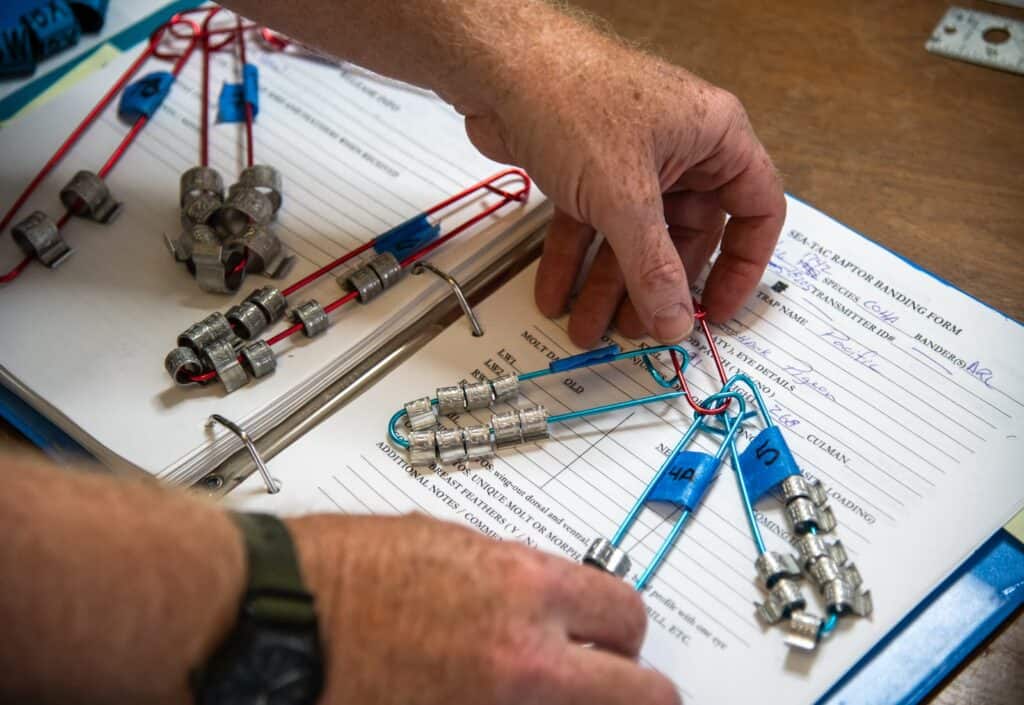

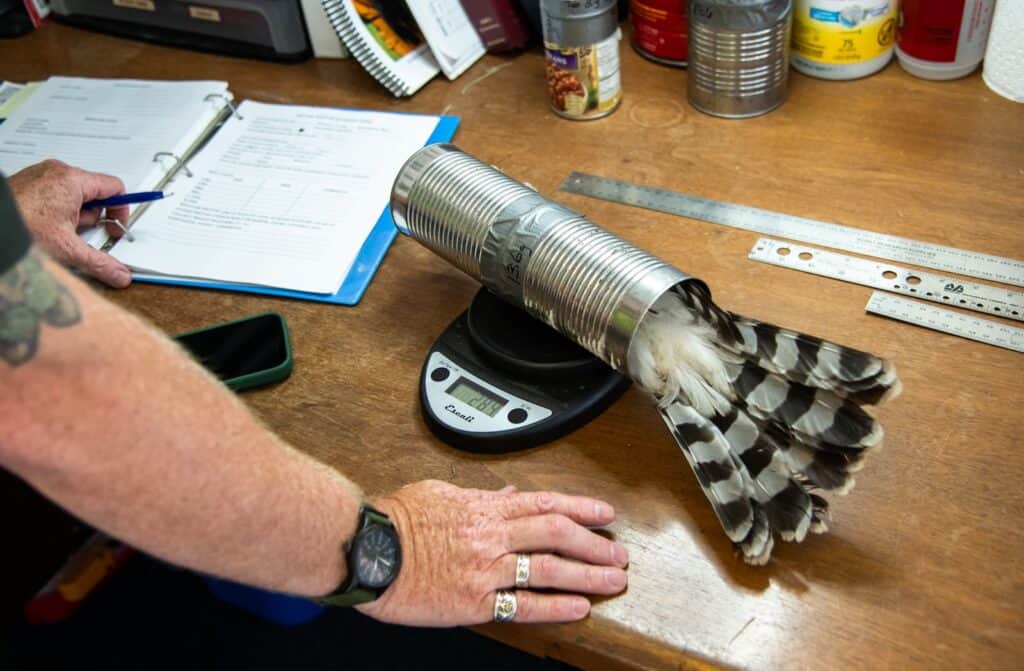
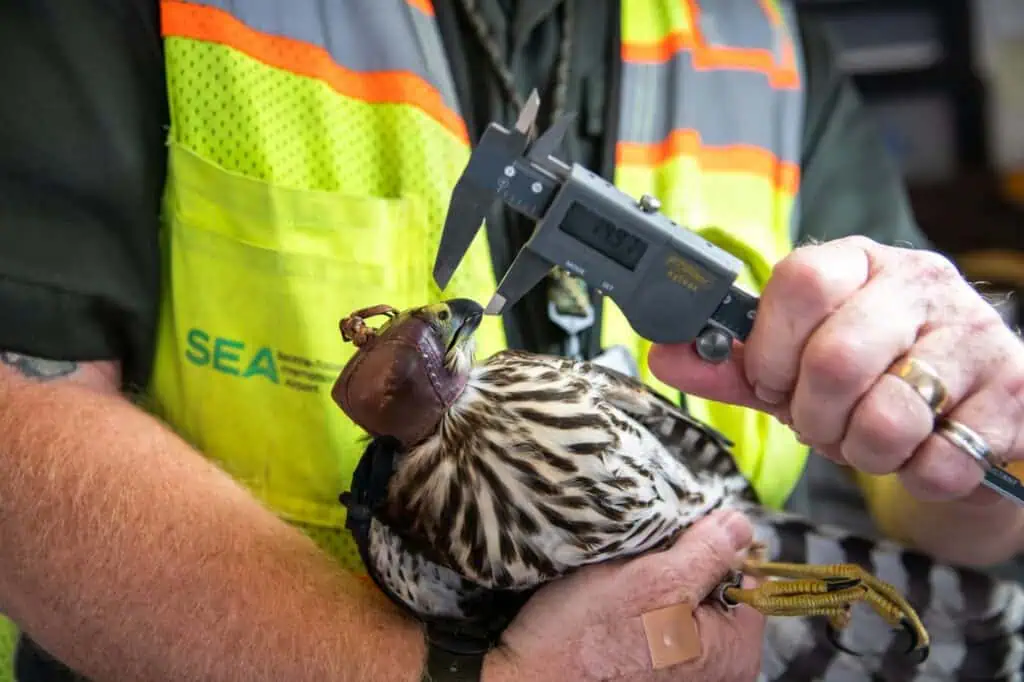
Since the program began, more than 2,400 raptors have been relocated. In recent years, SEA has recorded fewer than 100 bird strikes annually. Lauber says many airports do not relocate raptors and instead use lethal removal. SEA’s relocation program was the primary reason he came to the airport after spending 16 years at Portland International Airport.
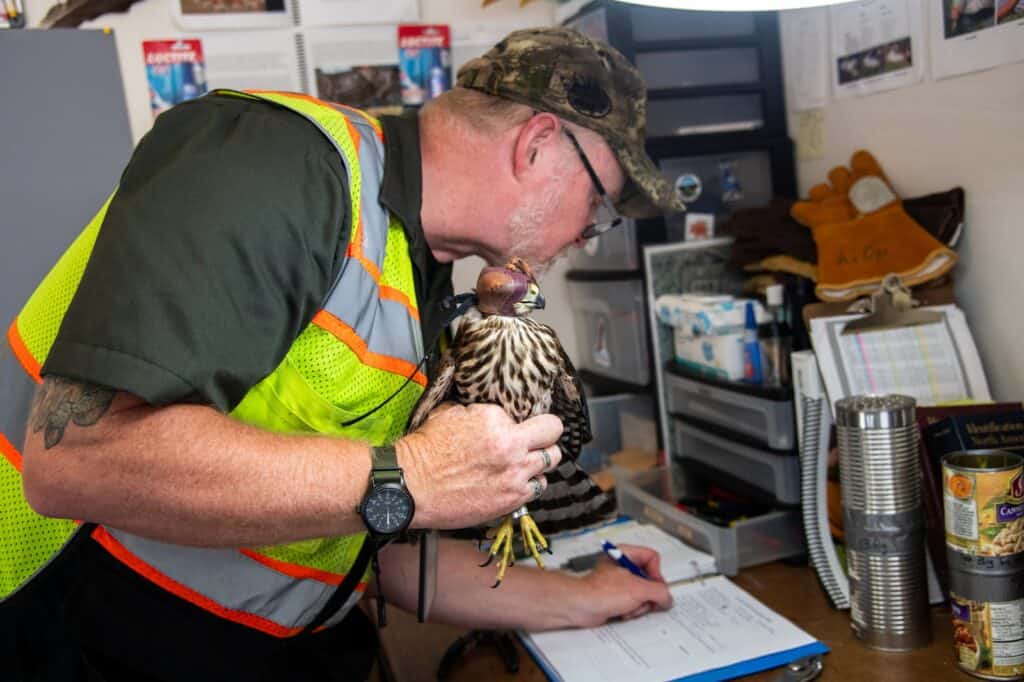
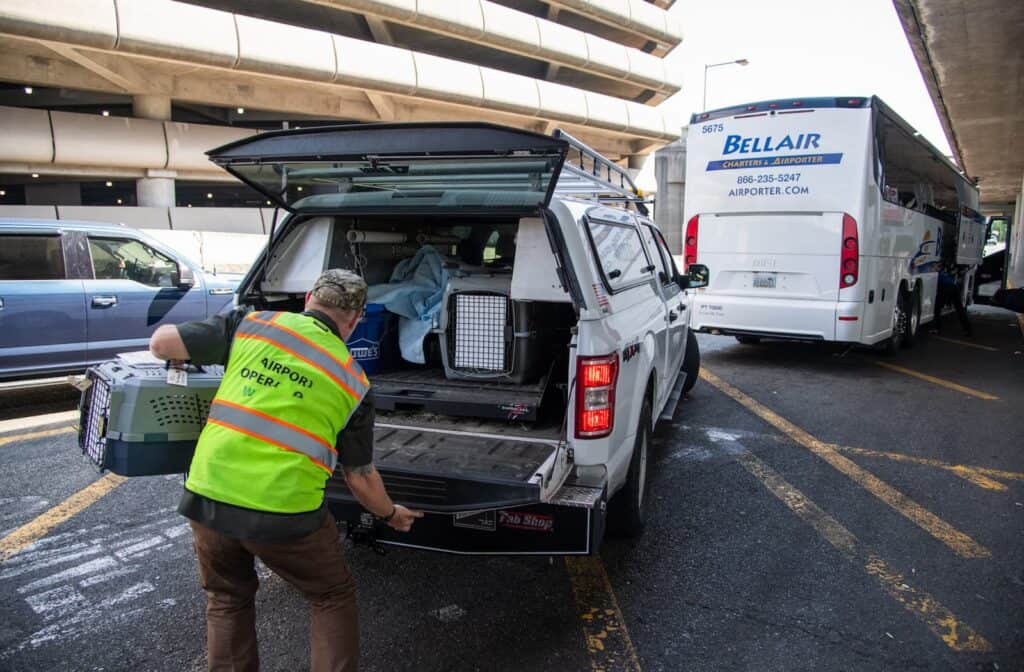
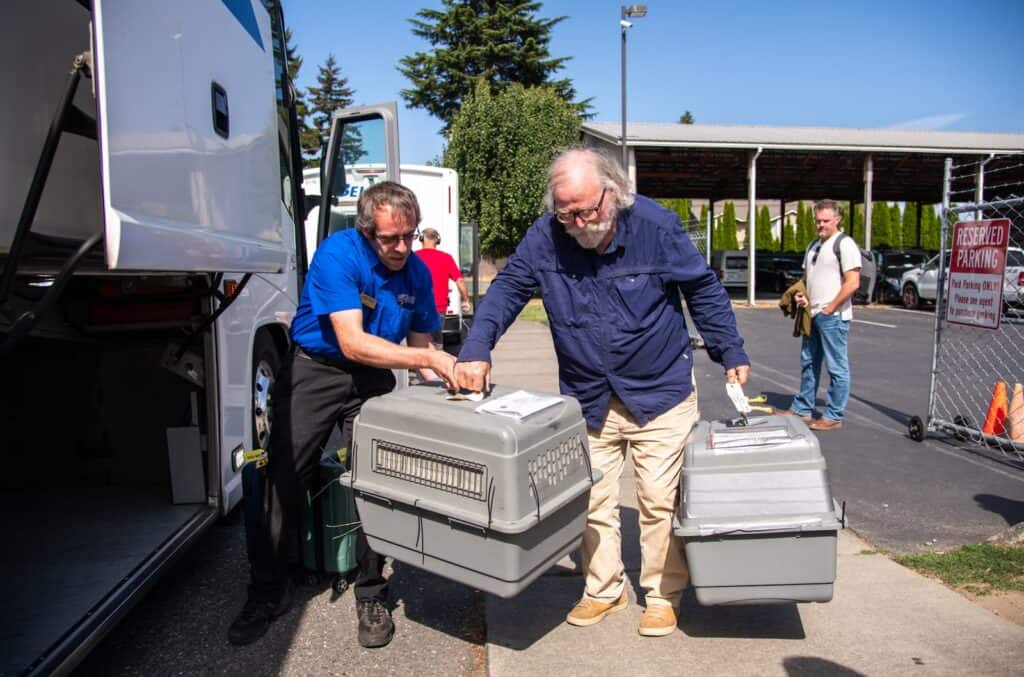
Birds cannot be held at SEA for more than 24 hours, and many are on their way north within 12 hours. Their destination is the Skagit Valley, about 65 miles north of Seattle. For more than 20 years, Bellair Airporter Shuttle has transported the crated raptors north at no cost, alongside passenger luggage, until the birds are met by raptor biologist Bud Anderson.
Anderson has spent decades studying birds of prey and knows the Skagit Valley intimately. He chooses release locations based on the species, how they hunt, and where food is abundant.
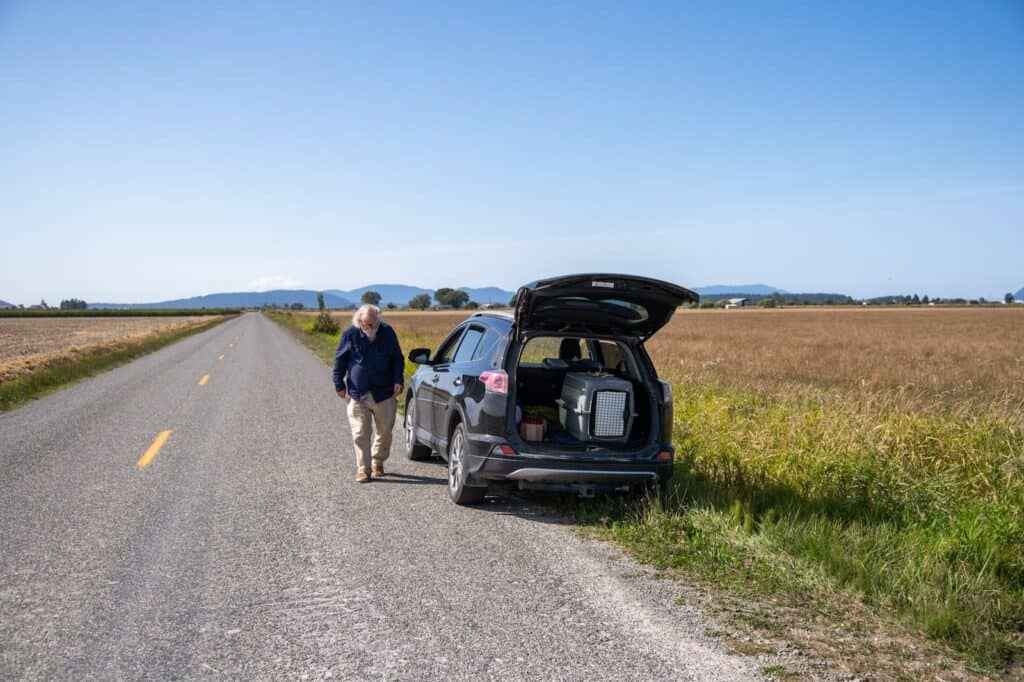
For red-tailed hawks and other raptors, Anderson calls the area a “paradise.” The wide-open fields are ideal for hunting, and the drainage ditches that line them are filled with voles, an abundant source of prey. Other species need different surroundings—great horned owls, for example, may be released higher up in forested areas.
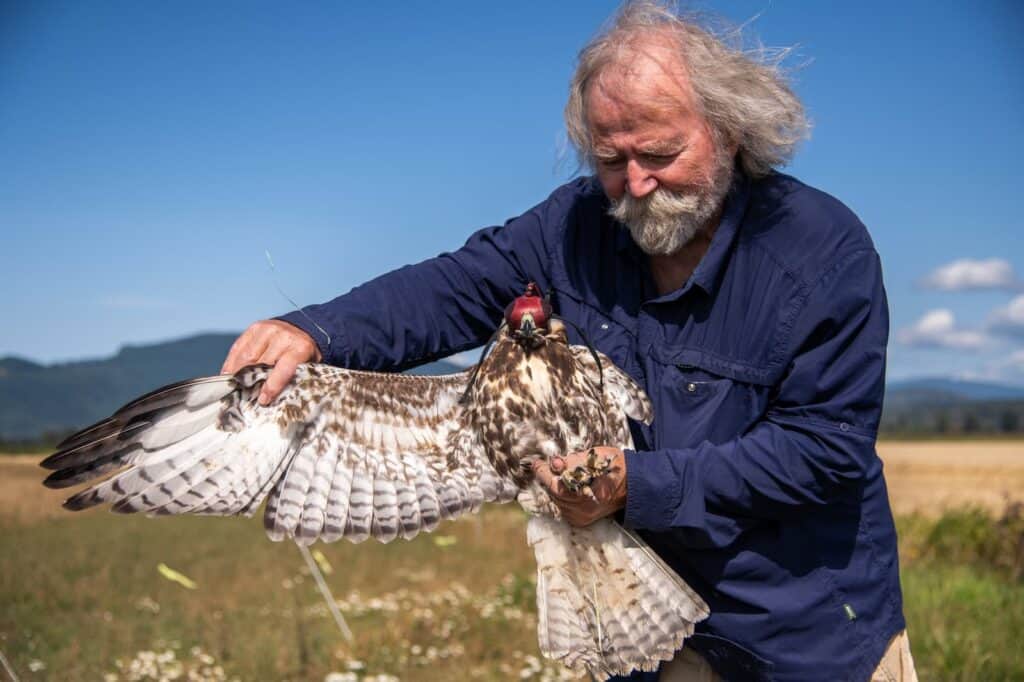
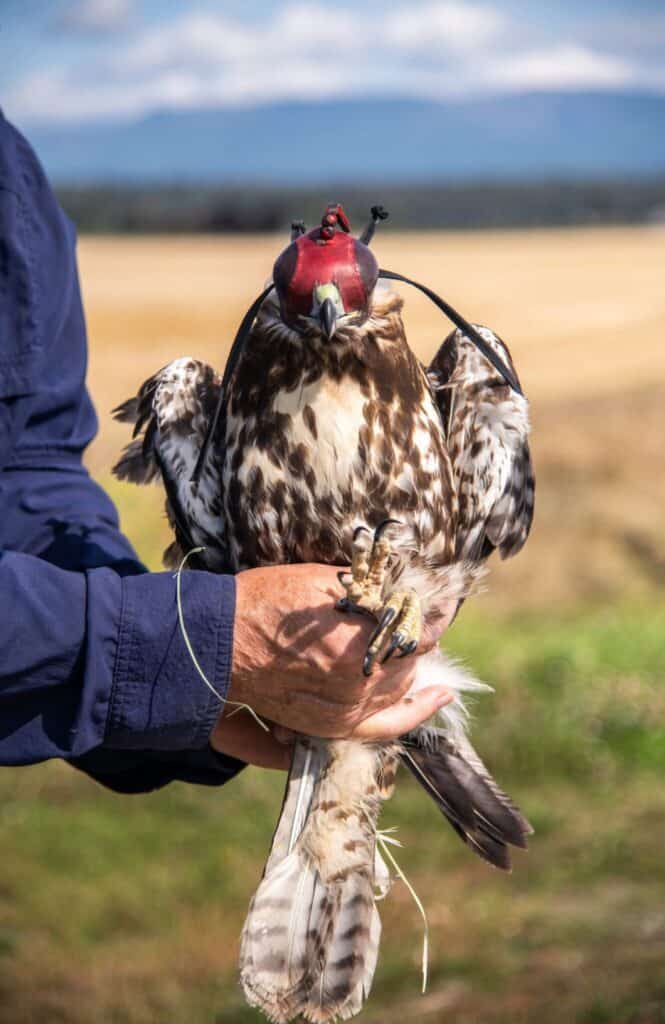
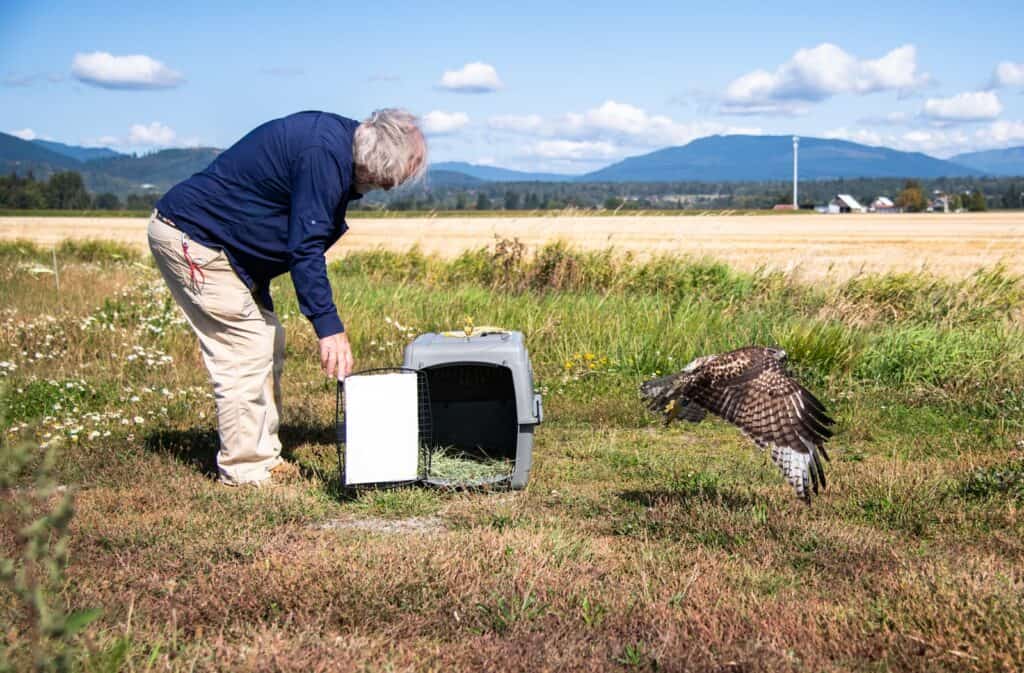
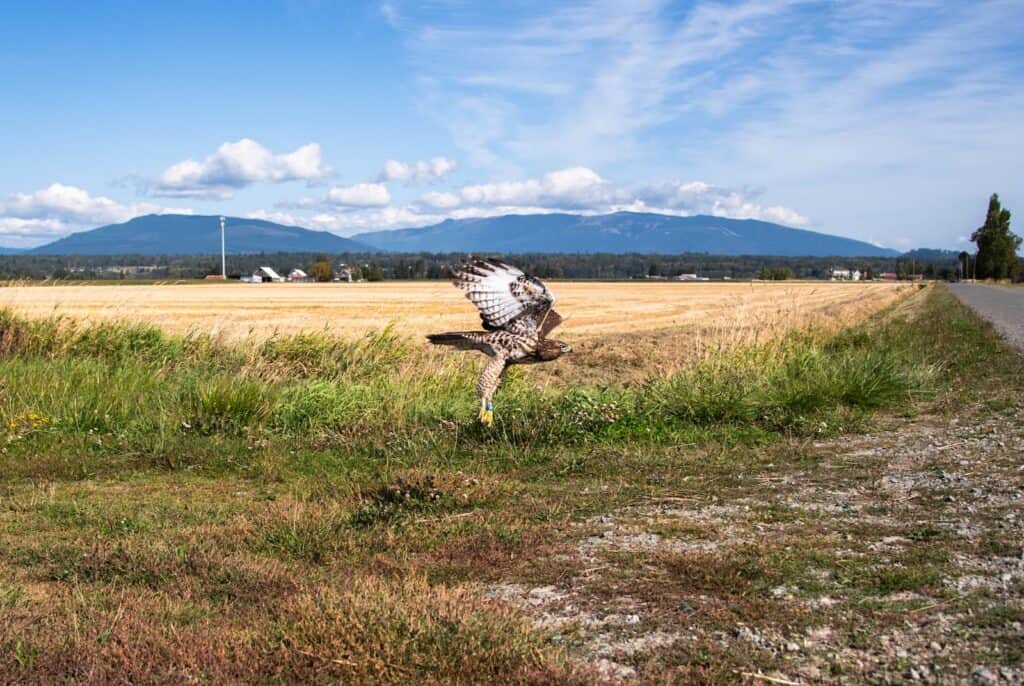
Lauber says only about 5% of relocated red-tailed hawks ever return to SEA. Earlier attempts to release birds south of the airport resulted in a much higher return rate. Anderson thinks the raptors choose to stay in the Skagit Valley because, as he puts it, they’ve found “a better restaurant.”
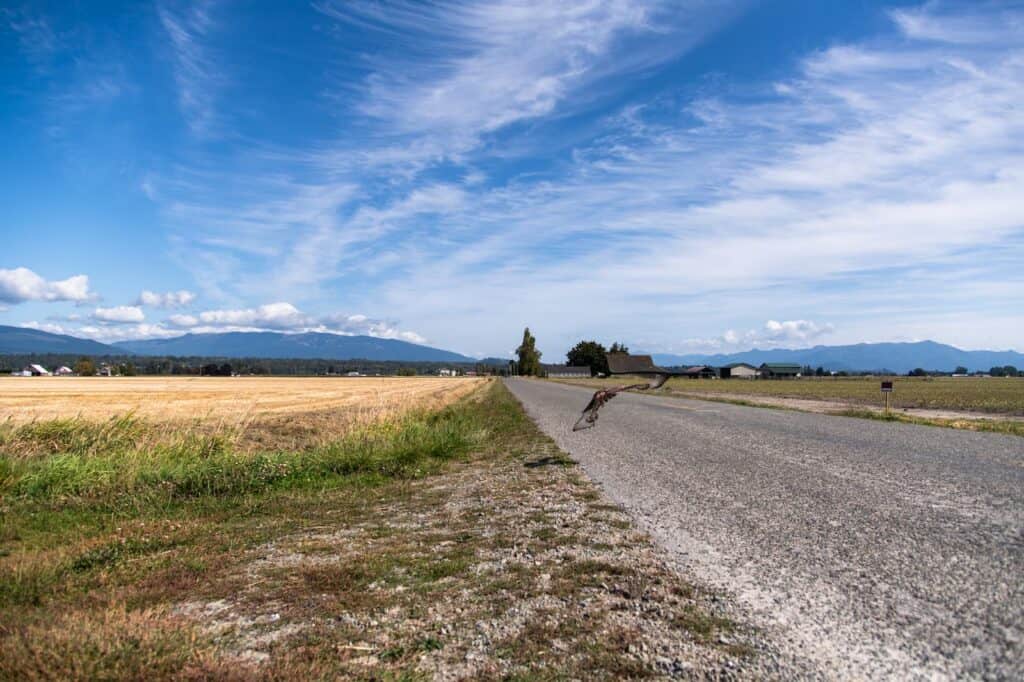
Standing in the open fields with Anderson, we watch two red-tailed hawks fly off toward the mountains. At SEA, aircraft and raptors pose a danger to one another. But here in the Skagit Valley, the birds are simply part of the landscape.
Navid Baraty is a Seattle-based photographer and visual artist whose work explores the intersection of science, scale, and wonder. With a background in engineering, he approaches his subjects with both precision and curiosity, from the geometry of cities seen from above to the stillness of remote desert landscapes beneath the night sky. Whether perched on rooftops high above cities or camped beneath the stars in the American Southwest, he is drawn to moments that reveal humanity’s place within something larger. Find him on Instagram at @navidbaraty.
Follow Us

United Nations Honors Seattle’s Urban Forests
Green Seattle Partnership earns World Restoration Flagship status, highlighting the city’s role in global ecosystem recovery.
Last week, the Environment Programme (UNEP) and the Food and Agriculture Organization (FAO) of the United Nations recognized Green Seattle Partnership as a World Restoration Flagship for its urban restoration work in Seattle’s forested parklands. The designation honors large-scale, long-term ecological recovery initiatives that embody the 10 restoration principles of the UN Decade on Ecosystem…

Photo Essay: Behind the Seams
A single thread can be beautiful on its own. Delicate and capable of stretching. Left alone long enough, the world slowly wears it down. But then we learn to weave. Threads intersect—over and under, until they become something greater than themselves. Behind the seams, a story carried across skin and across culture becomes a fashionable…

Broken? Ballard Has a New Shop for That.
At We Fix Old Stuff, two Seattle designers are giving treasured belongings a second life.
A woman had found a busted Sesame Street lamp just like the one her husband remembered having as a child. It wasn’t his original lamp, but she wanted to get it working again for his office. She brought it to Ashley Zaworska and David Nebert, two Seattle designers with a knack for fixing things. The…

Seattle’s Dancing Zombies Return This Saturday for 20th Annual Thrill the World
No brains required, just a little rhythm. Performers head to Woodinville for a Halloween dance synchronized across eight countries.
Maybe you’ve had the pleasure of stumbling upon a group of zombies dancing to Michael Jackson’s “Thriller” somewhere around Seattle. With their tattered clothes and sunken faces, they’re just the sort of wonderfully strange encounter I think we’re all secretly hoping for when we leave the house in October. These flash-mob-style performances can seem to…