





Food & Drink
Read More ›
Opening Night: Death & Co. Brings the Hype to Pioneer Square
The famed cocktail bar’s long-awaited Seattle outpost serves polished drinks, oysters, and a side of big-city validation.

A quarter-century ago, Krispy Kreme opened its first doughnut shop in the Northwest in Issaquah, occasioning the sort of rapture you’d expect if aliens revealed themselves to humanity. In the middle of the night, hours before the 5:30 a.m. opening, there was a line stretching around the building, reported the Seattle Post-Intelligencer. “Cars lined up in six rows in the East Lake Sammamish Center parking lot—like ferry traffic—waiting to go through the drive-through lanes.” The first customer ordered five dozen doughnuts.
Something deep within Seattle’s civic character craves the arrival of national chains like Krispy Kreme. When fried chicken purveyor Raising Cane’s opened its first Seattle location, people lined up overnight in the University District. People made a similar fuss over Filipino chain Jollibee. Some Seattleites drove 200 miles south to the state’s first In-N-Out. Maybe people just really like the food at these places. Or maybe this is the manifestation of a collective inferiority complex: We imagine that these chains grant some legitimacy to our little town in the upper-left corner of the continental U.S. I sometimes find the hype around these places a little bit embarrassing—like, really, you guys are celebrating Raising Cane’s? Don’t you know we have a lot of fried chicken already? If I’m feeling generous, though, I’ll concede that part of Seattle becoming a real cosmopolitan city is attracting all these national and multinational businesses. People come to Seattle because it’s a great place to live, and along with those inflows of migration come inflows of chains that developed elsewhere. What am I annoyed about, really? Do I not want Seattle to have a Jollibee?
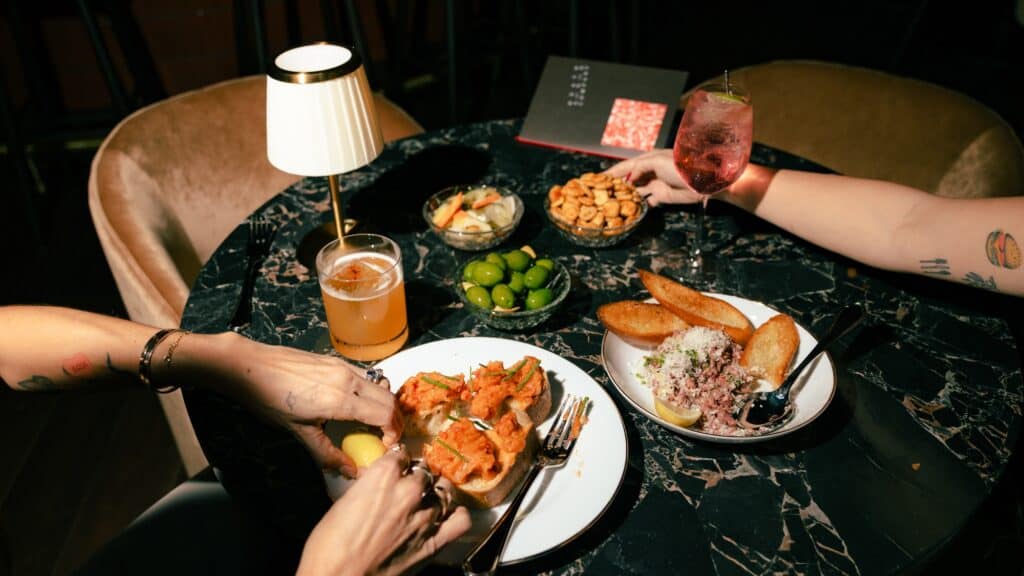
This is the kind of thing I was pondering as I sipped an NA version of a Mexican firing squad at a media preview for the new Death & Co., which opened September 3 after a long wait. Death & Co. is decidedly more upmarket than Krispy Kreme, but it is undeniably a chain, with locations in New York, Denver, Washington, D.C., and Los Angeles. Its original New York bar is on the short list of the most famous cocktail bars in the country; since its opening on New Year’s Eve 2006, it has become, as the drinks publication Punch recently put it, “one of the major pillars of what’s been called the 21st-century cocktail renaissance.” Not only is it notable for the care and technique its bartenders put into the cocktails, a huge number of trends—Prohibition-era vibes, bartenders in waistcoats, Oaxaca Old-Fashioneds—can be partially traced back to Death & Co. While Seattle has plenty of exceptional homegrown cocktail bars, Death & Co.’s opening in Pioneer Square is still newsworthy, the arrival of a boldfaced name.
According to Death & Co. founder David Kaplan, the hype around a Seattle location predated any plans for an actual bar. In 2022, Kaplan moved with his family to Bellevue, sparking rumors that he’d open a local Death & Co. The Seattle Times called him to ask about the rumors, and Kaplan demurred—he hadn’t made any concrete plans at all, though he told the paper that on an “optimistic timeline” he’d sign a lease in 2024 and open by 2025. The resulting Times story, which said in the headline that Death & Co. was “expanding to Seattle” and focused on Capitol Hill as the place where the bar would land, was fairly speculative.
But that story led the developers at the RailSpur development to reach out, and three and a half long years later, Death & Co. has opened. RailSpur, if you don’t know, is the sprawling, multi-building complex in Pioneer Square that has spent the last few years snapping up cool tenants, from the Populus Hotel to multiple Renee Erickson restaurants. It’s at the heart of the post-pandemic revival of Pioneer Square, which, as people at the Death & Co. event told me, is Seattle’s most New York City-esque neighborhood—historic and hip, a tourist destination that also attracts locals, an upscale vision of Seattle’s future that’s not backward-looking but also not bland tech slop.
Death & Co. fits right into that vision. The bar is dominated by a theatrical marble horseshoe bar surrounded by a smattering of small tables. The windows are shrouded in curtains to create a sort of perpetual dusk, offset by some abstract floral art from Sean Barton (the art will rotate).
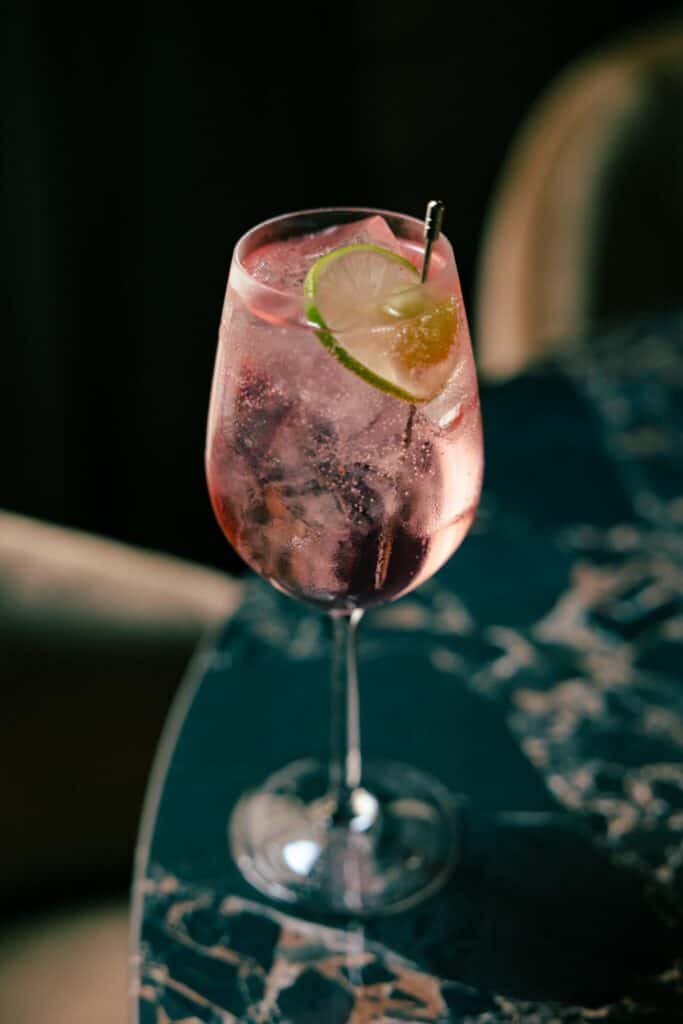
There’s a small food menu—think tartines, steak tartare, and oysters—that Kaplan hopes entices guests to make a meal out of their visit. There are also a handful of NA drinks (and the staff is skilled enough to improvise more options for you non-drinkers), but if you’re here, you’re here for the cocktails. The long menu offers both seasonal drinks and standards, with even the routine cocktails showcasing a bit of artistry: The dry martini features two types of gin and two types of vermouth. The famous Oaxaca Old-Fashioned—which substitutes tequila and mezcal for the traditional whiskey—is here, tucked in the “Reserve” section of the menu, where cocktails with top-shelf spirits start at $27. (Even on the non-reserve side of the menu, cocktails are typically $20.)
I suspect most Seattle cocktail fans will find their way to Death & Co. sometime soon, maybe in the same kind of spirit that leads some people to camp outside a chicken restaurant, or maybe just to see how it compares to the Doctor’s Office, Rob Roy, or the city’s other heavy hitters. The bar is in some sense an out-of-towner, a transplant. Maybe you’re the kind of Seattleite who regards transplants with distrust. But maybe you’re the kind of Seattleite who enjoys an elegant cocktail bar. Couldn’t we use another one of those?
Follow Us

Restaurant Roundup: Oysters Benedict and a Bar Tartare Tease
Here’s what was served up recently in the Emerald City.
Even if you’ve lived in Seattle your whole life, chances are there are still unexplored culinary secrets tucked away in the recesses of Pike Place Market. An obvious hit with tourists, walking tours—like the ones offered by Savor Food Tours for nearly 20 years—are a great way for locals to get reacquainted with their city,…

Opening Night: Wallingford’s Janta Is Exactly What a Cafe Should Be
The Indian coffee and chai shop from the Spice Waala team hits all the right notes.
Spice Waala’s owners have just opened a little cafe in Wallingford, and to understand why I’m so excited about it, you first need to know what’s so great about Spice Waala, which is that it’s one of the last restaurants in Seattle that feels like a deal. You can get a chicken or lamb roll…

Restaurant Roundup: 3 Pearls and Restaurant Week Redux
Here’s what was served up recently in the Emerald City.
When something tastes good, you gotta go back for seconds—and that’s exactly what we’re doing for this fall’s Seattle Restaurant Week, Oct. 18-31. Building off a successful spring spread, this edition brings back curated menus at various price points ($20, $35, $50, and $65) at restaurants, bars, cafes, and pop-ups across the greater Seattle area….

House Special: A Taste of Ecuador at Bad Chancla
Chef José Garzón brings a coastal Ecuadorian classic to his 335-square-foot Capitol Hill kitchen, where he hopes to introduce more dishes from home.
There is not much room at Bad Chancla. The bright pink walk-up on East Olive Way seats a handful of people elbow to elbow, mostly outside, and the kitchen behind the counter is small enough that chef and co-owner José Garzón can talk to you while he cooks. Garzón grew up between Guayaquil and the…