





Food & Drink
Read More ›
Seattle’s Vietnamese Coffee Wave
Rooted in history, evolution, and flavor, the city’s current bean boom is more than a caffeine fix.

This article originally appeared in the March/April 2026 issue of Seattle magazine.
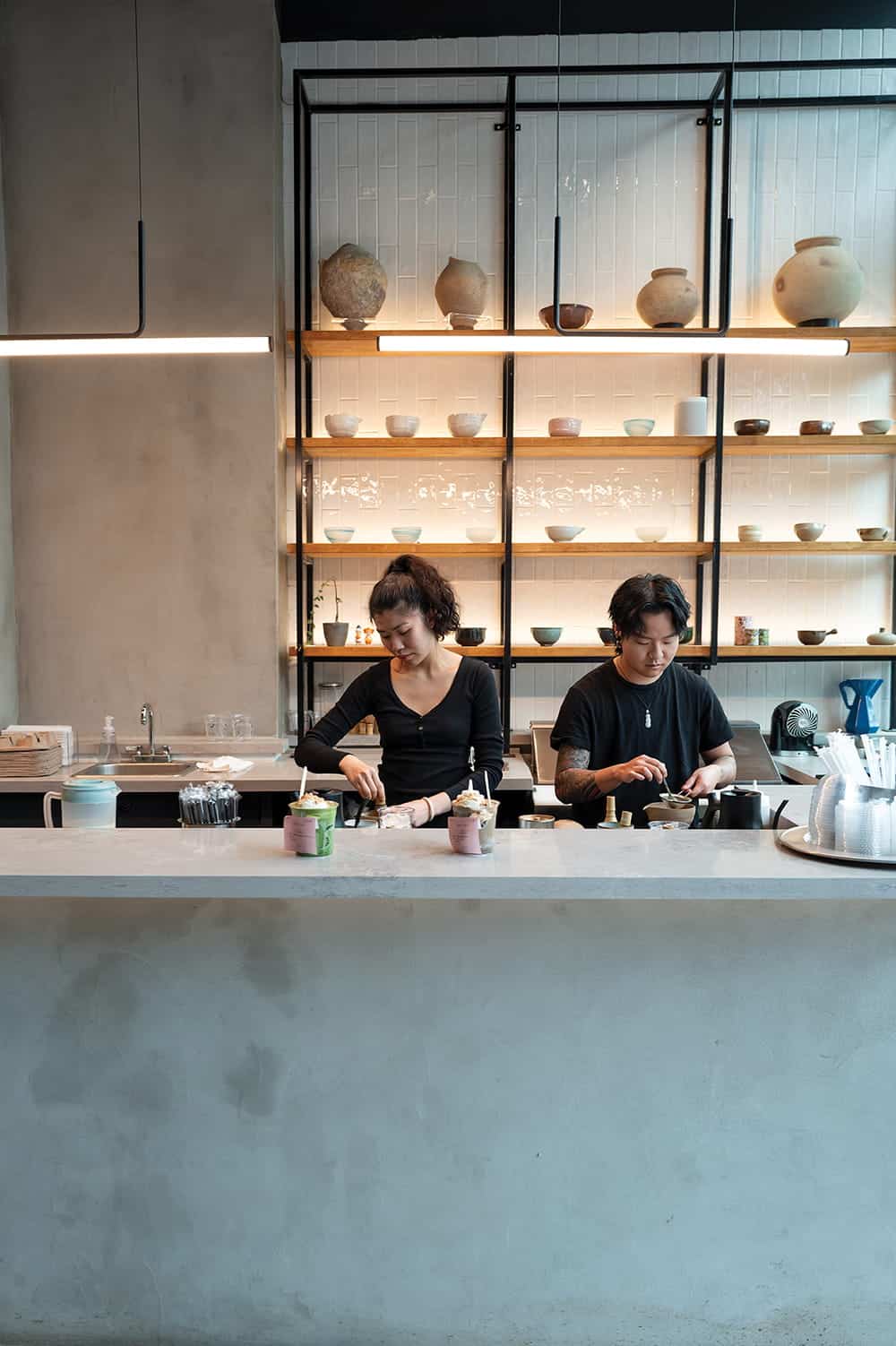
While the number of Vietnamese coffee shops in Seattle has risen in the past few years, the beverage itself is not a new phenomenon in the region. Many Vietnamese restaurants in South Seattle have long served the beverage alongside other traditional dishes, such as bánh mì and pho. In fact, Bao Nguyen, shopkeeper of the five-year-old café, Phin, has fond childhood memories of accompanying his dad to get coffee at these establishments, which primarily catered to Vietnamese immigrant communities.
“Phin is a culmination of my work in community organizing and community building in the International District, and my family’s history of eating and shopping in the neighborhood,” Nguyen says. “I was building on my love for the area and for Vietnamese culture, and it coalesced into having a Vietnamese coffee shop in Little Saigon.”
A recent influx of Vietnamese coffee shops in Seattle reflects the rising popularity of the beverage, which is prepared using Robusta beans and brewing methods that give it a nuttier, fuller-bodied flavor—and more caffeine—than drinks made with Arabica beans. Recent additions around the city include Joie Coffee in Ballard, Phê in Capitol Hill, Aroom Coffee in Fremont and downtown Seattle, and Drip Drip Coffeehouse on Cherry Hill.
A storied history
Like a handful of popular dishes—pho, bánh mì, and paté, for example—Vietnamese coffee has colonial origins, but those origins are not the defining factors of its story, which is more about how Vietnamese people have made coffee their own. A vibrant and essential part of the country’s culinary and social history, the beverage has long been a hub around which families, neighbors, and communities gather.
In Seattle, many Vietnamese coffee shops continue to embrace this tradition while modernizing by offering their own spin on flavor combinations, preparation methods, and pairings. These personalized takes on the classics usually involve cà phê sua đá (coffee made with condensed milk), cà phê trung (coffee with a foam made from whipped egg yolks and sweetened condensed milk), and cà phê dua (coconut coffee), and serve as a reminder that culture, especially in the culinary realm, is an ever-evolving concept.
“I get to bring my Vietnamese-American identity to my work, and I hope that I’m doing right by the Vietnamese farmers roasting and growing coffee and ensuring that people know that there’s so much behind Vietnamese coffee,” says Hien Đang, co-owner of Voi Cà Phê in Georgetown.
“We’re in what I consider a fourth wave of coffee, which is marked by coffee that’s more fun and interesting. we’re bringing culture into coffee by bringing in Thai, Korean, and Ethiopian influences.” —Bao Nguyen, Owner, Phin
The current wave of coffee culture
Coffee culture in Seattle is dynamic and globally recognized—and over the years, it has experienced distinct waves in keeping with international trends. The first wave of coffee popularity, around the 1950s, was primarily focused on mass production, and the second wave in the 1990s highlighted the experience that came with enjoying a cup of brew. Nguyen says that the third wave of coffee, which occurred in the 2000s, was focused on the sourcing of coffee beans and the techniques to bring out their flavor notes. Đang agrees, citing that the current wave of coffee aficionados cares more about where the coffee comes from and the impacts on the people who have the most direct connection to it.
“We’re in what I consider a fourth wave of coffee, which is marked by coffee that’s more fun and interesting,” Nguyen says. “We’re bringing culture into coffee by bringing in Thai, Korean, and Ethiopian influences.”
Locally, there are Turkish, Ethiopian and Mexican coffee shops, each with its own traditional flavors and preparation methods. At the Vietnamese and Korean spot, Joie Coffee, Vietnamese coffee and matcha are available with a selection of foams featuring Korean flavors like sweet corn and mung bean, as well as other Southeast Asian flavors like mango sticky rice. At Drip Drip Coffeehouse, Vietnamese coffee is available with toppings in sweet and savory flavors: roasted sesame, salted egg, and ube are just a few of the options.
With every drink being as unique as the place you get it, it begs the question: What exactly is Vietnamese coffee? It turns out that the answer is just as nuanced and varied as Vietnamese culture itself. “Vietnamese coffee doesn’t have to be made a certain way,” Nguyen says. “Coffee culture in Vietnam is evolving over time, and it’s still relevant today because people are evolving with it.”
Bridging tradition and innovation
Customers at Phin have the option to have their coffee brewed with a phin, a Vietnamese coffee press where hot water slowly drips through coffee grounds, or prepared with an espresso machine. Drinks are also available with regular condensed milk or house-made oat condensed milk, a welcome alternative for lactose-intolerant or vegan coffee lovers.
“The phin brew experience on the menu parallels how someone in Vietnam might have coffee,” Nguyen says. “I’ve also adapted to offer the espresso version. I’ve found a nice balance while staying anchored in the tradition of phin-brewed coffee and Vietnamese Robusta. The flavor profile doesn’t change—it’s just how we get there.”
Similarly, Voi Cà Phê offers traditional and modern preparation methods for drinks: Robusta beans are brewed using a phin, while the grounds from Arabica beans are put through an espresso machine. Brewing with a phin is one way the café stays connected to the tradition of Vietnamese coffee, and it’s at the core of everything it does. It’s also a way to honor the farmers and roasters who grow and prepare the coffee beans they use.
“About 70 percent of the work that goes in to coffee happens before it reaches the coffee shop,” says owner Đang. “We do our best every day to bring out the best of their coffee by brewing it with the right water, temperature, and ratio.”
With that foundation, Voi Cà Phê experiments with interesting flavor combinations, which range from coconut-cinnamon and tropical fruit (think tamarind and soursop) to unconventional ingredients like miso and fish sauce. Other establishments around the city put their creative stamp on drinks as well, bringing a modern twist—and creating buzz—to Seattle’s coffee scene. At Phê, for example, you’ll find the Phê Pho drink, which is served with a cream top made with spices typically used in pho.
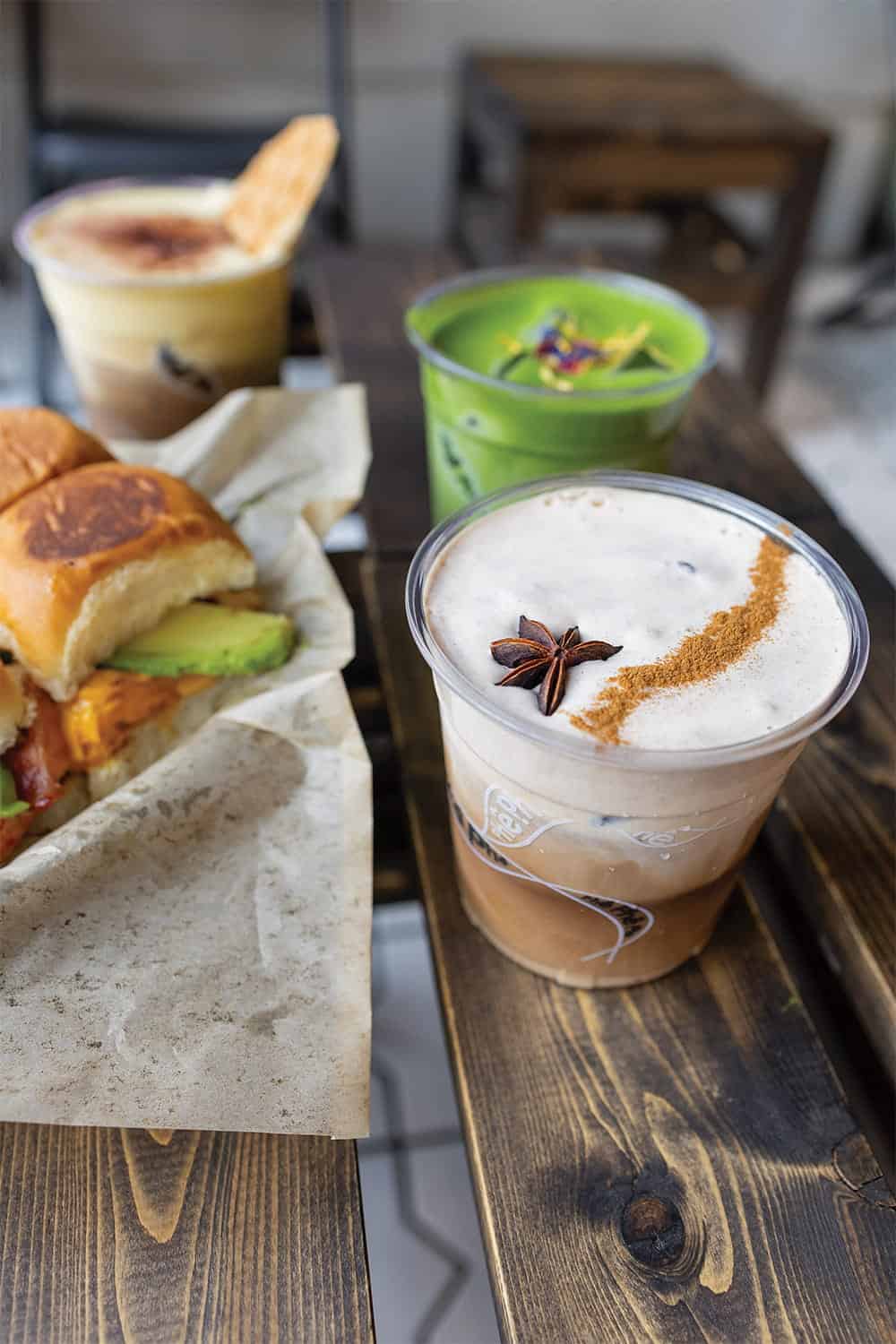
No matter what drink they’re making, Đang says that the shop is committed to highlighting the people who grow, process, and roast their coffee beans, which are from specialty roasters, the Married Beans and Soul Specialty Coffee. “We wanted to move beyond colonial history and ensure that the people benefitting from the industry are not just acknowledged, but celebrated, for their work,” she explains.
Coffee and community
Most Vietnamese coffee shops offer much more than just drinks. Take Hello Em, which is equal parts café, community gathering space (in partnership with Little Saigon Creative), and a micro-roastery that specializes in single-origin fine Robusta beans sourced from Buôn Ma Thuot, Vietnam. At Phin, Nguyen is inspired by his connection to Saigon and its vibrant coffee culture, and he invites people to come in, slow down, and enjoy their coffee in community with others.
“Vietnamese coffee distinguishes itself through the space it’s served in and what it means to Vietnamese people,” Nguyen says. “Regardless of how we choose to make our coffee, it’s an outlet for connection.”
And that connection extends further than just having a warm drink with a friend, bringing together culture, history, and creativity, and emphasizing the wider impact of even our smallest daily decisions. So, next time you plan to visit your usual go-to café, consider branching out to stop by a Vietnamese coffee shop instead. No matter whether you opt for something straightforward from the espresso machine or go the phin-brewed route, you’ll be supporting a local, independent business and all the people involved in bringing its menu to life.
“What we do is rooted in history and an understanding of what came before us, and we have our sights set on the future,” Đang says. “It’s exciting to be a part of this moment in Vietnamese coffee.”
Looking for more? Here are eight Seattle spots for Vietnamese coffee, from classic phin-brewed cups to playful modern takes.
Follow Us

The Burger That Saved My Marriage
When a closure on I-405 derails date night, Great State Burger comes to the rescue.
The plan was flawless, which, as every married person knows, meant it was immediately in danger. In an earnest attempt to be a good husband, I had arranged a Saturday night date in Bellevue: dinner at Fogo de Chao, followed by a movie at Cinemark in Lincoln Square. I made the reservation and bought tickets….

Industry Entrées
Seattle’s newest spots to eat, drink, and gather with friends.
Roma Roma Capitol Hill It seems like roman-style pizza keeps trying to catch on in this town, then disappearing, then popping back up in a fresh incarnation. (See also: Pizza by Ruffin, the recently departed Sacro Bosco, and the long-departed Bar Taglio.) At 12th and Olive, Roma Roma is the latest attempt. The skipped-over element…

Bloom Thai: Turning Tables into Friends
This hidden Thai food gem started as a pandemic pop-up. Now, in its permanent home in Lakewood, the restaurant has quietly amassed a following thanks to its fusion of flavors and gregarious chef.
For months before I went to Bloom Thai, I was regaled by Instagram reels about the tiny Lakewood restaurant. “The owner is so nice!” people exclaimed. “She came out and sat with us,” one influencer said, while another announced that “Auntie gave us free Thai tea!” and so on. The food looked legendary, too, and…

Industry Entrées: New Restaurants Around the Sound
Seattle’s newest spots to eat, drink, and gather with friends.
Balandra Fremont Taking over the legendary former Art of the Table space on Stone Way—following a brief stint as Robin’s—is Balandra, a chef-driven tapas and wine bar. Named for a Spanish sailing ship, it’s the debut from first-time owner Anna Bennett, who hails from the Eastside, with veteran chef Ivan Barraza at the helm. Along…