





Outdoors
Read More ›
Five Lesser-Known Washington State Parks for Spring and Summer
From Hood Canal beaches to Blue Mountain wildflowers, these quieter parks give warmer weekends some breathing room.

As the outdoor season gets going, many of us, myself included, tend to gravitate toward Washington’s national parks and a handful of the state’s most popular trails. There’s no arguing that they’re pretty spectacular. However, we also know that summer crowds are an issue and detract from the very reason we went in the first place: for some peace and quiet in nature.
Washington has well over a hundred state parks, many of which are little known, and offer quiet respites in the great outdoors.
“There are several parks that always have high visitation—Cape Disappointment, Deception Pass, Lake Chelan, and Lake Sammamish,” says Meryl Lassen, communications consultant with Washington State Parks.
“But, in some cases, there are parks just down the road that offer a different experience, but a lot more elbow room—Fort Columbia; Joseph Whidbey and Fort Ebey; Mount Spokane, Centennial Trail or northern Columbia Plateau Trail; Alta Lake, Beebe Bridge or Lincoln Rock; Olallie or Saint Edward; and Fort Townsend, respectively.”
Mix up your hikes and beach days this spring and summer with a visit to one of Washington’s quieter state parks. Scenic Beach, Dosewallips, Bridgeport, Brooks Memorial, and Fields Spring offer fresh reasons to get outside without heading straight for the usual crowded trails.
Scenic Beach State Park
In Seabeck, Washington on the Kitsap Peninsula, Scenic Beach State Park lives up to its name. The views are easy to find. Wander along forested, well-kept trails lined with rhododendrons that lead to sandy shores, blue waters, and views over the Olympic Mountains. Scenic Beach has 50 campsites, so you can stay a night or two and wake to the sound of crashing waves and sunrise over the Hood Canal.
Dosewallips State Park
Extending along the shores of the Hood Canal and Dosewallips River, Dosewallips State Park blends mountains, beach, and forest. The land has been part of the territories of Coastal Salish people for thousands of years. Wander along the beach and put your feet in the water, look for clams, oysters, and geoducks, which thrive in this river estuary. Bring a shovel and bucket to dig for some shellfish (with the right permits, of course). Dosewallips has accessible campsites—and you may spot herds of elk wandering through.
Bridgeport State Park
An expansive space set on the shores of freshwater lake Rufus Woods, Bridgeport State Park is a dream for water sports, picnicking, and sunbathing. Cycle to the dam, take a dip in the river, lay out on the beach, and search for birdlife around the water. Should you wish to stay a little longer, Bridgeport is well-equipped for camping as well, with accessible campsites, kitchen shelter, and fire pits.
Brooks Memorial State Park
By day, Brooks Memorial State Park is a playground for hiking and biking. And by night, it is a destination for stargazers and astro-enthusiasts. Located on the edge of the Columbia River, Brooks Memorial has miles of trails winding through mighty pine and oak trees and among meadows of wildflowers, with mountain views that stretch before you.
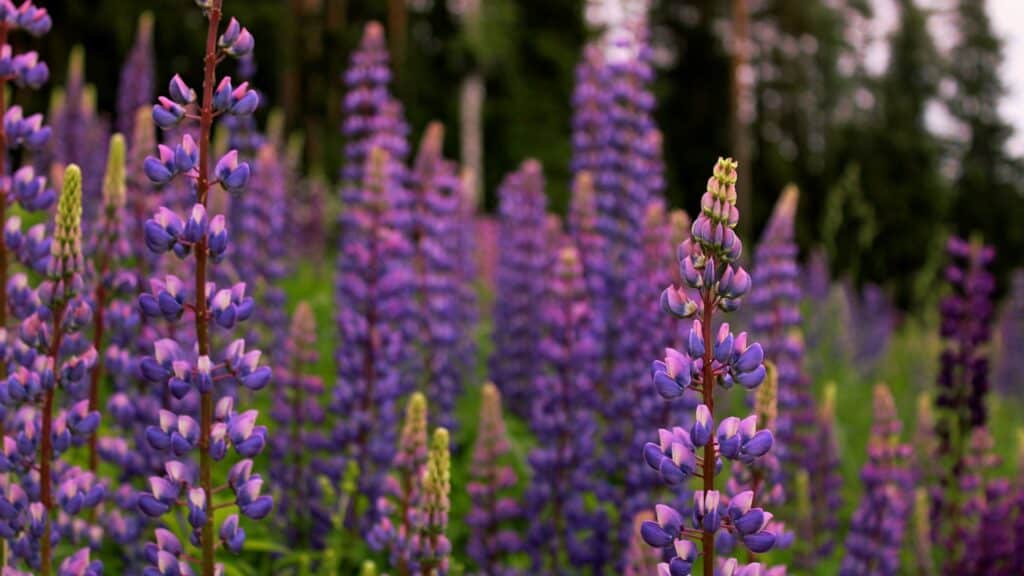
The park begins peaking in May. “As the wildflowers are coming out, along with a lot of our wildlife,” says Aaron Ricker, who has been a ranger with Brooks Memorial for four years. “There are morels for the mushroom hunters and a few varieties of orchids and lilies to enjoy. There are also lizards to chase and deer to watch. Just keep an eye out for the occasional black bear.”
And clear summer nights are meant for stargazing. The nearby Goldendale Observatory offers telescopes and equipment for a closer look at the night sky, though there’s no need to leave your campground. “The grandiose expanse from Brooks Memorial is awe-inspiring,” says Ricker. “For the best return on effort, our group camp is a great place for just sitting back and looking up at the stars.”
Fields Spring State Park
Tucked in southeastern Washington’s Blue Mountains near Anatone, Fields Spring State Park is a year-round wilderness paradise plentiful with wildflowers and wildlife. Ann Freeman, a park ranger who has worked at Fields Spring for about a decade, says that during the shoulder season, the park is often quiet.
Hike, bike, backpack, and climb during warmer months. Trek to the top of Puffer Butte and look out over the Wallowa Mountains. Campsites, teepees, and cabins are all available to reserve so you can spend a few days exploring everything that Fields Spring has to offer.
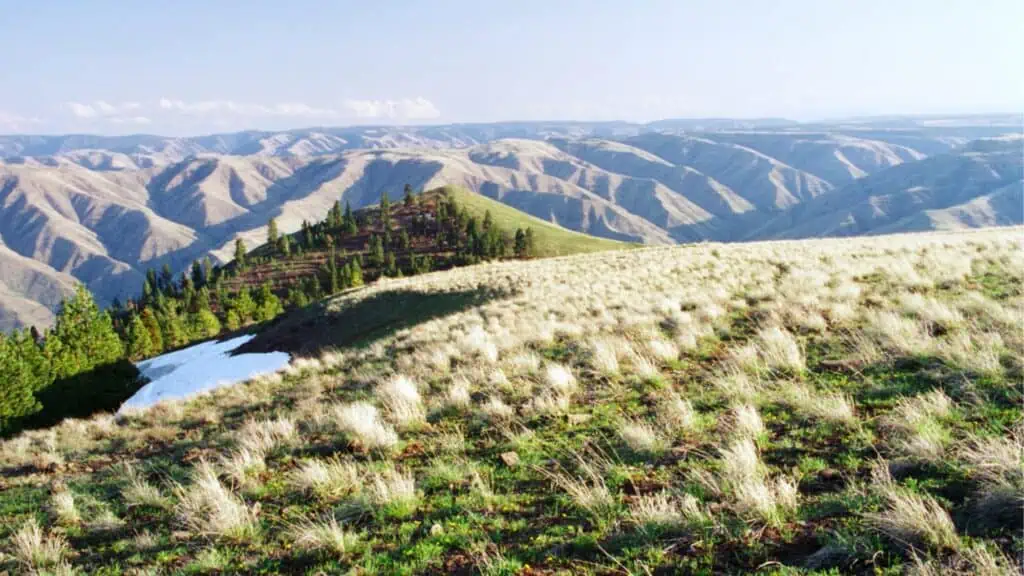
“During the spring and summer, Fields Spring is special for its wildflowers, morels, birds, and the general peace and quiet,” says Freeman. “This region is relatively dry, with many steep river valleys and canyons. This means that you can pass through many microclimates in a short distance.
“On the east and south sides of the park, you find fragrant, open pine forest and rocky slopes with wildflowers and small sagebrush. Walking less than a mile around the butte, you encounter denser forests that also include Douglas-fir, grand fir, and several flowering shrub species. And within another mile, you’re at a year-round creek with huge mountain maple trees, western yew, and Engelmann spruce adding to the fir forest.”
And the season extends into the winter, as Fields Spring is plentiful with snowshoeing routes and warming huts to duck into along the way.
Planning ahead? The next Discover Pass free day is June 19 for Juneteenth, when visitors can park on state-managed public lands without a pass.
Follow Us

A New Perspective on the Oregon Coast
Beyond the usual suspects like Astoria and Cannon Beach lie 300 miles of open road.
The Oregon Coast is a beguiling drive year-round, but autumn is when it feels most vital. The colors deepen, whales loiter in the shallows, and kites swoop against gray skies dappled with bursts of sunlight. At Tillamook Bay, Highway 101 veers inland through fifty miles of old-growth forest before re-emerging along the water. On this…

Inn at Langley: Where the Shore Meets the Sky
After a property-wide redesign, the Whidbey Island retreat reopens with a locally inspired take on vacationing in the Pacific Northwest.
Michelin-star chef Johnny Spero never planned to end up in the Pacific Northwest. A lifelong East Coaster born and raised in Baltimore, he began his culinary career at 16, working for a series of big-name chefs and restaurants before opening his own establishments in Washington, D.C., including Reverie, which earned him his Michelin star in…

The Northwest’s Gateway to Wine, Culture & Adventure
Escape the crowds. Slow down. Savor fall in the Lewis Clark Valley. As autumn paints the hillsides in gold, crimson, and amber, the Lewis Clark Valley becomes a picture-perfect place to slow down and savor the season. Where Washington and Idaho meet, fall brings crisp days, colorful landscapes, harvest among the vines, and plenty of…

Meet West Seattle’s “Freelance Beaver Detective”
A group of urban beavers helped Pamela Adams through a tough time. Now she’s returning the favor.
Pamela Adams was living in Port Townsend when her marriage fell apart. Little did she know at the time that she would soon find love again while doggedly pursuing the Five Families—not the ones of Mafia lore, but a four-legged sort living along the Longfellow Creek Watershed. Prior to moving to Washington, Adams resided in…