





Outdoors
Read More ›
Photo Essay: The Reefnetters of Legoe Bay
A photographer’s look at the small Lummi Island fleet taking part in a long-standing fishing tradition.

While driving across the country from Detroit to San Francisco in October 2024, I stopped on Lummi Island, about 10 miles west of Bellingham, to visit my friend Peter. I had met Peter while traveling with Bread & Puppet Theater, photographing its national tour. He thought I might be interested in documenting the fishing there, as it is one of the few places on the planet still practicing this ancient form of fishing.
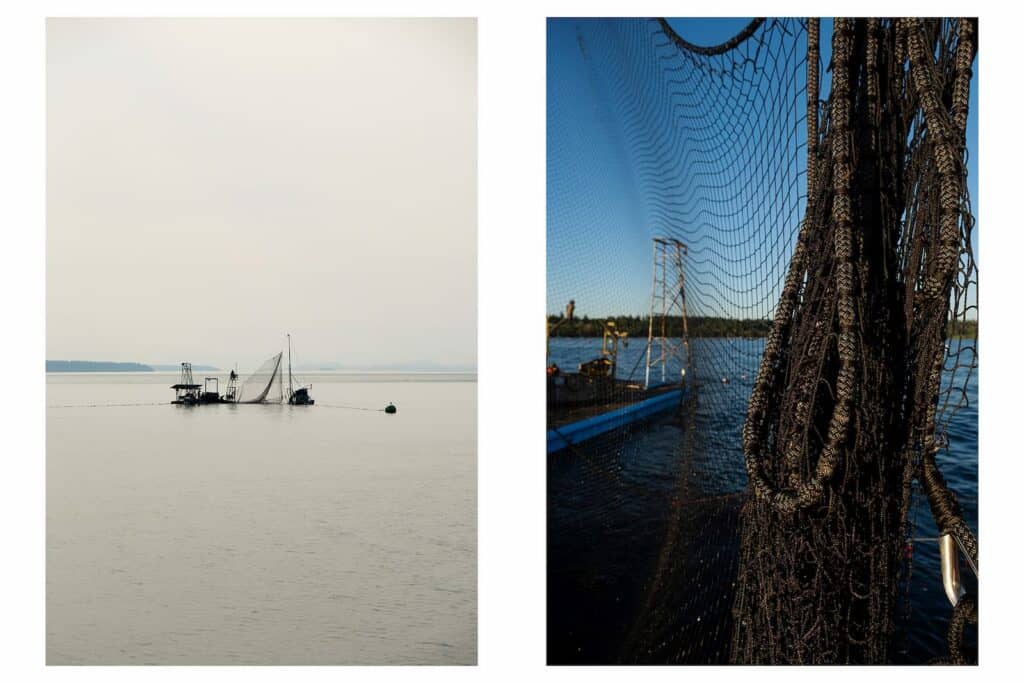
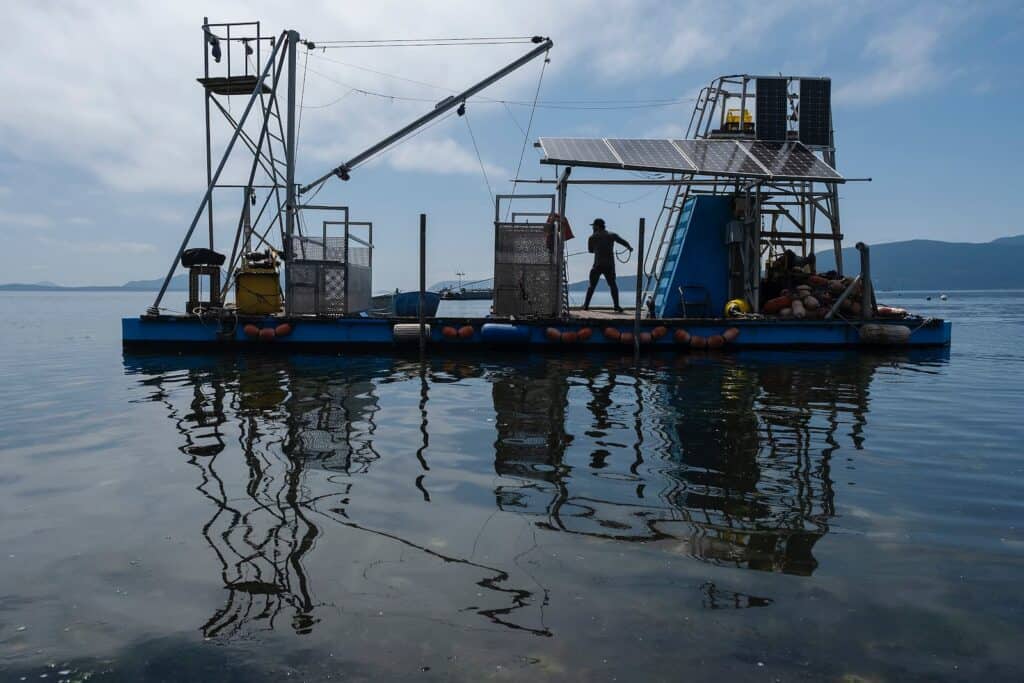
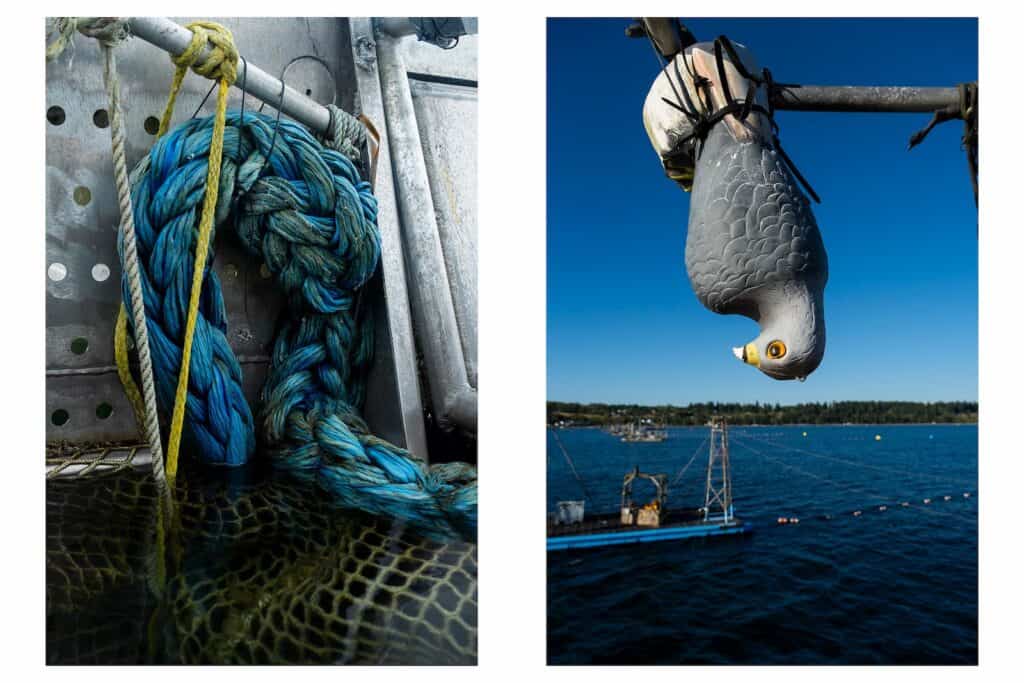
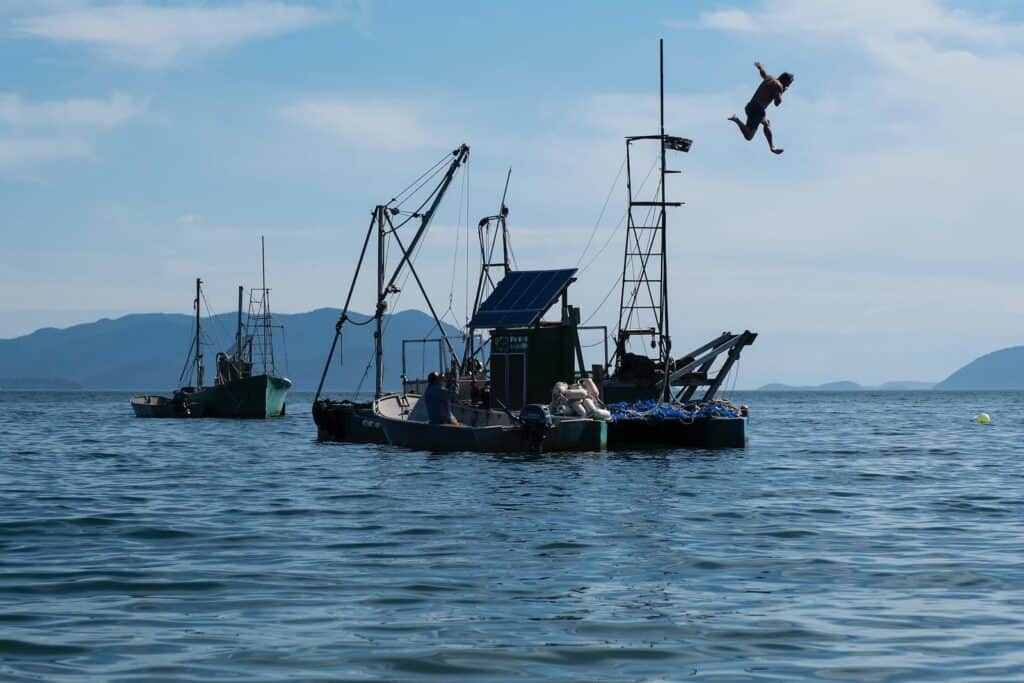
What grabbed my attention on that first visit to the island was the collection of reefnet gear sitting along Legoe Bay Road, stored on shore after the season had ended. Having never seen reefnet gear before, it looked like a collection of Rube Goldberg machines—hulking platforms with ropes and towers, small huts and metal cages, solar panels, and piles of netting. I had no idea how it worked, but I found it incredibly visually interesting.
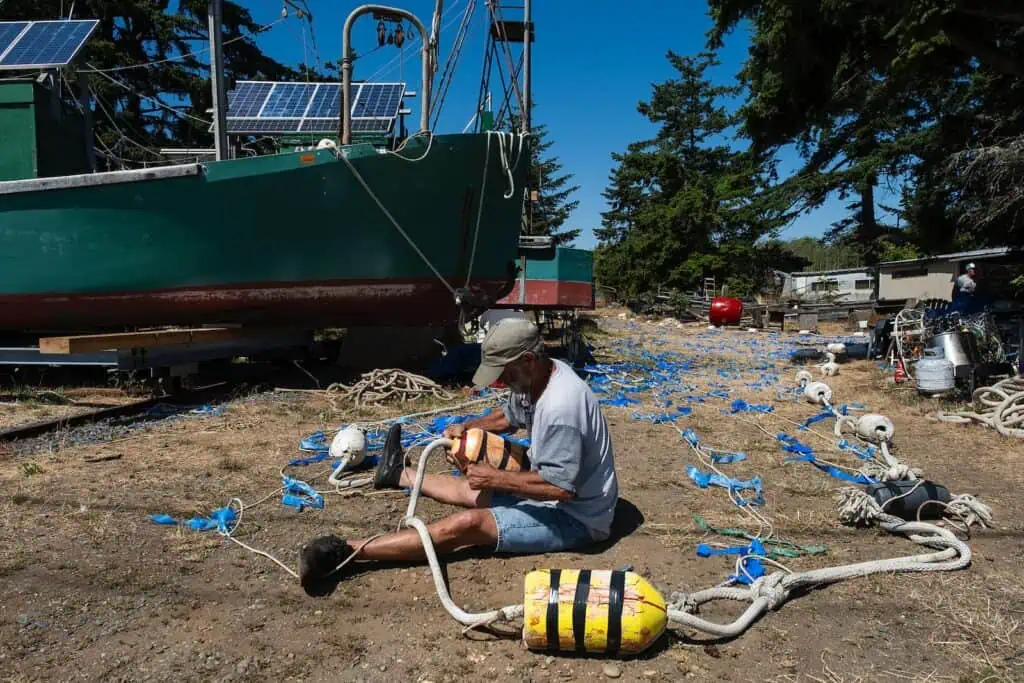
So I went back in the summer of 2025 to do a photo project on the people and the fishing out on Legoe Bay.
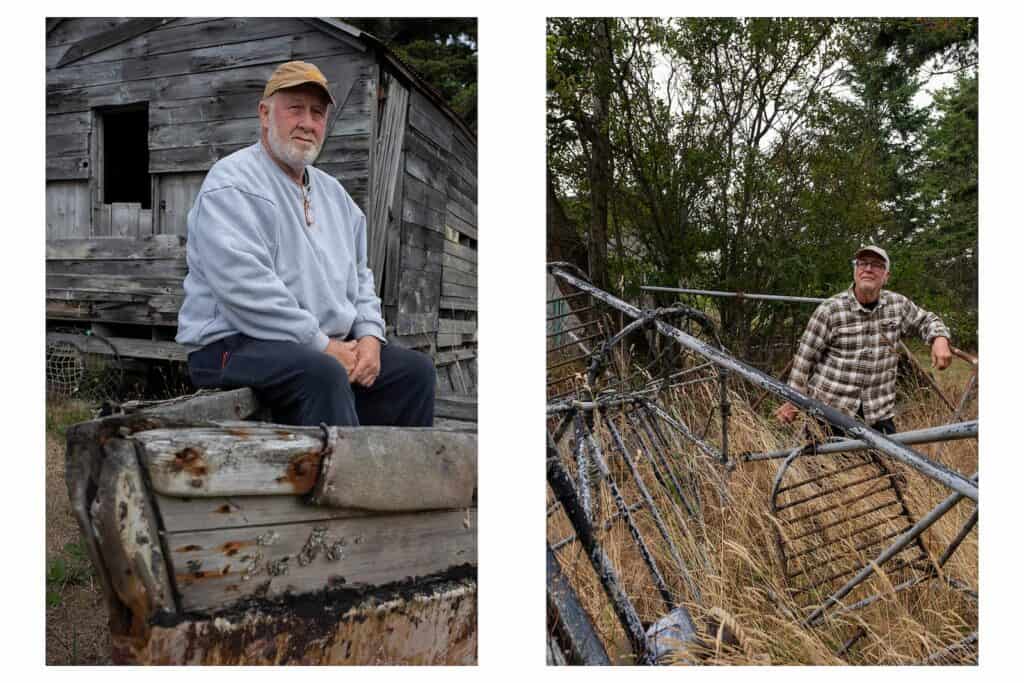
In reality, reefnet fishing is a minuscule portion of the industrial fishing fleet. The U.S. government issued 12 licenses last year, nine of which fish on Legoe Bay. The government has stated that no new licenses will be issued. Reefnet fishing is not a “growth industry”; it’s more of a passionate undertaking.
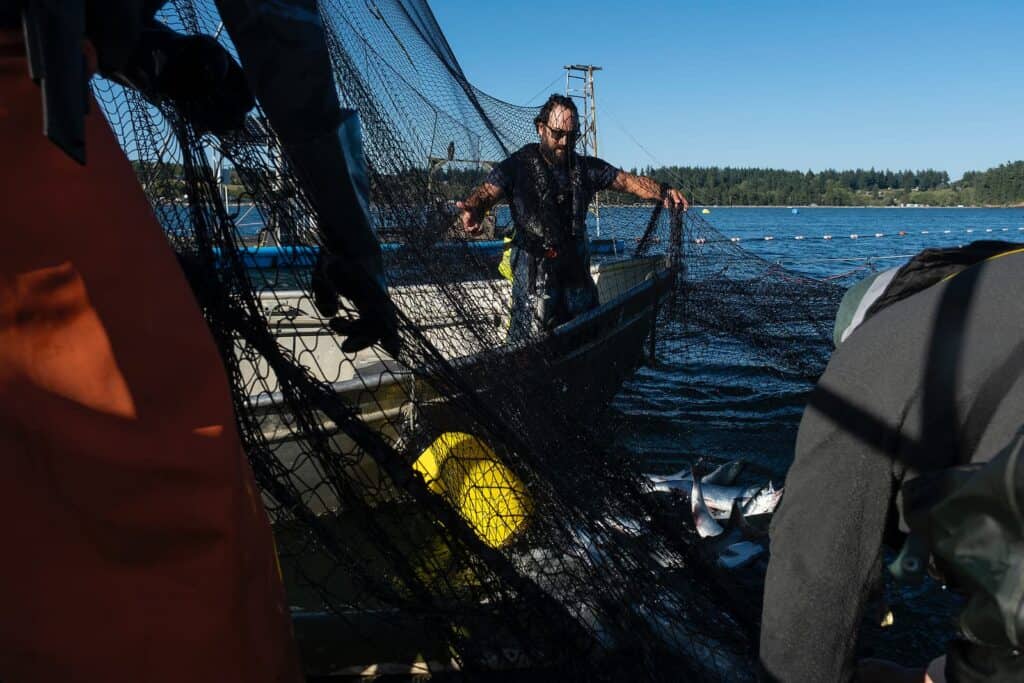
It is a delightful mixture of old and new—solar panels sharing space on the gear with the occasional WWII airplane hangar door motor; men perched in lookout towers searching for flashes of color while sonar arrays give a live 3D look at the waters beneath; lifelong fishermen full of salty knowledge paired with amateurs excited for a new experience and salmon for their freezer. All of this takes place on the ancestral lands of the Lummi Nation, with a fishing practice that goes back thousands of years for Coast Salish tribes.
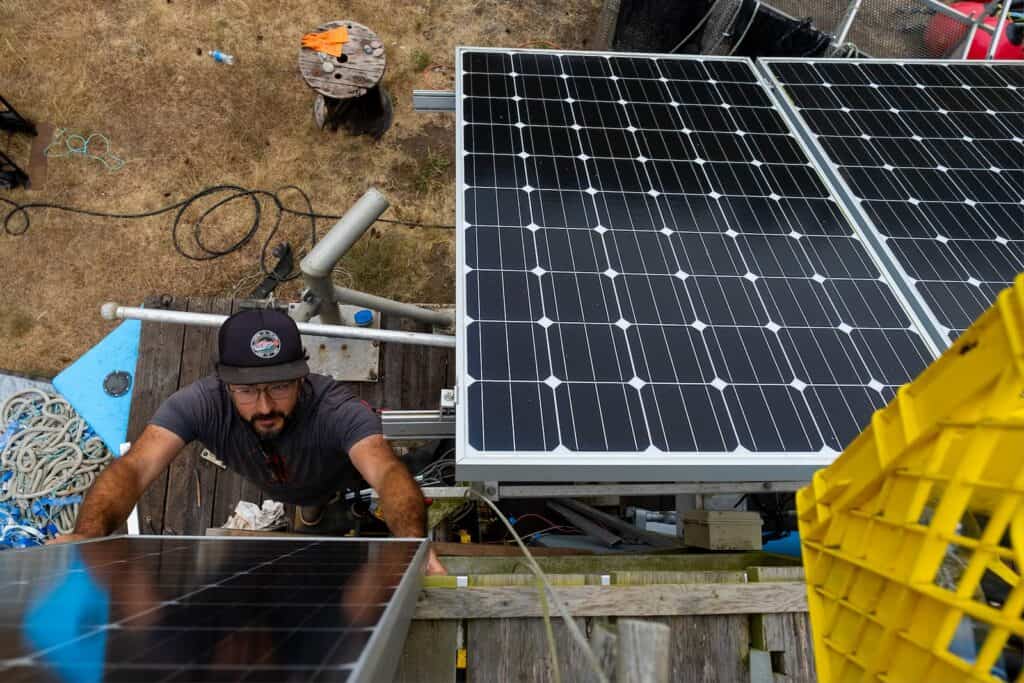
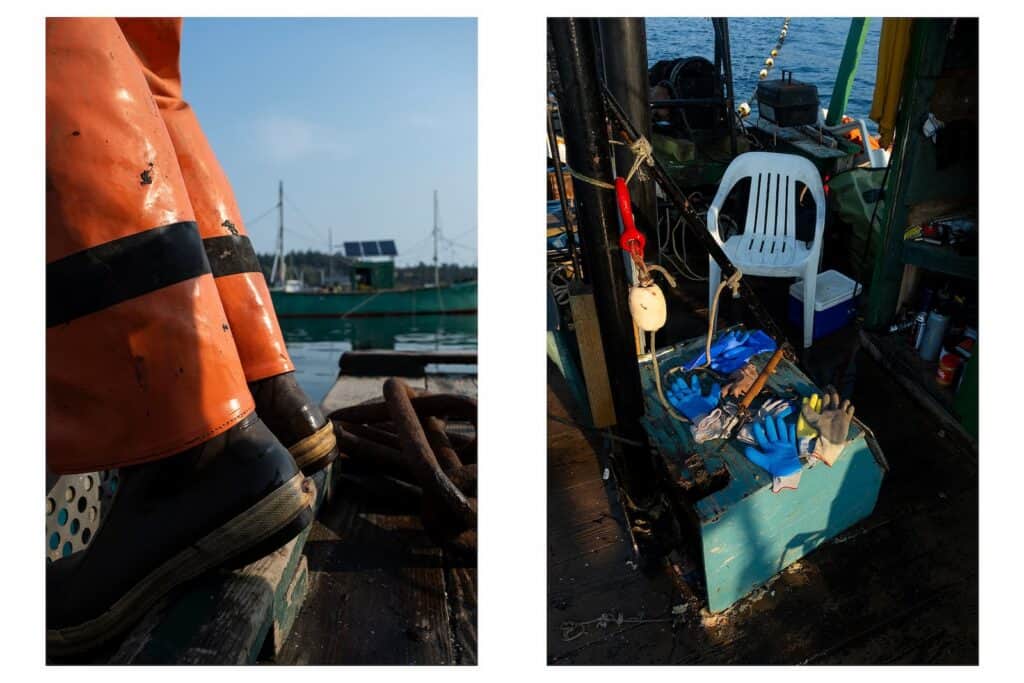
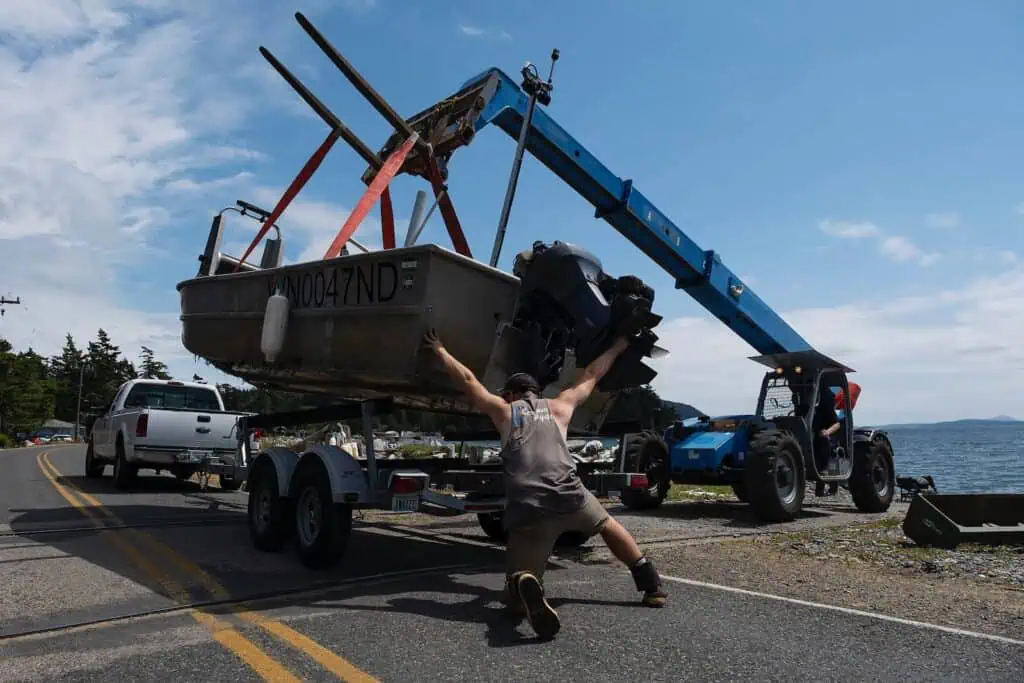
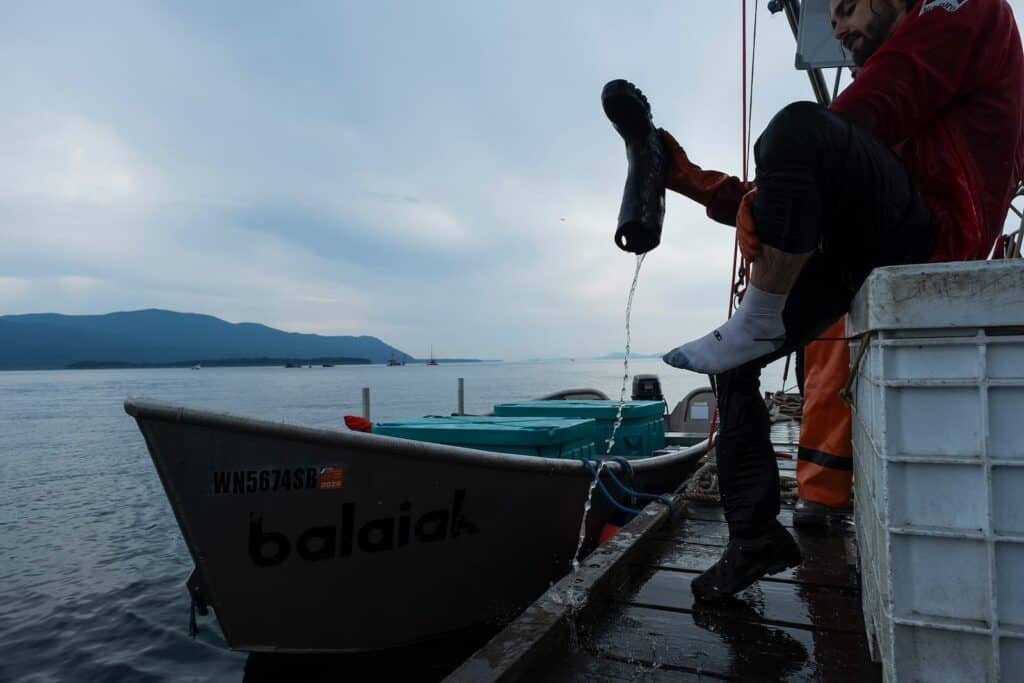
Before the season starts, there are nets to mend and platforms to seal tight, towers to weld or grind down, or both; hulls to paint, batteries to rewire, and motors to maintain. There are buoys—called head cans—that are the size of county fair prize-winning pumpkins. Once the repairs and maintenance are finished and the gear is ready to be launched for the season, some boats are railroaded across Legoe Bay Road on tracks that run from the gear yards into the water.
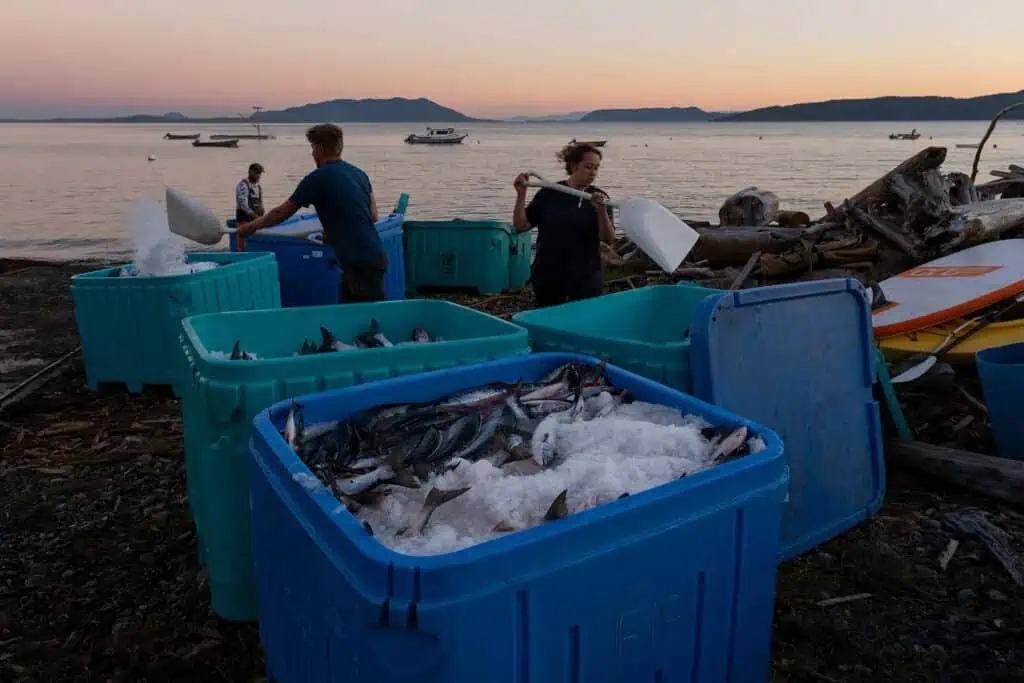
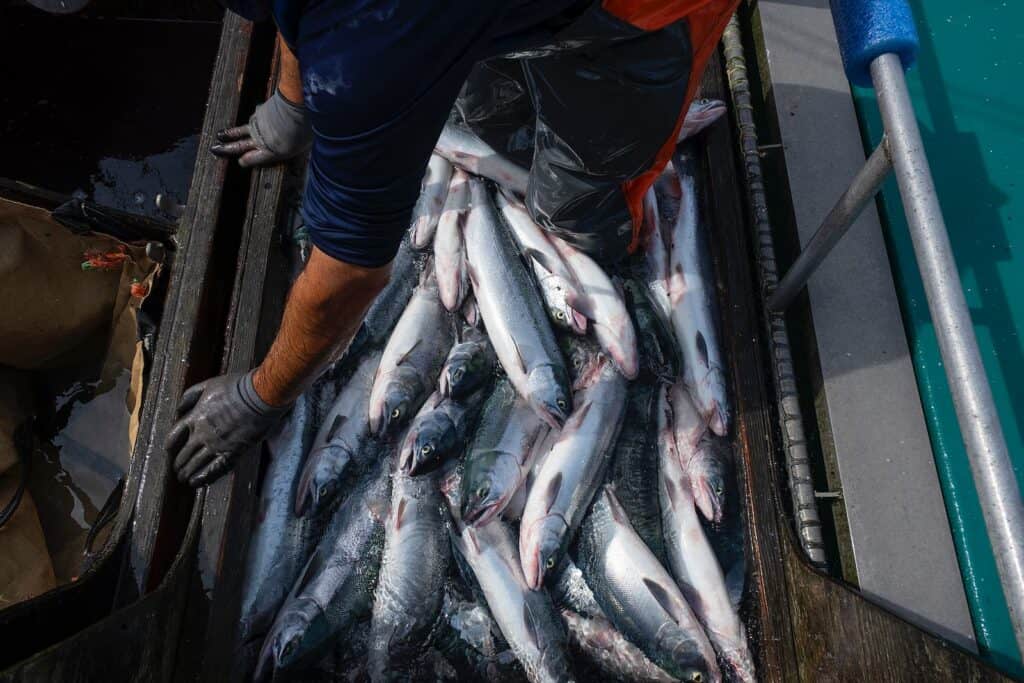
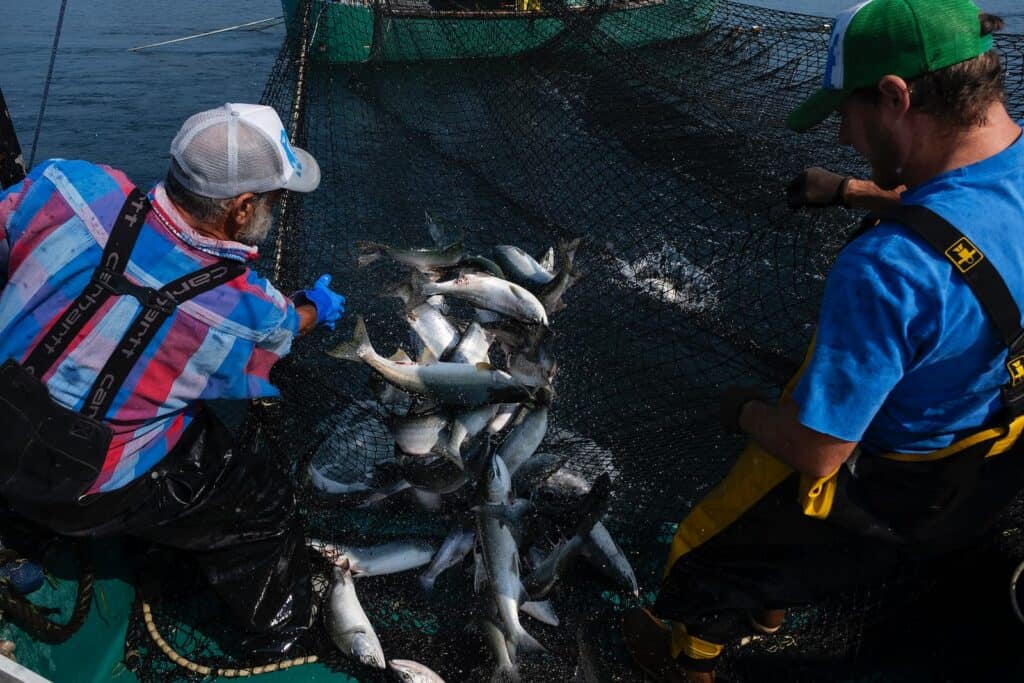
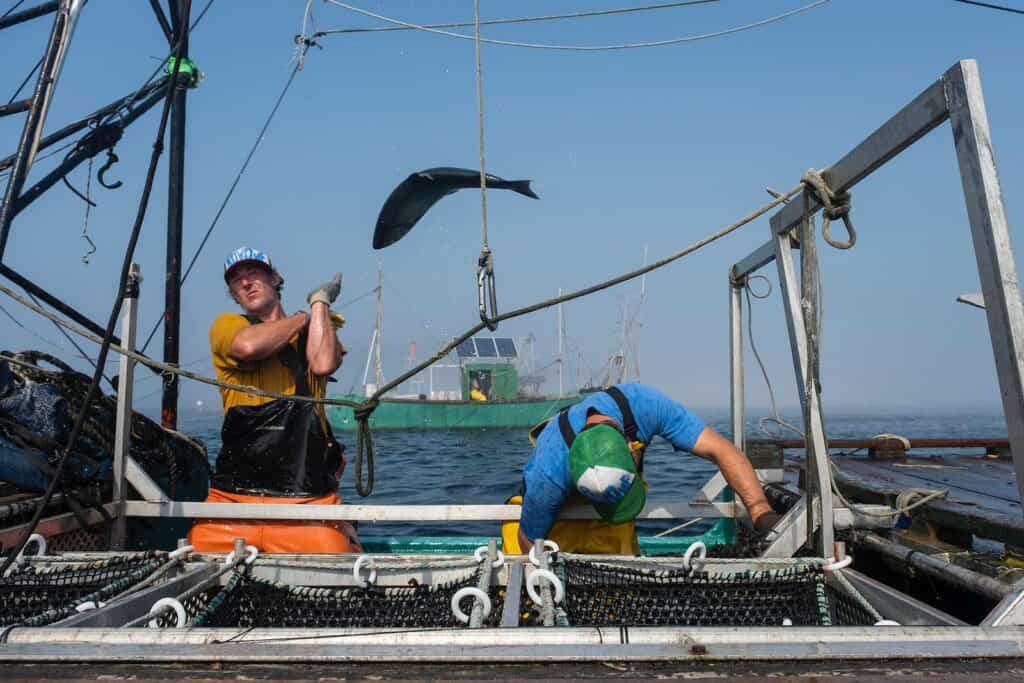
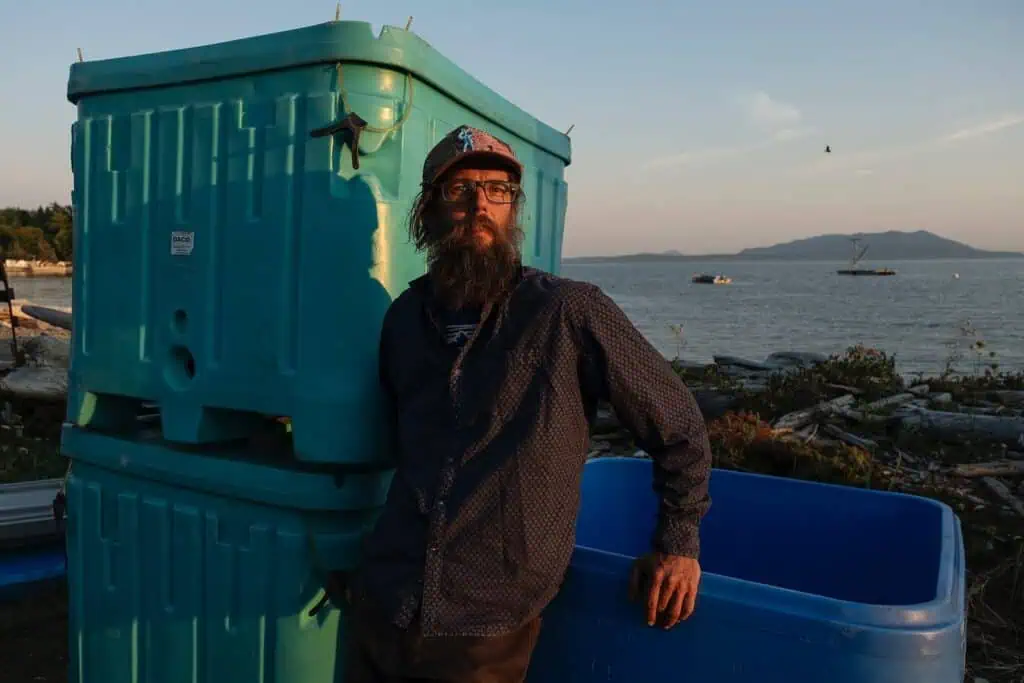
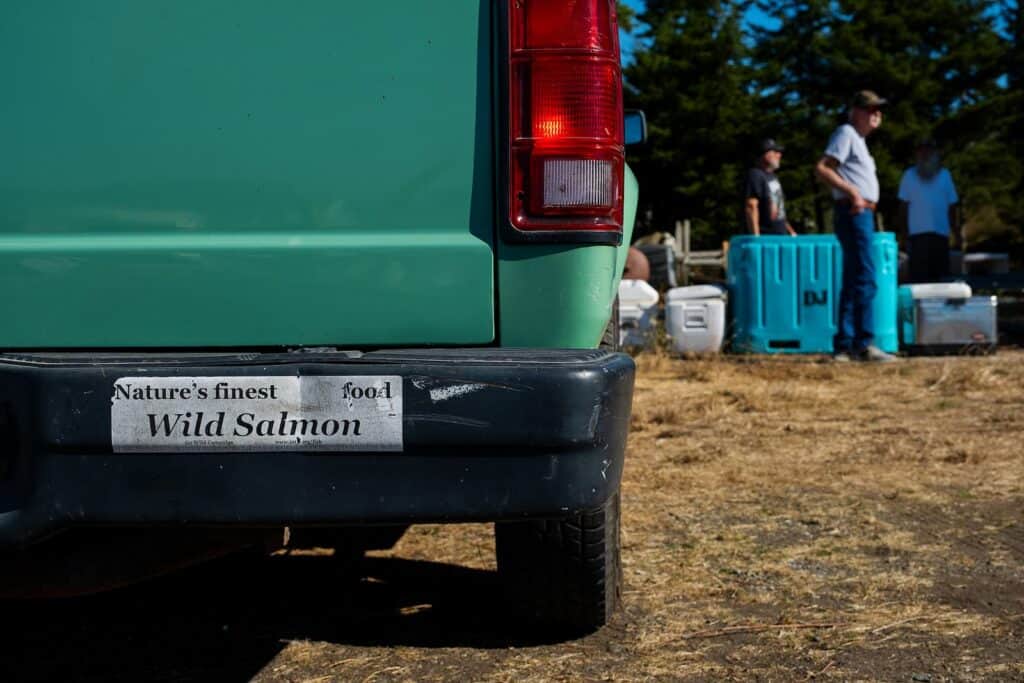
During the season, massive coolers full of ice wait on the beach for the freshly caught sockeye and pink salmon. Things go wrong, frequently. Ingenious solutions are made on the fly. Sometimes things break and fishing grinds to a halt. Fog rolls in and drops visibility to 50 yards or less, the eerie silence punctured by the high-pitched whine of the winch motors kicking on. But when the salmon are running strong and stuffing the nets, the fleet fills with joyous shouts and toothy grins.
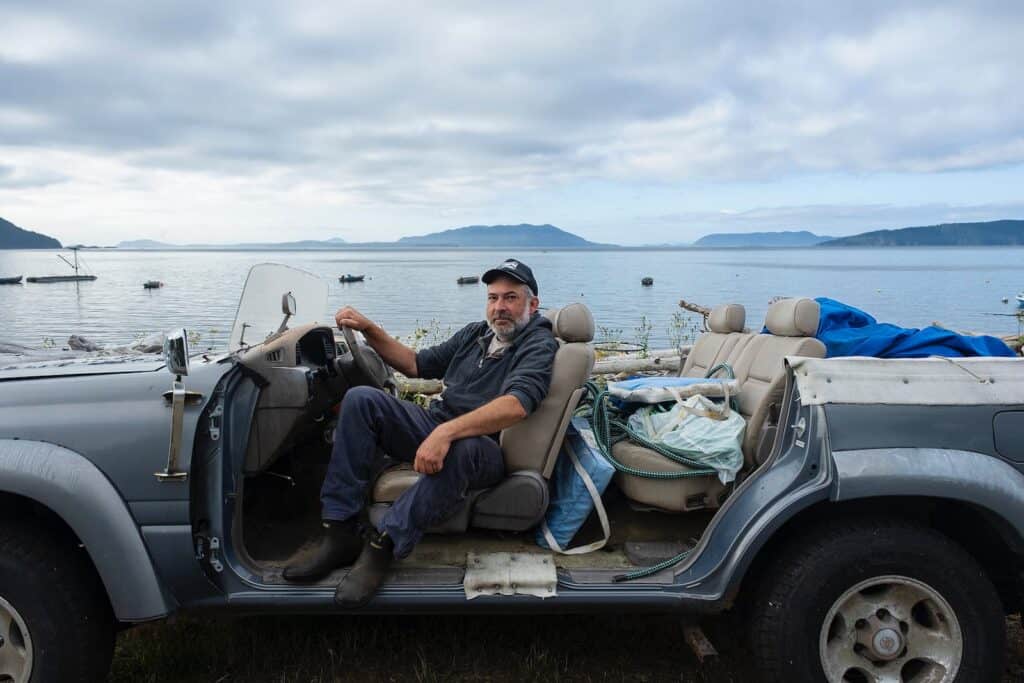
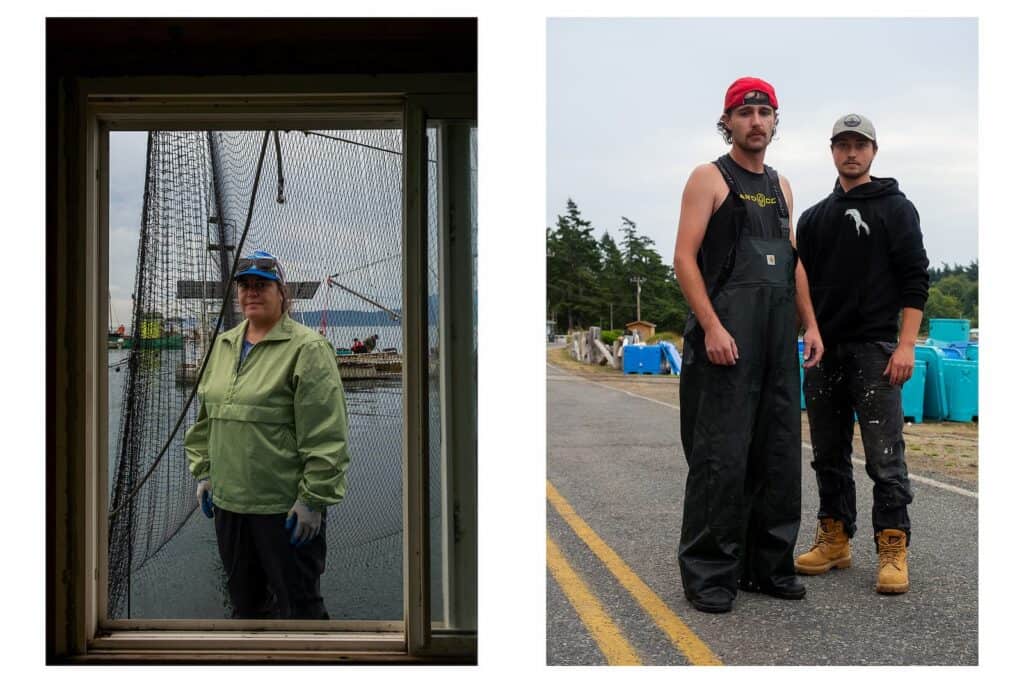
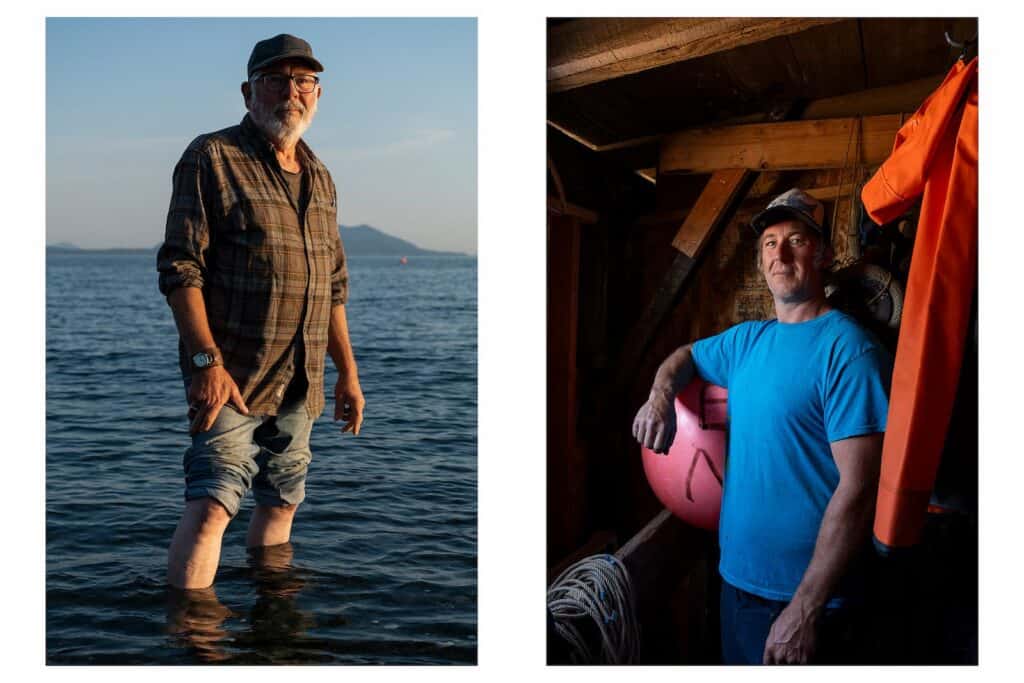
As an outsider, I was introduced to a couple of the captains through Jen, one of the summer crew. Then, by walking along Legoe Bay Road before the season started, I met other captains and crew members who gave me access to document their work and fishing—Roger and Riley, Stu and Steve, Ian and Sierra, Pete and Deb, Jeff, Paul, Simon, Ryan and Johnny, among so many more. Their openness and desire to share their passion for reefnet fishing made this project possible.
This is in no way a full telling of reefnet fishing—there is so much to its history, politics, business, and people. Instead, it’s a glimpse into one summer spent with a tiny fishing community on Lummi Island, and the salmon that make it all possible.
Learn more about reefnet fishing at Salish Center, or purchase Legoe Bay salmon from Lummi Island Wild.
Garrett MacLean is a documentary and portrait photographer currently based in San Francisco. See more of his work at garrettmaclean.com.
Follow Us

Seattle Loves a Brand That Treats Its Workers Well
Seattle loves a brand that treats its workers well. It’s how Dick’s Drive-In, Costco, and Patagonia earned the kind of loyalty no marketing budget can buy. A new name deserves a spot in that club: Great State Burger. With locations near the Amazon Spheres, T-Mobile Park, and now inside SeaTac’s newly renovated C Concourse, Great…

Restaurant Roundup: R-Day, Chowder Charity, and Bourdain’s Order
Here’s what was served up recently in the Emerald City.
With the salty Puget Sound air teasing your palate, there tend to be a few bites that float to the top of the list—perhaps a bagel topped with smoked salmon or a dozen oysters on ice. But what really hits the mark, especially on the drizzly gray days that lie ahead, is a basket of…

Washington Has Incredible Oysters. Have You Tried Alaska’s?
A quick flight from Seattle—or a stop on an Alaska cruise—leads to Southeast Alaska’s floating oyster farms and a Ketchikan waterfront spot serving the local harvest.
Living in Seattle can make an oyster eater a little smug. Washington produces some of the best, and we know it. We have opinions about mignonette—do or don’t?—and can find a good dozen without leaving the neighborhood. So when an invitation to Southeast Alaska promised oysters that were “INSANE!” I wanted to see how they…

Opening Night: Death & Co. Brings the Hype to Pioneer Square
The famed cocktail bar’s long-awaited Seattle outpost serves polished drinks, oysters, and a side of big-city validation.
A quarter-century ago, Krispy Kreme opened its first doughnut shop in the Northwest in Issaquah, occasioning the sort of rapture you’d expect if aliens revealed themselves to humanity. In the middle of the night, hours before the 5:30 a.m. opening, there was a line stretching around the building, reported the Seattle Post-Intelligencer. “Cars lined up…