





Outdoors
Read More ›
Magical Mollusks
Oysters are one the Northwest’s favorite harvests. The hardworking farmers behind this bounty share a deep appreciation for its source and a personal connection to the processes that yield our food.

This article originally appeared in the March/April 2026 issue of Seattle magazine.
It’s hard to describe people who are undeniably connected to the land—often, it’s about a feeling they transmit. Grounded, knowledgeable about their work, and passionate in their care for nature’s resources. Oyster farmers along Hood Canal, like Matthew Macias, give off a certain vibe, as though they have some secret to life that I don’t know. Perhaps they have figured out the key to happiness: hard work, staying connected to nature, and giving something meaningful to the world.
Oysters have an almost mythical quality; the mollusk’s beauty lies hidden inside a craggy shell—a kind of culinary treasure waiting to be discovered. At the end of last year, I took a road trip across Puget Sound and along Highway 101 to find out what makes oysters so special in this part of the Pacific Northwest.
When I met Macias, co-owner of Olympic Oyster Co. in Lilliwaup, he was out working his oyster beds during a low tide. He’s mostly a one-man show and has built his single-acre oyster farm from scratch. Despite this humble setup, his oysters are among the most coveted at some of Seattle’s best restaurants, like the Walrus and the Carpenter, Matt’s in the Market, and Westward.
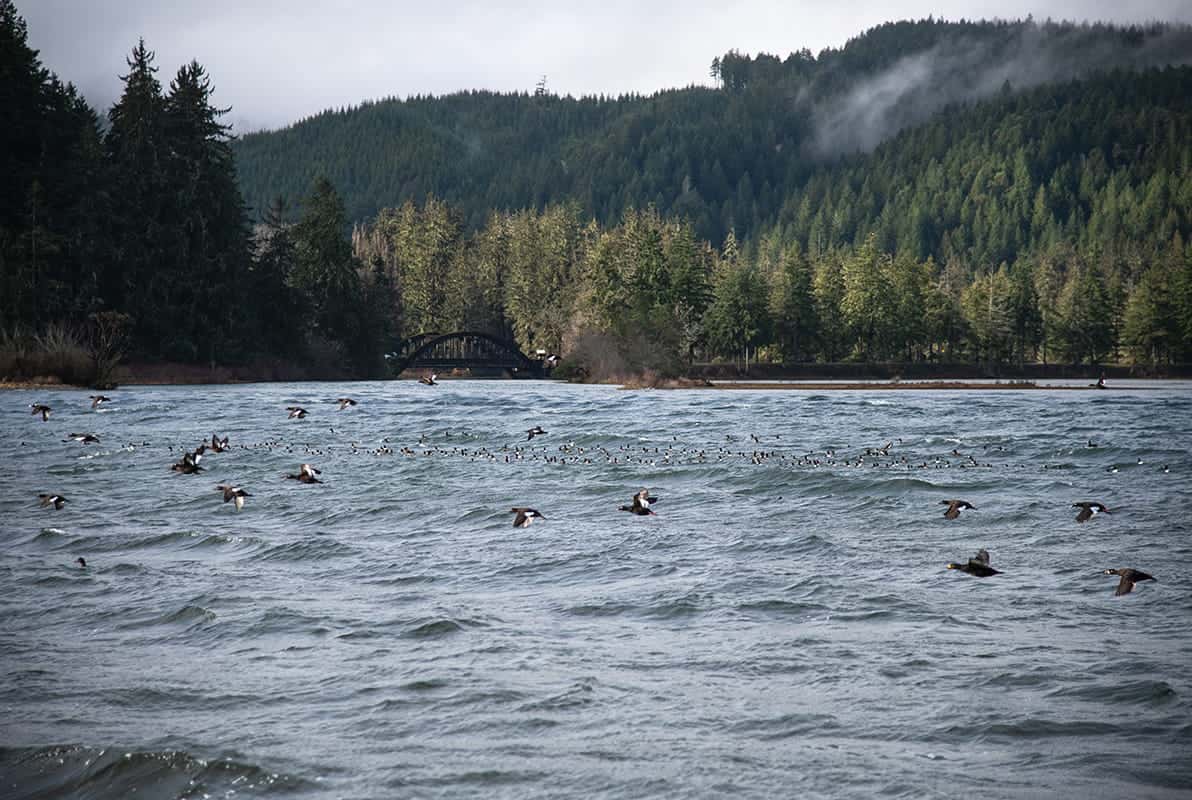
Oyster farming is hard work, and Macias doesn’t sugarcoat it—or give me the idea of a romanticized life he lives. He fell into this work when he met his wife and now business partner, Sara, whose family has been living on and operating a small getaway destination, Mike’s Beach Resort, since the 1950s. After the couple met in 2011, they decided to help manage the resort, adding their own twist to the property by introducing oyster farming in 2016. Now, ten years on, Macias finds peace and a sense of accomplishment in being able to provide a good life for his wife and two young children. He loves educating guests at the resort about oysters through classes, and he finds meaning in the relationships he’s built with restaurateurs and chefs across the region.
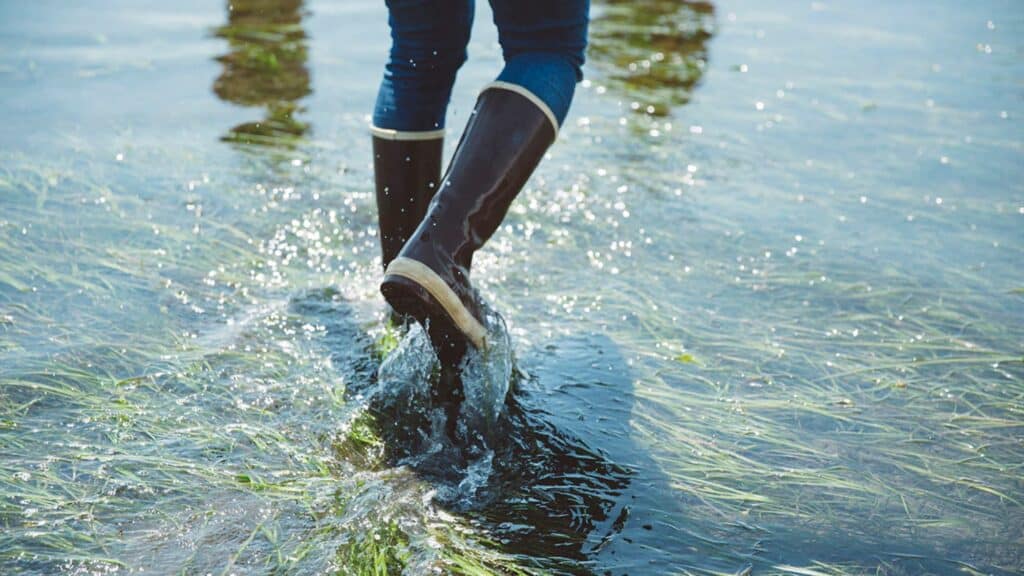
I was expecting Macias to wax poetic about how perfect oysters are and why they benefit the world—a grandiose observation I’ve heard from more than a few chefs—but he had a more pragmatic way of looking at the industry. It’s not easy to wake up at 3 in the morning, he explained—it’s an absolute grind at times—but it’s an honest way to make a living, and he’s extremely proud and lucky to have what he does. “There is something deeply grounding about working in sync with the tides,” he says. “People are drawn to this industry because it’s a ‘boots on the ground’ connection to nature—you aren’t just growing food; you’re participating in an ancient coastal rhythm.”
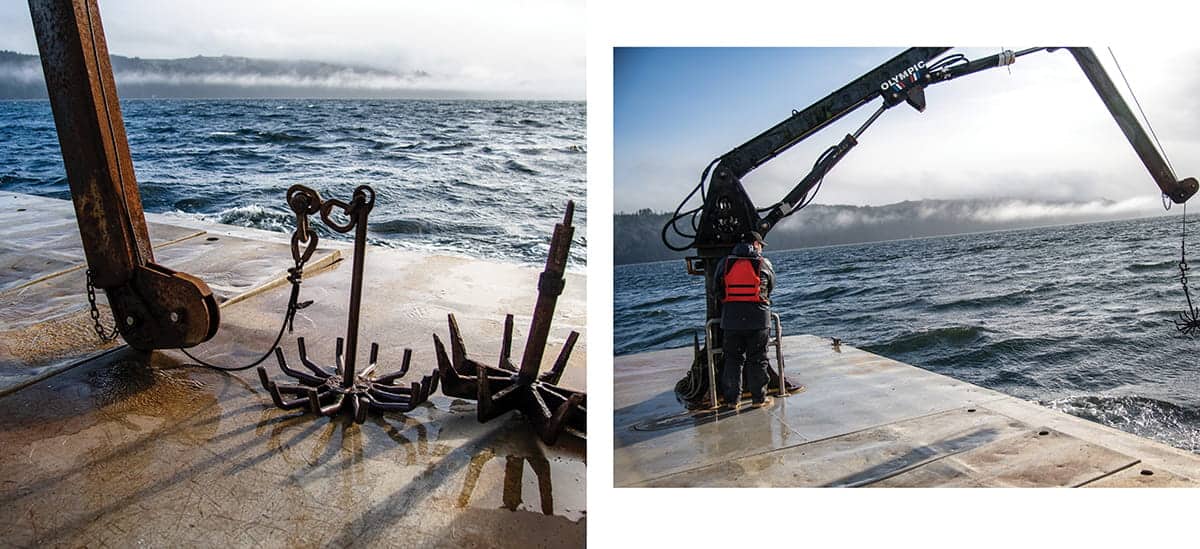
Farther down Hood Canal , at Hama Hama Oyster Company, a fifth-generation, family-owned business, I met with the retail manager, Adrienne Anderson, to get a feel for what it takes to run a slightly larger operation. Most of the oysters at Hama Hama are grown from “seed” (juvenile oysters measuring just 2–25 millimeters in length). This is the most common method for farming oysters. From a hatchery or nursery farm, the seeds at Hama Hama are then transferred to tumble bags, which lie directly on the beach, or are scattered onto the tide flats. Hama Hama’s blog does a great job of explaining how farming oysters comes down to the tides. When the tide goes out, farmers pick oysters and do beach maintenance. When the tide ends, the crew ties a buoy to the crates and bags, so they don’t float away. Finally, when the tides are in, a barge is used to pull up the oysters and take them to shore, where they are ready for consumption or packaging.
“There is something deeply grounding about working in sync with the tides. People are drawn to this industry because it’s a ‘boots on the ground’ connection to nature—you aren’t just growing food; you’re participating in an ancient coastal rhythm.” —Matthew Macias, co-owner of Olympic Oyster Co.
At the time of my visit, Anderson had just moved to the Pacific Northwest from the East Coast, with a background in food media. Part of what drew her to the oyster industry was the chance to work in an intimate environment, closely connected to community and a particular place. She graciously pulled a book, The Essential Oyster, which she did the styling for, from the store and sent me home with it. Simply put, the author, Rowan Jacobsen, calls oyster farms “the greenest protein producers on earth.” According to the World Wildlife Fund, “a single oyster can filter and process up to 50 gallons of water each day,” meaning they greatly improve water quality along coastlines. So, eating oysters (though often a slight blow to the wallet) is not harmful to the planet. In fact, compared to other conventional protein sources, such as beef and chicken, it proves to be the complete opposite.
But the effects of climate change are making it harder to produce oysters consistently. “We are constantly navigating dramatic shifts in water temperatures, seasonality, and market volatility, alongside rising operational costs like permit fees,” says Macias from Olympic Oyster Co. “Farming today requires you to be a risk manager who is deeply attuned to the ebbs and flows of the environment.”
One of the problems in the Pacific Northwest oyster industry is people’s desire to eat oysters in the summer, when the warm weather and extended daylight call for gathering outdoors. Unfortunately, at this time of year, oysters are traditionally at their worst for consumption. If you’ve lived in the PNW for any length of time, you’ve probably heard the old quip about oysters being best to eat in the “R” months (months with the letter “R” in their names). It turns out, there’s something to that. Oysters spawn in the summer, using their energy for reproduction, rather than for producing a sweet taste. Luckily, many farmed oysters are spawned in hatcheries, meaning they can stay fresh year-round. However, according to the aforementioned author and journalist Rowan Jacobsen, he’s “yet to meet the oyster that wasn’t at its peak between November and January.”
Increasingly warmer summers in the region mean more difficult work conditions for oyster farmers and a harder environment for growing oysters during heat waves. According to a 2022 article written in High Country News about Taylor Shellfish Farms, the largest shellfish farm in America, based in Bow, Washington, raising baby shellfish in the midst of warmer summers is harder than ever. In 2021, temperatures rose higher than 100 degrees in the region, “spark[ing] a massive oyster die-off, both at farms and in the wild,” the article states.
Despite the challenges of farming oysters and their resulting high prices, particularly at restaurants, the demand for these briny bivalves remains high. “Oysters, nutritional nobodies, can cause people to part from their economic senses in a way generally reserved for drugs and sex,” Jacobsen writes in the introduction to The Essential Oyster. Perhaps, as the folks at Olympic Oyster Co. believe, consumers are looking for new ways to connect with their food, rather than in a traditional fine-dining setting. “The future for us is about opening the oyster farm to the public and allowing people to consume right at the source,” Macias says.
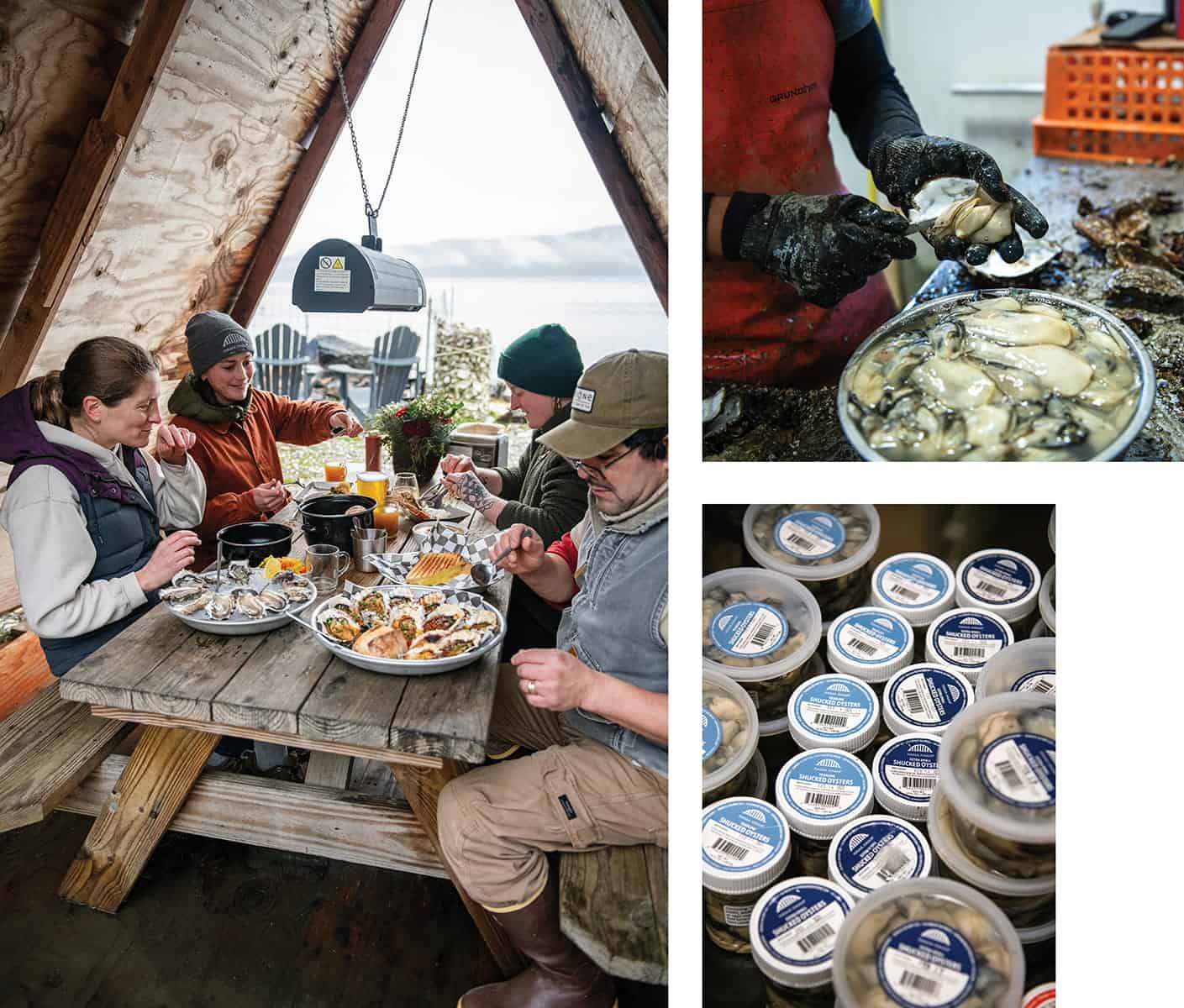
As I sat with a plate full of freshly shucked oysters at Hama Hama, my feet were planted just steps from where my food came from. For me, consuming oysters is a sensual experience. I like to eat them without lemon or mignonette, tasting the “merroir” (a term coined by Jacobsen, similar to how terroir is explained in the wine industry, but instead describing the taste of the sea). It feels increasingly difficult to find moments of real connection to our food and where it comes from, but gazing out at the still canal, watching farmers gliding around on a steel skiff, working the oyster beds, gave me a real feeling of being grounded. I could see the lapping water from which my food had just been pulled, and I could taste the source in every delicious, briny slurp.
Driving back along highway 101, passing bald eagles feeding on the shores of Hood Canal on a crisp autumn day, I found myself daydreaming about being an oyster farmer. Wouldn’t it be so simple and so pure? How romantic it sounds, and yet, how difficult and volatile the industry truly is. I guess, like with anything, there is a balance between hard work and success, often impacted by fickle forces outside of human control (weather, market demand, a fluctuating economy).
I kept returning to the image of Matthew Macias at Olympic Oyster Co., sitting on the tailgate of his truck with his son and daughter, smiling the huge, satisfied grin of someone who is extremely proud of what he does. In a world where people spend so many hours hunched over their glowing screens, he is a man who is sincerely in touch with the land, the water, and the seasonal cycles that bring us the food we so easily enjoy. While it’s not a life for everyone, I thought, perhaps it’s a type of awareness we should all strive to incorporate into our routines—even if that just means taking a moment to appreciate the origins of a freshly shucked, salt-tinged oyster waiting to be slurped.
Follow Us

Restaurant Roundup: 3 Pearls and Restaurant Week Redux
Here’s what was served up recently in the Emerald City.
When something tastes good, you gotta go back for seconds—and that’s exactly what we’re doing for this fall’s Seattle Restaurant Week, Oct. 18-31. Building off a successful spring spread, this edition brings back curated menus at various price points ($20, $35, $50, and $65) at restaurants, bars, cafes, and pop-ups across the greater Seattle area….

House Special: A Taste of Ecuador at Bad Chancla
Chef José Garzón brings a coastal Ecuadorian classic to his 335-square-foot Capitol Hill kitchen, where he hopes to introduce more dishes from home.
There is not much room at Bad Chancla. The bright pink walk-up on East Olive Way seats a handful of people elbow to elbow, mostly outside, and the kitchen behind the counter is small enough that chef and co-owner José Garzón can talk to you while he cooks. Garzón grew up between Guayaquil and the…

Opening Night: GoodMart Makes Lunch Feel Like Luxury
Victor Steinbrueck, owner of Fremont’s acclaimed Local Tide, opens his second seafood-centric restaurant in the heart of Ballard.
On a Thursday afternoon I was able to walk right up to the counter at GoodMart on Ballard Avenue and order lunch, which surprised me. GoodMart is owned by Victor Steinbrueck, who opened Local Tide in Fremont during the height of the pandemic (August 2020) and built it into one of Seattle’s most acclaimed seafood…

Where to Warm Up With a Drink This Fall and Winter in Seattle
From swanky speakeasies to a cozy literary bar, these spots serve inventive cocktails and zero-proof options.
Seattle’s drearier days are slowly arriving, but it’s not all gray and gloom from here. Finding a cozy spot to warm up is part of the trick to enjoying the darker, colder months. The right place lets you bring a friend, a book, a journal, or simply yourself, and let time pass by. Whether you…