





Fashion
Read More ›
How a Move to Italy Changed Everything for Seattle Designer Angeline Brunk
The former Luly Yang designer followed her curiosity abroad and came home ready to launch her namesake fashion line.

This article originally appeared in the September/October 2026 issue of Seattle magazine.
Angeline Brunk thought she was planning an European vacation at the end of 2022. Then another thought arrived: “What if I didn’t come back?”
Within months, the Seattle fashion designer had sold nearly everything she owned and moved to Italy. She didn’t have a business plan. She wasn’t enrolling in one of the country’s prestigious fashion schools. Instead, after more than a decade designing bridal gowns at Luly Yang, she decided to follow a feeling that it was time for something new. She would study Italian, she decided, then immerse herself in the country’s design culture—and trust that her next chapter would reveal itself.
Friends asked if she was embarking on an Eat, Pray, Love-style journey of self-discovery, but Brunk says she was after something else.
“The difference is she went to go find herself,” she says of author Elizabeth Gilbert. “I felt like I knew myself. I was going to discover my next steps.”
Those steps didn’t emerge from a carefully crafted five-year plan. Instead, they materialized through curiosity.
After arriving in Florence, Brunk started learning Italian and, for the first time in years, untangling herself from the relentless pace of the fashion industry. Then she started attending Italy’s renowned trade shows. Not because she knew exactly what she was looking for, but because she wanted to see what was possible.
She visited exhibitions devoted to tailoring, knitwear, and eventually garment technology, where companies serving luxury fashion houses like Gucci and Valentino politely wondered why a Seattle couture designer interested in one-of-a-kind gowns had shown up at all.
“They were looking at me like I was crazy,” Brunk recalls. People kept asking: “‘Why are you here?’”
Sometimes, she wondered the same thing, but she decided to stay curious. That decision would ultimately reshape her career.
At one technology trade show, a man working in apparel innovation kept asking why she’d come. Years earlier, he finally explained, someone had generously helped him while he was developing new technology in Silicon Valley. Turns out, he wanted to return the favor, and offered Brunk his email for advice.
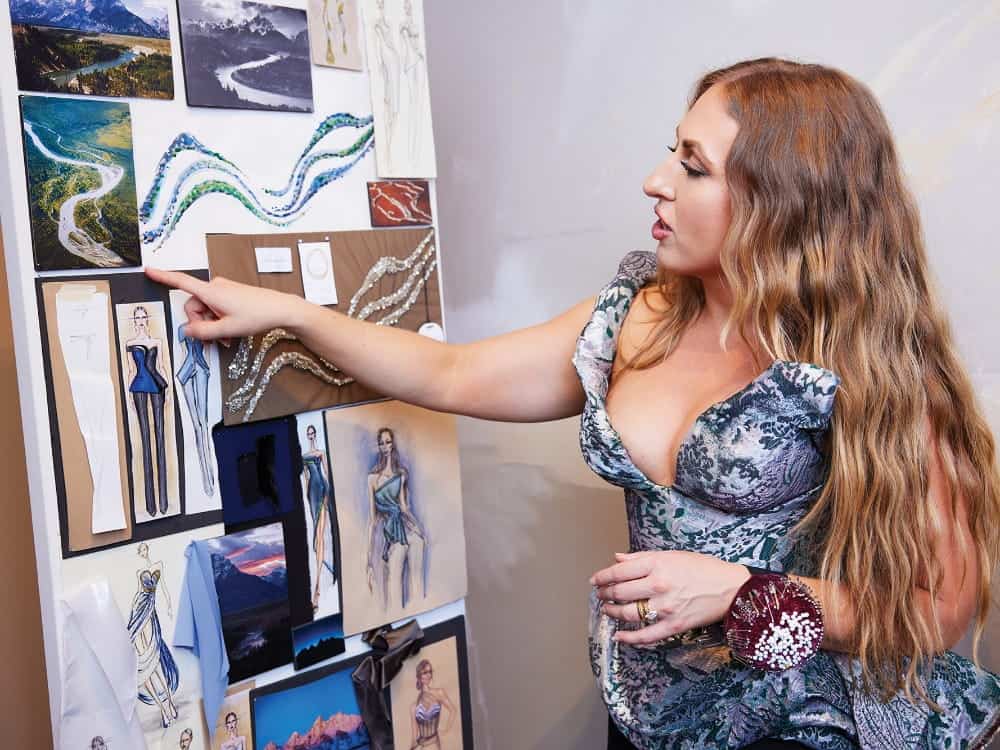
After the show, Brunk emailed asking if he knew anyone who could produce the kind of highly specialized couture work she envisioned. He responded with an Excel spreadsheet filled with contacts—a roadmap for an industry into which breaking in is notoriously difficult.
Visiting the tradeshows in italy also revived an idea Brunk had back in Seattle. A few months before leaving the country, she’d been struggling through a particularly challenging project in the styling room when she turned to her seamstress with what felt like a ridiculous question.
“If we could just sculpt the garment,” she remembers asking, “would it make everything easier?”
“She looked at me like I was crazy,” Brunk says. “And I thought it was crazy, too.”
But in Milan, as Brunk visited a company experimenting with seamless garment construction, she suddenly realized the question she’d asked back in Seattle might actually have an answer.
That moment became the beginning of Bodice Tech, Brunk’s proprietary construction method that replaces much of traditional cut-and-sew bodice crafting with a sculpted, seamless foundation made using thermoforming and bonding techniques. Today, it allows her gowns to achieve an exceptionally precise fit while dramatically reducing the need for alterations that typically consume time, money, and creative energy.
Getting there, however, required hearing one word over and over again: “No.”
Manufacturers told her the technology wasn’t designed for one-of-a-kind couture. Engineers explained why it couldn’t work. Sewing rooms raised practical obstacles. But each time she was given an objection, Brunk saw a way through.
“I’m like, ‘Great. Tell me why.’ And then I’ll solve that,” she says. “Instead of being discouraged by the ‘no,’ it’s actually like, ‘Oh, I can’t wait to hear what your no is.’”
It’s part of a mindset shift, she says, that has been the biggest adjustment in going from employee to entrepreneur.
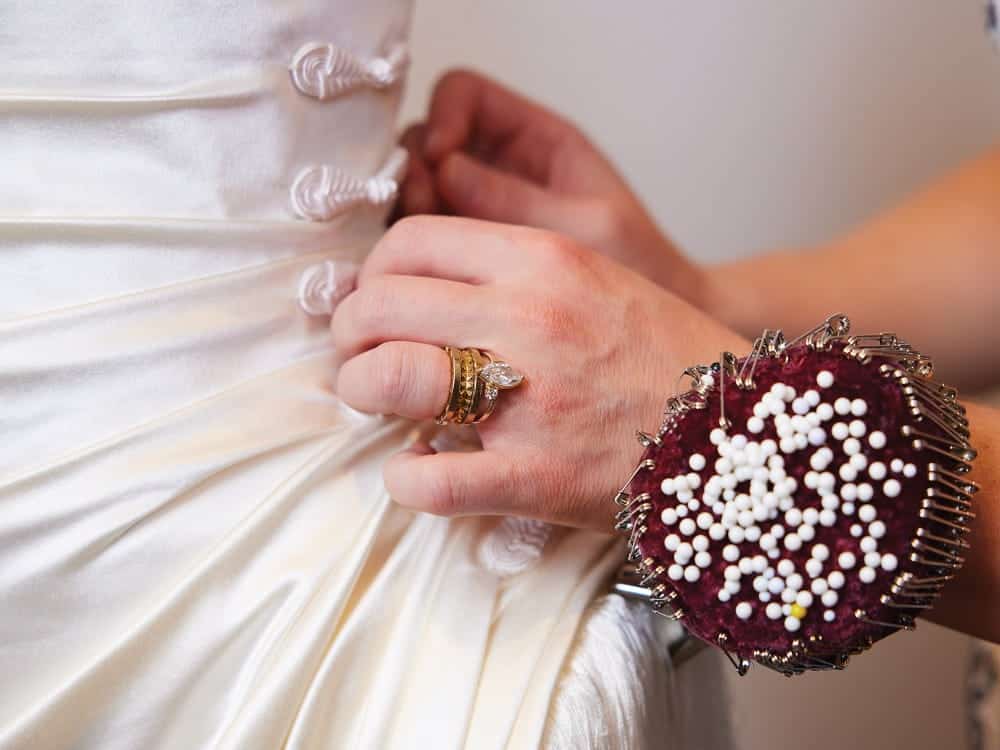
“I think the mindset is the most challenging thing,” she notes. “If you can get on top of your mindset, then you can do it. … Oftentimes opportunities are disguised as challenges. And most companies come [about] because of some challenge, right?”
Back in Seattle, Brunk began experimenting with existing materials in entirely new combinations, eventually developing Bodice Tech herself. The timing proved unexpectedly perfect: shortly after returning, she got engaged, giving her the opportunity to design and test the new construction method on perhaps the most important garment she’d ever make—her own wedding dress.
“Designing, especially in bridal and formalwear, is such a transformative process. you really go through this journey with the client, and with yourself.”—Angeline Brunk
“The timing was just so fortuitous because I got to explore and develop with a natural deadline and a real occasion, and I got to experience what the bride was going through,” she explains.
The resulting dress, on display over the summer in the middle of her studio in Chophouse Row, features a sleeveless swirl of white silk and sequins, with delicate beads dripping off the shoulders like icicles, or like the rain that Brunk says is a constant source of inspiration.
She also created looks for her mother (inspired by a sunset in Verona), sister, and other members of the wedding party, discovering that the new Bodice Tech process performed exactly as she’d hoped.
For Brunk, though, innovation alone has never been the goal.
“Designing, especially in bridal and formalwear, is such a transformative process,” she says. “You really go through this journey with the client, and with yourself.”
That collaborative spirit is something clients mention again and again.
Andrea Barber, who first worked with Brunk while she was at Luly Yang before becoming one of the first clients to wear a gown incorporating Bodice Tech, says, “We bounce ideas off each other, making changes along the way, so it’s a very flowing process. She always makes me feel great and [as though] we’re a team during the whole design process.”
For bride Carie Fowler Antonelli, who commissioned three looks from Brunk for her wedding in the Cotswolds, the experience was equally memorable.
“Angeline made me feel confident, considered, and creative from start to finish,” she says. “She made me feel like my ideas were woven in, my insecurities were considered, and my strengths were highlighted.” The resulting trio of looks included a clean, seamless bridal corset worn with repurposed skirt, a metallic champagne-hued draped gown, and a mink-colored silk charmeuse halter-top gown. Both Brunk and Antonelli delighted in using luxurious fabrics from Italy. “Watching her elicit structure and movement from a single length of silk was mesmerizing,” Antonelli says.
Brunk hopes to bring that same spirit of collaboration to Seattle’s fashion community as she opens her first showroom in downtown Kirkland later this year. She talks less about building a luxury label than about creating opportunities for the skilled local seamstresses, dressmakers, and craftspeople whose expertise makes couture possible, but who often struggle to find opportunities.
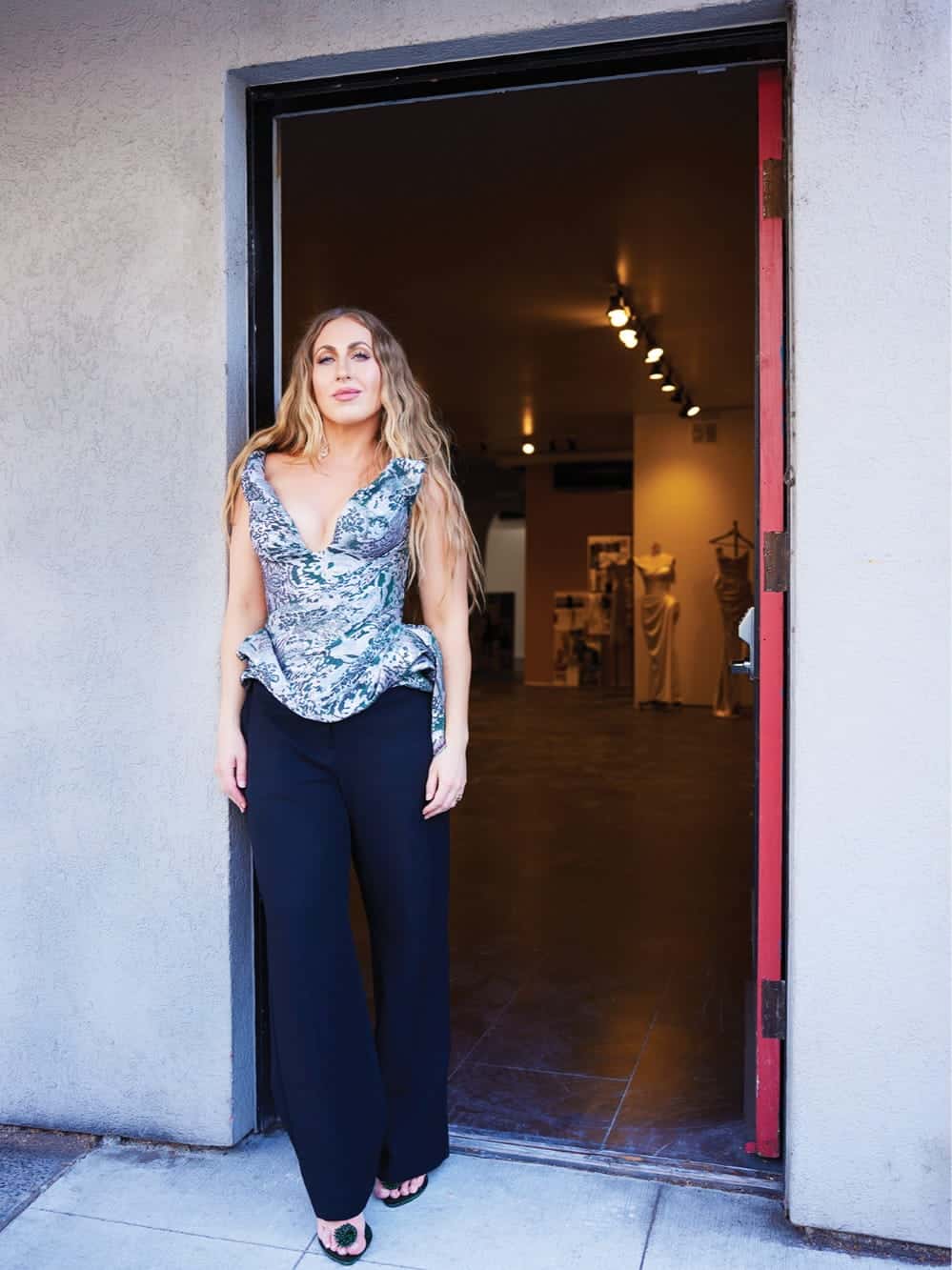
“That drove me a lot more than making clothing for the sake of making clothing with my name on it,” she says.
In the end, it’s tempting to describe Brunk’s success as the result of trusting her instincts. But her story suggests something more deliberate. Every major turning point—from moving to Italy to inventing Bodice Tech—began not with certainty but with curiosity. She kept asking questions, kept listening to the answers, and kept treating every obstacle as the beginning of a conversation rather than the end of one. It’s that openness, and that tenacity that have become key to her success—and that have made her clients grateful she did come back from vacation after all.
Follow Us

Styled Child: Meet Seattle Kidswear Brand Rapozza
From a basement startup to a Pacific Place boutique, the family-run label is making colorful children's clothing with staying power.
For Rapozza, a locally owned and designed children’s clothing brand, the phrase “moving on up” describes the company’s evolution in more ways than one. Founded by Brenda Palomino in 2023, Rapozza launched from a basement with online sales, then jumped to local makers markets, and most recently, opened its first brick-and-mortar location in Pacific Place….

Umbrella Policy
Northwest threads.
Nine years after meeting at Bumbershoot, Cam Russ and Marcus McFall launched a clothing company with Northwesterners on their minds. Called It’s Always Wet in Seattle, the line of sweats and beanies is available in colors reflecting the locale—Orca Black, Lake Union Blue, and Cascade White. Fun details include upside-down umbrella zipper pulls (a wink…

Gift Guide: Meaningful Gifts, Made Easy
Gifts designed to be worn, loved and remembered, year after year.
Images courtesy of Ben Bridge Jeweler Ikuma Diamond Zodiac Necklace Our Ikuma Zodiac Collection celebrates the celestial beauty of every sign. Each pendant traces its constellation in diamonds and gold, capturing the wonder of the night sky in a piece that’s as personal as it is timeless. Toscano Gold Freeform Earrings Striking in shape…

Seattle’s First Outdoor Fashion Week Lands in Pioneer Square
The new festival connects Seattle’s heritage brands with its creative future.
Seattle has never been a fashion capital in the glossy-magazine sense. But the city has always dressed for adventure. Filson built its reputation during the Klondike Gold Rush, REI grew from a neighborhood co-op, and local designers are pushing sustainability in ways that are distinctly Northwest. This is what sets the stage for Seattle’s first…