





Arts
Read More ›
Seattle Once Banned Underaged Dancing — This Podcast Explains It All
Written by local journalist Jonathan Zwickel, Let the Kids Dance traces the origins and legacy of Seattle’s Teen Dance Ordinance.
 By Rachel Gallaher-Zenz August 27, 2024

Nearly 40 years ago, in 1985, the city of Seattle passed Ordinance 11237, the Teen Dance Ordinance (TDO) — a piece of legislation that essentially banned teen dances outside of schools and barred anyone under the age of 18 from attending a concert without a chaperone. If visions of a young, tank-top-clad Kevin Bacon clandestinely rage-dancing around an abandoned warehouse are starting to edge into your mind, then you’re not far off from reality.

The wildly misguided TDO was enacted to allegedly “protect” young Seattleites, but instead, it ushered in the city’s own Footloose era that took away spaces for teens to gather and enjoy their favorite bands. With a disparate cast of characters — famous rock musicians, hip-hop artists, puritanical politicians, and school-age misfits looking for ways to hear music and hang with their friends — the story of the TDO is lengthy, complicated, and, at times, downright unbelievable.
Earlier this spring, journalist Jonathan Zwickel dove deep into the history and lore of the TDO, releasing Let the Kids Dance, a KUOW podcast docuseries that looks at the politics, culture, and activism in Seattle during the mid-1980s to early 2000s — all in relation to the inception, and eventual repeal, of the law. Zwickel first heard of Ordinance 11237 in 2007. He had moved to Seattle that year after being recruited by The Stranger to run the paper’s music section. One of his first assignments was a story about the opening of the Vera Project’s permanent all-ages space on the Seattle Center campus, for which he attended the opening party.
“I didn’t know anything about the Vera Project or the TDO,” Zwickel says. In 2016, he joined the organization’s board and is the current board president. “At the time, I wasn’t even that tapped into the concept of an all-ages music venue. The opening was a huge party, and hundreds of people showed up. The energy in the room was ecstatic, but it was lost on me why that moment was so important to Seattle. I had to ‘crash-course’ myself to understand the backstory and why it was such a big deal.”
After a year at The Stranger, Zwickel was let go, landing first at the Seattle Times, then City Arts (full disclosure: Zwickel was one of my editors when I freelanced for the publication), where he stayed for eight years before the magazine closed. Over that decade, Zwickel became one of the region’s premier music journalists, and the more involved he got with the creative community, the more he encountered seemingly disparate threads that wove together to form the complex story of the TDO.
“It was probably around 2012, and I was working on the liner notes for a Light in the Attic (a local record label) compilation about funk and soul music in the ’60s and ’70s in Seattle,” Zwickel says. “While doing that research, I learned about the Monastery, a landmark nightlife location that was a lightning rod for attention. It was cherished as a place to dance to incredible sound systems, with DJs coming from all over the West Coast, but it was also a haven and a safe space for young, queer people who were feeling unsafe or under pressure at home from parents who disapproved of their lifestyles.”
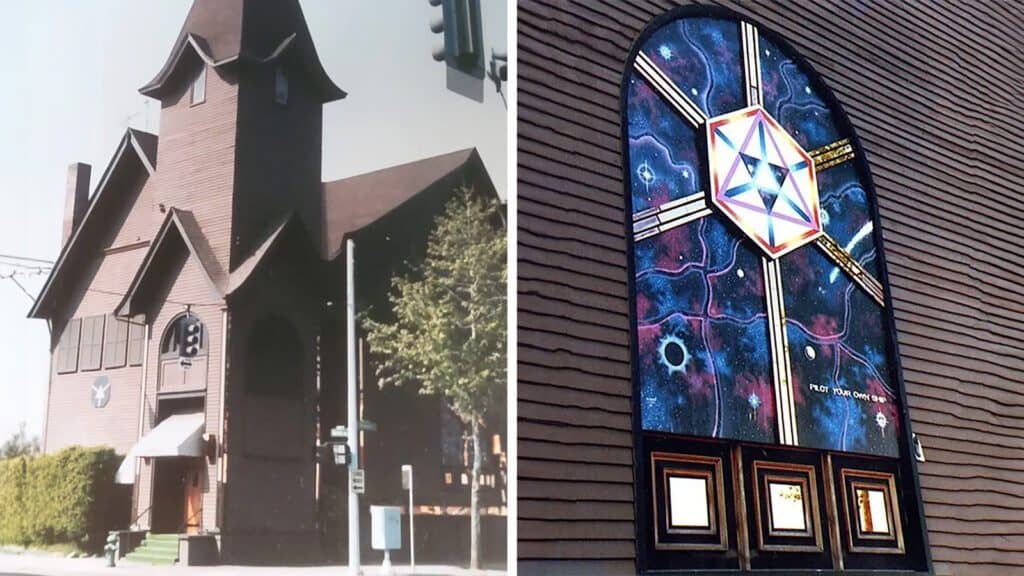
While Zwickel lists many factors that led to the TDO, The Monastery sits at the heart of the story’s beginning. Opened in 1977 by George Freeman — who owns the often wildly lit house with the “Science is God” sign on the west side of Capitol Hill — the nightclub occupied a former church on the corner of Boren Avenue and Stewart Street. With all-night parties and an open-arms policy, the space attracted a lot of “misfits,” including a spate of teen runaways. This garnered the attention of authorities. During the 1970s, around 5,000 youths lived on the streets of King County, and in 1985, led by county Prosecutor Norm Maleng, the city issued a civil abatement against The Monastery, citing prostitution, underage drinking, and drug use to shut down the establishment. That year, the city passed the TDO which, in addition to laying down strict limitations for all-ages shows, required venues to have two off-duty police officers on premises and $1 million in liability insurance.

which opened downtown in 1978.
What followed — clandestine shows, the rise in popularity of all-ages venues such as the Old Redmond Fire House and Ground Zero in the suburbs outside of Seattle, a whole lot of grass-roots activism by bands, their fans, and other music-loving Seattleites — is meticulously reported in the podcast, spanning seven episodes. (A bonus episode featuring a live recording of a recent round table between Zwickel, Ben Gibbard, and curator/promoter Lori LeFavor at Easy Street Records is slated to be released later this month.) According to Zwickel, he originally planned to pitch the idea as a long-form magazine piece, but as he kept researching and digging, more archival audio and video material kept popping up.
“As more of this ephemera kept emerging, it made it clear to me that a magazine article wasn’t the best way to tell the story,” he says. “Instead, I thought about harnessing all of those bits and pieces I found online into a podcast. So many of the main characters are still alive and able to tell the story in their own words.”
Not to mention the music. Zwickel talked to more than a dozen people, including George Freeman, musicians Chris Walla, Sean Nelson, Rocky Votolato, Paul Uhlir, and King County Creative Economy Director Kate Becker, among many others, each of whom had a unique experience with the repercussions of the TDO. In addition to recorded audio clips, Let the Kids Dance features original music by local artists Ryan Devlin and Kim West of Smokey Brights and mega cat.
While prior attempts to repeal the TDO were unsuccessful, in 2002 the Seattle City Council approved the All-Ages Dance Ordinance, which replaced the TDO, easing age and security restrictions and eliminating the $1 million insurance requirement for venues. After 17 years, Seattle — a city that by the 1990s, had skyrocketed to global fame for its music scene, yet locked out many of its supporters — finally allowed everyone to enjoy the creative community, legally. But even before the overthrow of the TDO, young people in Seattle found ways to make, celebrate, and see art. Zwickel touches on this in the podcast, noting that Seattle has always embraced a scrappy, DIY approach to getting things done.
“Part of the surreal aspect of this podcast is how adults and politicians got it so wrong,” he says. “That they said ‘no,’ and just expected so many people to obey, as if they could stamp out the impulse of creativity or the impulse to gather around music. You can pass this law, but, of course, you saw the young people finding innumerable ways to connect with music and each other.”

Whether it was house parties, backyard shows, or neighborhood block parties, teenagers found a way to keep the music alive, express their ideas, and make their voices heard — all with the same grit, determination, and awareness that still permeates Seattle’s youth culture today.
Let the Kids Dance is available through multiple streaming services. To access the series or learn more about Zwickel, click here.
Follow Us

SENSORIUM Takes on Our Screen Addiction
Dance, drag, and immersive art collide in an eight-week exploration of our phone-obsessed lives, with a few surprises along the way.
What do drag queens, smartphone addiction, art installations, and an old luggage shop have in common? According to longtime Seattle choreographer Alana O’Farrell Rogers, a lot. “There’s no dead time anymore,” says Rogers, explaining how the proliferation of smartphones fills the empty spaces that once served as time for rest or connection. Where we snuggled…

Salt-N-Pepa on Breaking Barriers and Staying Power
Ahead of their performance at Seattle’s Museum of Pop Culture gala, the hip-hop pioneers talk about creative ownership, connecting with new generations, and the songs that still resonate.
The Museum of Pop Culture (MOPOP) will host its annual ICONS of Pop Culture Gala in Seattle on October 22, honoring five artists and institutions whose work has helped shape entertainment and culture. This year’s honorees are martial arts and film legend Bruce Lee, fashion designer Jeremy Scott, the video game franchise Halo, hip-hop pioneers…

Studio Sessions: Christopher Paul Jordan
Drawing on childhood memories, neighborhood history, and salvaged materials, Christopher Paul Jordan’s latest show at Cornish’s Behnke Family Gallery explores how the past stays with us.
Start in the middle. It’s good advice for telling a story, and a way into Christopher Paul Jordan’s paintings. By the time you encounter them, their materials have already been something else, and who knows what they might move on to become. The Tacoma interdisciplinary artist works with salvaged objects, including screens, picture frames, canvas,…

Rearview Mirror: Wedding Bells, A Furniture Launch, and the Symphony’s New Look
Things I did, saw, ate, learned, or read in the past week (or so).
WEDDING BELLS I’ve been a bit absent from this column lately, but I think I have a pretty good excuse: I got married! It’s already been three weeks since my September 19 wedding, but I’m still reflecting on the magic of the day. My fiancé, well husband now (I can’t get used to saying it!),…