





Music
Read More ›
A Historic Quilcene Farm Finds Its Rhythm
The former dairy property hosts Tarboo—now in its third year—a family-run music festival built around Northwest artists.

Like a speakeasy, The Quilcene Lantern is hidden in plain sight.
To get there one must traverse some of our state’s most iconic majesties: the Olympic Mountains, the Washington State ferries, (and the tater tots onboard), the Hood Canal Bridge, to name a few. However, instead of venturing further toward the charm of Port Townsend or the grandeur of Olympic National Park, there is a nondescript turnoff along Highway 104 worth taking. From there, one crosses a tired old wooden bridge and enters one of the state’s newest havens for music, community and lodging. Unlike a speakeasy, the doors at The Quilcene Lantern are wide open, especially for its annual music festival, Tarboo.
While the massive barn and milking shed have been on the property for almost 100 years, the de Koch family has only been there since 2024. What started as a retirement project brainstorming session became a family-wide endeavor that would steer them from Seattle, New York, and Port Angeles to the lush greens of Quilcene.
“Laurie and I were talking about how we’d retire but we didn’t think we could just quit our jobs and do nothing,” says Steve de Koch, “We did a bunch of camping in our camper and we thought, it would be cool to buy a campground or an RV park and do all the maintenance.”
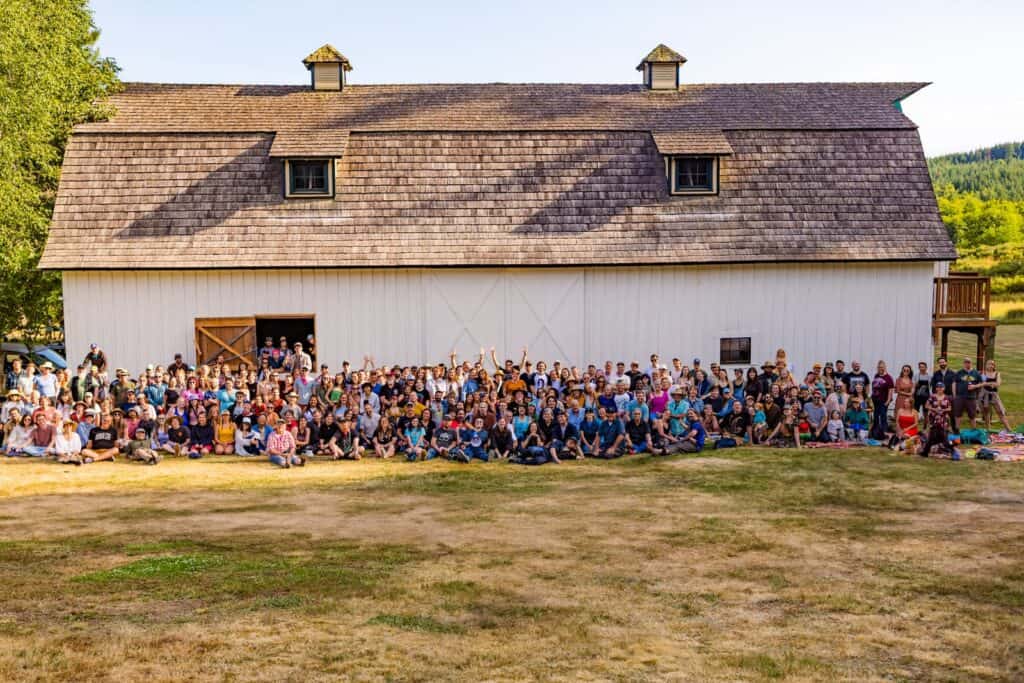
Who better to employ for all of the upkeep than their sons, Willem and Bergen. “On a family trip in 2023 my parents were spitballing ideas for their retirement vision. They were thinking about a decade or more in the future,” says Willem de Koch. “But at the same time, I was really burned out on living in New York and playing music with The Westerlies, so I was kind of looking for a chapter change.”
With a little family-fueled fire underneath them, Steve and Laurie started rolling the idea around in earnest. One day over drinks with friends someone told them they knew a lady who might be selling some land. The property turned out to be 53 acres with a gargantuan barn and numerous cabins in various states of habitability. The Iseri family operated the property as a farm and dairy until the onset of World War II, when they were incarcerated along with all other Japanese immigrants and Japanese Americans in the area. Unfortunately, The Iseris never returned to their land in Quilcene. In the 1980s the historic barn became a well-known venue for classical music. Shortly after hearing about the property, the de Kochs approached the owner, ready to start a family project.
“We kept walking through the open doors,” says Willem. “It all happened way faster than any of us anticipated.”
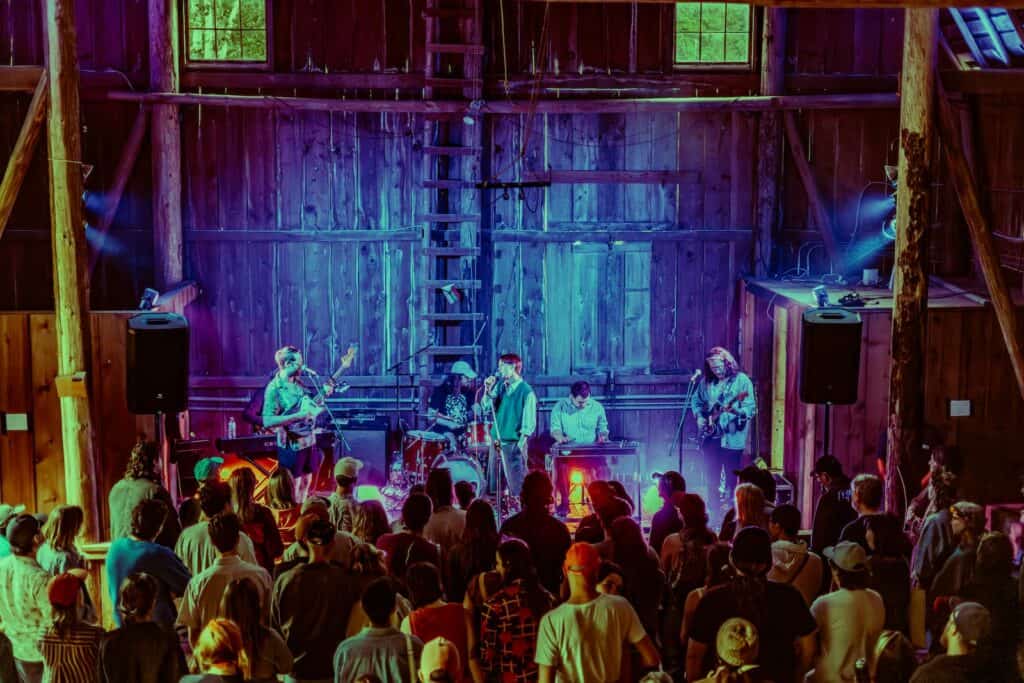
They were able to move onto the property in January of 2024, and the de Kochs employed every skill and talent they had accrued over their four lives. Father: Steve, builder and architect. Mother: Laurie, navigator of permits, licensing, and logistics. First son: Willem, musician and arts manager. Second son: Bergen, media specialist and carpenter. They had five months to get the property into shape before a multiweek concert series followed immediately by their first Tarboo Music Festival.
“Originally Tarboo was just going to be a grand opening for the Lantern but I wanted it to highlight Pacific Northwest artists, in general and Olympic Peninsula artists, in particular, ” says Willem. “No one moves to the Peninsula to become famous. It’s this sleeper cell of amazing musical talent.”
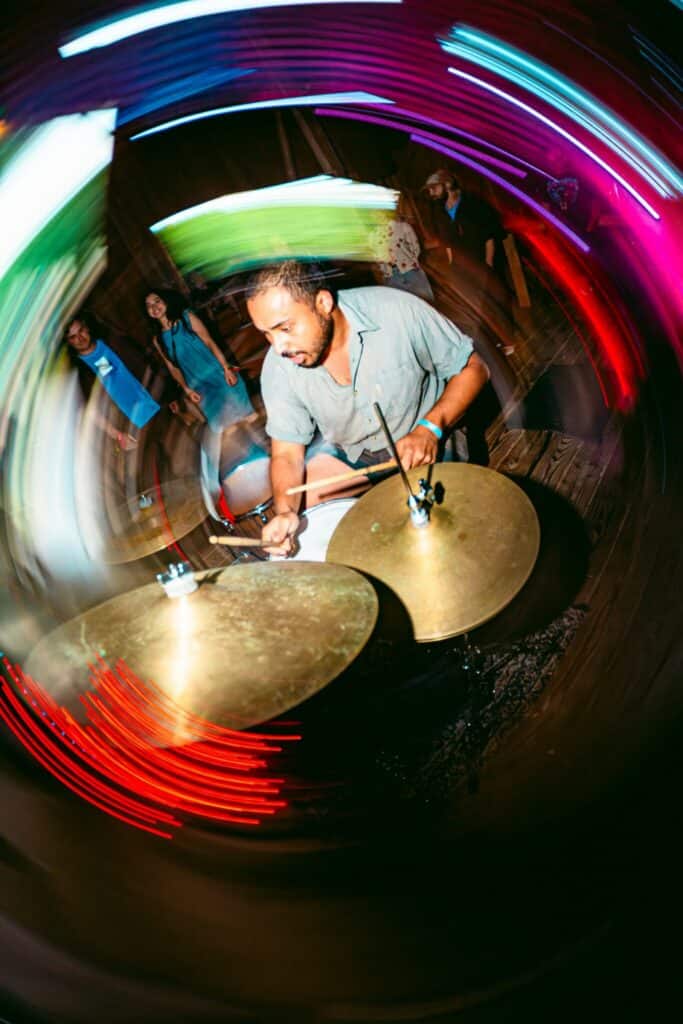
The de Kochs worked tirelessly retrofitting cabins, wrestling septic improvements, and setting up a business from scratch. Their hope was to create a destination venue in a lesser-traveled part of the state for artists. “If you’re on tour, you’ll play Seattle, Portland, maybe Olympia or Bellingham,” says Willem, “For a certain level of artist there wasn’t a lot of infrastructure out here. Part of the intention was to connect touring acts with the music scene that’s happening here.” The weekend of the first annual Tarboo arrived and the de Kochs were more surprised than anyone to see it go off without a hitch.
“The first year we had some people say, this is the best organized music festival we’ve ever been to,” says Willem. “We had huge imposter syndrome. Behind the scenes it was literally just me, my mom, my brother, and my dad and a couple of close friends running the show.”
“On one of those first nights there were people up late jamming around a campfire and Willem and I were literally screwing the doors shut because we didn’t have locks for the doors to the venue,” says Bergen. “There’s still a DIY or punk element to it that’s scrappy and just making it happen.”
Despite, or perhaps thanks to, the seat-of-the-pants nature of year one, Tarboo grew into itself almost immediately. “Tarboo is special in a way that’s very intimate and homegrown,” says Bergen. “It’s a place where you can have these really tangible lasting connections with people and stand out against an isolated world where we’re endlessly being sold things.”
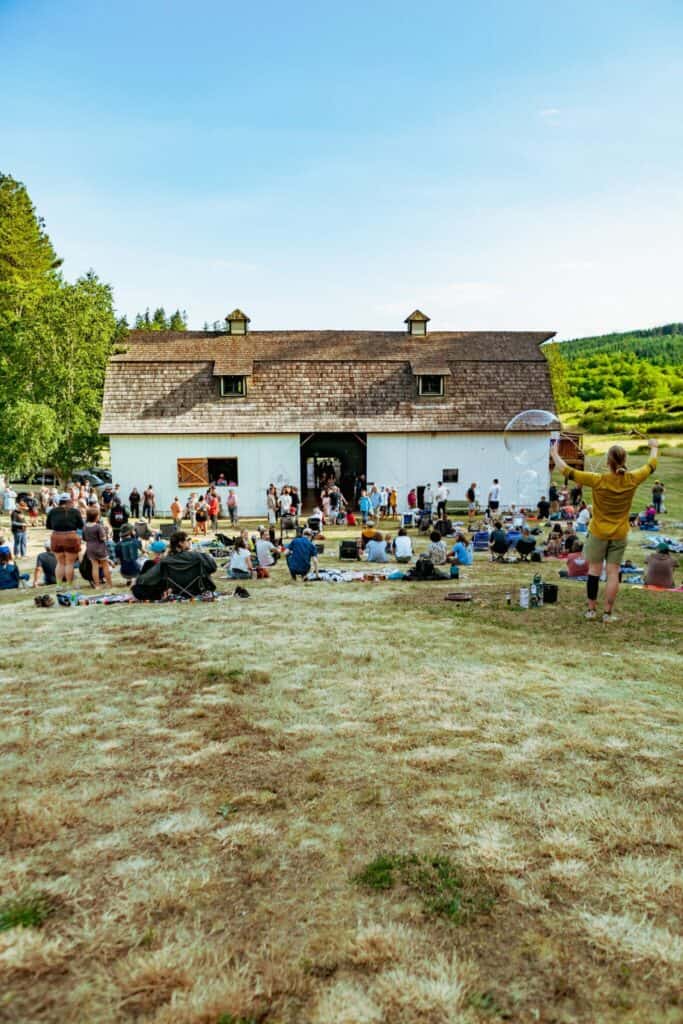
After a career in the nonprofit arts sector in Seattle focused on music education for young people, Laurie was touched to see the resonance of Tarboo in action. “The headliner, Kate Davis, came for the full festival and spent the three days connecting with folks and building community,” says Laurie, “by the time it was her turn to play, it was the last night—the final act. The crowd was so joyful and supportive, and there was such a deep connection between her as the artist on stage and all the people in the room, and you could just really feel the give and take of the energy and the camaraderie.”
The second year of the festival, the de Kochs streamlined the event. Well-known names such as Blind Pilot were joined by lesser-known artists from the Peninsula and around the Northwest. “The lineup is intentionally discovery oriented,” says Willem, “we want people to discover new music and make new friends, not necessarily because they’re going to see their favorite band play a headlining slot.” For artists on the Olympic Peninsula, the festival also brings energy to the region. “It’s a real pleasure to be a part of that lineup. It merges a lot of the biggest regional and super local, up-and-coming talent,” says Kai Dakers of the band, Lotion, who performed at the first two Tarboos.
While the de Kochs are new to the region, they’ve made a tangible impact on the local arts scene. “It’s easy to have an attitude when people move from somewhere else and set up their business. I think oftentimes people don’t do the hard work of understanding the community,” says Dakers, “but I think everybody in the Quilcene music scene and peninsula music scene feels that having this place here is a big game-changer, and has impacted the greater music scene very positively.”
Unlike previous July renditions of the festival, this year Tarboo will be held August 21-22. While Dakers won’t be performing at Tarboo this year, he’ll certainly be in the audience for one of the headliners, La Luz. “I’ve lived here a long time and the idea of seeing a band of that caliber here in Quilcene was just unthinkable before the de Kochs and the Lantern.”
This year’s lineup includes Alela Diane, La Luz, JRCG, and Coral Grief. For tickets and more information, visit www.quilcenelantern.com/tarboo.
Follow Us

Get Blown Away: Seattle’s Glass Art Scene Takes Center Stage
Now in its 8th year, Refract Seattle is the region’s premier celebration of glassblowing—arguably the most famous visual art genre in the Pacific Northwest. Pioneered by names like Dale Chihuly, Ginny Ruffner, Lino Tagliapietra, and Preston Singletary, glassblowing has remained among the area’s most prolific creative outputs, with contemporary talents such as John Hogan, Julie…

Kishi Bashi Is Ready to Feel Everything
Ten years after Sonderlust pushed his music in a new direction, he’s bringing the pivotal album to The Crocodile—and playing it in full for the first time.
Back in March of 2012, I snagged a last-minute ticket to see Of Montreal at the Showbox. As amazing as Kevin Barnes and company were, along with tourmates Deerhoof, the biggest impression made on me was the opener, Kishi Bashi. Armed with little more than a violin, a loop pedal, and a pristine voice, Kishi…

Seattle’s Artists of Color Expo Offers an Inside Look at the Creative Life
The October 9-11 gathering features live art-making and hands-on workshops, with Seattle artist Damon Brown delivering the keynote.
More than 100 artists participate each year in Seattle’s Artists of Color Expo & Symposium (ACES), which brings exhibitions, artist talks, live art-making, and workshops under one roof. Visitors can learn a technique from an artist or hear how a childhood memory became the starting point for a piece. This year’s event takes place October…

Seattle Author Kristen Millares Young Follows Her ‘Desire Lines’
Blurring the lines between desire and expectation, her debut memoir explores what women inherit, sacrifice, and claim for themselves.
In her debut memoir, local author Kristen Millares Young dives straight into precarious experience of being a woman. Blending myth, history, personal essay, and travelogue, Desire Lines (Red Hen Press), out October 6, is an unflinching look at the challenge of balancing one’s own desires with the demands of motherhood, marriage, and work, and the…