




Features
Read More ›
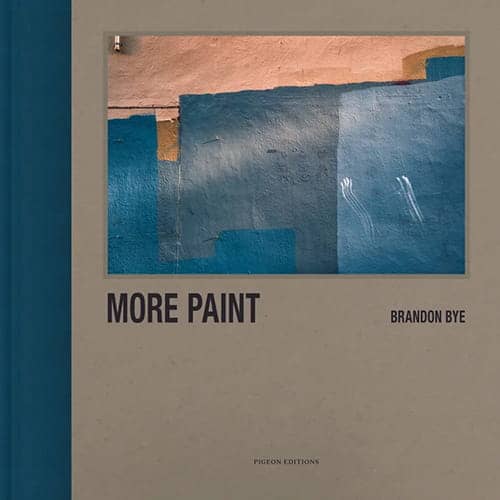
Photo Essay: More Paint
Words and photographs by Brandon Bye.

This article originally appeared in the May/June 2026 issue of Seattle magazine.
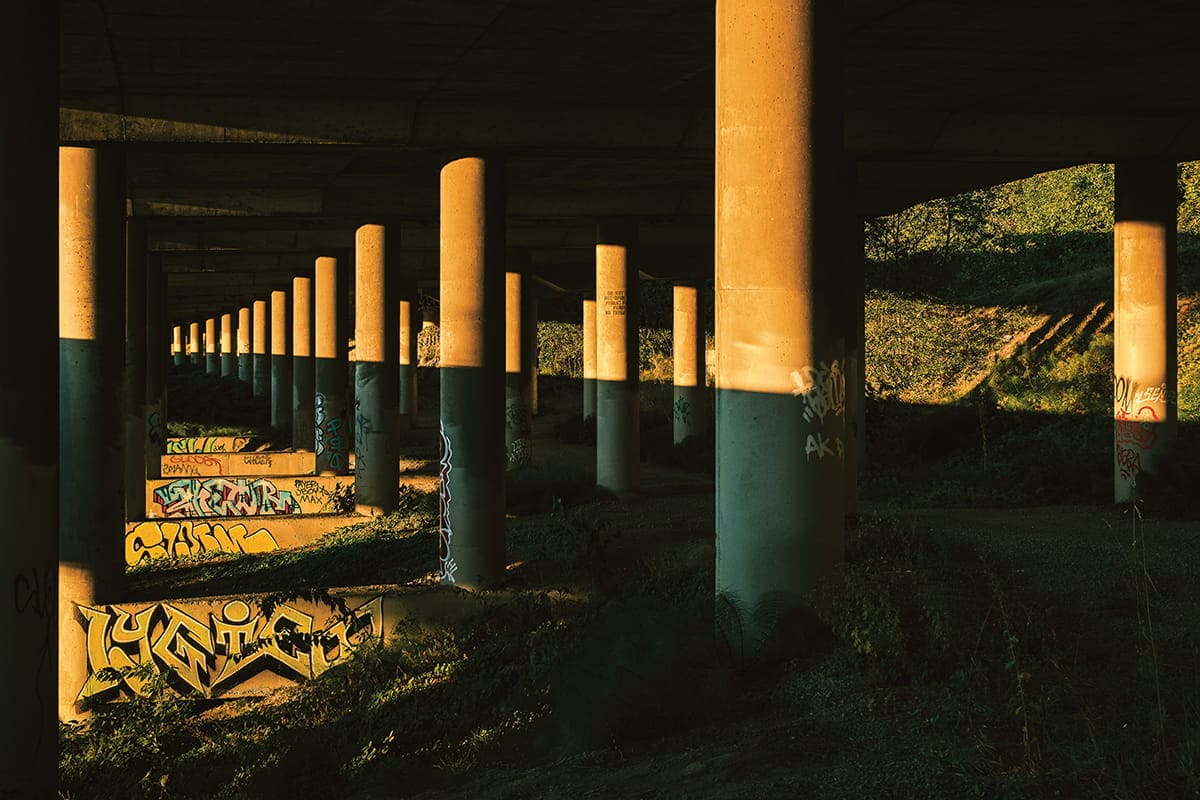
Graffitti is the doorway. At its core, my book More Paint, observes how cities manage public space and how policies, population growth, and daily life intersect and splinter. Far before the inner alchemy of interpretation reaches a boil, much of the world enters us through the eyes. Our environment speaks. This work listens in an effort to read the landscape and translate what it is saying.
In 2023, I spent time in Buenos Aires with a pair of graffiti writers who go by no me baño—Spanish for I don’t bathe myself. Their pieces, which cover countless exteriors, are often large-scale and feature the face of a fly. The works appear alongside people living on the streets, unintentionally framing scenes of poverty that have long been metabolized into the city’s visual field. Homelessness there—everywhere, really—is purgatory in plain sight, and the pattern suggests that clearing encampments only lasts so long. Today’s squalor becomes tomorrow’s standard.
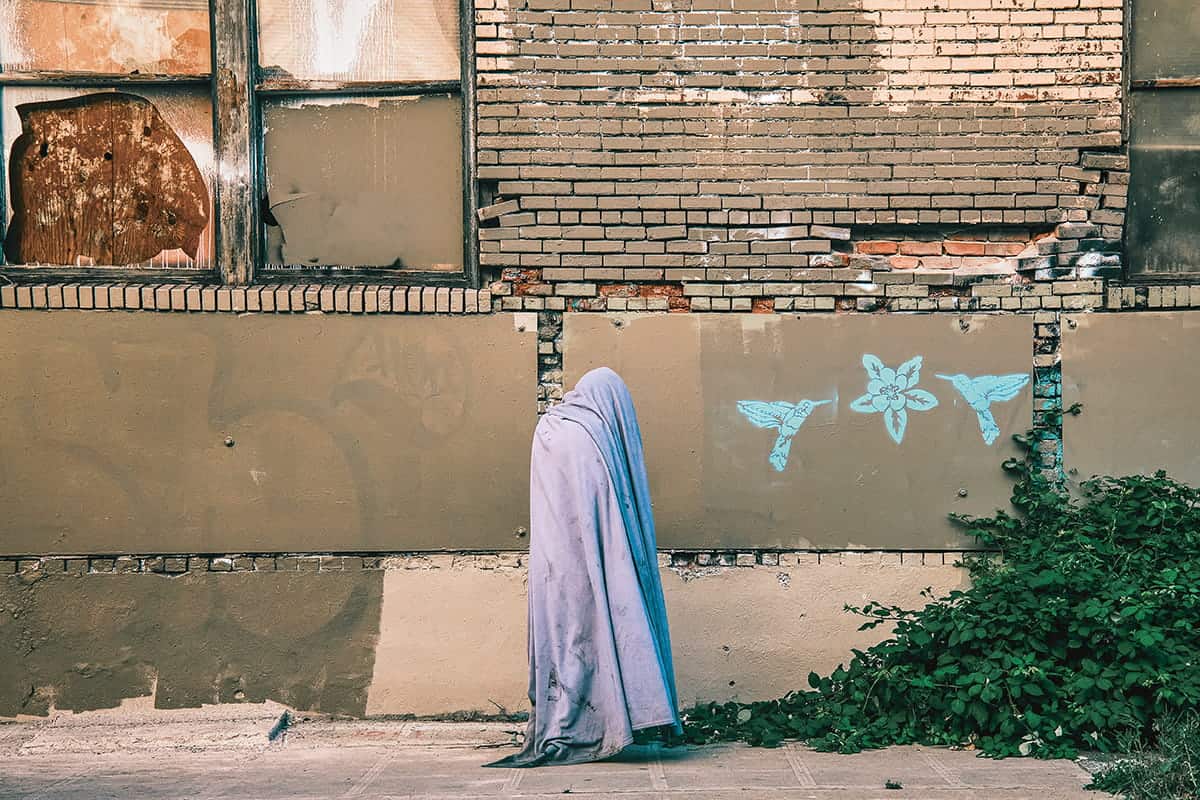
In 2026 in America, the effects and realities of urbanization are no longer confined to metropolitan centers. Graffiti and homelessness are increasingly visible in midsize cities and small towns, too—and they’re symptoms. Signals. Proof that the ecosystem is under strain, the result of reaping and sowing. Cause and effect. Evolution pulling in all directions, toward comfort and toward hardship. A force, neutral and unrelenting. Cover-ups and encampment sweeps are a cosmetic relief in response to increasing pressure—instincts around ownership, safety, and territoriality, amplified by the cumulative effects of civilization itself.
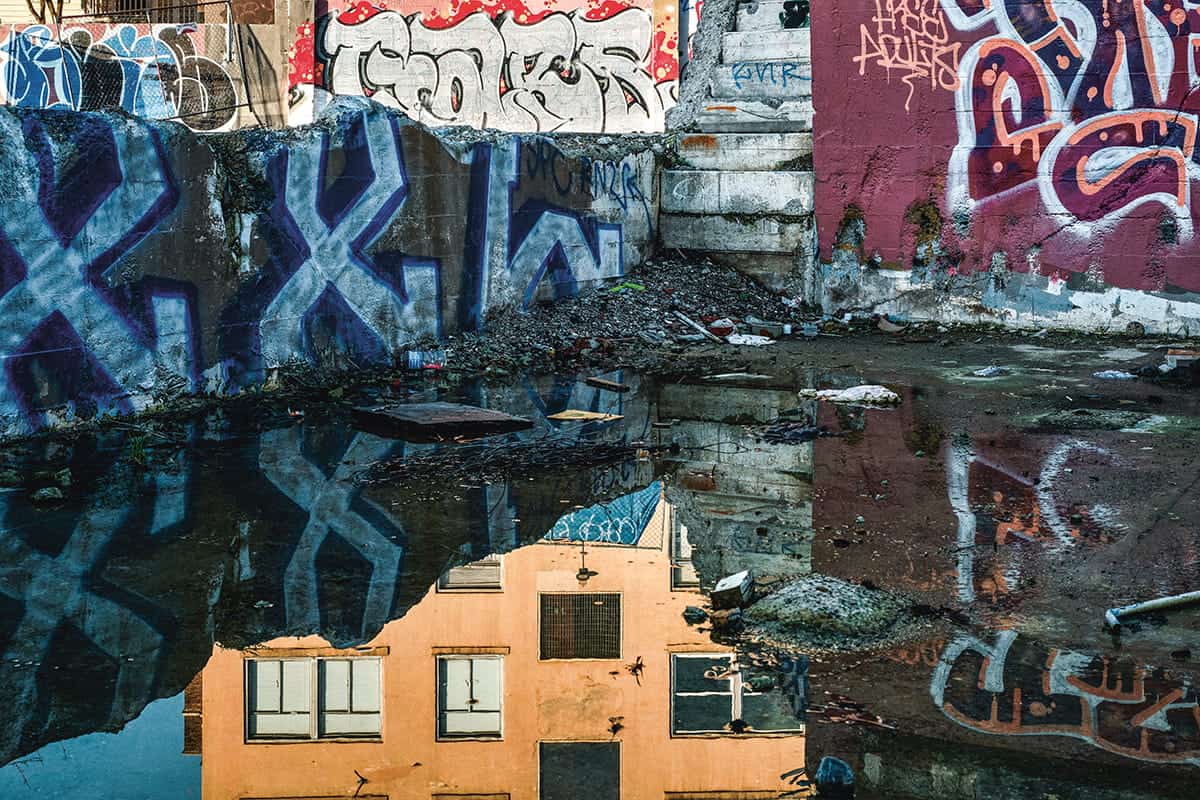
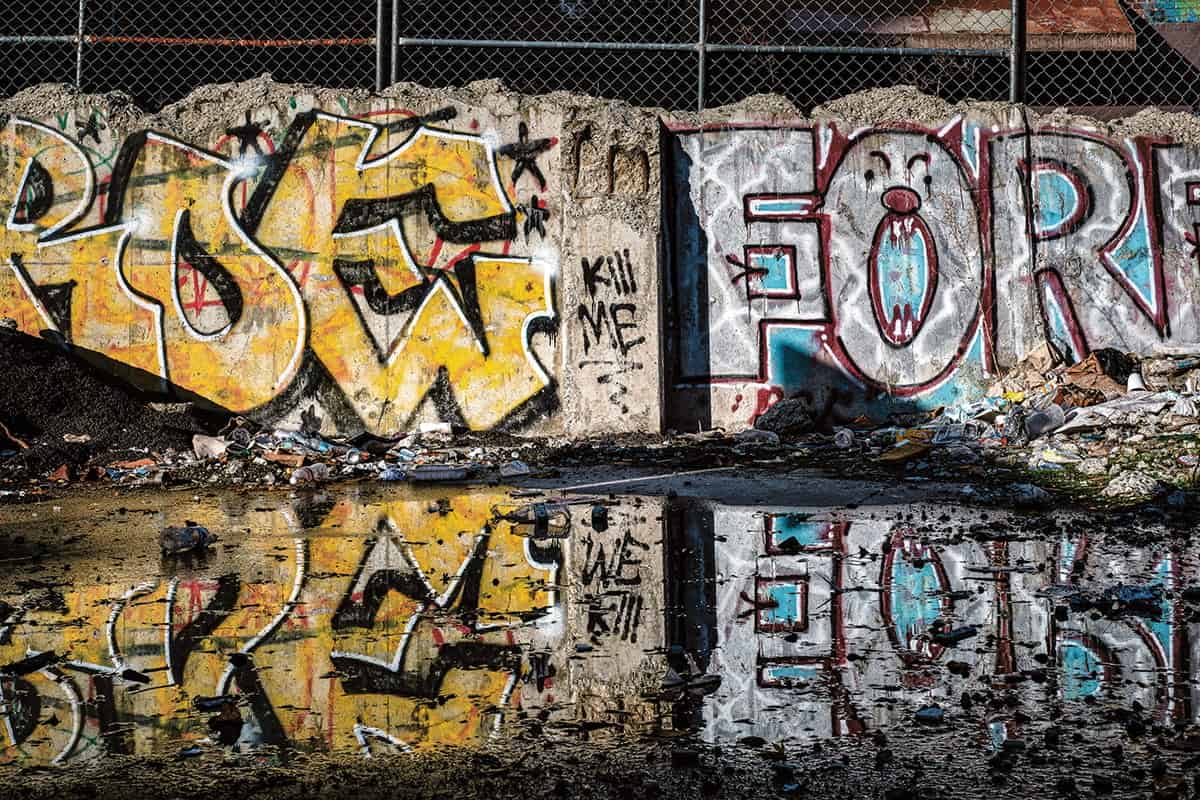
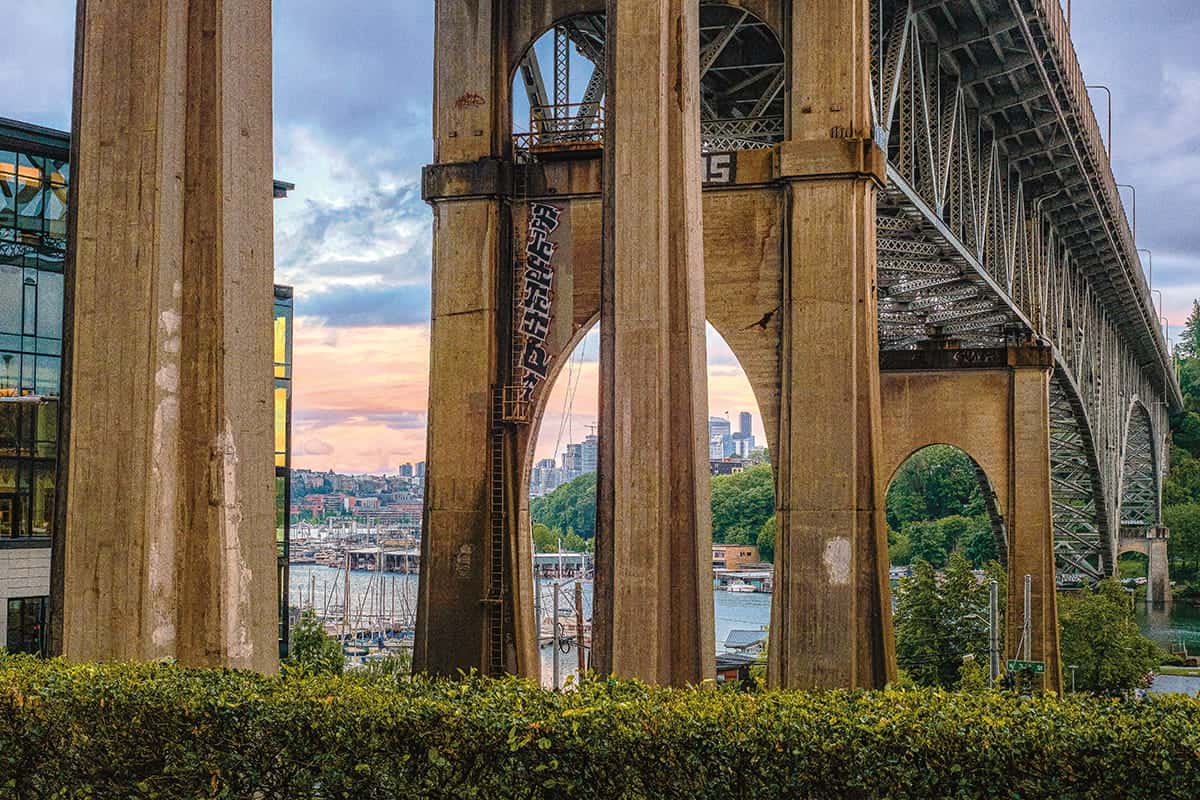
The city, the world, is an organism, innocent in a sense, its skin shedding and growing all the time. Streets and highways get carved in, paved, repaved, then expanded. Buildings are constructed, torn down, and rebuilt. Rubble and scaffolding, scars and mends. Graffiti is part of this process. Some cry vandalism, others claim art. Either way, graffiti marks a moment of transition between what a place is and what it is becoming. Systems and policies shape the city from above, but the evidence of success or failure appears at ground level.
One afternoon, I spoke with a man living in his car, parked in Pioneer Square. His cat, Milo, lay stretched across the rear window bay in the sun, tail flicking, eyelids heavy. Traffic moved past. “We’re poor,” he told me, “not incapable.” Like everyone, the people who live between the streets and the shelters—inside cars and campers and tents, in parks and doorways, on sidewalks—are more than one thing. Yes, many struggle with addiction and mental health issues. Many are down on their luck, caught in cycles they can’t escape. And somewhere back there, all of the people you see on the streets have childhoods.
Critic John Berger wrote that the opposite of living with this world is indifference. To say no to something, we must first say yes—not in endorsement, but in acknowledgment. The street makes that choice visible.
Teslas accelerate past tent cities. If you move fast enough, nothing has to stay in focus. Destitution expands over the surface of convenience, as the streets of Seattle inch toward the Villas of Buenos Aires and the favelas and slums of Rio and Mumbai.
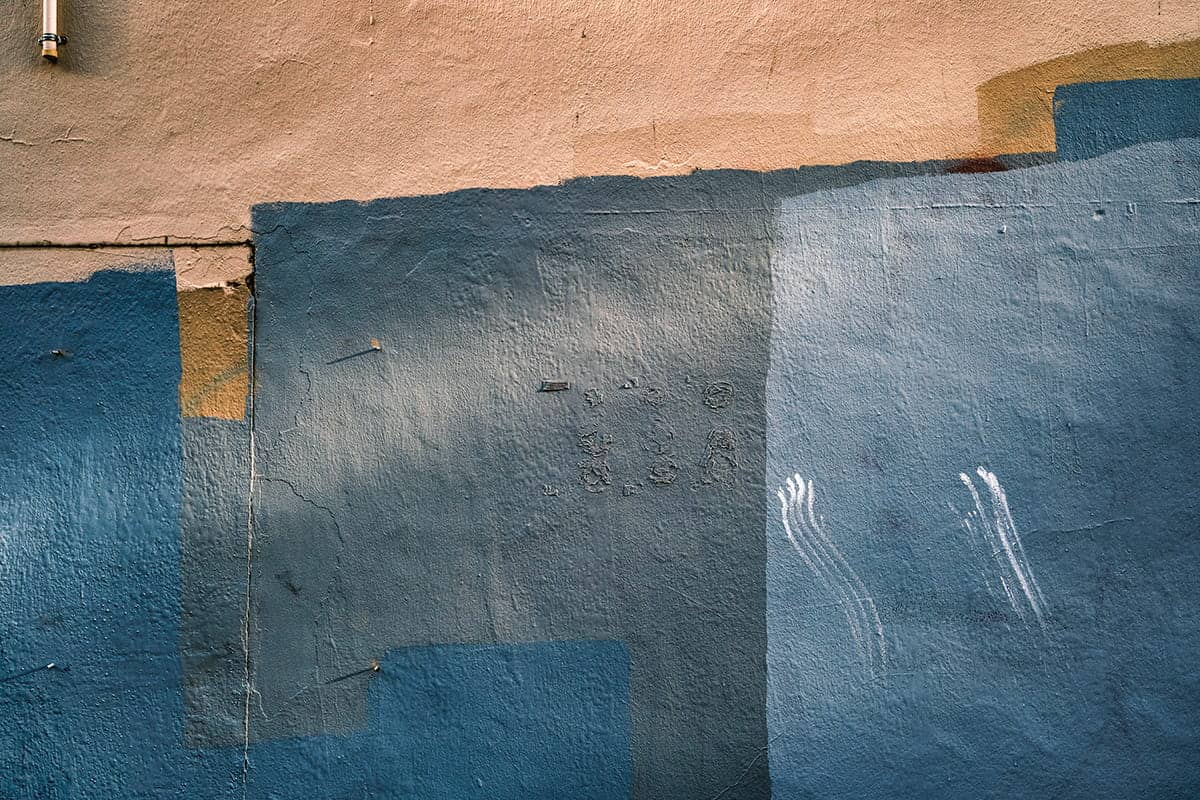
This is landscape photography. It reflects the environment and lays bare Seattle’s struggle for civic control between 2023 and 2025, a time when the population grew by nearly 36,000 residents. With growth comes growing pains: more tents, more tags, and a public caught between looking away and cracking down. City crews clear camps and paint over walls. Laws loosen, tighten, a quickening of the tide. Paint sloshes over private and public property. Blue and gray color blocks cover graffiti. Fresh graffiti replaces the color blocks. New color blocks dispatch.
Although public opinion varies on the subjects presented here, the seesaw teeters on one unanimous, if temporary, agreement—more paint.
More Paint was made possible with the invaluable collaboration of Nate Gowdy (publisher) and Lisa van Dam-Bates (editor), and with grant support from 4Culture. Copies of the book are available at Elliott Bay Book Company, Third Place Books, Arundel Books, and online at brandonbye.com.
To connect with Brandon, follow @morepaintmorepaint on Instagram.
Follow Us

The Bark Benefit is changing lives, one rescue at a time
Every rescue dog has a story.
Tickets for The Bark Benefit are available now. September 19, 2026 | Meydenbauer Center Some animals arrive with broken bones or other medical needs. Others carry wounds that can’t be seen: fear, neglect, or trauma in need of healing. And then there are the dogs who have simply found themselves without a home because life…

From Prison, With Purpose: A Podcast From the Inside
After spending nearly five years incarcerated at the Washington State Penitentiary, Vik Chopra emerged with a strengthened sense of self and the resolve to change the narrative surrounding the justice-impacted community. Now, he runs one of the few prison-produced podcasts in the country.
Meet Vik Chopra, the Seattle visionary behind "Concrete Mama," Washington’s first prison podcast. Discover his journey from incarceration to empowering justice-impacted voices through storytelling.

Powering Progress: Aina Abiodun on Climate Innovation That Serves Communities
As president and executive director of VertueLab, Abiodun is working to make climate tech more equitable, practical, and rooted in real human needs.
Meet Aina Abiodun, VertueLab’s executive director, who is championing equitable climate tech in Seattle and empowering communities to drive innovation.

Five Ways to Make the Most of a Seattle Summer
Rooftop cocktails, rose gardens, waterfront walks, farmers markets, and one very big Seattle Center party.
I have lived in the Pacific Northwest long enough to expect it, and still, late spring catches me by surprise. The mountain returns for the season, suddenly part of the almost-daily view again. The grass isn’t (so) soggy anymore. Dinner can happen outside, and the city gets a little easier to love. Here are five…