





Features
Read More ›
From Prison, With Purpose: A Podcast From the Inside
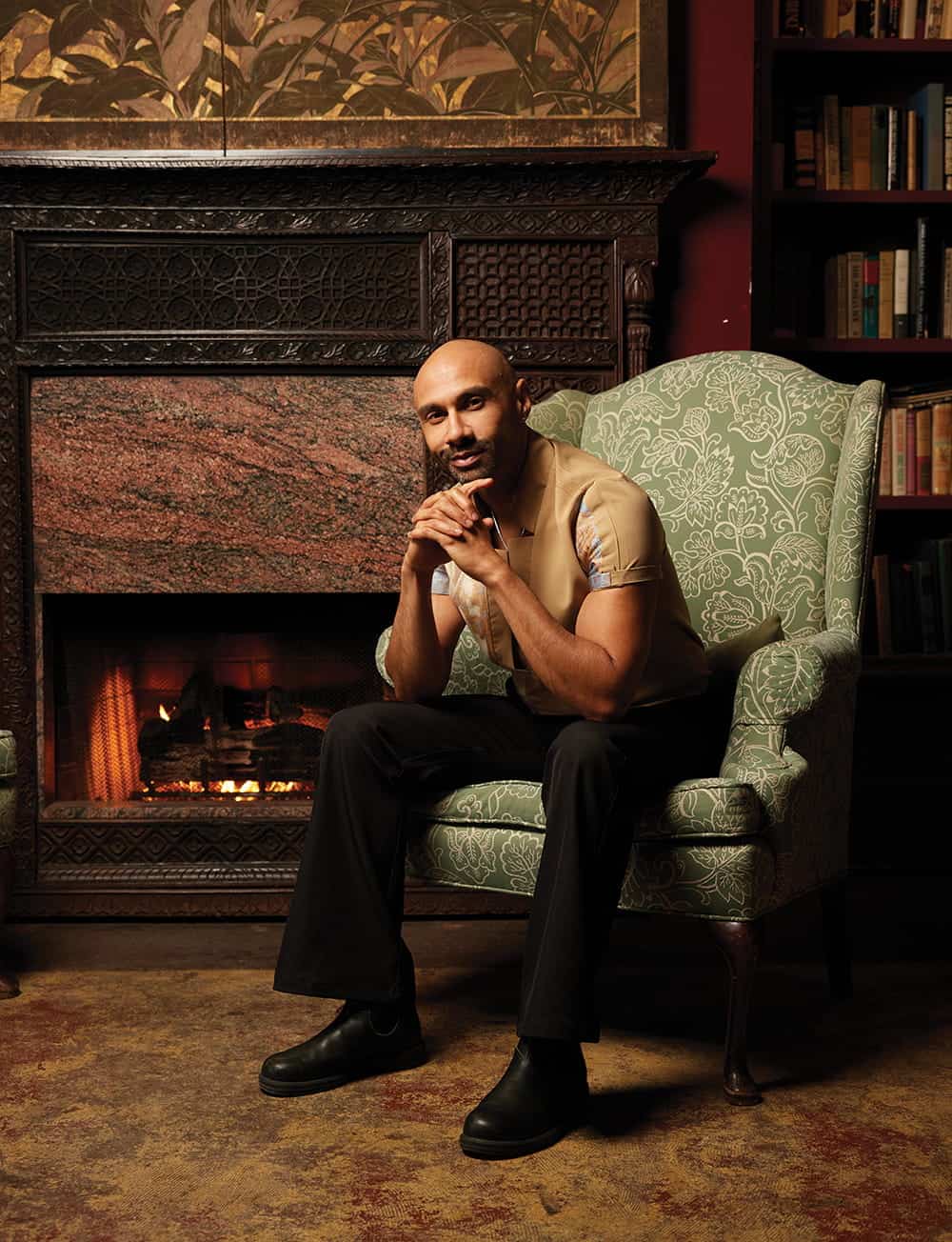
After spending nearly five years incarcerated at the Washington State Penitentiary, Vik Chopra emerged with a strengthened sense of self and the resolve to change the narrative surrounding the justice-impacted community. Now, he runs one of the few prison-produced podcasts in the country.
 By Rachel Gallaher June 15, 2026

This article originally appeared in the May/June 2026 issue of Seattle magazine.
Moment of truth
It was a picture of a woman, spotted as he flipped through a newspaper in the day room at Snohomish County Jail, that caused Vik Chopra to reevaluate his situation. She looked like the wife of one of his friends, someone who had helped connect him with a talent agent when he first started pursuing modeling and acting jobs. That day, Chopra felt calm and clear-headed—he was sober for the first time in years. A few months prior, on March 28, 2013, he and his boyfriend were arrested at the hotel where they were staying, and he was charged with 26 felonies—25 counts of identity theft and a drug charge. That was the last night he had any illegal substances or alcohol in his system. The post-arrest detox had been difficult, but it was the first step toward untangling the mess his life had become.
“There was this weird dichotomy seeing [this person who represented] my previous life and where I was in that moment,” Chopra recalls of that afternoon in the day room. He realized that if he didn’t make some major changes, he was facing a dead end trajectory. “I remember sitting there, looking around, and saying to myself, ‘Look where you’re at right now. What are you going to do about this?’ I didn’t want my story to end there. I decided to take back control and write my next chapter.”
“I never in a million years thought I would end up in prison. But after five years of being incarcerated, I met incredible people. Entrepreneurs and artists, poets and other creatives. And so many of us are just trying to get out and make something better of ourselves.”—Vik Chopra
‘Look where you’re at right now. What are you going to do about this?’ I didn’t want my story to end there. I decided to take back control and write my next chapter.”
At the time, Chopra didn’t realize it, but this shift in mindset, coupled with the resolve to turn his life around, would help him get through 58 months in Walla Walla’s Washington State Penitentiary (WSP)—reduced from 84 for good behavior—and emerge from the U.S. prison system poised to make a difference in the lives of incarcerated individuals across the state, and beyond.
A platform for change
Storytelling comes naturally to Chopra. Warm and open, with vibrant energy and an infectious smile, the 44-year-old filmmaker, producer, and actor is one of the visionaries behind Unincarcerated Productions, a nonprofit media production company he founded with Spencer Oberg, whom he met at the tail end of serving his time. The two men completed their sentences in early 2018 and launched the organization that spring, with the goal of shifting the narrative around the justice impacted community. “I never in a million years thought I would end up in prison,” Chopra says. “But after five years of being incarcerated I met incredible people. Entrepreneurs and artists, poets and other creatives. And so many of us are just trying to get out and make something better of ourselves.”
Unincarcerated Productions is behind Concrete Mama, Washington state’s first prison podcast, which features hosts and guests who are incarcerated or formerly incarcerated, sharing the realities, struggles, and triumphs they experienced during their time in prison, as well as what it’s like to reintegrate with society at large. The series, which premiered in February 2025, secured the #2 spot in the Apple Podcasts ‘Documentary’ category, ranked #13 in the ‘Top Series’ category, and has been downloaded more than 110,000 times. Season two is set to premiere early this summer.
“We want to make sure we’re humanizing the people that are incarcerated,” says Anthony Covert, a current Whitman College student who helped develop Concrete Mama while serving time at WSP. He is one of the show’s hosts and a strong advocate of letting people tell their own stories in the hopes of creating relevant. moments for listeners, whether they are incarcerated or not. “What is real are the emotions you feel,” he says. “Anger, sadness, frustration, happiness, joy, peace—we talk about all those things, and though you may not relate to the situation, you can relate to the feeling, right? It’s more than just telling our stories; it’s us telling our stories in a way to relate to the community.”
The downward spiral
For years, Chopra was the last person you’d peg to go down a path of crime. Growing up in Renton, he was an honors student involved in multiple extracurricular activities, including student government and the multicultural club. While his relationship with his father was strained, his mother was incredibly loving and supportive, and he enjoyed spending time with his siblings. During his teenage years, Chopra started to question his sexuality. Due to the conservative-leaning culture he grew up around, he felt enormous shame that caused him to suppress his true identity. After high school, Chopra enrolled at the University of Washington, where he studied economics and joined a fraternity. “I was still in the closet at the time,” he says, “and struggling with that and trauma from growing up. Sure, I partied, but nothing ever got crazy out of hand.”
Chopra graduated from UW in 2005, worked in entry-level sales for a while, then landed a job at KCTS 9 (now Cascade PBS). In 2009, he started as an account executive at KEXP, helping to secure sponsorships for a project that brought the station’s music to New York. At 24, Chopra had come out as gay, and during his time at KEXP, he was in his first same-sex relationship. “It was the wrong fit right from the start,” he reflects. “We started using [drugs] pretty early on, and that was what started us down the path of addiction.”
Casually popped prescription painkillers turned into street-purchased OxyContin, which became a daily habit. When OxyContin became too expensive, they turned to smoking heroin and meth. Both men lost their jobs, then their housing. They fell in with a crowd of other lost people and resorted to criminal activity, including theft and credit card fraud, to fuel their drug habits.
“At that point, I was just a total shell of a human being,” Chopra says. “I was suicidal. I thought my life was over.” He and his partner continued on the endless conveyor belt of committing crimes to keep using drugs, and inevitably, on March 28, 2013, they were arrested. “That was the last time I ever used, and I always say that was the night that saved my life,” Chopra notes. He has been clean and sober for 13 years.
“Prison is trauma, but you can also find purpose, meaning, and passion again. That’s what it did for me.”—Vik Chopra
After his arrest, Chopra was sent to Snohomish County Jail to await sentencing, a process that can take months or even years, as each side prepares its case. He spent the first couple of weeks in detox and withdrawal, but once he emerged from the drug-clouded haze, he was able to look squarely at where he’d come from—the mistakes, the addiction, the squandered potential—and pivot toward a tentatively hopeful future.
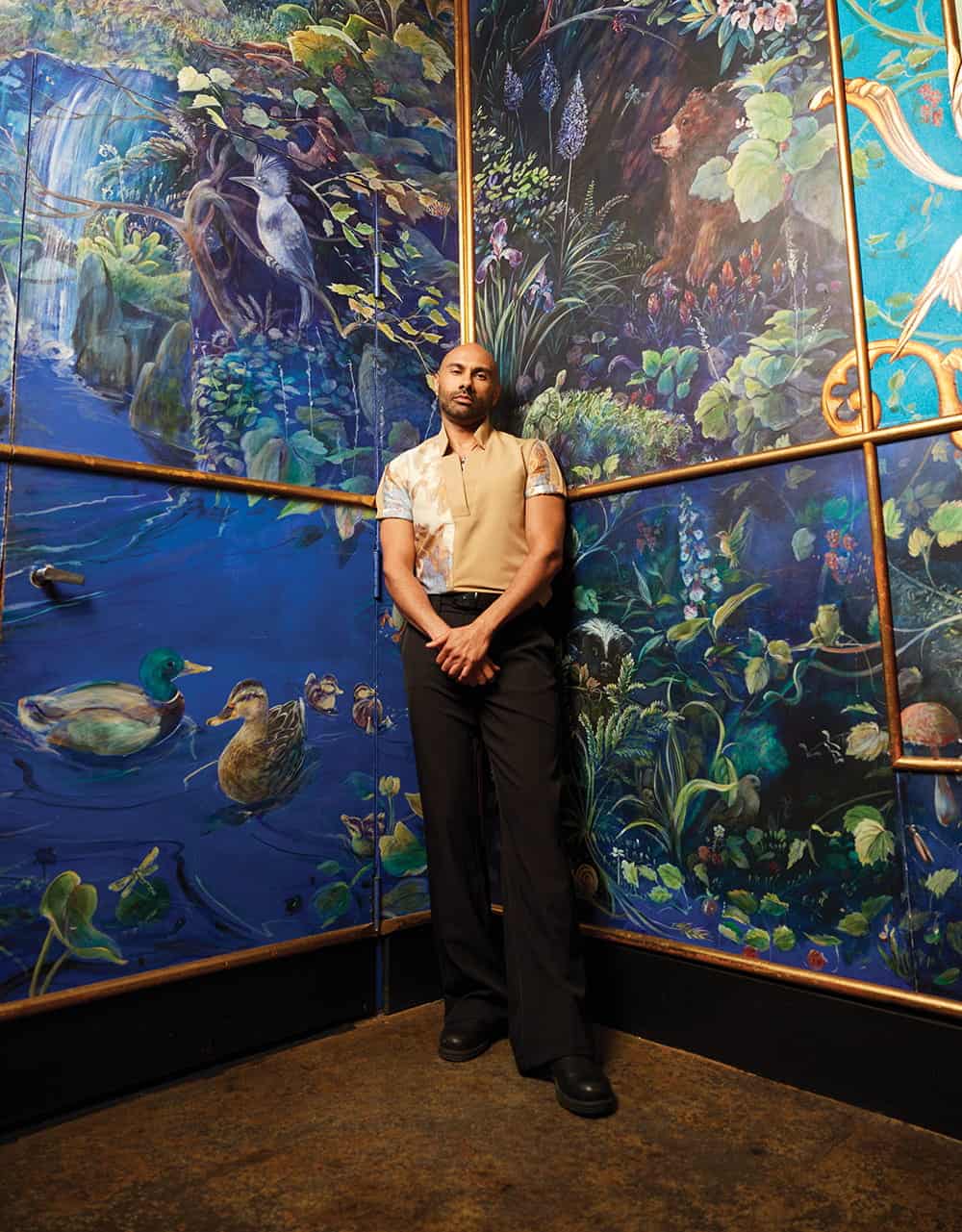
“You have a choice,” he says. “You put yourself here, right? I asked myself, ‘What are you going to do about it?’ And I was not going to be a victim. I made a choice to accept what happened, figure out how to forgive myself, and also ask for forgiveness. I was going to show that I was a different person and that [what I did] was not a reflection of who I am at my core.”
Once he arrived at WSP, Chopra admits to feeling relief. Ironically, inmates in the prison have more “freedoms” than those in jail: access to workout equipment; entertainment such as music players and tablets; a library stocked with books, magazines, and educational resources; the opportunity to go outside; and the possibility of obtaining a job, which provides the stability of a schedule and a sense of purpose. Chopra received a relatively easy assignment: driving corrections officers around campus on a golf cart.
While inside, Chopra remade himself physically, spiritually, and mentally. He started working out, lifting weights, and meditating, activities he continues to this day and credits with helping him maintain his sobriety. He also laid the groundwork for pursuing future filmmaking projects, writing two screenplays while incarcerated. “Prison is trauma,” he says, “but you can also find purpose, meaning, and passion again. That’s what it did for me.”
On the outside
Chopra was released from WSP in September 2017. He entered a work-release program in Seattle to finish his sentence, which ended on January 25th, 2018. Soon after, he and Oberg formed Unincarcerated Productions. The organization pursued several film projects before launching the Concrete Mama podcast, which coalesced after Chopra was invited to speak at the May 2023 WSP graduation ceremonies for inmates completing educational programs. There, he met Demar Nelson, who, at the time, was trying to start a prison radio show with his cellmate, Anthony Covert.
After hearing Chopra speak, a Department of Corrections staff member, who was in charge of programming in the west complex at the prison, approached him about working with Nelson and Covert. It took a year and a half to receive approval, but once the project was green-lighted, Chopra and others from Unincarcerated Productions spent eight months helping to produce Concrete Mama. The name is a nod to a 1981 book by Ethan Hoffman and John A. McCoy, who, in 1978, spent four months recording what life was like inside WSP.
“When Vik showed up, it was all history from there,” Covert says. “As a prisoner, you’re always skeptical of people, you know? So I was skeptical at first, but as soon as he started explaining who he was and his story, I was mesmerized. This is what everybody in prison dreams about: getting out and doing something that they are passionate about. That inspired me and motivated me to want to do this even more.”
While some might question the choice of spending DOC dollars on podcasting equipment to give these incarcerated men a platform, Chopra believes that the rehabilitative potential outweighs any possible downsides. Media training also equips inmates with valuable vocational skills that can aid them in finding employment after release, a notoriously difficult aspect of reintegrating with society once you have a criminal record. More than just a look into prison life, Chopra sees the podcast as a bridge between those inside WSP and the surrounding community.
“To have an opportunity to give the guys inside a chance to be artists, to use their voices, to regain some humanity—to me that’s what media and arts education are all about.”—Vik Chopra
“I wanted it to be something immersive and emotional, and I always want us to come from a place of being vulnerable and authentic,” he says of Concrete Mama. “I believe that vulnerability is the most powerful thing because it allows people to not only see themselves in you and your story, but it gives them a place to heal, too, through that recognition.”
Looking ahead
From the podcast production project, a full-fledged media lab was developed within the Sustainable Practices Lab at WSP. (The Sustainable Practices Lab offers dozens of programs, some in partnership with local organizations, that teach inmates skills such as hydroponic gardening, quilting, and furniture repair.) In 2025, Unincarcerated Productions offered a screenwriting course taught by Don Roff, which culminated in a narrative short film script. From there, the group led an intensive, multi-day, hands-on filmmaking course to cast and make the film. Titled Lockdown, it had its world premiere in April 2026 during the Justice Media Film Festival in Walla Walla, which was held partnership with the San Quentin Prison Film Festival.
“To have an opportunity to give the guys inside a chance to be artists, to use their voices, to regain some humanity—to me that’s what media and arts education are all about,” Chopra says.
While the first season of Concrete Mama received a small amount of funding from the Washington state DOC, those dollars didn’t come through this year, so much of the work is supported through donations, video production work, or the more prominent avenue: Chopra and others volunteering their time and resources. His unfailing optimism, drive, and genuine care for those around him prove Chopra a natural leader, and his seemingly endless energy has him working on a dizzying number of projects at once. In addition to writing and producing an autobiographical short film, he’s partnering on a project called the Blueprint, to produce a series of master-class style educational videos that would be available on prison tablets. Unincarcerated Productions is also in talks with other Washington state correctional facilities about introducing media production courses.
“Vik leads with love,” says director, writer, and producer JR Mitchell, who met Chopra while they were both working on the JoySauce Late Night talk show. (Full disclosure: Seattle magazine’s owner, Jonathan Sposato, is the founder of JoySauce Network.) “He is fantastically talented, but he’s also open in every way: creatively, emotionally, from a friendship standpoint, from a collaborative standpoint … it’s how he convinced a giant correctional facility that has no interest in transparency to let its prisoners tell their experiences to the world.”
For Chopra, sharing his story has been part of his healing journey, an experience he hopes to bring to those impacted by the carceral system throughout the United States. “I do admit, I like being on camera,” he says with a smile. “I like telling my story. But, at the same time, what’s more important is making an impact and changing people’s lives. I want to be a conduit for purpose, transformation, and healing through the power of storytelling.”
Follow Us

The Bark Benefit is changing lives, one rescue at a time
Every rescue dog has a story.
Tickets for The Bark Benefit are available now. September 19, 2026 | Meydenbauer Center Some animals arrive with broken bones or other medical needs. Others carry wounds that can’t be seen: fear, neglect, or trauma in need of healing. And then there are the dogs who have simply found themselves without a home because life…


Powering Progress: Aina Abiodun on Climate Innovation That Serves Communities
As president and executive director of VertueLab, Abiodun is working to make climate tech more equitable, practical, and rooted in real human needs.
Meet Aina Abiodun, VertueLab’s executive director, who is championing equitable climate tech in Seattle and empowering communities to drive innovation.

Five Ways to Make the Most of a Seattle Summer
Rooftop cocktails, rose gardens, waterfront walks, farmers markets, and one very big Seattle Center party.
I have lived in the Pacific Northwest long enough to expect it, and still, late spring catches me by surprise. The mountain returns for the season, suddenly part of the almost-daily view again. The grass isn’t (so) soggy anymore. Dinner can happen outside, and the city gets a little easier to love. Here are five…