





Visual Arts
Read More ›
Studio Sessions: Eirik Johnson
In a residency hosted by Foster/White Gallery, local photographer Eirik Johnson observes the collision between nature and humanity, and the longing by the latter to leave a mark in place and time.
 By Rachel Gallaher June 18, 2026

Most people view the advent of summer as a signal to slow down and relax, but for artist Eirik Johnson, this year’s warming months are a time to ramp up as he prepares to debut two creative projects. Born and raised in Seattle, Johnson, whose deeply emotional photography covers a range of subjects, will release a new monograph, Leviathan Rising (MW Editions), this fall in conjunction with an exhibition at the Tacoma Art Museum. Simultaneously, he is preparing work for a September exhibition that is the culmination of his residency at Recology.
A visual artist who wasn’t initially sure he wanted to pursue art, Johnson has settled nicely into his niche, traveling the world to capture images for both his fine art practice and respected publications such as Dwell and the New York Times. “I find the world endlessly fascinating,” Johnson says. “More often than not, inspiration comes when simply paying closer attention to the everyday, so I try to slow down, stay alert, and be open to where my curiosity takes me.”
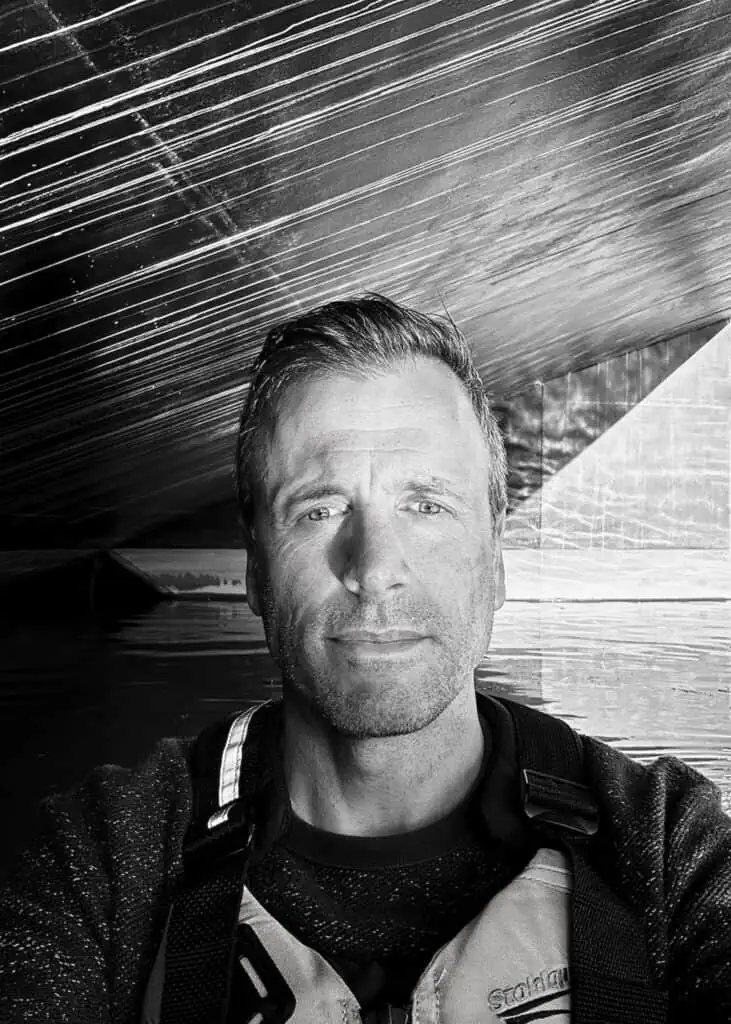
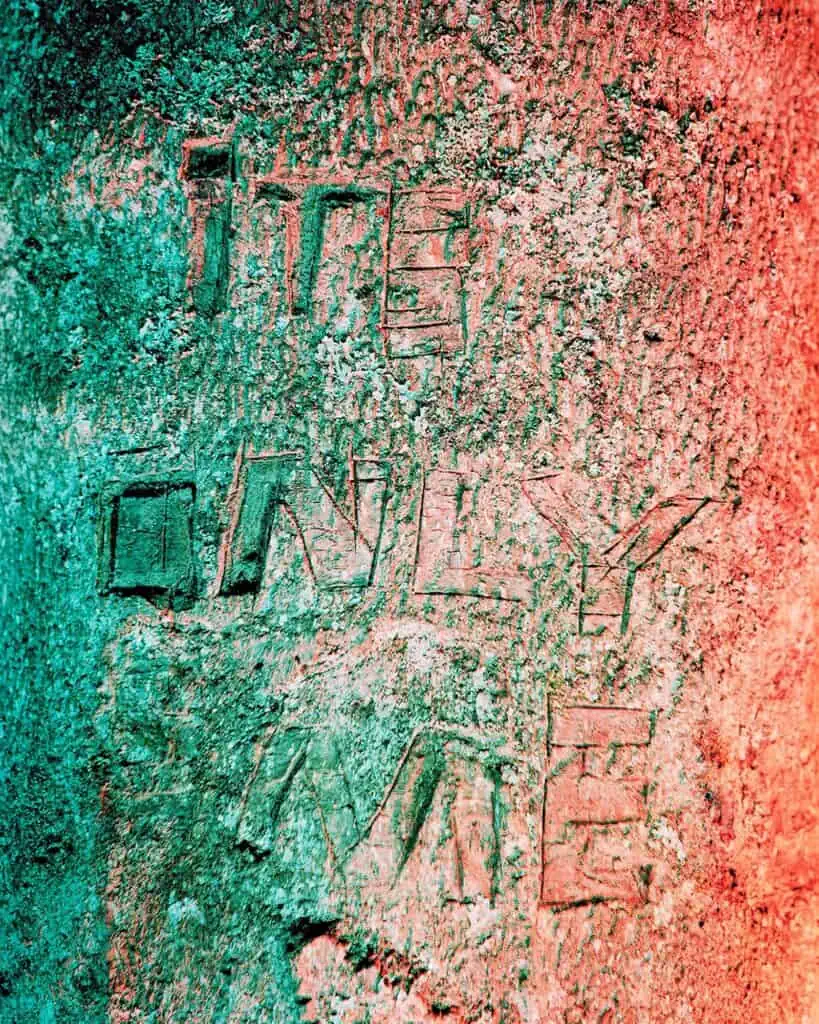
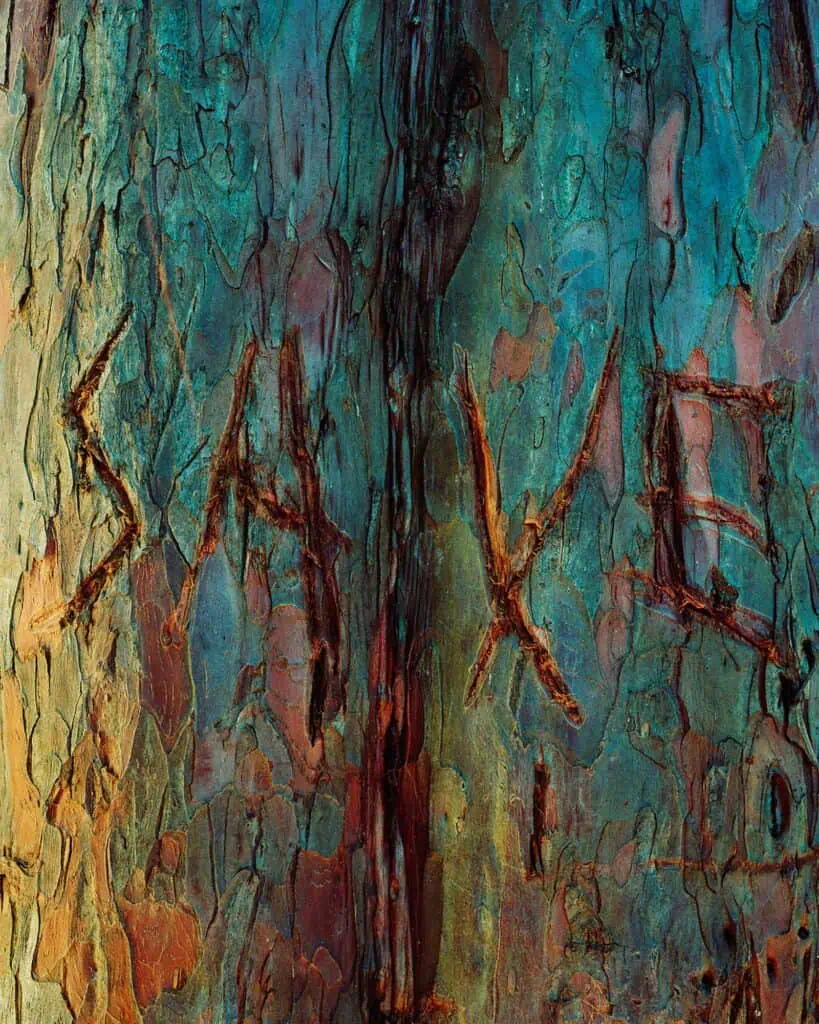
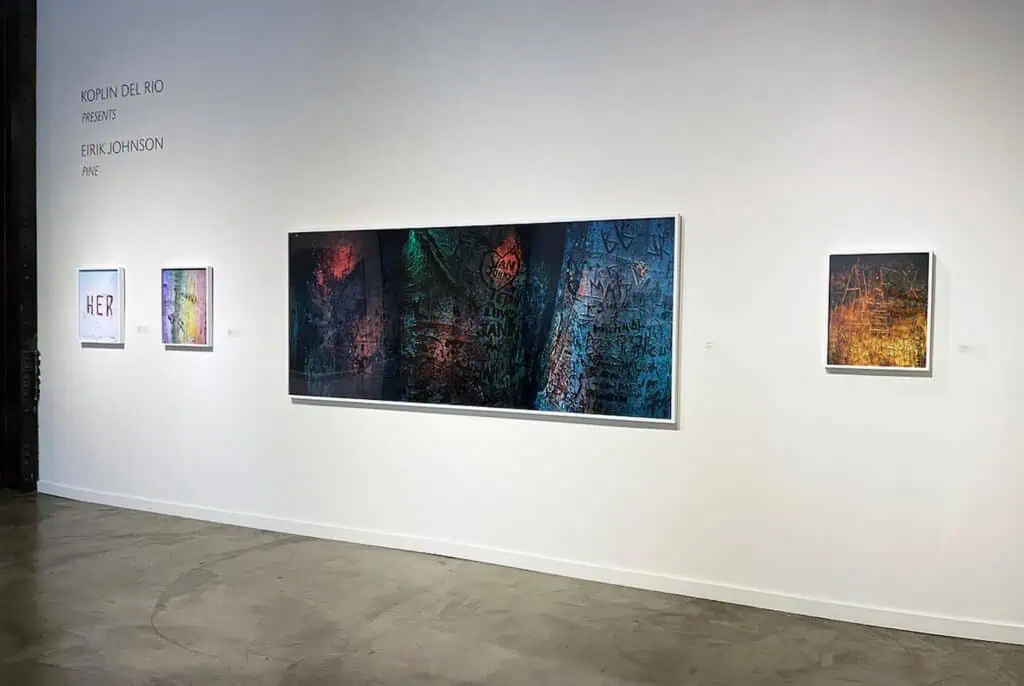
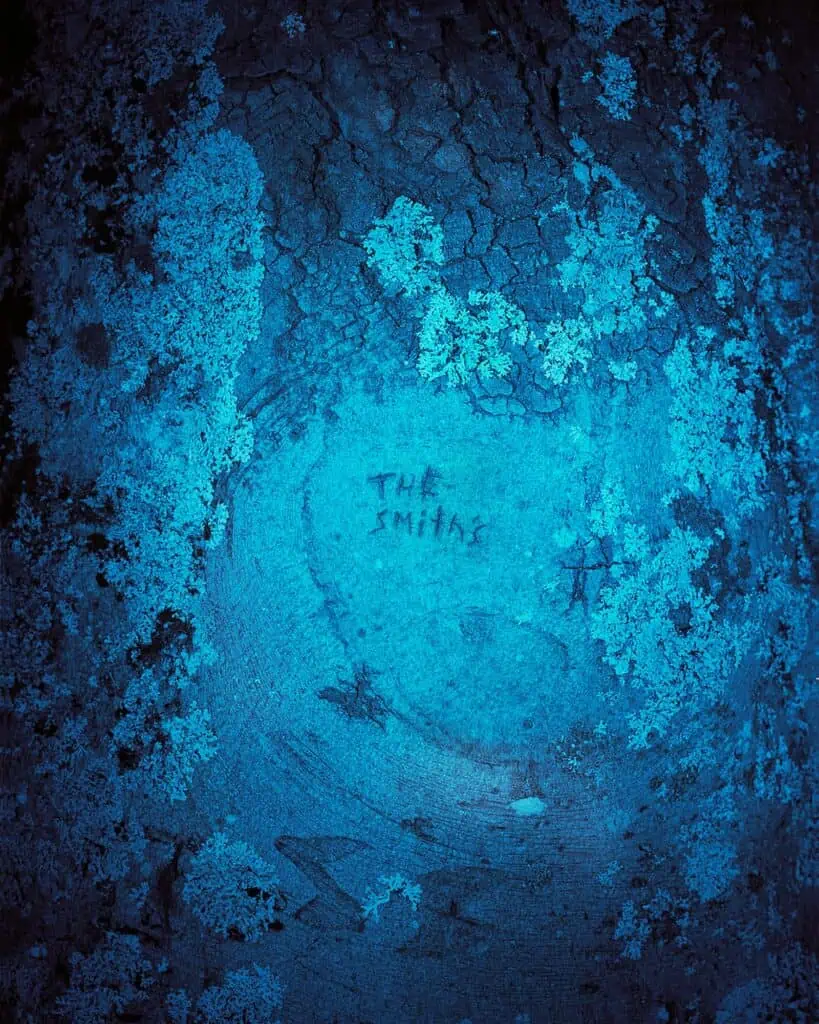
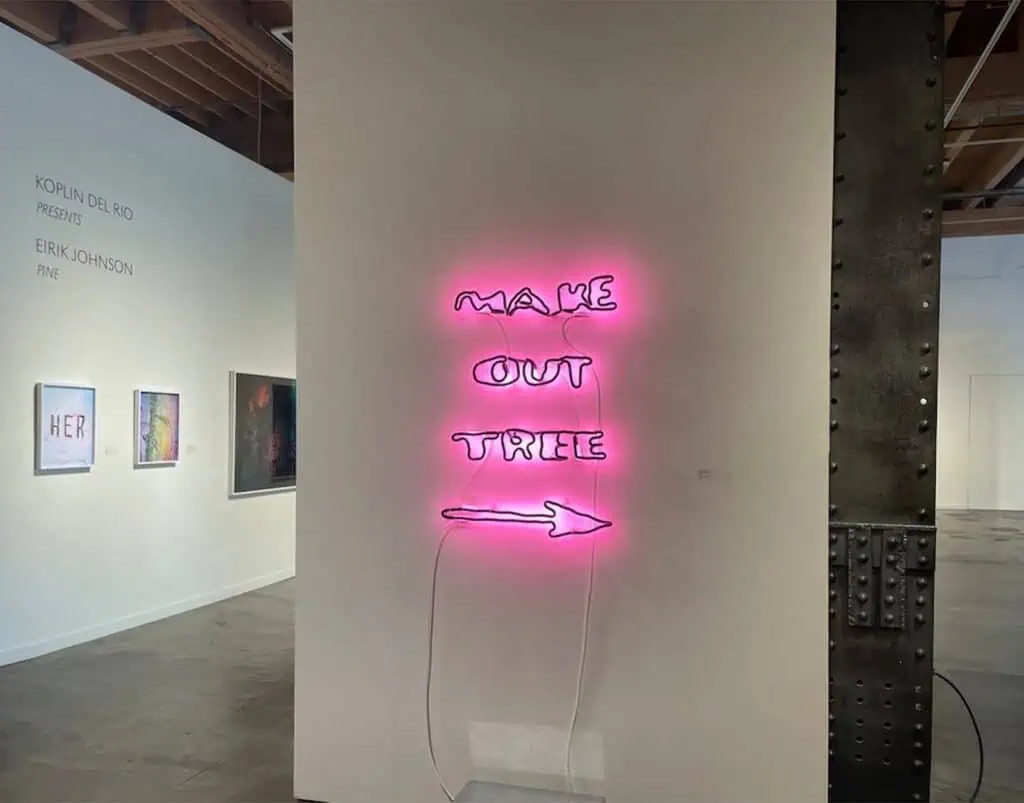
Currently, Johnson has an exhibition, PINE, presented by Koplin Del Rio as part of a summer residency at Foster/White Gallery in Pioneer Square. Comprising nocturnal, long-exposure photographs of carved trees—hearts, words, and symbols scrawled into the bark—the exhibition is raw, punkish, and romantic all at once. A reminder of our almost inexhaustible need to be remembered, the images catalogue an interaction between humans and nature that’s at once violent, tender, and thought-provoking.
PINE is on view through July 25 at Foster/White Gallery.
Hometown:
Seattle
Discipline:
Primarily photography with sound and installation
Favorite Spot in Seattle:
I grew up in the city, so I’ve got a lot of favorite old-school haunts. I’ve been going to Elliott Bay Book Company since its Pioneer Square days and still love to lose track of time deep in its shelves. Discovery Park is a pretty amazing place. During my undergrad years at the University of Washington, I worked on a long-term project photographing the park and somehow, I ended up as the youngest board member of the Friends of Discovery Park. What I love about the place are the many layers of history it contains, what it was (military base), what it might have become (a Nike missile outpost), and what it turned out to be (re-wilded public park).
Describe your work in three words.
Lyrical. Complex. Rigorous.
When did you know you wanted to be an artist?
I knew I wanted to be creative since I was young, but I thought that would filter into me being an architect, a commercial photographer, or perhaps a musician. It took a while to warm up to the concept of being a visual artist. In 1999-2000, I received a Fulbright Fellowship to Peru. It was during that year of self-directed creative exploration that I fully committed to calling myself an artist.
What are you working on now?
It’s a busy season at the moment. In addition to the current exhibition with Koplin Del Rio at Foster/White, I will be publishing my new monograph Leviathan Rising with MW Editions this fall in conjunction with an exhibition at the Tacoma Art Museum. The book is a stunning object and I’m looking forward to sharing it. Also, this summer, I’m one of two artists in residence at Recology where I’m making photographs, sculptures, and sound work. We’ll be premiering that work at an exhibition in early September. I’m really trying to embrace experimentation during the residency.
What draws you to your particular medium?
Photography is seemingly capable of being both forensic in its attention to detail and poetically surreal as a moment pulled from the flow of time. It’s also just a really good excuse to prioritize my curiosity.
Share one piece of advice you wish you knew when you were first starting out.
Humility and ambition are not mutually exclusive.
Define success on your terms.
Being able to realize my creative potential.
Thoughts on the current art market?
Honestly, it seems to be on life support. Mid-tier galleries in affluent cities such as Seattle and San Francisco become fewer by the year. More wealth does not dictate more appreciation or affinity for collecting art, at least when it comes to photography.
What has been the biggest industry change you’ve noticed since the start of your career?
When I was a young twenty-one-year-old learning what it was I was trying to say with photography, very few people actually made pictures. It took effort to pick up a camera, buy film, properly expose, process ,and print an image. Now, we consume and create a sea of photographs every day, thanks to the camera phone and social media. This does not mean that we are making better photographs, or that we understand, or even appreciate photography more. In fact, I’d argue it’s dulled our appreciation of the medium.
What do you still hope to accomplish?
Several years ago, I produced a major site-specific photographic and sound-based installation of my Leviathan Rising project at the Georgetown Steam Plant. It was a massive logistical undertaking, but the resulting presentation was hugely successful and elevated my desire to develop further site-specific installations. I’d love the opportunity to approach similarly ambitious projects internationally.
Who do you admire and why?
I have admiration for a whole host of folks for different reasons. I admire my old professor, Linda Connor, both as an artist and educator, but also as a community builder. More locally, I admire my friend the artist and musician Dan Webb, who doesn’t shy away from technique and craft while making deeply conceptual and personal work. And I admire my mother who, in her golden years, is never for lack of wonder in the world.
Follow Us

Studio Sessions: Heidi Grace Acuña
Drawing on her Filipino heritage, interdisciplinary artist Heidi Grace Acuña brings sculpture and fashion together with a spirited approach to ancestral traditions.
Heidi Grace Acuña has made me fond of crocodiles. At her exhibition at ARTS at King Street Station, I could study the little ones alongside their larger companions, peer into mouths lined with uneven gold teeth, and circle their clay bodies with all the curiosity and delight that fear would ordinarily keep in check. The…

CID Night Market Returns This Saturday With a New Food Walk
More than 100 vendors will take part in the free festival, with food specials starting at $6.
My daughter and I were recently watching the Tokyo episode of Eugene Levy’s The Reluctant Traveler, and we couldn’t get over how pretty the lanterns looked along the busy streets. It made me want to be out in a city at night, somewhere with good food and plenty of people. Now in its 19th edition,…

Rearview Mirror: Crocodile Guardians, Late-Summer Potato Salad, and a Halloween Costume Hunt
Things I did, saw, ate, learned, or read in the past week (or so).
COOKING WITH ASTER PANTRY A few leaves turn, my inbox fills with fall festival pitches and cozy brunch menus, and suddenly I want to stay home with a glass of wine and cook. I love this nesting season, though I’m not ready to give up summer produce. Earlier this year, I wrote about Seattle chefs…

WALKDONTRUN Returns This Saturday, Turning Downtown Seattle Into a Sprawling Art Show
In its second year, the free festival brings 200-plus artists to a 20-block route September 19, with a secret garden and a former 7-Eleven stocked with art.
Most walks through downtown Seattle involve trying to get somewhere. On September 19, the crosswalk itself might be the reason to stop. Heap Troupe will turn a four-way crossing into a performance, one of dozens of encounters planned for this year’s WALKDONTRUN. The free, all-ages art walk stretches across more than 20 blocks. From 11…