





Visual Arts
Read More ›
Studio Sessions: Ling Chun
The Seattle-based artist brings playful color to ceramics and neon while exploring memory, transformation, and life between cultures.
 By Sarah Stackhouse September 3, 2026

For Ling Chun, creating begins with something sensed before it can be named. Working with clay, glass, light, and sometimes synthetic hair, the Hong Kong-born artist gives physical form to things that words cannot always hold. “For me, the magnitude of making goes far beyond the object that is eventually produced,” Chun says. “The object is important, but it is also evidence of everything that happened through making it—the questions, discoveries, mistakes, memories, and changes along the way.”
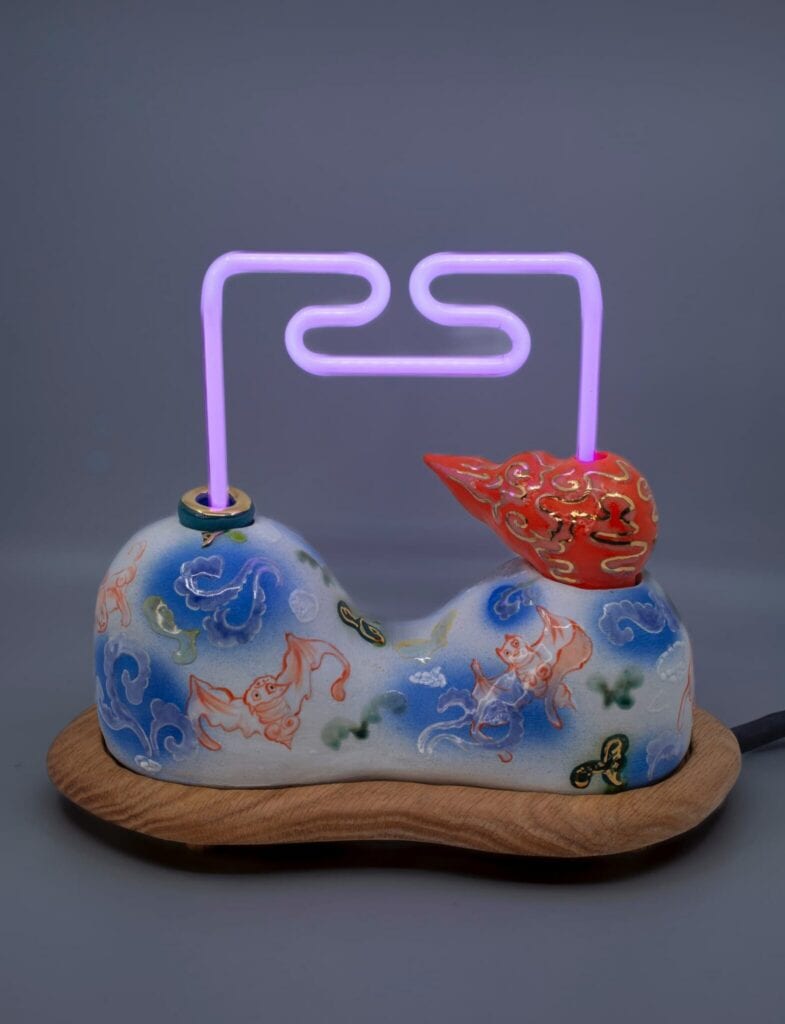
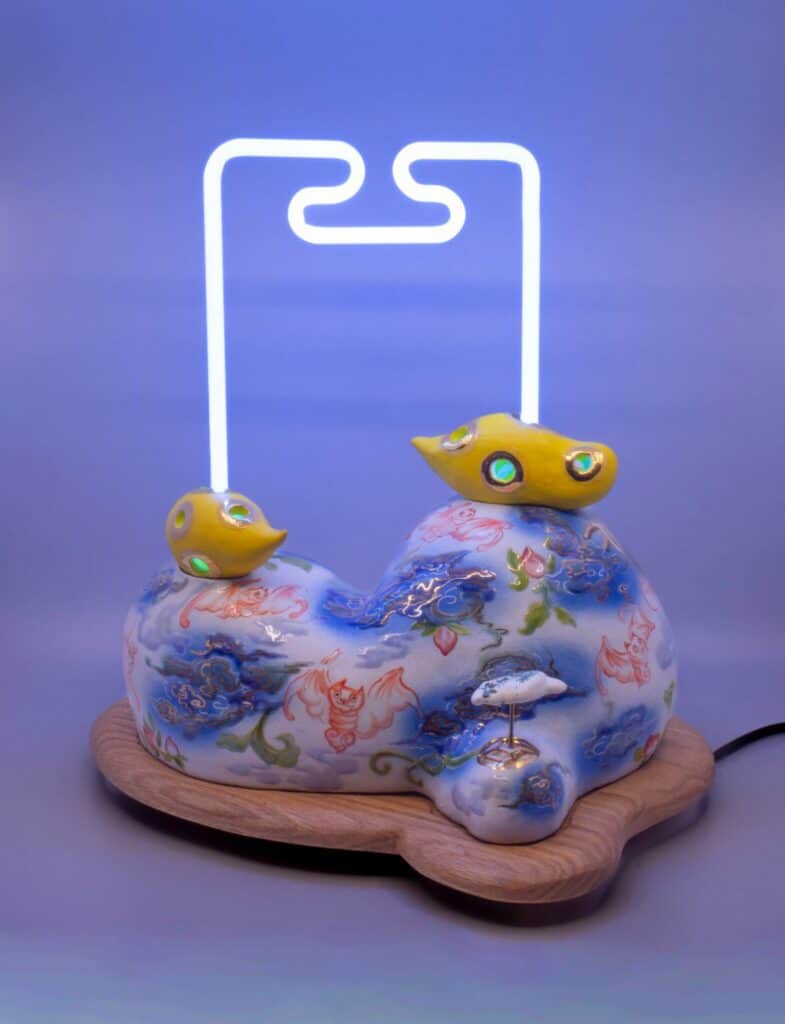
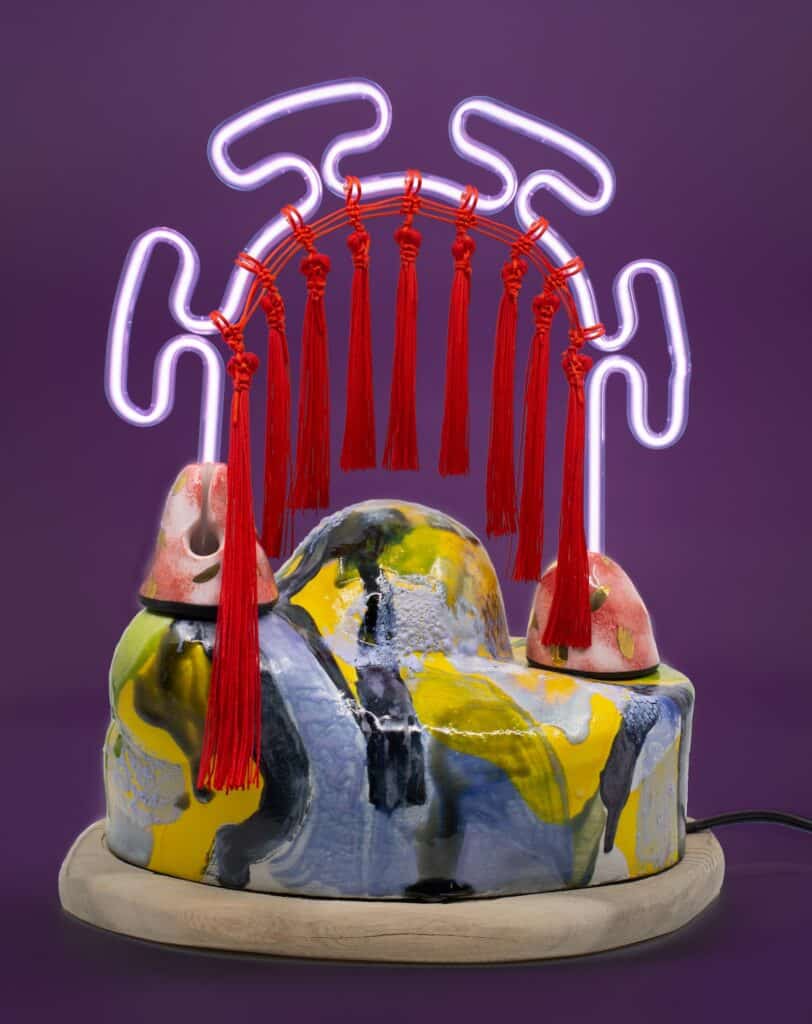
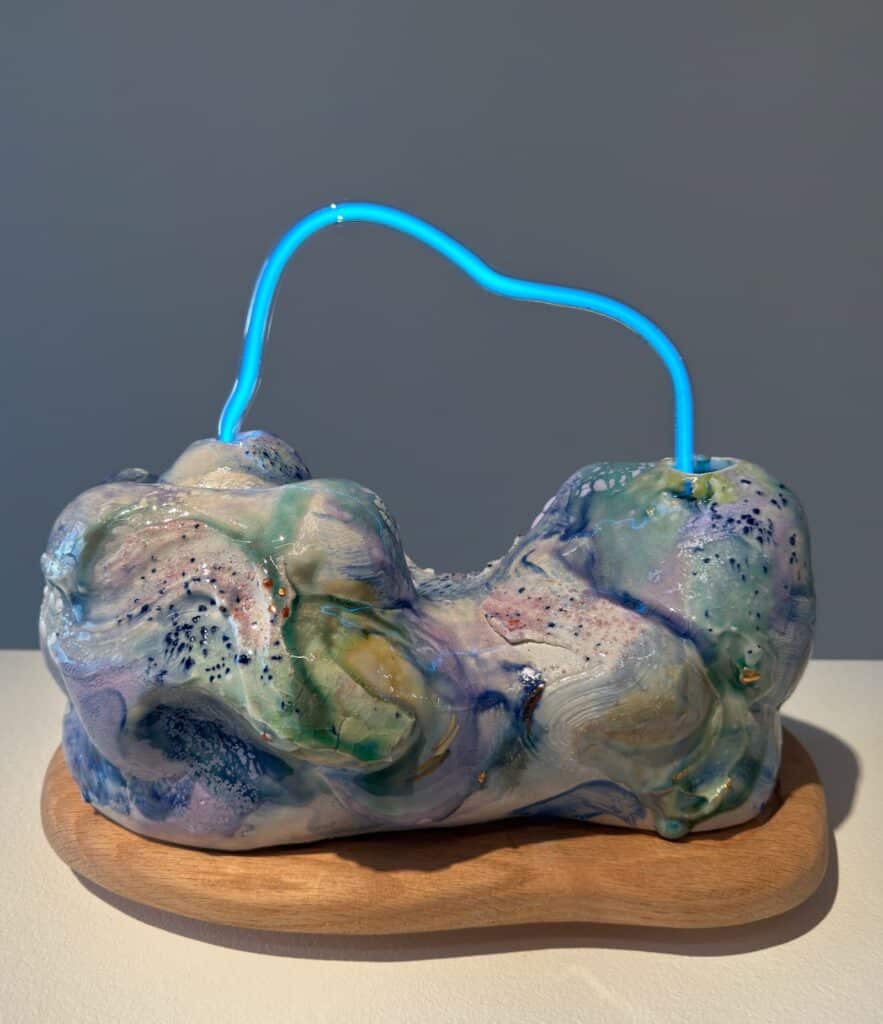
Clay was Chun’s first love. Tactile and responsive, it records the movement of the hands and body that shape it. Neon brings a different energy to her practice, allowing her to draw with glass and illuminate the forms she builds. Its glow can be soft and calming, then sharp and electric with energy. Clay has a similar range, taking on smooth, rounded shapes or rough, abrasive surfaces. Through these contrasts, the materials give Chun a way to consider how memories and identities change over time—and how a sense of home and nostalgia can remain vivid even as the places we remember evolve. That connection carries particular weight for Chun as Hong Kong’s once-familiar neon signs gradually disappear. “I hope my work has a quality that makes people want to revisit it—to come back, look again, or take another glance. Maybe in that moment of looking again, you discover something about yourself that you hadn’t noticed before,” she says.
Chun teaches ceramics at North Seattle College, bringing what she discovers in the studio back to her students while continuing to see herself as a student, too. Her work has received national and international recognition: NCECA named her a 2020 Emerging Artist, and she received an ArtBridge Fellowship sponsored by Chihuly Garden and Glass. She was also shortlisted for London’s 2019 Young Masters Art Prize and selected as a finalist for the 2021 Korea International Ceramics Biennale.
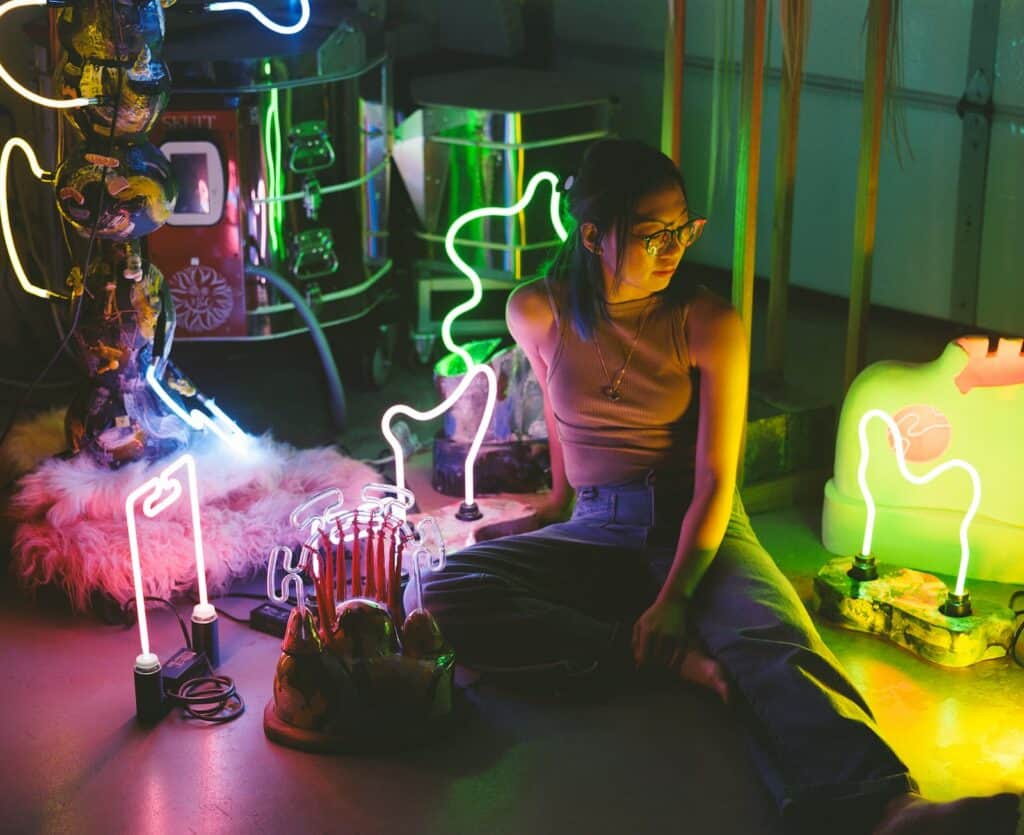
On September 19, Chun will show an outdoor installation at WALKDONTRUN, Seattle’s downtown art walk marathon, near Benaroya Hall. In the studio, Chun devotes one day each week to Neon A–Z, an ongoing project through which she is learning to form the alphabet in glass—one glowing letter at a time.
Hometown
Hong Kong / Seattle
Discipline
Ceramics + Neon + sometimes hair
Favorite spot in Seattle
Chinatown International District
Describe your work in three words.
Memory. Transformation. Connection.
When did you know you wanted to be an artist?
From a young age, I always saw myself as an artistic person. I was drawn to creativity more than almost anything else. But there is one very vivid moment when I really decided that I was an artist. I remember filling out an immigration form and writing ARTIST under occupation.
It was scary to write that down. It felt vulnerable, but there was also a real risk in claiming that identity. As an immigrant still in the process of obtaining status in the U.S., writing “artist” as my occupation could raise more questions about how I planned to sustain myself and make a living here. It would have been easier to write something else. But I wrote ARTIST anyway. I think that was the moment I knew: I need to be an artist. It is non-negotiable.
Where do you find inspiration?
I find inspiration through connections with other people, especially social groups and cultures that I don’t normally interact with. The less I know about something, the more curious and inspired I become. Curiosity is a very important part of how I make work.
What draws you to your medium?
I play with many different materials, but ultimately, I always come back to clay. Clay is honest. It is touchable, and it reacts to your thoughts and the movement of your body. You can see the evidence of how someone touches and works with it.
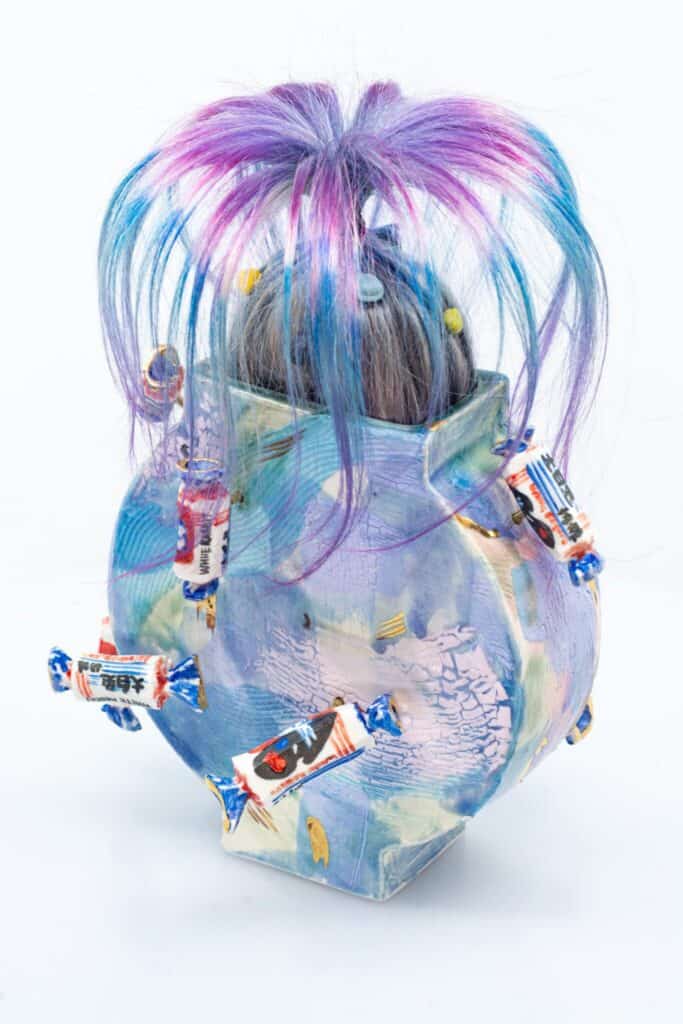
Clay has always been my first love. I often joke that my use of synthetic hair is a reminder of my past as a beauty school dropout. More recently, I’ve fallen in love with neon bending—bending glass to shape light and finding ways to house and protect that glow. Neon has also become a way for me to hold onto pieces of what home in Hong Kong used to look like. Combining ceramics with neon has become my way of preserving memory through material.
What are you working on now?
I’m currently working on an installation for WALKDONTRUN, happening September 19 from 11 a.m.-3:30 p.m. My installation will be outside Benaroya Hall on Second Avenue, directly in front of the north entrance of the Garden of Remembrance.
I’m also curating an exhibition about neon called That Must Be a Sign, which will open in November 2026 at the North Seattle College Art Gallery. And I recently started a project called Neon A–Z, where I spend one day each week learning to bend the alphabet in glass. I’m still very much a student of this material, and I like that.
Tell us about a moment in your career that made you especially proud.
There are measurable things that make me proud. Recently, I received a $10,000 Teaching Artist Cohort grant from the Center for Craft, and that meant a lot to me.
But what I am most proud of recently is discovering neon and finding my own way into the material. I felt my world open up once again. I became a student again, learning a craft-based medium and slowly finding my way into a new community of neon and glass artists. The generosity and open doors I experienced from that community are something I really value.
Being asked to curate a neon exhibition for the art gallery at the college where I teach also made me feel incredibly humbled and excited. It gives me a chance to bring what I am discovering back to my students and show them how much a material can expand beyond simply making an object.
What do you still hope to accomplish as an artist?
I want to keep making creative work that brings people together. That can happen through experiencing artwork, making something together, or learning from one another. One of my goals is to bring more of my studio practice into my teaching, so that something I discover through making can continue through someone else’s experience.
Define success on your terms.
Success means continuing to feel connected to materials and people while allowing curiosity to keep driving me forward. I don’t want to reach a point where I feel like I already know exactly what I’m doing. For me, keeping that passion, openness to possibility, and curiosity is probably the best measure of success.
Follow Us

Actor and Author Ke Huy Quan Shares His Story at Very Asian Foundation’s Annual Seattle Brunch
From his childhood as a refugee to his decades away from Hollywood, Quan opened up about the experiences behind his new memoir, Never Say Die.
At this point, most people with even a passing interest in film know Ke Huy Quan got his start in Hollywood as a child actor in the mid-1980s. After starring as Short Round in Indiana Jones and the Temple of Doom opposite Harrison Ford, and as Data in The Goonies, Quan acted in a few…

SENSORIUM Takes on Our Screen Addiction
Dance, drag, and immersive art collide in an eight-week exploration of our phone-obsessed lives, with a few surprises along the way.
What do drag queens, smartphone addiction, art installations, and an old luggage shop have in common? According to longtime Seattle choreographer Alana O’Farrell Rogers, a lot. “There’s no dead time anymore,” says Rogers, explaining how the proliferation of smartphones fills the empty spaces that once served as time for rest or connection. Where we snuggled…

Salt-N-Pepa on Breaking Barriers and Staying Power
Ahead of their performance at Seattle’s Museum of Pop Culture gala, the hip-hop pioneers talk about creative ownership, connecting with new generations, and the songs that still resonate.
The Museum of Pop Culture (MOPOP) will host its annual ICONS of Pop Culture Gala in Seattle on October 22, honoring five artists and institutions whose work has helped shape entertainment and culture. This year’s honorees are martial arts and film legend Bruce Lee, fashion designer Jeremy Scott, the video game franchise Halo, hip-hop pioneers…

Studio Sessions: Christopher Paul Jordan
Drawing on childhood memories, neighborhood history, and salvaged materials, Christopher Paul Jordan’s latest show at Cornish’s Behnke Family Gallery explores how the past stays with us.
Start in the middle. It’s good advice for telling a story, and a way into Christopher Paul Jordan’s paintings. By the time you encounter them, their materials have already been something else, and who knows what they might move on to become. The Tacoma interdisciplinary artist works with salvaged objects, including screens, picture frames, canvas,…