





Food & Drink
Read More ›
House Special: Soondae Gukbap at Busan Jeong
Every component of the signature pork soup is made in-house to create a lasting impression.

Seattle is not short of quality Korean restaurants, but many offer similar menus built around the best-known, most popular dishes. When global restaurateur Hoyeon Park moved to Seattle, he noticed that it was difficult to find authentic Busan-style pork soup, a beloved comfort food in Korea but largely unknown in the States. Park currently operates more than 20 restaurants of varying concepts across Korea and Hong Kong. For his first U.S. restaurant, he decided to craft its concept around the Busan-style pork soup, naming the restaurant Busan Jeong.
The word jeong (정) describes a Korean sentiment that encompasses warmth, kindness, generosity, and human connection. It is an ethos Park hopes is felt not just through the literal warmth of the food, but also in the time and care evident in its preparation. The team at Busan Jeong makes the broth entirely from scratch, simmering pork bones for many hours to achieve a rich, deeply flavored broth with a clean finish. They also make the accompanying kimchi, sauces, and other components in-house.
Gukbap, which translates to “soup-rice,” is eaten with rice added directly to the soup so it can soak up the rich broth. Among the variations of gukbap on the menu, Park wanted to introduce American diners to soondae gukbap, a Korean blood sausage and pork soup. He notes that many people outside Korea have never tried Korean soondae and that many local Korean restaurants likely purchase premade, frozen versions from suppliers.
“Making soondae from scratch requires significantly more time and labor, but the difference is remarkable,” says Park. “Our soondae has a softer texture, a cleaner flavor, and a more delicate balance than commercially produced versions.”
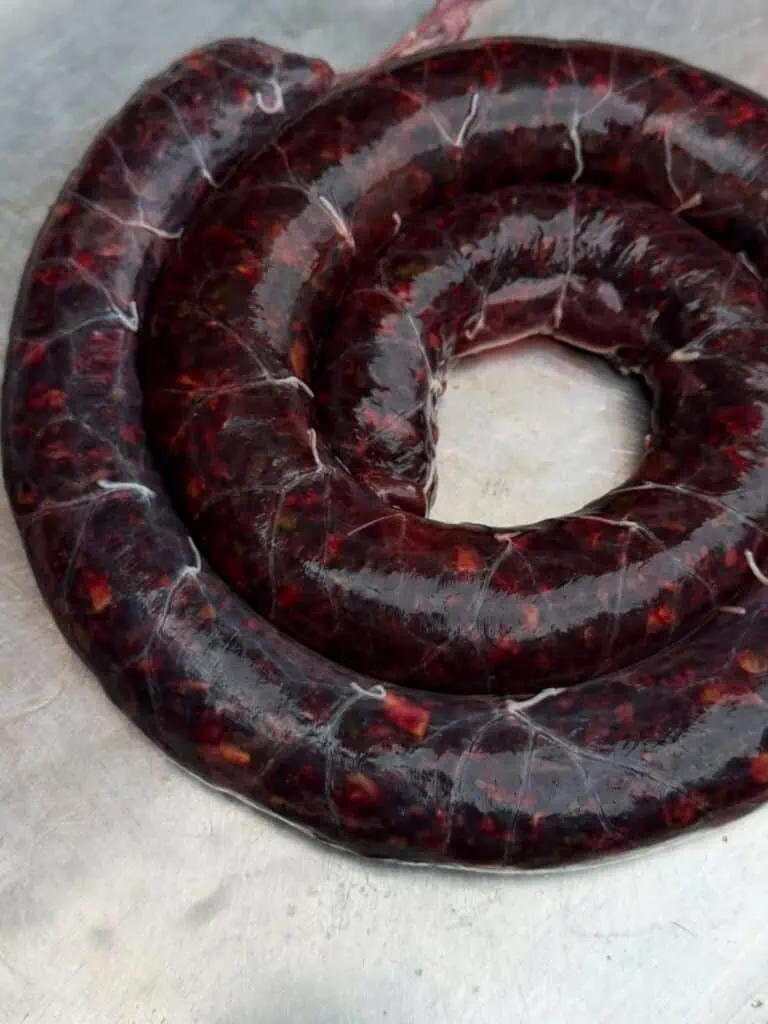
Busan Jeong’s soondae is prepared using natural pork casings filled with Korean glass noodles, pig’s blood, vegetables, tofu, and its own in-house seasoning blend. The process requires the team to extensively clean the casings before mixing the filling and stuffing them by hand. They slowly steam the blood sausage before cooling it and adding it to each bowl of soondae gukbap.
This is one of Busan Jeong’s signature dishes and also one that surprises diners the most.
“Many guests tell us they were hesitant to try blood sausage at first, but after tasting our homemade version, they completely changed their perception,” says Park. “For me, this dish represents our philosophy of honoring traditional Korean comfort food while putting genuine care into every step of the process.”
Tiffany Ran is a writer and the chef behind Babalio Taiwanese Pop-Up, a Taiwanese food pop-up, and the food editor of TaiwaneseAmerica.org. Much of her food exploration includes jumping between catering, restaurants, and the pop-up world. Her writing has been featured in Vice Munchies, Lucky Peach, Goldthread, JoySauce, Northwest Asian Weekly, and more.
Follow Us

Restaurant Roundup: 3 Pearls and Restaurant Week Redux
Here’s what was served up recently in the Emerald City.
When something tastes good, you gotta go back for seconds—and that’s exactly what we’re doing for this fall’s Seattle Restaurant Week, Oct. 18-31. Building off a successful spring spread, this edition brings back curated menus at various price points ($20, $35, $50, and $65) at restaurants, bars, cafes, and pop-ups across the greater Seattle area….

House Special: A Taste of Ecuador at Bad Chancla
Chef José Garzón brings a coastal Ecuadorian classic to his 335-square-foot Capitol Hill kitchen, where he hopes to introduce more dishes from home.
There is not much room at Bad Chancla. The bright pink walk-up on East Olive Way seats a handful of people elbow to elbow, mostly outside, and the kitchen behind the counter is small enough that chef and co-owner José Garzón can talk to you while he cooks. Garzón grew up between Guayaquil and the…

Opening Night: GoodMart Makes Lunch Feel Like Luxury
Victor Steinbrueck, owner of Fremont’s acclaimed Local Tide, opens his second seafood-centric restaurant in the heart of Ballard.
On a Thursday afternoon I was able to walk right up to the counter at GoodMart on Ballard Avenue and order lunch, which surprised me. GoodMart is owned by Victor Steinbrueck, who opened Local Tide in Fremont during the height of the pandemic (August 2020) and built it into one of Seattle’s most acclaimed seafood…

Where to Warm Up With a Drink This Fall and Winter in Seattle
From swanky speakeasies to a cozy literary bar, these spots serve inventive cocktails and zero-proof options.
Seattle’s drearier days are slowly arriving, but it’s not all gray and gloom from here. Finding a cozy spot to warm up is part of the trick to enjoying the darker, colder months. The right place lets you bring a friend, a book, a journal, or simply yourself, and let time pass by. Whether you…