





Architecture + Design
Read More ›
Better Together: This Take on Co-Housing Emphasizes Quality and Community
The Seattle project presents an out-of-the-box model, where investors are also residents, and the design focuses on longevity and tenant retention—not profit.
 By Rachel Gallaher-Zenz April 20, 2026

This article originally appeared in the March/April 2026 issue of Seattle magazine.
Growing up in rural Detroit, Chad Dale spent many after-school and weekend hours playing with neighborhood kids in an open lot near his house. It’s an experience he always hoped his children would have someday, but by the time he became a father in Seattle, land was at a premium: either already developed or prohibitively expensive. About a decade ago, Dale—a real estate developer and part of the ownership team behind the Sea Creatures restaurant group—started hearing from friends who were also lamenting the skyrocketing cost of single-family homes in the area. It seemed that to have the space and amenities they wanted, the best solution was to move out of the city.
At one point, Dale and several families in the friend group purchased a communal farm on Whidbey Island as a weekend getaway, but the distance from Seattle made it difficult for them to spend extended amounts of time there. Not to mention, it had only one bathroom. After a few years, conversations between the friends started to broach whether they could recreate—and afford—a collective living experience in the city proper.
“As we were talking, it dawned on me that there were a lot of things that we’d be happy to share,” Dale says, citing amenity spaces, rooftop decks, a large yard, and rooms for guests among them. “You’re sharing the space, but you’re also sharing the cost of it, and it allows you, on some level, to have your cake and eat it, too.”
Eventually, they landed on an idea for an apartment building that has a mix of traditional renters and owner-residents. Completed in 2023, with 35 units—nearly a third of which are occupied by investors, including Dale and his family—the Shared Roof project is a collaborative venture where stakeholders own shares, receiving dividends from profits made through traditional residential and commercial renters.
“We were able to show that the financial returns were similar to what you would anticipate getting in the single-family market,” Dale says of the Phinney Ridge property. “Anyone who lives in Shared Roof could put in any amount of money. It allowed us to have folks who may not have a certain level of resources to participate in the market here.”
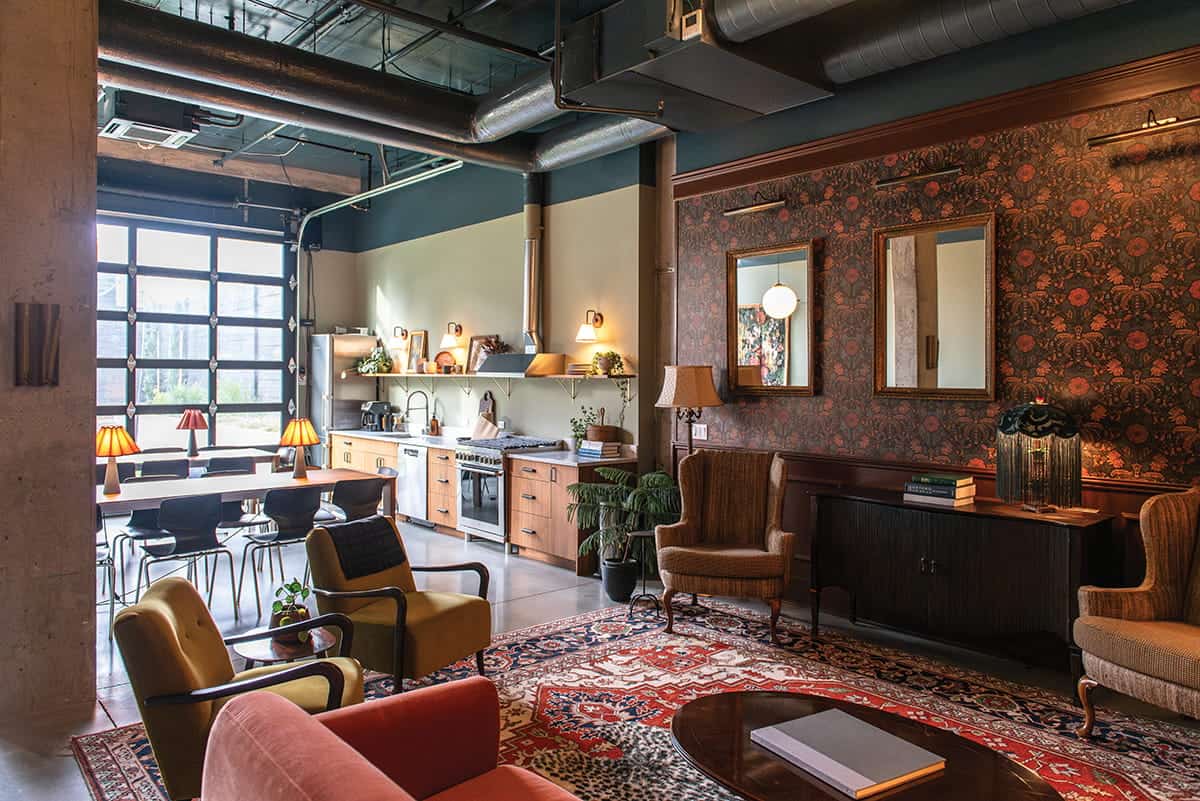
One advantage of investors occupying units in the building is that they didn’t scrimp on the details when it came to design (fixtures, finishes, windows, and appliances are all high-end) or sustainability measures (the project is currently going for a LEED Platinum certification).
“Because the developers were actually going to live there, they were willing to make certain commitments,” says David Fuchs, a principal with Johnston Architects, which designed Shared Roof. Johnston Architects is actually the second firm on the project, and Fuchs and his team embraced a key element—the building’s central courtyard—from their predecessor’s design.
Inspired partly by European architecture—especially multi-family living in Amsterdam—and partly by Northwest modernism, the five-story building orients around the interior courtyard, which opens up to the neighborhood on several sides and holds a handful of popular commercial spaces, including Lioness, Ben’s Bread, Holy Mountain Brewing, and Doe Bay Wine Company. “There was a lot of focus on creating spaces for community,” Fuchs says, “and that courtyard really became the heart of the building.”
“This has happened a couple of times in our business, where a different business model can generate a much more interesting result—and eliminate some of the constraints,” notes Ray Johnston, a founding partner at Johnston Architects.
Instead of hastily constructing a row of ubiquitous townhomes, Dale and the other investors prioritized opportunities for connecting with neighbors. Courtyard-facing exterior walkways on each level increase the chance of bumping into people on multiple floors, not just those adjacent to your unit. Shared amenities—the idea that kicked off the project in the first place—include a community room with a library (perfect for gathering or watching sporting events), flex spaces, a fitness area, a guest suite bookable for overnight visitors, a 4,500-square-foot outdoor playfield (Dale jokes that he hardly sees his kids because they are always outside playing), and the namesake 11,000-square-foot roof, complete with an outdoor kitchen, greenhouse, fireplace, and views of Green Lake, Mt. Rainier, downtown Seattle, and Elliott Bay.
One thing that’s conspicuously missing from the roof is the building’s mechanical system, which the developers paid a premium to locate in the underground parking garage. “Typically, developers put all the mechanical systems up there,” Dale says. “And then they have a dog run, and maybe a few hundred square feet where you can sit or grill, and that is exactly the opposite of what we wanted. The idea here was to be more efficient with our space.”
Johnston Architects worked with the owners to develop a palette of brick, stucco, dark-stained cedar, and black metal accents, blending a sleek, contemporary look with a sense of timeworn coziness. According to Johnston, parts of the project resembled “a puzzle-solving exercise with a Rubik’s Cube quality.” For example, units on the fourth and fifth floors, where many of the long-term investors live, were highly customized, so it took some creative spatial planning to make them fit together seamlessly. For everyone involved, the extra time and money were worth the investment.
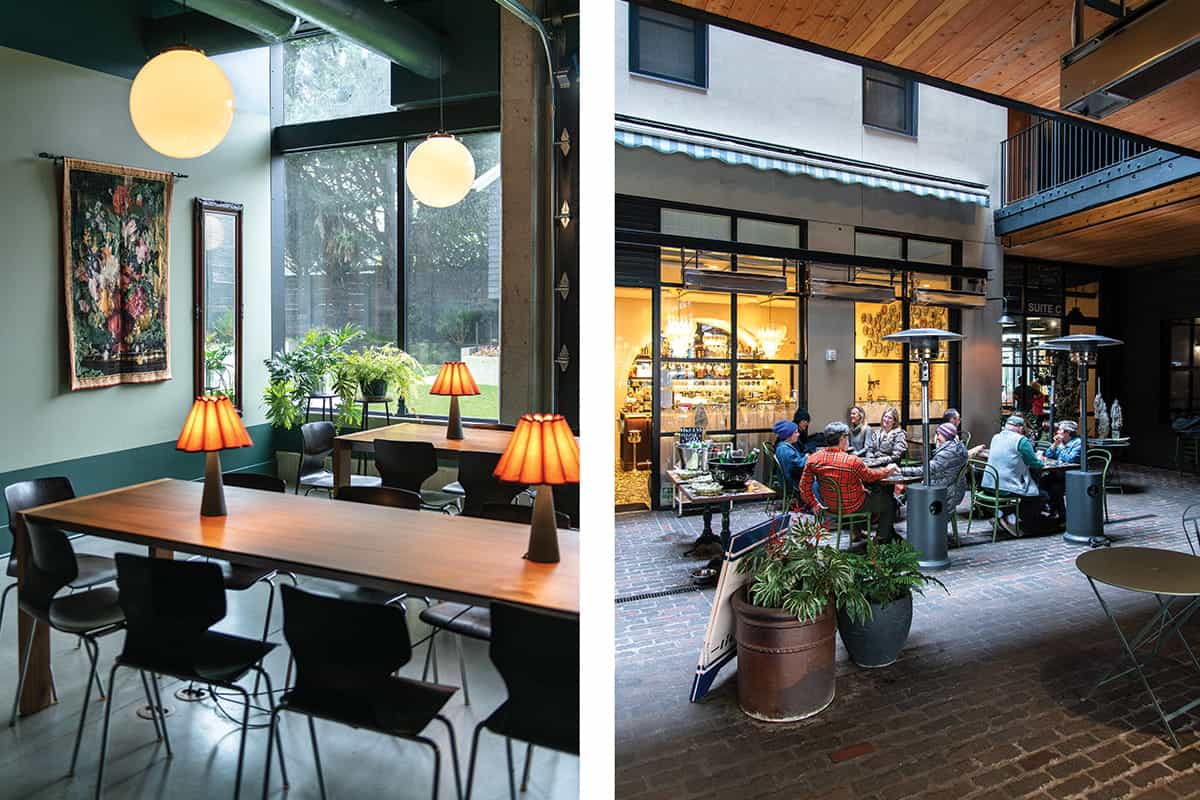
“One of the great parts about this project is that we weren’t approaching it [with the intent] to build and then sell,” Dale says. “We said, ‘We’re going to build it and live in it, and we’re going to stay here for a long time.’ That let us think about things with a much longer-term perspective.”
Despite a raft of setbacks—a mid-project contractor switch and extensive water damage that delayed the timeline by more than two years—the residents of Shared Roof have settled into their homes and created a unique, connected community. According to Dale, one couple loves to host informal dinners, some residents watch Seahawks and Mariners games together in the community room, and one gentleman, with a large collection of tools, will happily help fix almost anything.
“We wanted people to be engaged at a different level than they typically would be in a single-family home living situation,” Dale explains. “Even in a great neighborhood, you’re still not seeing your neighbors that often. Here, it’s a different story. We’ve been so fortunate to have a really incredible, eclectic mix of folks who ended up here because they genuinely want to connect with each other.”
Follow Us

A San Juan Island Home for All Seasons
With an eye toward the future, Prentiss + Balance + Wickline helped two Seattle professionals design a house perfect for weekend getaways now—and permanent living during their post-retirement years.
It was early 2017 when a Seattle-based empty-nester couple started searching for a property in the San Juan Islands. They still had jobs in the city, but were nearing retirement and wanted a home they could use on weekends, and eventually settle in after they left the workforce. Initially, the two weren’t planning on a…

Can Alaska Kelp Help Washington Crops Beat the Heat?
A Ketchikan company is working with WSU researchers to see whether its kelp-based biostimulant can help grapes and berries withstand environmental stress.
From the floatplane, reddish-brown kelp traces the edges of the small islands between Ketchikan and Prince of Wales Island like brushstrokes on the surface of the water. Up close, on a rare 70-degree July day in Alaska, the kelp is glossy and beautiful, though the wind coming off the water makes it nearly impossible to…

PlantCon Is Coming for Seattle’s Windowsills
The nation’s largest gathering for houseplant lovers makes its Pacific Northwest debut this August with 200 booths, hands-on workshops, and a DJ.
My house is full of plants, enough that I’ve lost count. Houseplants have the same suspicious math as tattoos: One is rarely the final number. I propagate cuttings in jars of water, regularly rearrange corners of the house in pursuit of better light, and like to imagine the entire collection is improving the air. That…

Noir Lux Lights Up Fourth Avenue
The Seattle candle brand’s new two-level pop-up brings workshops and community gatherings downtown through September.
It’s often said that good things come in threes, and for Colina Bruce, founder of the lifestyle and home fragrance brand Noir Lux, that’s certainly proving true. With a flagship shop in Belltown and an outpost in Ballard, Bruce is rounding out a Noir Lux trio with the opening of the Noir Lux Collective on…