




Lifestyle
Read More ›
Bat Signal Seattle
Bats are out this summer, and so are the community scientists tracking them
 By Sarah Stackhouse July 10, 2025

By mid-July, most Seattleites have clocked the summer clichés: backyard rosé, panic-buying box fans, and chatting with strangers in the grocery store about how nice it is. But here’s something better: bats.
Washington is home to 14 species, 10 of which live in western Washington. They’re tiny, nocturnal insectivores that eat thousands of bugs a night — natural pest control that’s easy to miss unless you’re looking. They’re most active in the summer months, especially from June through August, when warm evenings draw them out to hunt. And lately, they’ve been in trouble.
Bat populations are declining across the U.S. due to habitat loss, climate change, wind turbine collisions and light pollution. Since 2016, Washington has also been grappling with white-nose syndrome, a deadly fungal disease that has already killed millions of bats nationwide. Scientists are still trying to understand how it spreads and what can be done.
Bats are critical to ecosystems across the globe — pollinating plants, controlling pests, dispersing seeds — and local declines can ripple outward. Data collected in the Pacific Northwest feeds into a larger network of research tracking the species’ survival across North America.
That’s where Woodland Park Zoo’s Bat Activity Trends (BAT) program comes in. It helps researchers monitor local bat behavior, build year-to-year comparisons, and raise awareness about conservation threats.
The zoo is hosting BAT events through September. These include every-other-Wednesday walks at Seward Park Audubon Center and Green Lake Bat Talks with Bats Northwest every-other-Thursday. There is also a Bats on the Farm night at Kelsey Creek Farm in August and a Schafer State Park outing on July 12. Events are timed to sunset and loosely structured around the whims of bat activity and weather. Most events are free, but a few require registration.
You can also log observations from home using your phone or computer, and there’s kid-friendly info to help families get involved.
Seattle has a strong tradition of community-powered science. From counting bees and birds to tracking marine life. And in a way, we’re built for it. The city holds 6,000 acres of parks and more than 200 miles of shoreline. We also rank first among the 25 largest U.S. cities for having the most wilderness within a 100-mile radius — 3.6 million acres. The BAT program is one more way to help scientists understand what’s happening in our region.
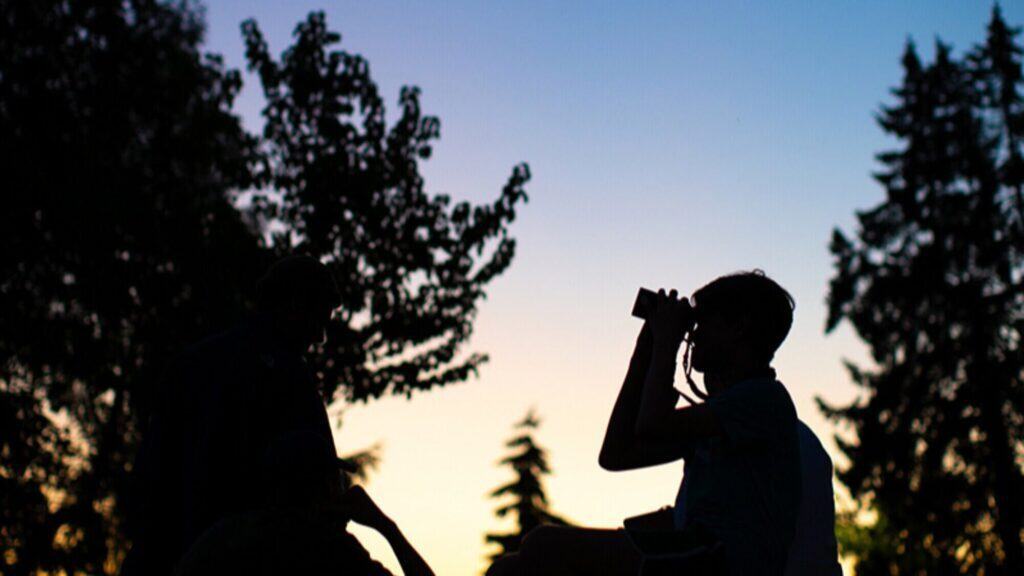
In the big picture, these kinds of local efforts can add up to real conservation progress. If more cities did what Seattle is doing by turning public interest into community science, we’d be in a better position to protect not just bats, but the ecosystems that depend on them. That includes our own.
Follow Us

Soapbox Project Founder Nivi Achanta Centers Community and Joy in Climate Justice
The Seattle organizer shares why taking action helps her stay hopeful—and how anyone can get started.
If you were asked to envision what the world could look like in the future, you might take a page out of a dystopian book. But what about imagining a future that feels more hopeful, one where you have access to reliable transit, green spaces, and opportunities to gather in community with others? That’s exactly…

Remember When the Eastside Felt Like a Road Trip?
Months after the Sound Transit 2 Line began crossing Lake Washington, Seattle and the Eastside feel a whole lot closer.
There’s a particular kind of optimism and happiness you feel when a city decides to connect itself to its own future. World-class cities invest in the invisible things that make everything else possible. They make it easier for ideas to collide, for workers to access opportunity, for culture to flow. The East–West light rail Crosslake…


World Cup 26 Is Keeping the Region Busy. So Are Its Recycling Bins.
A local expert explains what actually happens after a plastic bottle leaves the bin.
Seattle is buzzing right now. In the first 11 days of World Cup 26, Waterfront Park recorded more than 451,000 visits, including nearly 85,000 on June 19 alone. SEA Airport has also seen some of its busiest travel days ever, with match-day crowds and summer travelers moving through the city. That is a lot of…