





Travel
Read More ›
Creative Collections: Destination Museums Worth the Trip
Seeing art in person isn’t just visual; it’s visceral.

This article originally appeared in the September/October 2026 issue of Seattle magazine.
Museums will always be destinations, but you don’t need to go to the Met or the Louvre to enjoy the ride.
And the thrill isn’t limited to paintings—a fighter jet, a historic cipher machine, or a field full of vintage neon also delivers an emotional impact that can only be experienced with the intimacy of showing up.
Here are nine niche museums nationwide that are worthy of the primary destination label—not just an activity to tack onto your itinerary if you happen to be in the area. Combine them with these stylish hotel pairings to turn it into an enlightening long weekend.
The Neon Museum—Las Vegas
Las Vegas rarely looks back, a fact that makes the Neon Museum gently subversive. It’s a six-acre “boneyard” a few miles north of the Strip, where the city’s discarded signs are preserved rather than forgotten. Opened in 2012, the museum is anchored by the restored lobby shell of the 1961 La Concha Motel, a Googie-style landmark designed by architect Paul Revere Williams. Come after dark, when the restored signs glow against the desert sky, but linger for the stories they tell. The Moulin Rouge sign recalls the pioneering hotel-casino that opened in 1955 as the nation’s first racially integrated resort. The museum extends its mission each fall with Duck Duck Shed, a citywide festival of tours, talks, and behind-the-scenes experiences that celebrate Las Vegas as what executive director Aaron Berger calls “a living cultural artifact.”
Stay: Fontainebleau Las Vegas, a short drive south on the Strip, opened in December 2023—a 67-story tower whose rooms lean into blue-and-silver water tones nodding to the original Miami property’s history. Cantina Contramar, chef Gabriela Cámara’s first U.S. outpost of her beloved Mexico City seafood institution, opened in March inside a Frida Escobedo-designed dining room of volcanic stone and hammered copper. Order the tuna tostada and the whole grilled pescado a la talla, two signature dishes brought over intact from Mexico City.
International Spy Museum—Washington, D.C.
Blocks from the National Mall, the marble monuments give way to something considerably more clandestine. Opened in 2002, the International Spy Museum traces tradecraft from George Washington’s Culper Spy Ring through the Cold War’s cat-and-mouse era. It currently houses the world’s largest public collection of espionage artifacts. Don’t miss the genuine Enigma cipher machine, whose mechanical complexity took years of Allied efforts to crack, or the collection of concealment devices—bugs hidden in martini olives, cameras built into cigarette packs—that make the abstract idea of surveillance suddenly, unsettlingly real.
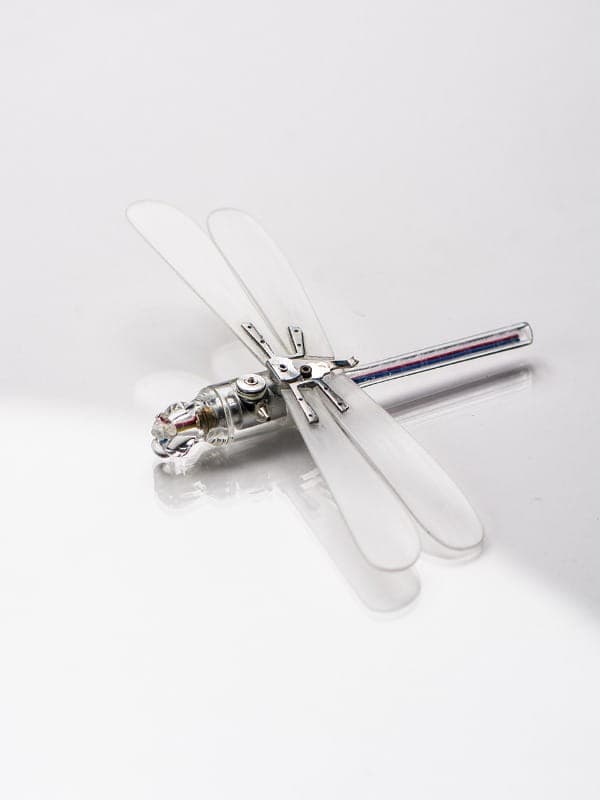
Stay: The Pendry Washington DC–The Wharf sits atop the Potomac waterfront in a striking angular building; its rooms are done up in a residential European inflected warmth exuded by old-world flooring and brushed bronze. Before dining on sushi at rooftop bar Moonraker, order a martini, whether shaken or stirred, but beware the olive: it might be listening.
Center of Science and Industry (COSI)—Columbus, Ohio
Set on the riverfront in a repurposed high school, COSI is a perennial favorite to win the position as the top science museum in the country. It packs more than 300 hands-on exhibits into themed galleries—Ocean, Space, Gadgets—built for touching, testing, and disassembling things. The must-see is the American Museum of Natural History Dinosaur Gallery, anchored by a full-size Tyrannosaurus Rex. The largest planetarium in Ohio runs a close second.
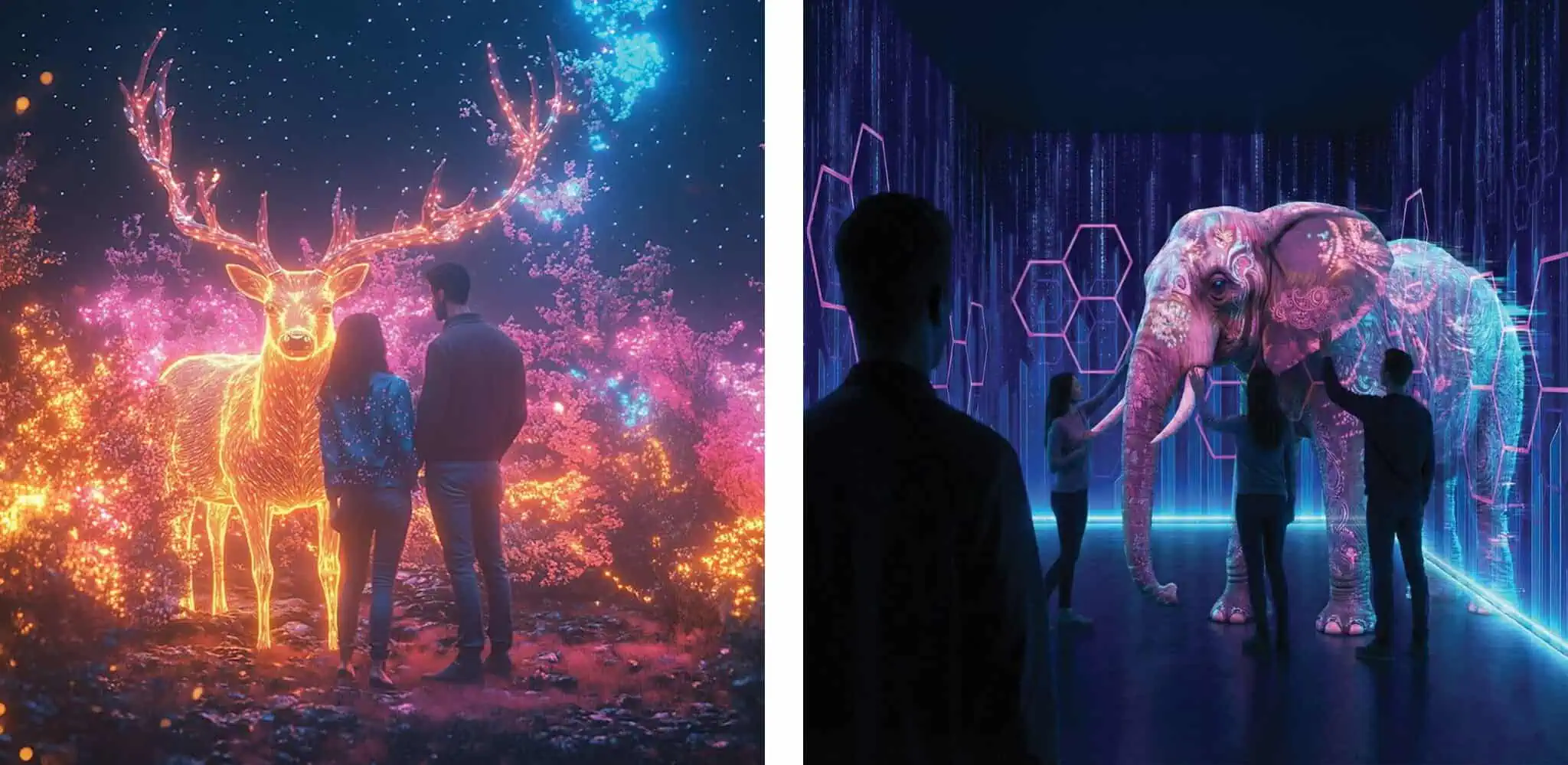
Stay: The Junto, just minutes away in the Franklinton neighborhood, has a style that leans industrial-modern with a communal streak. The lobby is designed for hanging out, guest rooms are marked by unexpected design touches, and a “Gear Garage” lends out bikes and kayaks for the adjacent Scioto River. Little West Tavern prepares wood-fired cuts downstairs; Brass Eye, the rooftop bar, trades in skyline views and playful cocktails.
Petersen Automotive Museum and LACMA—Los Angeles
Miracle Mile is Los Angeles distilled into a few walkable blocks, where a car museum and one of the largest art museums in the country sit close enough to visit both in a single afternoon. The Petersen Automotive Museum, wrapped in its recognizable stainless-steel ribbons, holds over 300 vehicles across three floors, and the underground Vault adds several hundred more rarities. The Batmobile and the Back to the Future DeLorean attract the crowds, but the real draw is the ground floor’s design galleries, which present the automobile as a sculptural art form as much as a machine.
The Los Angeles County Museum of Art recently opened its David Geffen Galleries, the 110,00-square-foot Peter Zumthor-designed structure spanning Wilshire Boulevard that now holds the museum’s entire permanent collection. Over 100,000 objects were painstakingly removed and reinstalled without chronology or hierarchy. Instead, objects are grouped thematically and geographically according to global bodies of water (Pacific, Indian, Mediterranean, and so on). It’s a museum most Angelenos haven’t even seen yet, whatever they remember from before. Don’t miss Chris Burden’s iconic Urban Light: the 2008 street installation consisting of 202 restored street lamps from the 1920s and 30s.
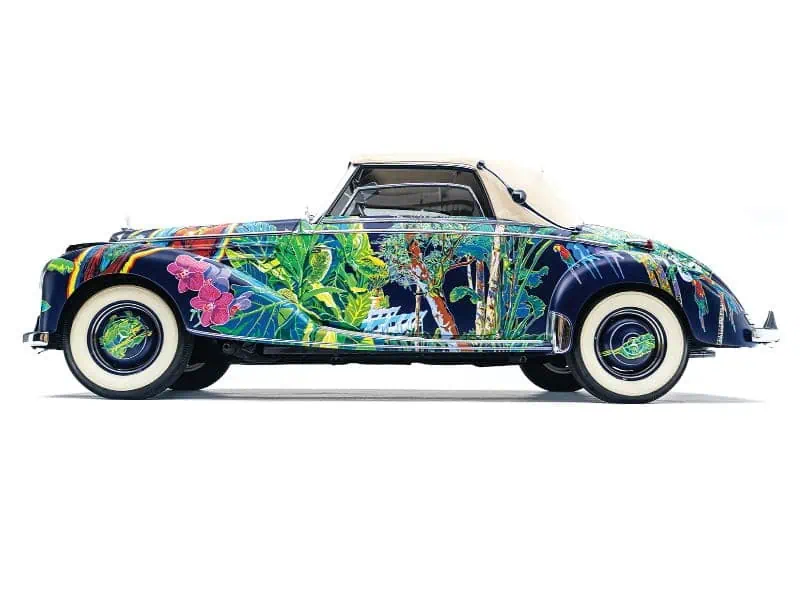
Yamagata.
Stay: Palihouse West Hollywood, a European-style hotel oasis, is situated on a quiet stretch of West 3rd Street, so close to the museums you can walk. Inside, prepare for wild bursts of color, maximalist and whimsical flair, and a second-floor swimming pool. The Lobby Lounge Café and Bar, beloved by locals and visitors alike, is a convivial meeting place to hold court for hours against the shifting human backdrop. And with the boutiques and restaurants in the neighborhood, you won’t need a car for the whole visit.
USS Midway Museum—San Diego
America’s longest-serving aircraft carrier now sits permanently docked at the Embarcadero, its four-acre flight deck open to the sky. While the Midway takes museum-goers through seven decades of naval aviation history, the flight deck offers the main reason to visit: nearly 30 restored aircraft, from WWII-era Corsairs to modern Hornets, are arranged where real launches once occurred. Climb the island for the bridge and Primary Flight Control, then head below for the tight quarters of the engine room and crew quarters. Sign up for the VIP Docent Tour, and you might be guided by a veteran who served on the ship.
Stay: As the largest hotel in Southern California, the Manchester Grand Hyatt San Diego matches the grandeur of the ship. The waterfront twin-tower high-rise, a short walk down the harbor, recently unveiled redesigned Seaport Tower rooms with an apt nautical theme—complete with teak-inspired carpet patterns and reflective water-toned artwork. Sally’s serves the fish tacos San Diego is famous for, while Top of the Hyatt, 40 stories up, delivers perfect bay views. You can even salute the USS Midway.
Crystal Bridges Museum of American Art—Bentonville, Arkansas
Bentonville is an improbable art capital—a farm town remade, largely on Walmart money, into a destination for the creative class. Crystal Bridges opened in 2011, spanning a spring-fed ravine, with the Moshe Safdie-designed structure built specifically to hold five centuries of American art. The collection ranges from Gilbert Stuart portraits through Hudson River School landscapes, and into work by Rothko, Warhol, and O’Keeffe. Asher B. Durand’s 1849 Kindred Spirits is the painting that many people plan their route around. The record-setting acquisition is a cornerstone of American Romanticism, and when Alice Walton whisked it away from the New York Public Library for $35 million, the art world took notice.
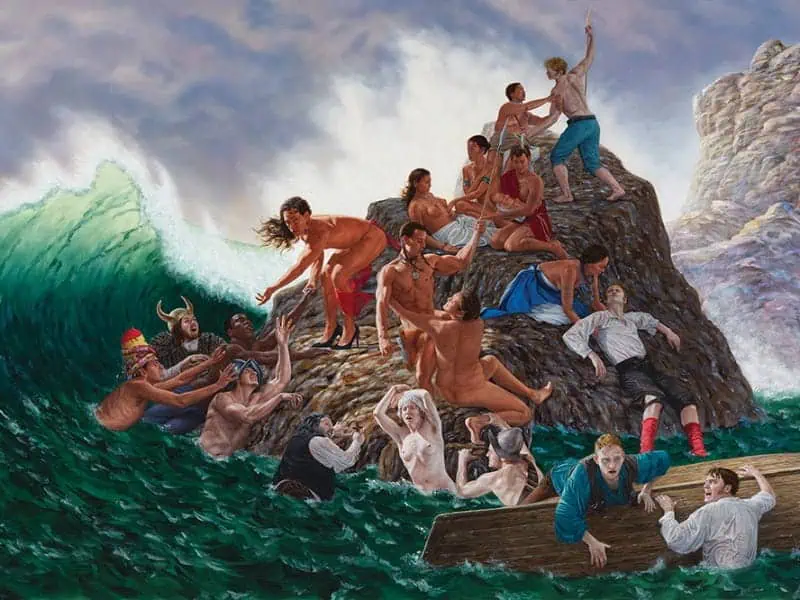
Stay: 21c Museum Hotel Bentonville sits close enough to Crystal Bridges that you can walk; its lobby doubling as a free, round-the-clock contemporary art museum in its own right. Rooms lean minimalist and art-filled; the on-site restaurant, The Hive, cooks Southern food spotlighting and sourced from the Ozarks. The hotel also offers beach cruisers to borrow, making it easy for visitors to participate in Bentonville’s rich cycling culture.
Isabella Stewart Gardner Museum—Boston
In 1903, philanthropist and art collector Isabella Stewart Gardner built this wonderfully strange, namesake Venetian-palace replica to house her collection exactly as she arranged it, with no curatorial logic beyond her own eye. The courtyard at its center, glass-enclosed and blooming year-round, is worth the visit alone. Don’t miss Titian’s The Rape of Europa, purchased in 1896 for a record sum, and, oddly, the most valuable piece the infamous 1990 heist thieves left behind. The museum still hangs empty frames where the stolen works once were.
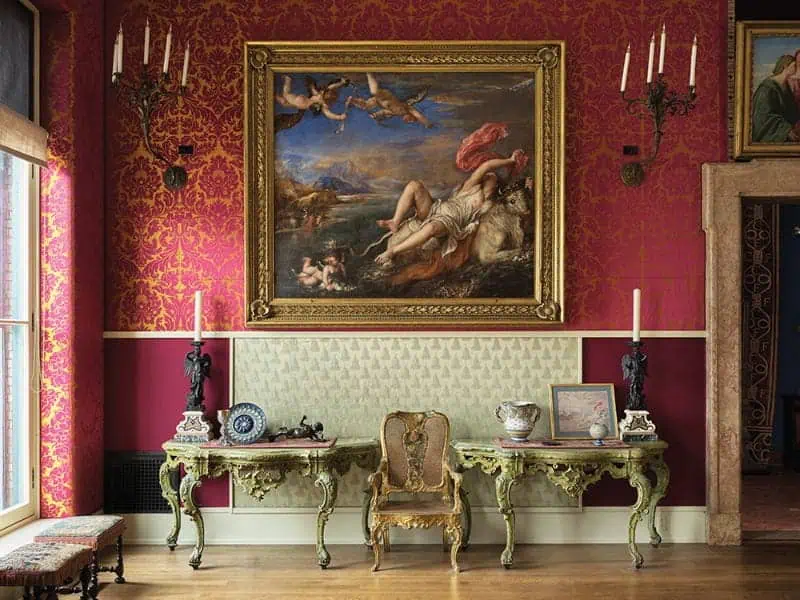
Stay: The Verb Hotel, a short walk away, is a full tonal swerve: a converted 1959 motor inn turned rock-and-roll shrine, with record players in every room, a heated pool, and a vinyl library thousands deep. Hojoko, the on-site izakaya, serves sushi and yakitori until midnight—a loud, colorful contrast to the Gardner’s hush.
Museum of Fine Arts, Houston
The MFAH, often overlooked, is easily one of the country’s greatest museums. The 2020 Nancy and Rich Kinder Building changed the calculus—a Steven Holl structure wrapped in translucent glass tubing, added 100,000 square feet, built specifically for the museum’s modern and contemporary holdings. The permanent collection spans Rembrandt and Van Gogh in the Beck Building through Ai Weiwei and James Turrell in the Kinder wing—a full arc under one roof. The Cullen Sculpture Garden is so beautiful it has become a magnet for locals, boasting works by Louise Bourgeois, Henri Matisse, and Frank Stella.
Stay: The Hotel Saint Augustine, which opened in early 2025, sits across from the equally rewarding Menil Collection. Its five buildings are connected by open-air bridges that run through landscaped courtyards. Rooms favor burled walnut, deep blue walls, and framed courtyard views.
Follow Us

Actor and Author Ke Huy Quan Shares His Story at Very Asian Foundation’s Annual Seattle Brunch
From his childhood as a refugee to his decades away from Hollywood, Quan opened up about the experiences behind his new memoir, Never Say Die.
At this point, most people with even a passing interest in film know Ke Huy Quan got his start in Hollywood as a child actor in the mid-1980s. After starring as Short Round in Indiana Jones and the Temple of Doom opposite Harrison Ford, and as Data in The Goonies, Quan acted in a few…

SENSORIUM Takes on Our Screen Addiction
Dance, drag, and immersive art collide in an eight-week exploration of our phone-obsessed lives, with a few surprises along the way.
What do drag queens, smartphone addiction, art installations, and an old luggage shop have in common? According to longtime Seattle choreographer Alana O’Farrell Rogers, a lot. “There’s no dead time anymore,” says Rogers, explaining how the proliferation of smartphones fills the empty spaces that once served as time for rest or connection. Where we snuggled…

Salt-N-Pepa on Breaking Barriers and Staying Power
Ahead of their performance at Seattle’s Museum of Pop Culture gala, the hip-hop pioneers talk about creative ownership, connecting with new generations, and the songs that still resonate.
The Museum of Pop Culture (MOPOP) will host its annual ICONS of Pop Culture Gala in Seattle on October 22, honoring five artists and institutions whose work has helped shape entertainment and culture. This year’s honorees are martial arts and film legend Bruce Lee, fashion designer Jeremy Scott, the video game franchise Halo, hip-hop pioneers…

Studio Sessions: Christopher Paul Jordan
Drawing on childhood memories, neighborhood history, and salvaged materials, Christopher Paul Jordan’s latest show at Cornish’s Behnke Family Gallery explores how the past stays with us.
Start in the middle. It’s good advice for telling a story, and a way into Christopher Paul Jordan’s paintings. By the time you encounter them, their materials have already been something else, and who knows what they might move on to become. The Tacoma interdisciplinary artist works with salvaged objects, including screens, picture frames, canvas,…